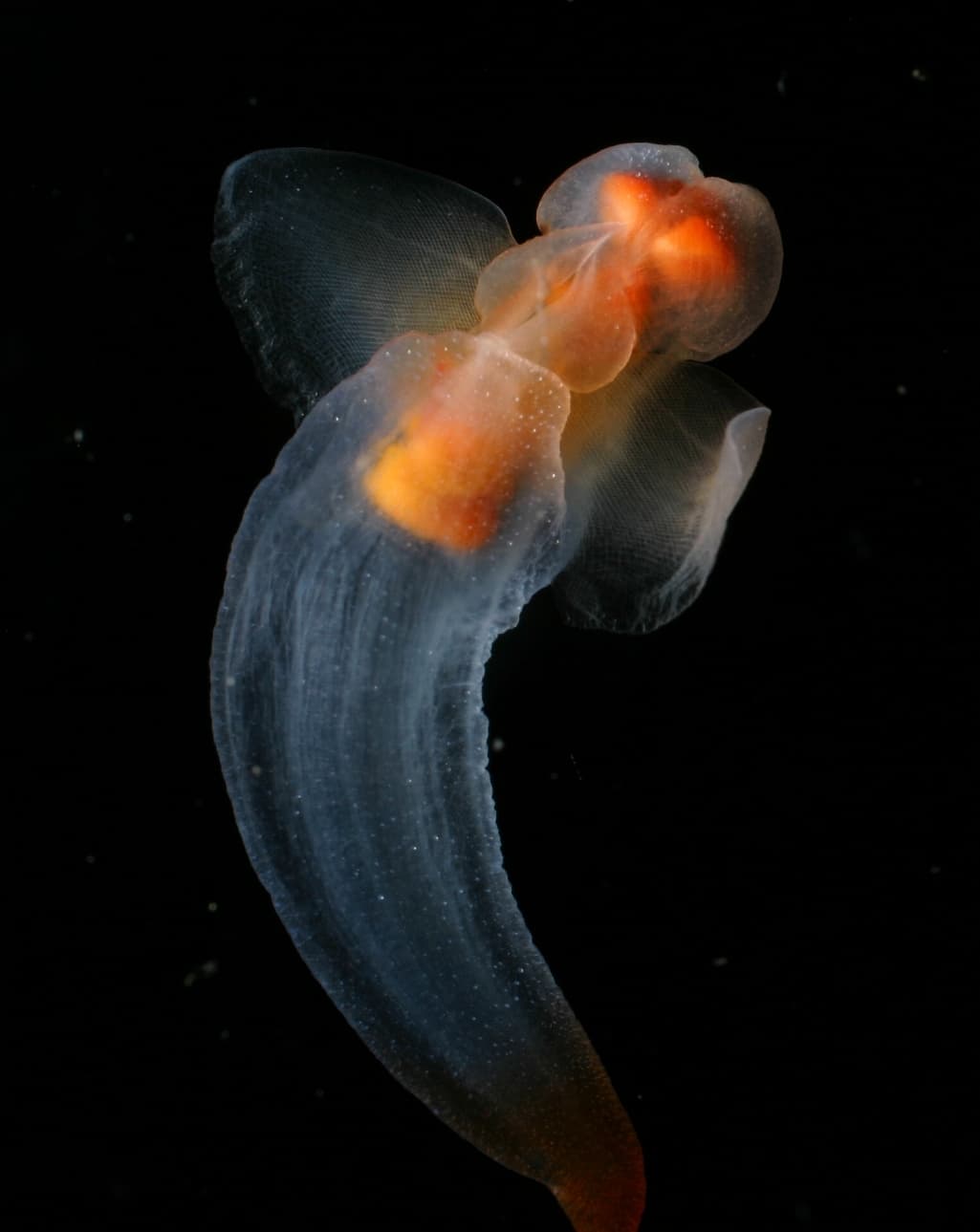
A sea angel beats two tiny wing-like flaps through the water, its transparent body seeming almost weightless. Yet this delicate-looking animal is a hunter that can pull another snail from its shell.
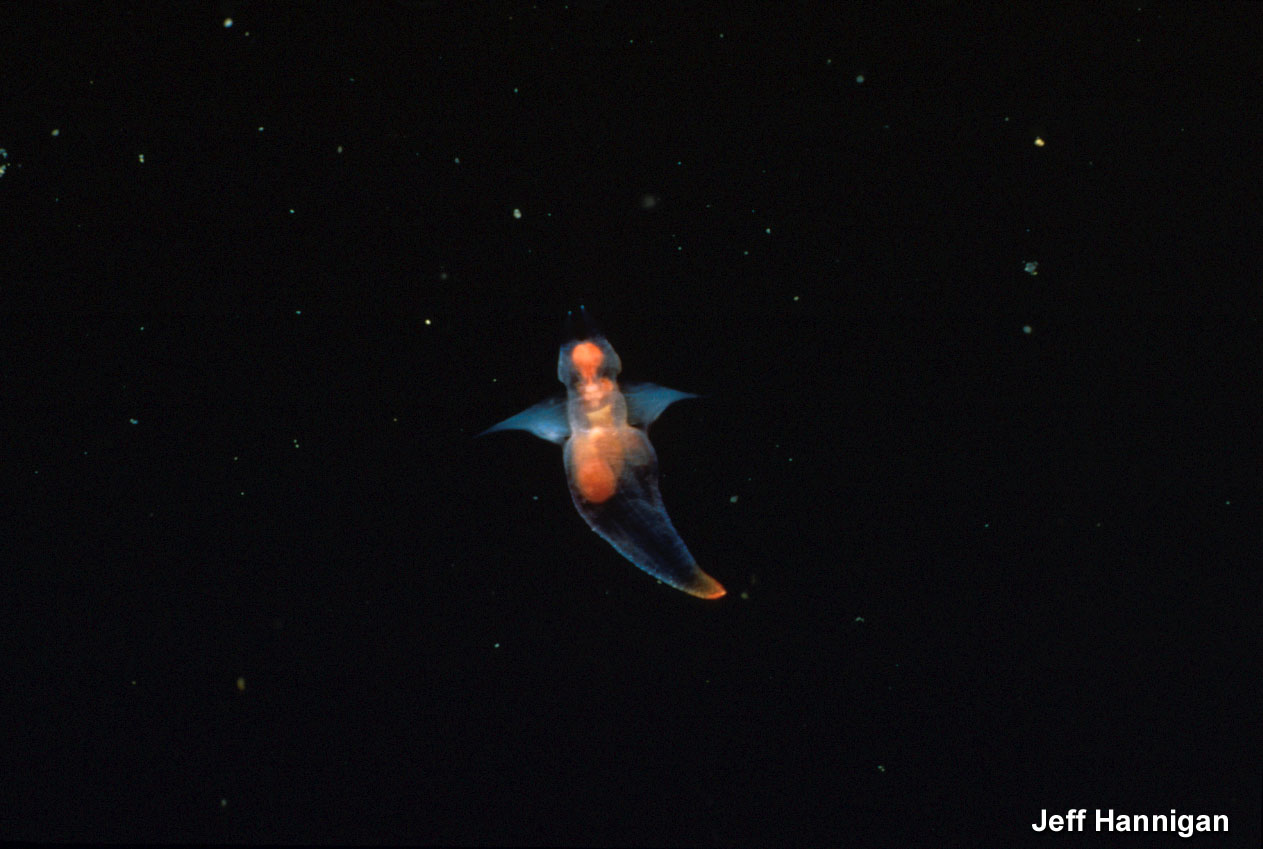
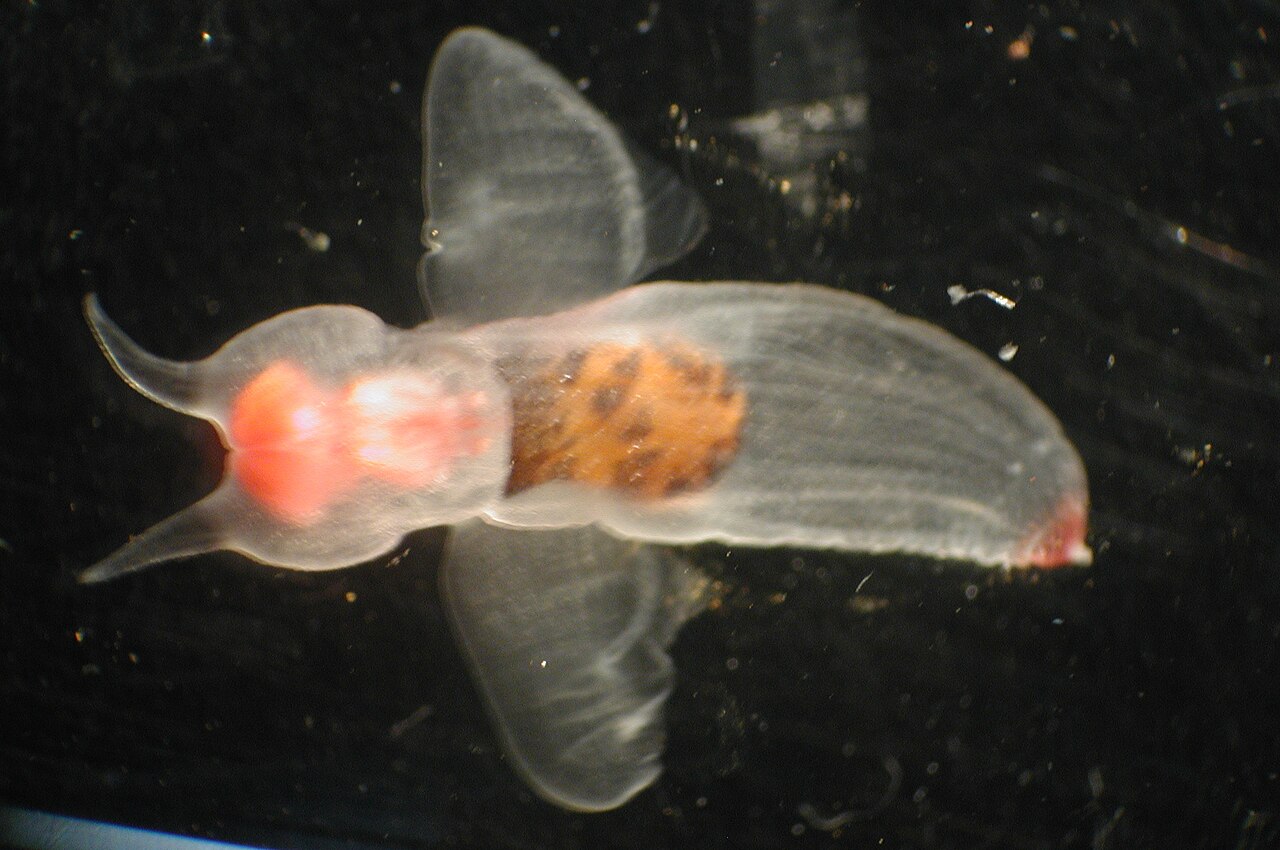
Sea angels are swimming gastropods, relatives of familiar snails and slugs. The photographs here show animals identified as Clione limacina, one member of this remarkable group.
Wings that began as a foot
A land snail moves on a muscular foot. In these swimming relatives, that body region has evolved into paired structures called parapodia.
The Monterey Bay Aquarium sea-angel account explains how the flaps propel a soft, shell-free body through open water. They are not wings like those of a bird, but the resemblance gives the common name its charm.
A very different kind of mealtime
Sea angels prey on other swimming snails. Clione limacina specializes on sea butterflies in the genus Limacina.
When prey is captured, structures around the mouth help grip it and draw the soft animal out of its shell. The peaceful-looking swimmer suddenly reveals a feeding system unlike anything its name suggests.
Its transparency also matters: an animal without a burrow or reef crevice has few places to hide in the water column.
A link in a changing food web
Sea angels occur in cold and temperate seas. Their lives connect them with both the animals they eat and predators that eat them.
NOAA's explanation of ocean acidification describes the vulnerability of shelled pteropods, including sea butterflies. Changes affecting those prey can reach animals farther along the food web.
The sea angel shows how beauty and predation fit into the same small body. Its flapping “wings” introduce a whole world of open-ocean relationships, hidden in a creature that can be easy to overlook.
Photo credits
Featured image: Clione limacina by NOAA.jpg — Kevin Raskoff, Hidden Ocean 2005 Expedition: NOAA Office of Ocean Exploration.; Public domain.

Body image 1: Clione limacina.jpg — Jeff Hannigan (NOAA); Public domain.

Body image 2: Sea angel.jpg — Matt Wilson/Jay Clark, NOAA NMFS AFSC; Public domain.

Images supplied at web display size where available.