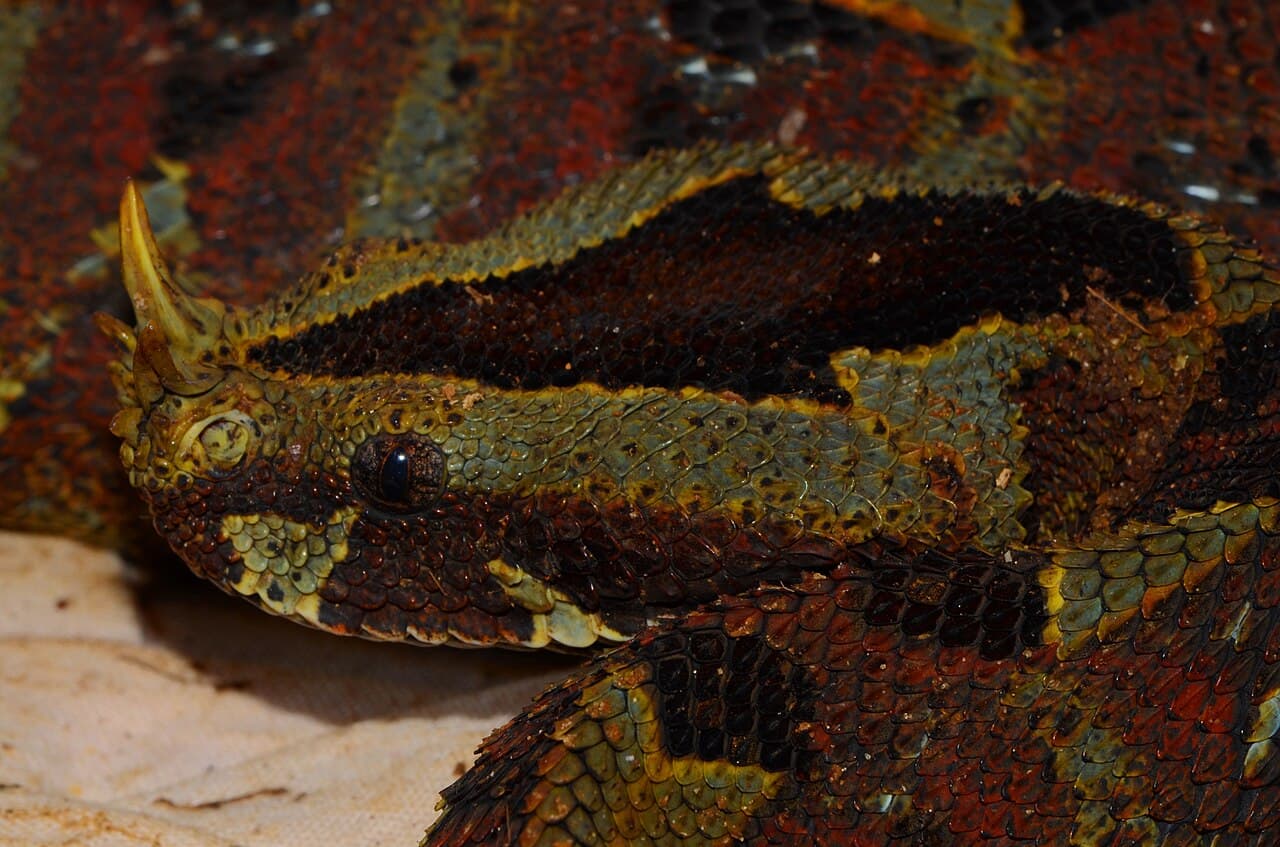
The rhinoceros viper wears a small crown of horn-like scales on its nose. Add a thick body and an intricate pattern, and this African snake looks almost too elaborate to be real.
Yet those unusual features belong to an animal built for life among forest leaves.
The snake behind the name
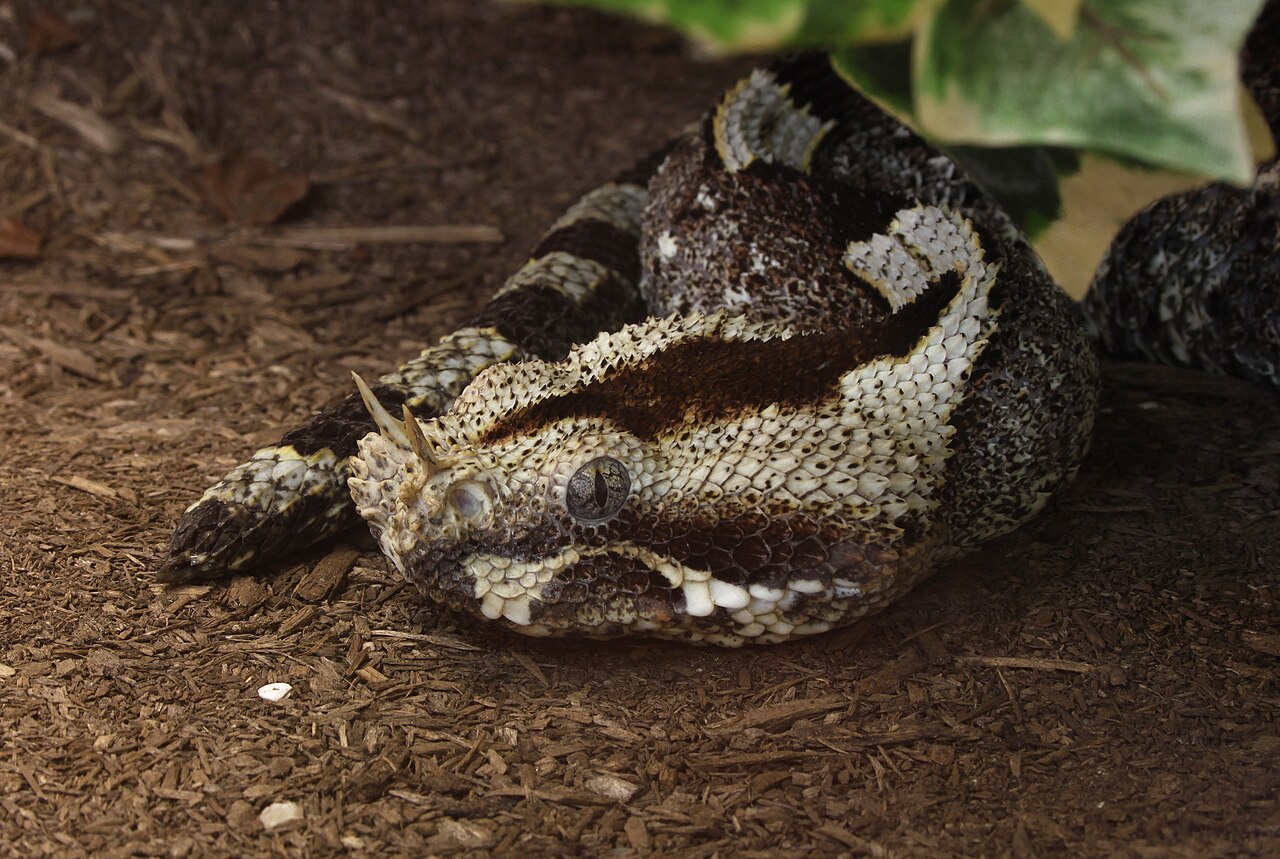
The rhinoceros viper, Bitis nasicornis, inhabits forests in western and central Africa, often in damp places near water. Its raised snout scales give it its common name.
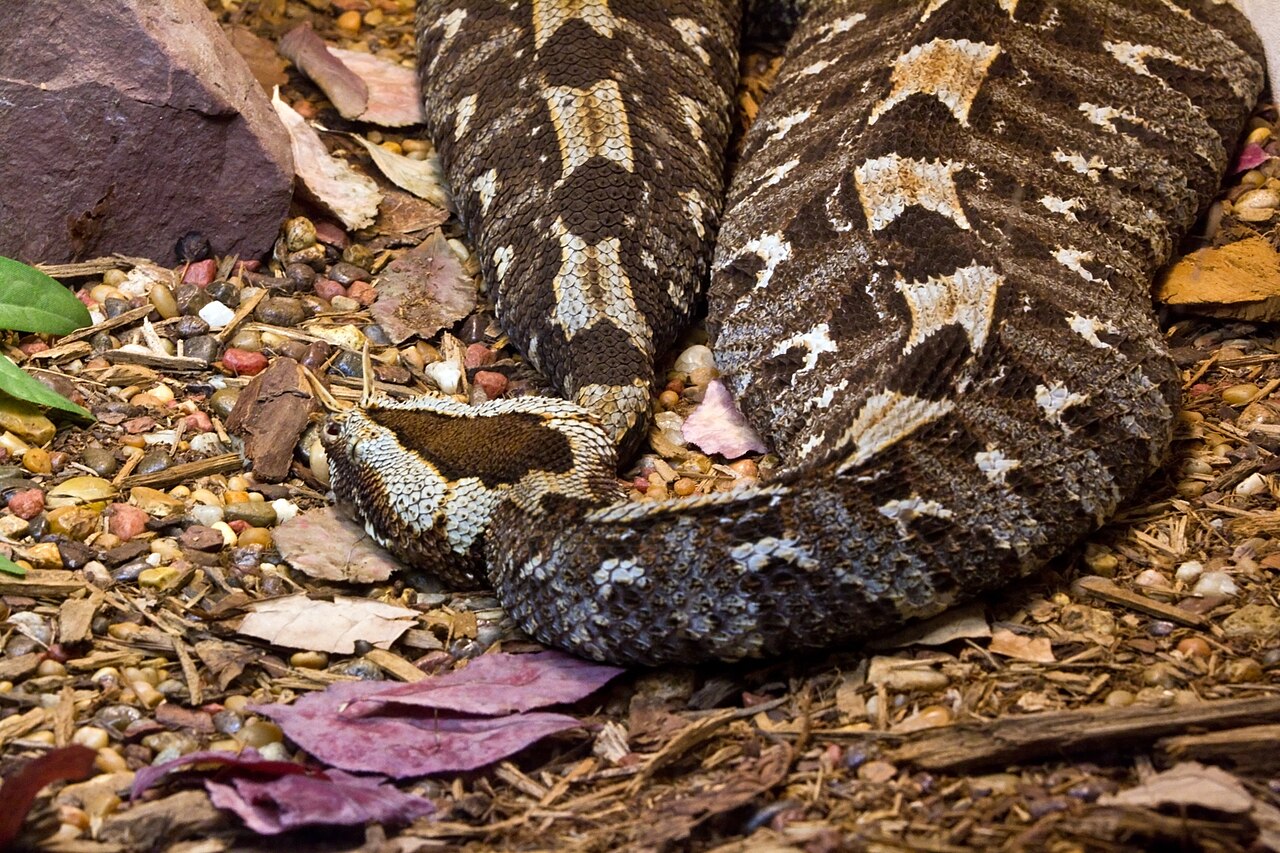
Its pattern can combine dark geometric shapes with lighter, sometimes richly colored areas. Against a plain background, the markings stand out. Among broken leaves and shadows, the same shapes help interrupt the snake's outline.
Animal Diversity Web describes its appearance, habitat, and behavior.
Waiting for a meal
This viper hunts mainly by ambush, allowing prey to come within striking distance. Small mammals form part of its diet. Although closely associated with the ground, it can also climb.
Patience is central to this hunting style. A hidden predator does not need to chase every animal that passes.
Rhinoceros vipers are venomous and should be left undisturbed. Photographs offer a wonderful way to appreciate their details without entering their space.
A different view of beauty
The nose scales draw our attention first, but the whole animal deserves a second look: the compact coils, the textured skin, and the pattern that becomes harder to follow against leaves.
For Amazing Nature readers, this viper is a reminder that beauty can be intricate, surprising, and best admired with respect.
Photo credits
Featured image: Bitis nasicornis 81357307.jpg — Marius Burger; CC0.

Body image 1: Bitis nasicornis Nashornviper.jpg — Holger Krisp; CC BY 3.0.

Body image 2: Rhinocerous viper - Bitis nasicornis.jpg — Greg Hume; CC BY-SA 3.0.

Photographs resized for web display where available.