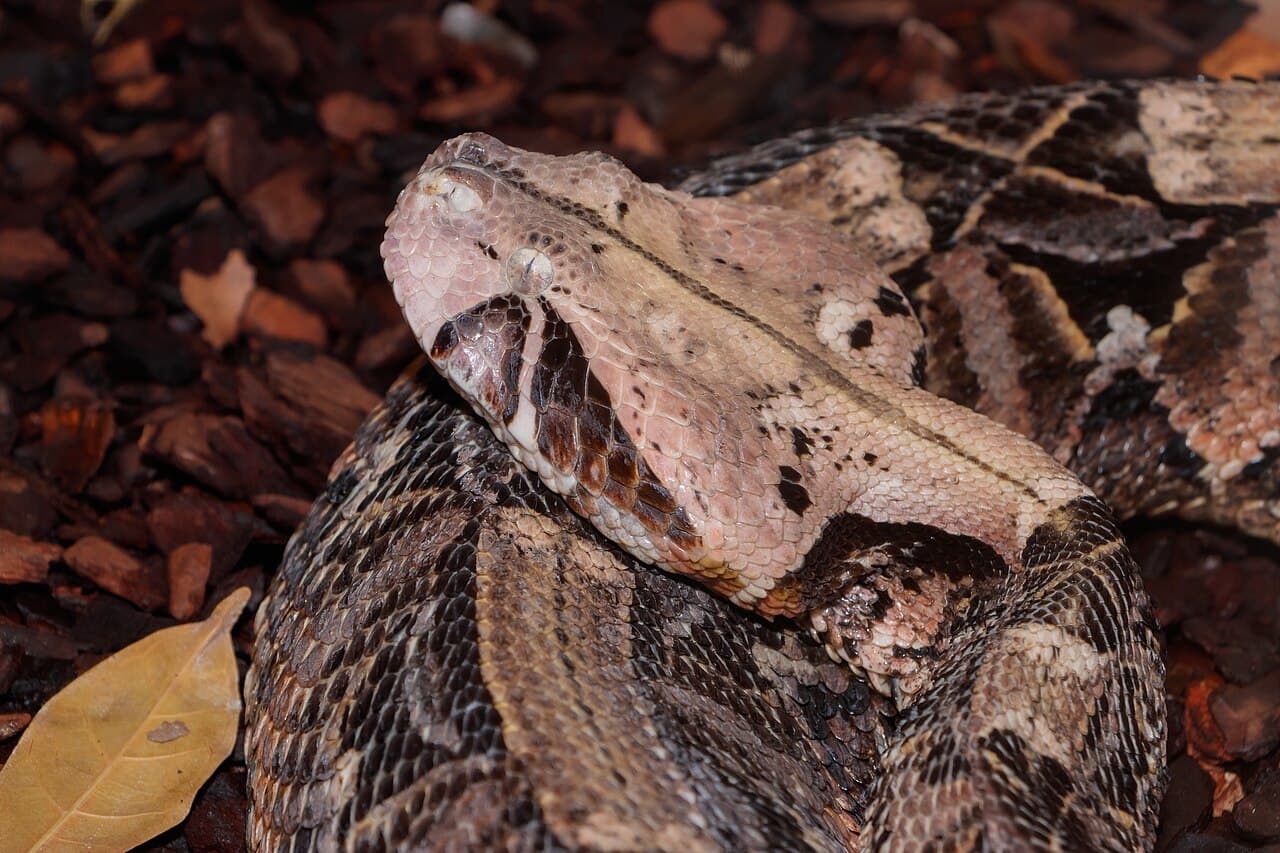
A Gaboon viper can be lying in plain sight and still look like part of the forest floor. Its broad head resembles a fallen leaf, while a patchwork of brown, cream, and pinkish shapes breaks up its body.
Look closely, and what seemed to be scattered leaves becomes a remarkably heavy-bodied snake.
A hunter dressed like its surroundings
The Gaboon viper lives in African forests, where fallen leaves provide cover. Its markings work together with its habit of remaining still. Small mammals and birds can approach without noticing the waiting predator.
The Smithsonian's National Zoo describes this striking camouflage and the snake's ambush hunting. The pattern is more than decoration: it helps hide an animal that might otherwise look quite conspicuous.
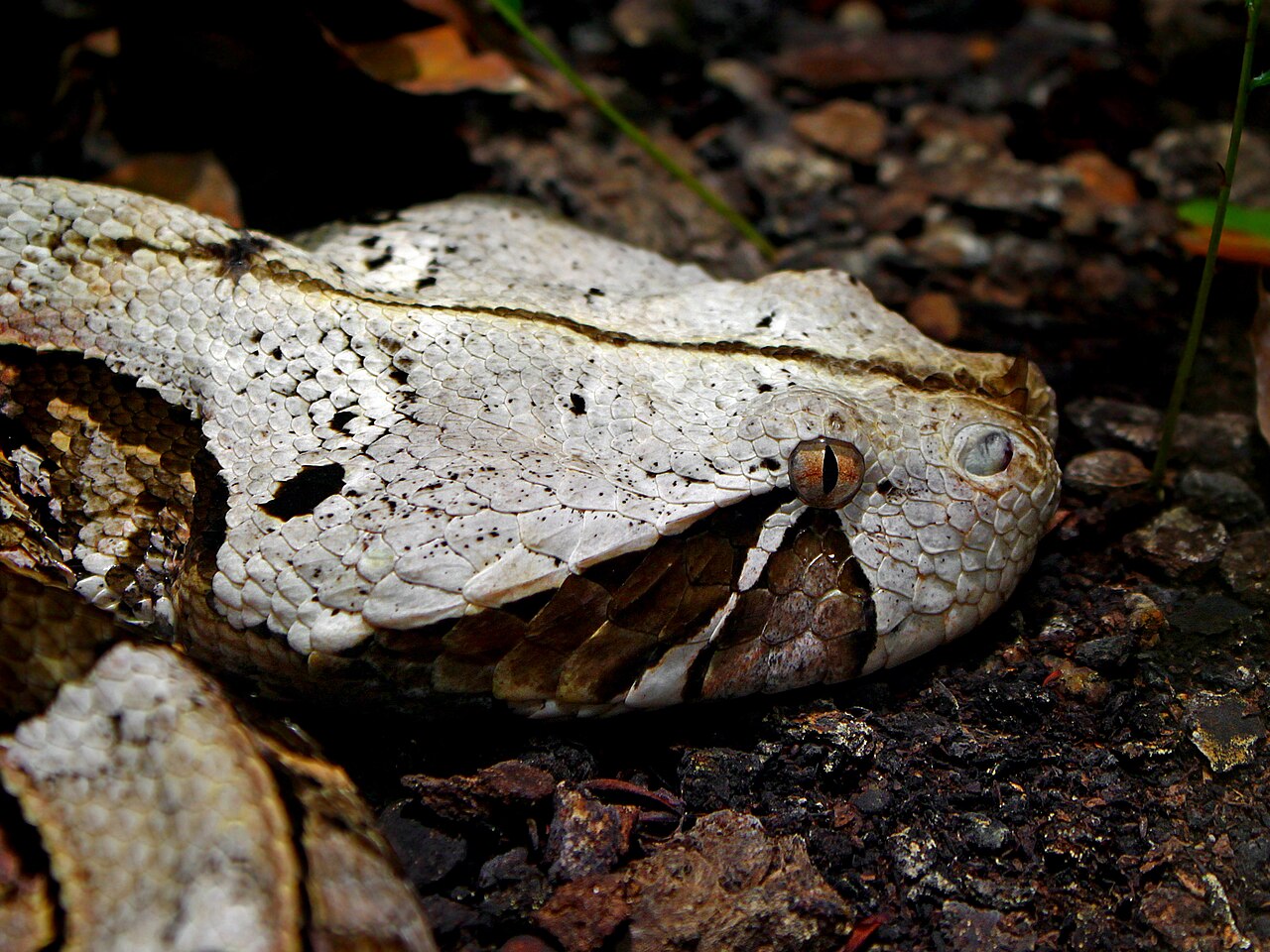
Fangs with a folding design
Gaboon vipers have exceptionally long fangs that fold back when the mouth closes. During a strike, the fangs deliver venom used to subdue prey.
This is a venomous wild animal. Its stillness should never be mistaken for an invitation to approach or touch it. Watching from a safe distance protects both people and wildlife.
Learning to notice the forest floor
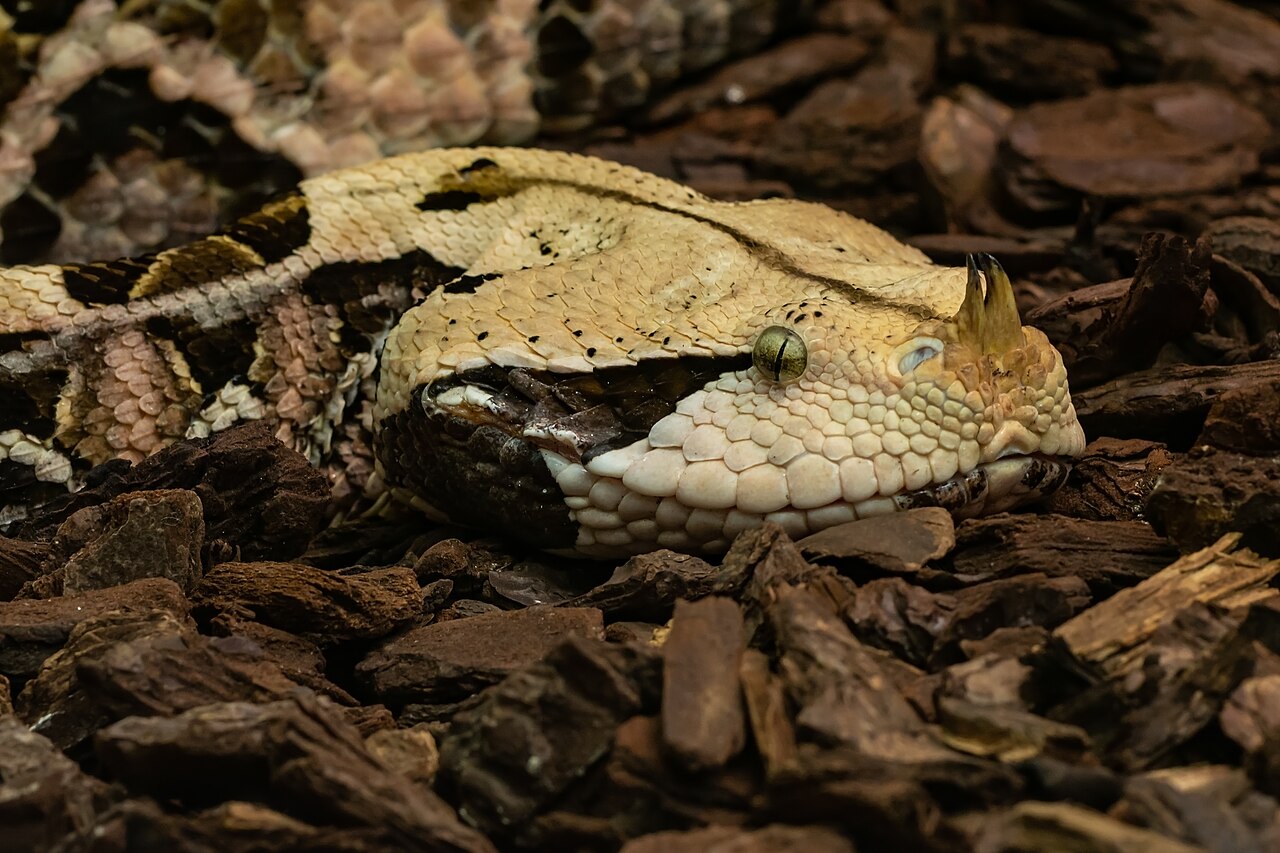
The most memorable thing about this snake may be how easily its outline disappears. A leaf-shaped head and a patient hunting style turn ordinary ground cover into a hiding place.
At Amazing Nature, the Gaboon viper reminds us to look beyond bright colors and dramatic movement. Sometimes nature's most impressive design is the one we almost fail to see.
Photo credits
Featured image: Bitis gabonica - Wilhelma 01.jpg — H. Zell; CC BY-SA 3.0.

Body image 1: Bitis gabonica 01.jpg — H. Zell; CC BY-SA 3.0.

Body image 2: Gabunviper Bitis gabonica-7848.jpg — Isiwal; CC BY-SA 4.0.

Photographs resized for web display where available.