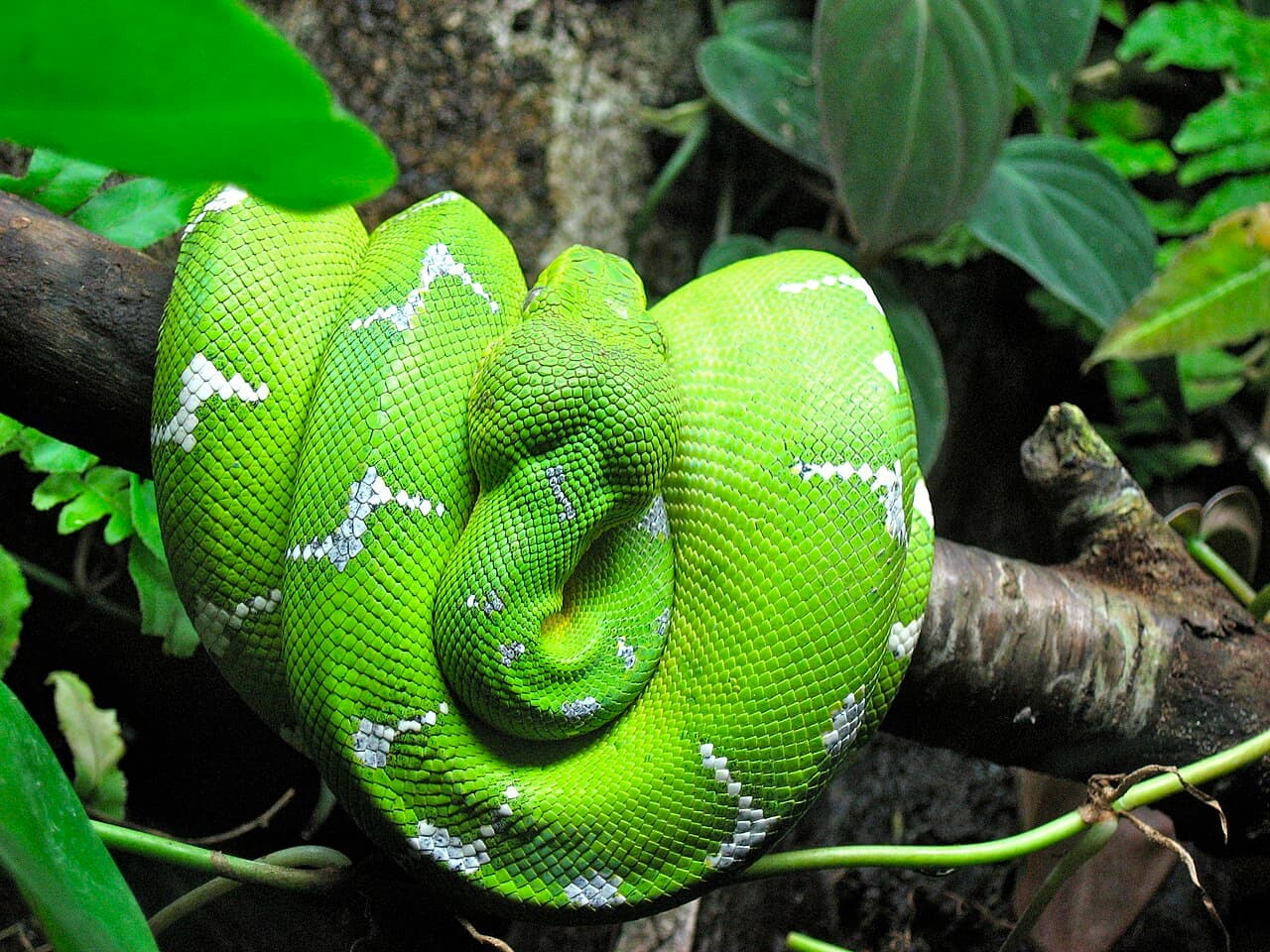
An emerald tree boa can look like a living green ribbon folded over a branch. Its body hangs in balanced loops, often with its head resting near the middle.
The pose is beautiful, but it also tells a story about a snake that makes its home above the ground.
Built around a branch
Emerald tree boas inhabit South American forests. Their gripping tails help anchor them among branches, while their muscular bodies allow them to move through the trees.
They are nonvenomous constrictors: they capture prey and tighten their coils around it. Animal Diversity Web's account describes the tree-dwelling life of these boas.
The Reptile Database distinguishes the Amazon Basin emerald tree boa, Corallus batesii, from its close relative Corallus caninus. Both share the familiar green, branch-hugging appearance.
A green adult can start out red
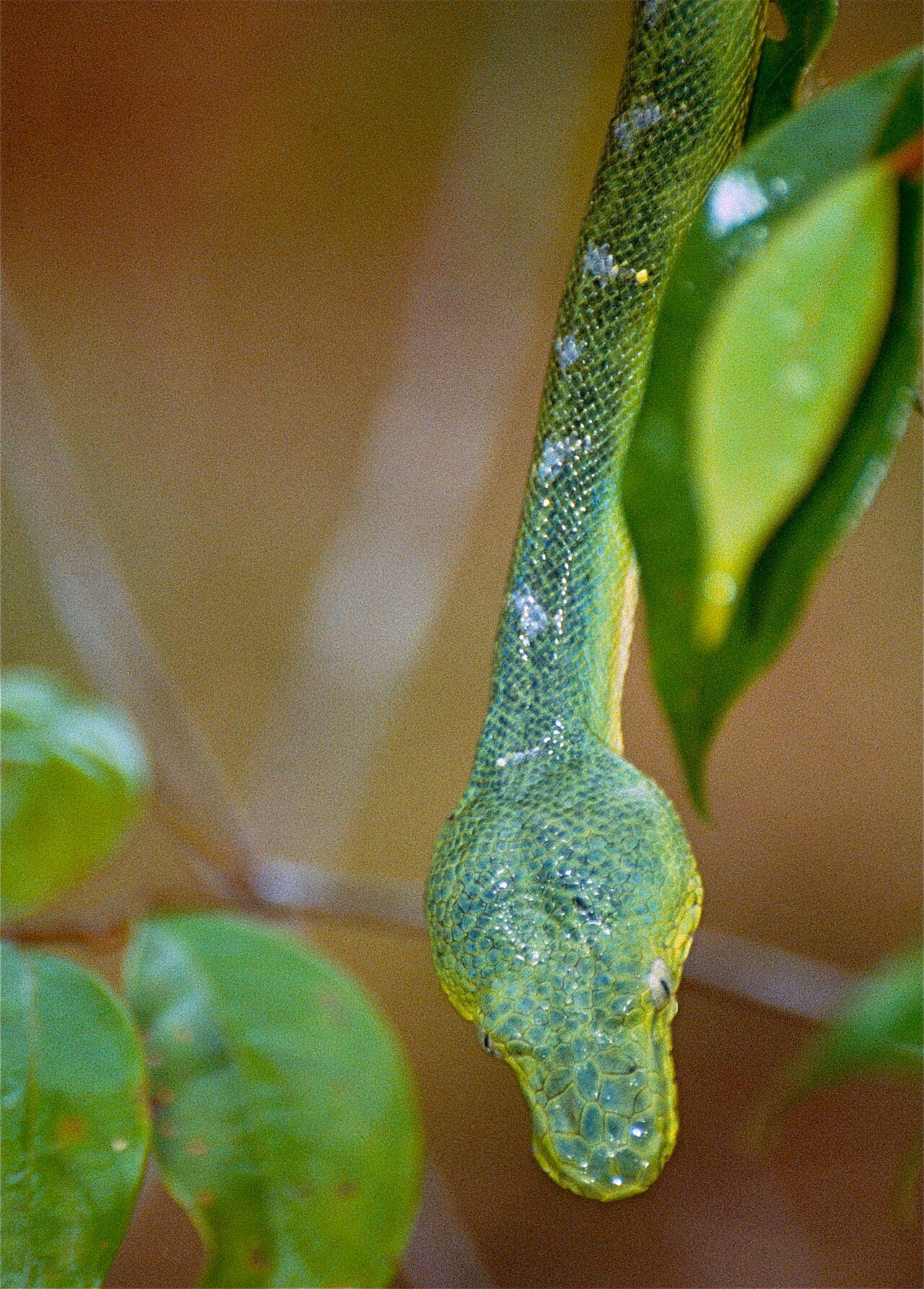
Young emerald tree boas can be reddish or brownish rather than the vivid green associated with adults. As they grow, their appearance changes.
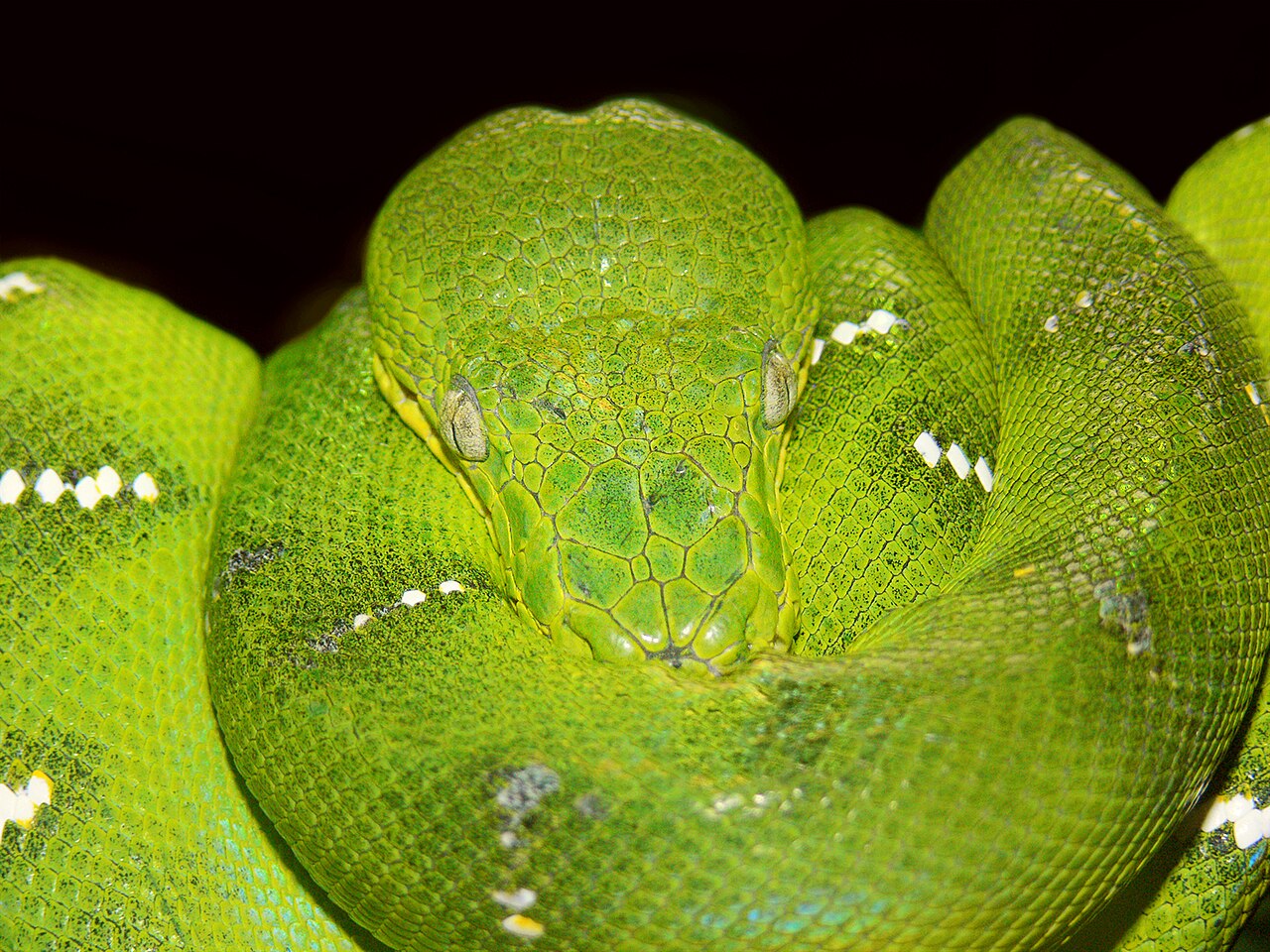
Many adults have pale markings across their backs. Against foliage, green scales and broken light markings create a very different impression from the same animal displayed against a dark background.
Appreciating a forest specialist
An emerald tree boa's appeal goes beyond its color. Its tail, posture, and branch-hugging body all help us picture the forest as a three-dimensional home.
Watching one invites a slower kind of curiosity. Follow the coils with your eyes, find the hidden tail, and notice how much of the animal rests on a single perch. Amazing Nature is often revealed in these quiet details.
Photo credits
Featured image: Corallus caninus.JPG — Jyothis; CC BY-SA 3.0.

Body image 1: Emerald Tree Boa (Corallus caninus) (10595852643).jpg — Bernard DUPONT from FRANCE; CC BY-SA 2.0.

Body image 2: Emerald tree boa444.jpg — Benjamint444; CC BY-SA 3.0.

Photographs resized for web display where available.