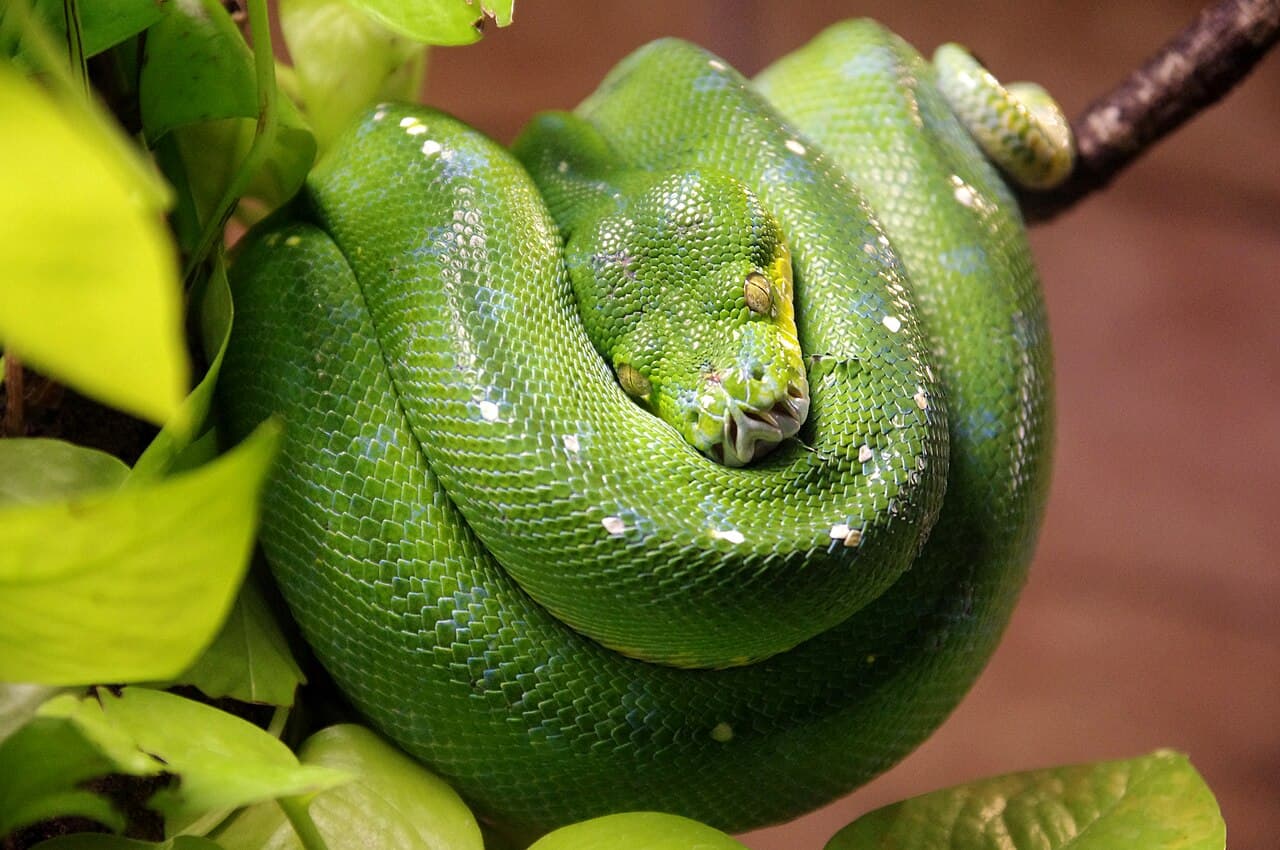
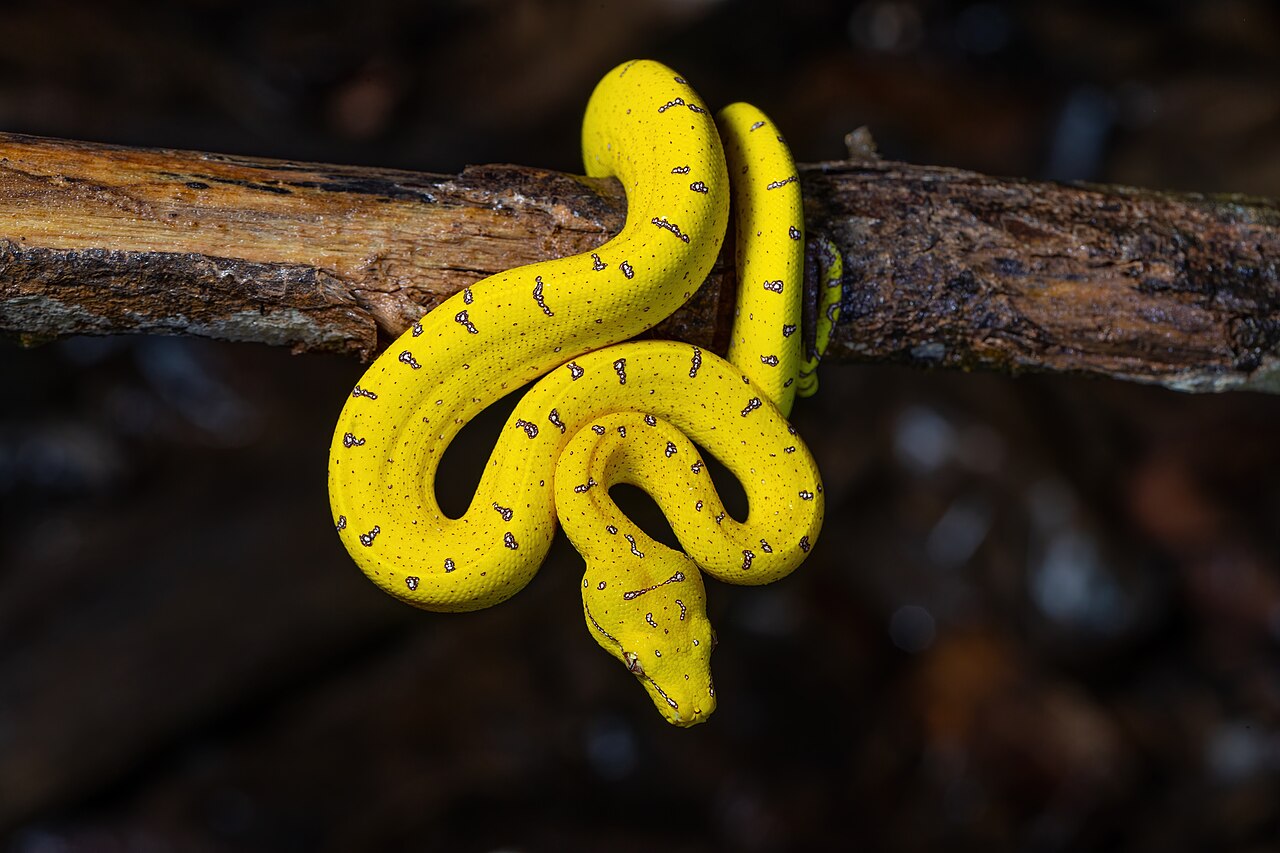
A yellow snake curled around a branch may grow into a brilliant green adult. Green tree pythons can begin life in colors that seem to contradict their own name.
Their changing appearance is one reason these forest snakes are so fascinating to watch.
Growing into the name
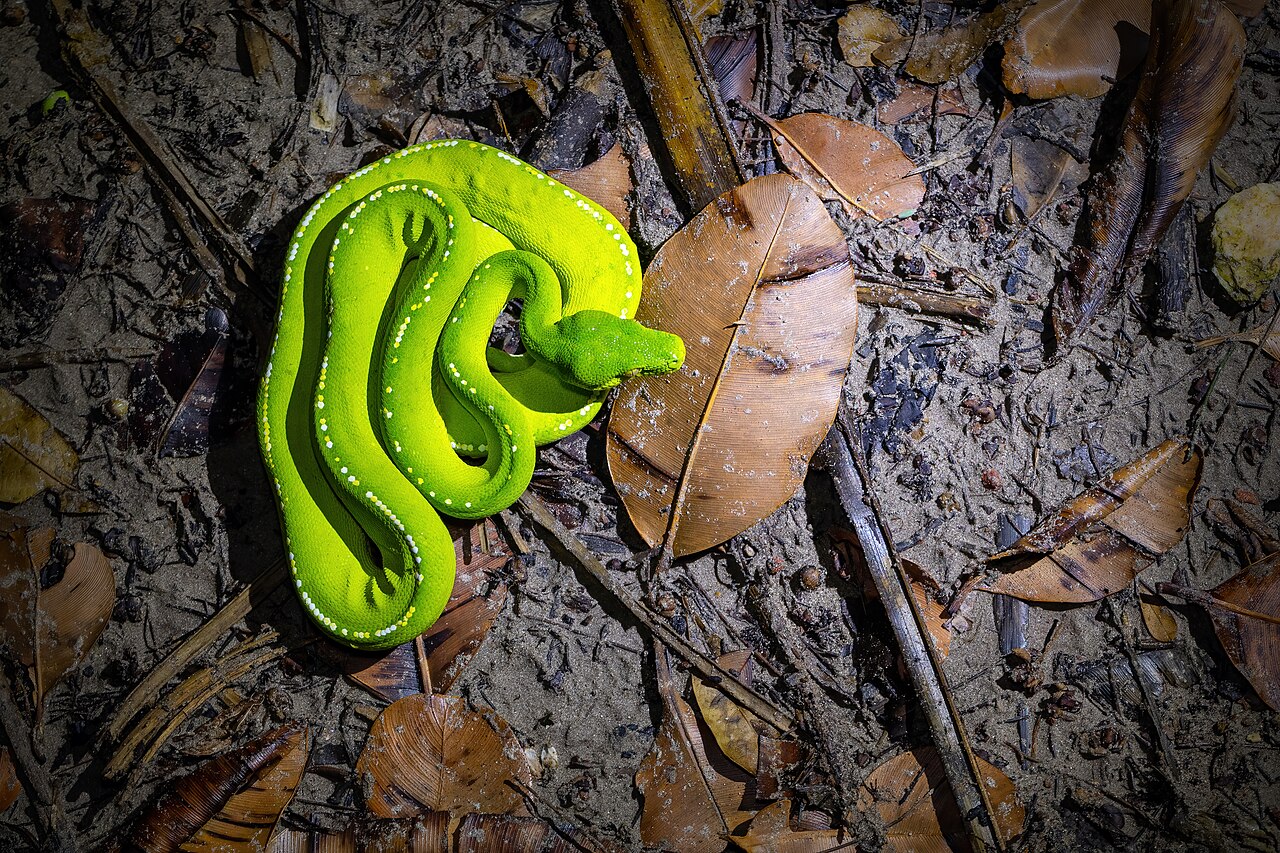
Young green tree pythons can be yellow or red before becoming green as they mature. The Smithsonian's National Zoo describes this change and the species' life among trees.
These pythons are associated with New Guinea and nearby regions, including northeastern Australia. They are nonvenomous constrictors, feeding on animals such as small mammals and reptiles.
A tail that helps hold on
A gripping tail supports movement among branches. At rest, the snake often folds its body into loops over a horizontal perch, leaving its head near the center.
Heat-sensitive pits around the mouth provide another way to detect warm prey. Combined with a secure perch, these senses help make the trees a useful place to hunt.
Similar shapes, different snakes
The green tree python can resemble an emerald tree boa, but pythons and boas belong to different families. A shared tree-dwelling lifestyle helps explain why their resting poses look so similar.
For Amazing Nature readers, that resemblance offers an invitation to look more carefully. Color alone does not tell an animal's whole story. A yellow youngster, a green adult, and a tightly curled tail each reveal a different chapter in the life of this remarkable forest snake.
Photo credits
Featured image: 20130526 Morelia viridis 4900.jpg — Jakub Hałun; CC BY-SA 3.0.

Body image 1: Green Tree Python 0A2A0428.jpg — JJ Harrison; CC BY-SA 3.0.

Body image 2: Green Tree Python juvenile A22I6572.jpg — JJ Harrison; CC BY-SA 3.0.

Photographs resized for web display where available.