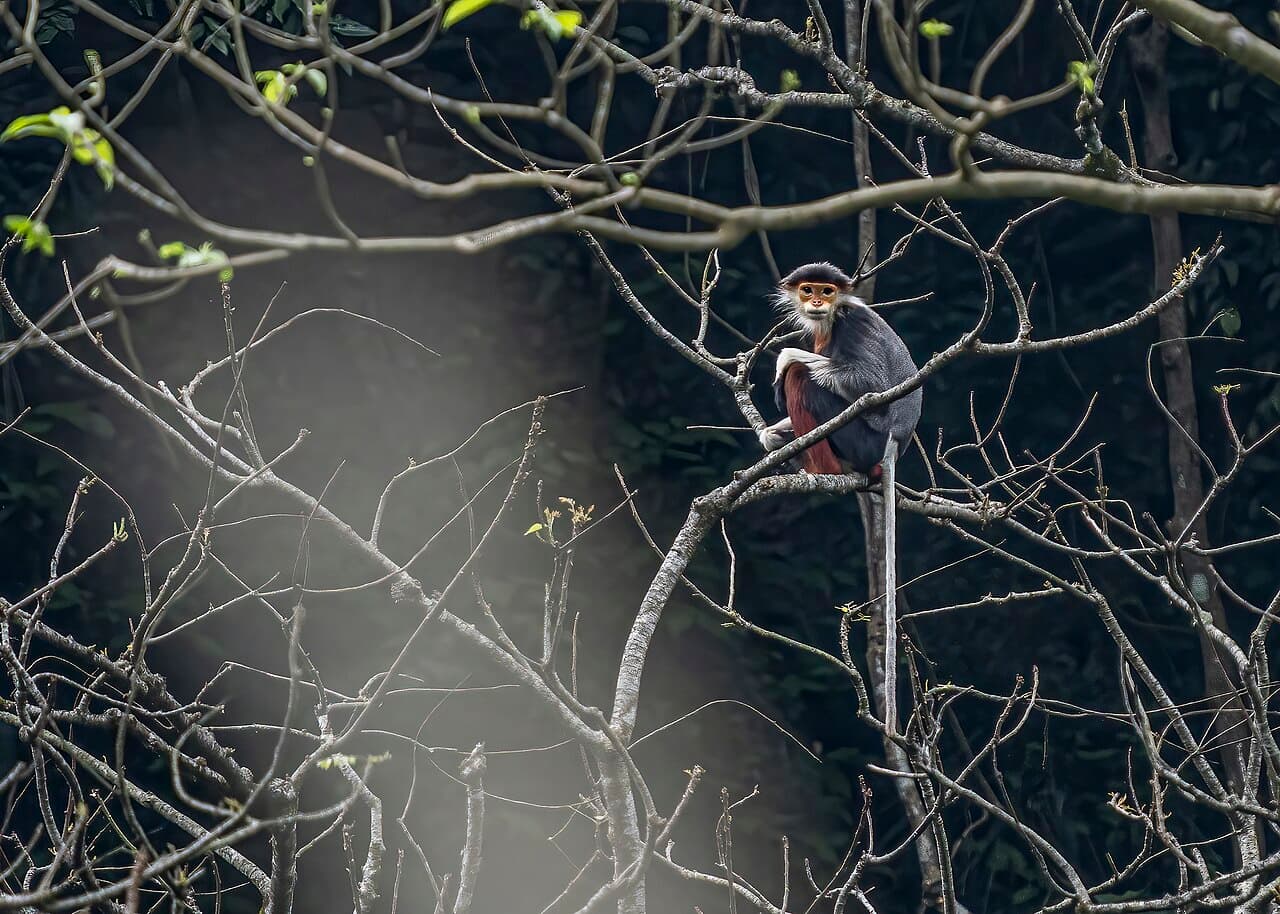
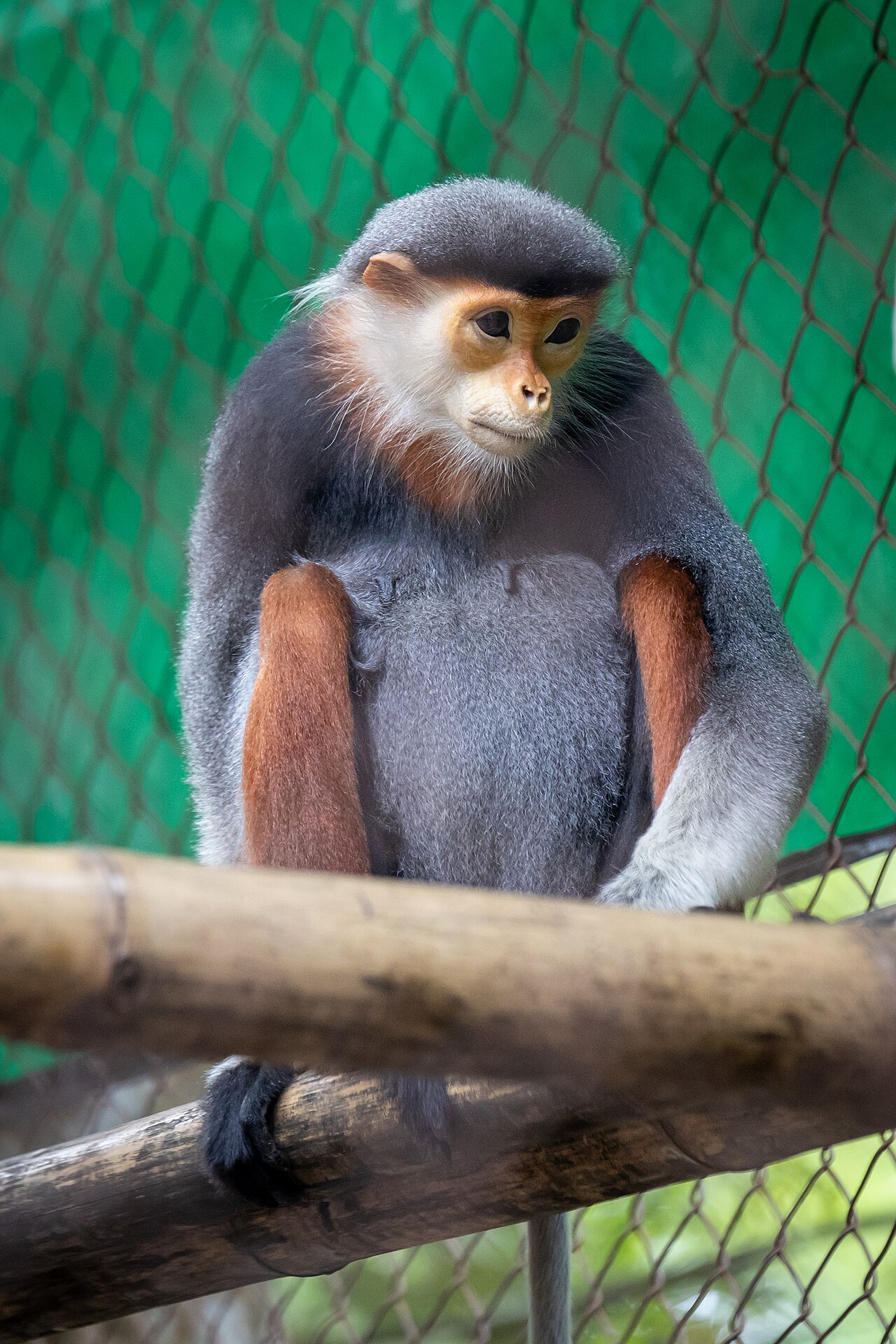
Red lower legs, white forearms, dark hands, and a pale face make the red-shanked douc look almost as if it is dressed in a carefully matched costume. Every color belongs to a living monkey, shaped by its own evolutionary history.
Beauty is a matter of taste, so there is no scientific winner for “the world's most beautiful monkey.” The red-shanked douc hardly needs that title to be extraordinary.
Meet the monkey behind the colors
The red-shanked douc, Pygathrix nemaeus, lives in Vietnam, Laos, and northeastern Cambodia. It is one of three douc species, distinguished in part by the color of the lower legs.
The Endangered Primate Rescue Center describes a gray body, white cheek whiskers and tail, and deep-red lower legs. Males are generally larger than females.
A leafy life above the ground
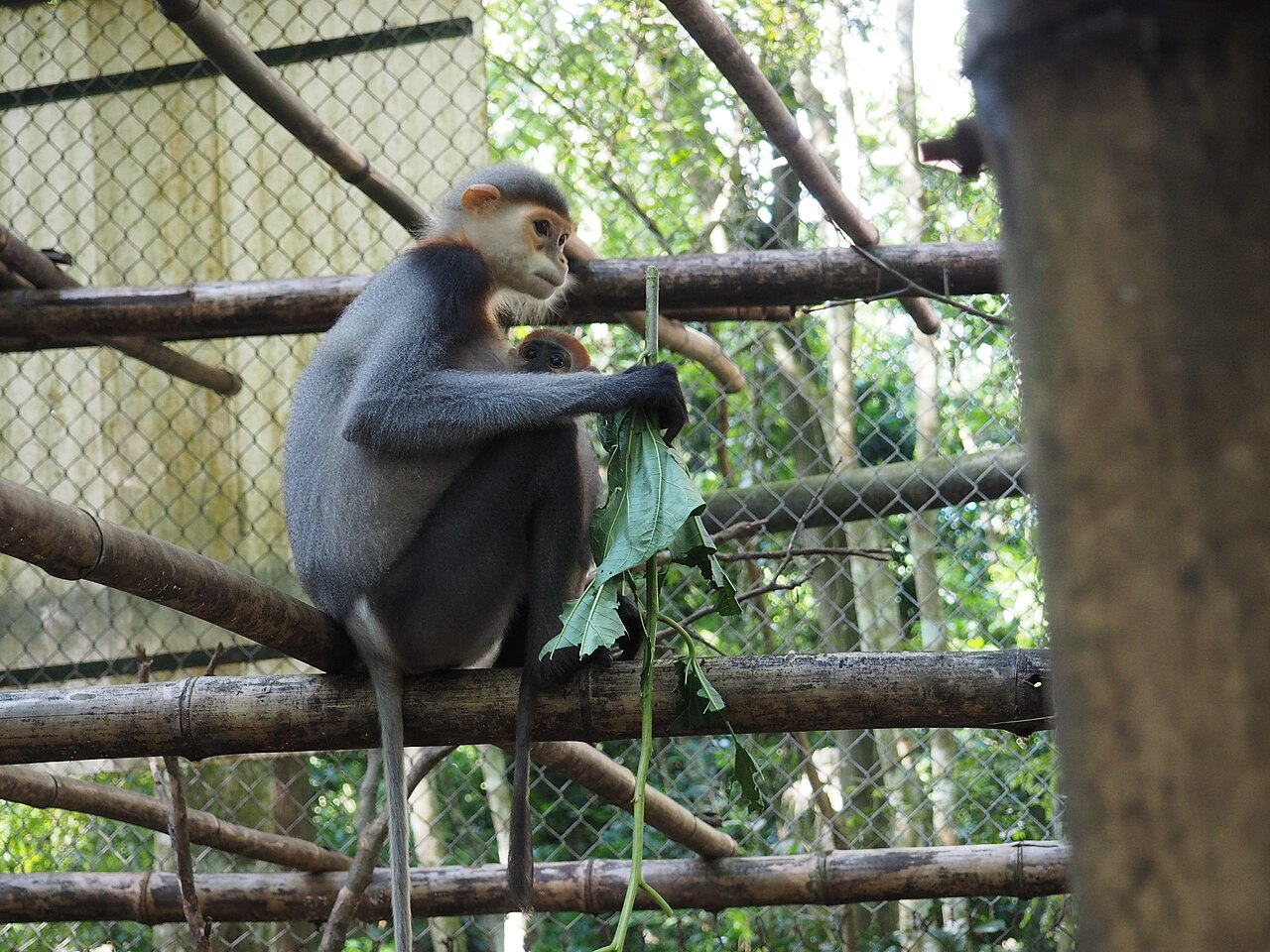
These monkeys are active during the day and spend much of their lives in trees. Leaves are their main food, supplemented by items such as fruit, flowers, buds, and bark.
Leaf eating requires more than picking the nearest green thing. As colobine monkeys, doucs have a specialized digestive system adapted to processing plant material.
The Wisconsin National Primate Research Center describes their anatomy and ecology, including differences among douc species. A fact about one species should not automatically be applied to all three.
Families in a changing canopy
Red-shanked doucs live in social groups. Smaller units may come together into larger gatherings, so a group is not always a fixed set of animals.
A continuous canopy provides both food and routes between feeding places. When forest becomes fragmented, moving through that world becomes more difficult.
More than a colorful photograph
Hunting, illegal wildlife trade, and habitat loss threaten doucs. The Douc Langur Foundation works to draw attention to the pressures facing these Southeast Asian primates.
Protecting forests and reducing capture matter far more than awarding a beauty title. Rescue centers can care for individual animals, but wild populations need secure habitat.
The red-shanked douc's colors may stop us scrolling. Let the next thought be about the forest behind them—and how to keep such a remarkable animal living within it.
Photo credits
Featured image: Red-Shanked duoc in Phong Nha Ke Bang National Park.jpg — James Hunt, CC BY-SA 4.0.

Body image 1: Red-shanked douc langur.jpg — Eprc.asia, CC BY-SA 4.0.

Body image 2: 2024-03-28-Pygathrix nemaeus-3147.jpg — Superbass, CC BY-SA 4.0.

Photographs resized to up to 1,280 pixels wide for web display.