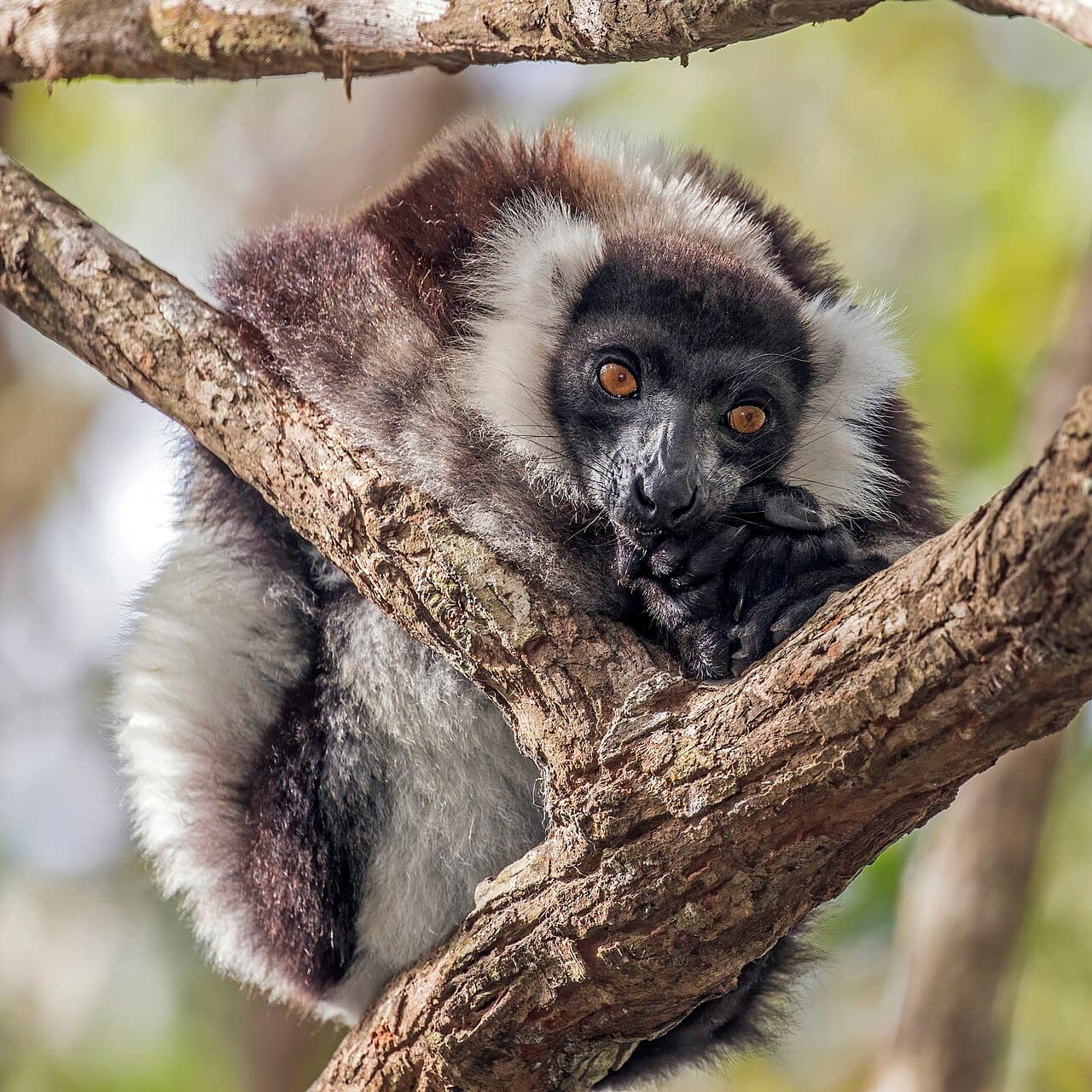
When a black-and-white ruffed lemur pushes its face into a flower for nectar, it can leave with more than a meal. Pollen sticks to its fur and may travel to the next flower. A large, furry primate becomes part of a plant's reproductive story.
The black-and-white ruffed lemur, Varecia variegata, comes from the rainforests of eastern Madagascar. Its bold coat is only the beginning of what makes it remarkable.
A ruff around a bright-eyed face
Thick fur, bright eyes, tufted ears, and a long tail create a striking outline. The distribution of black and white varies, so every animal does not have an identical pattern.
These are lemurs, members of a primate group native to Madagascar. Their forest home contains relationships found nowhere else.
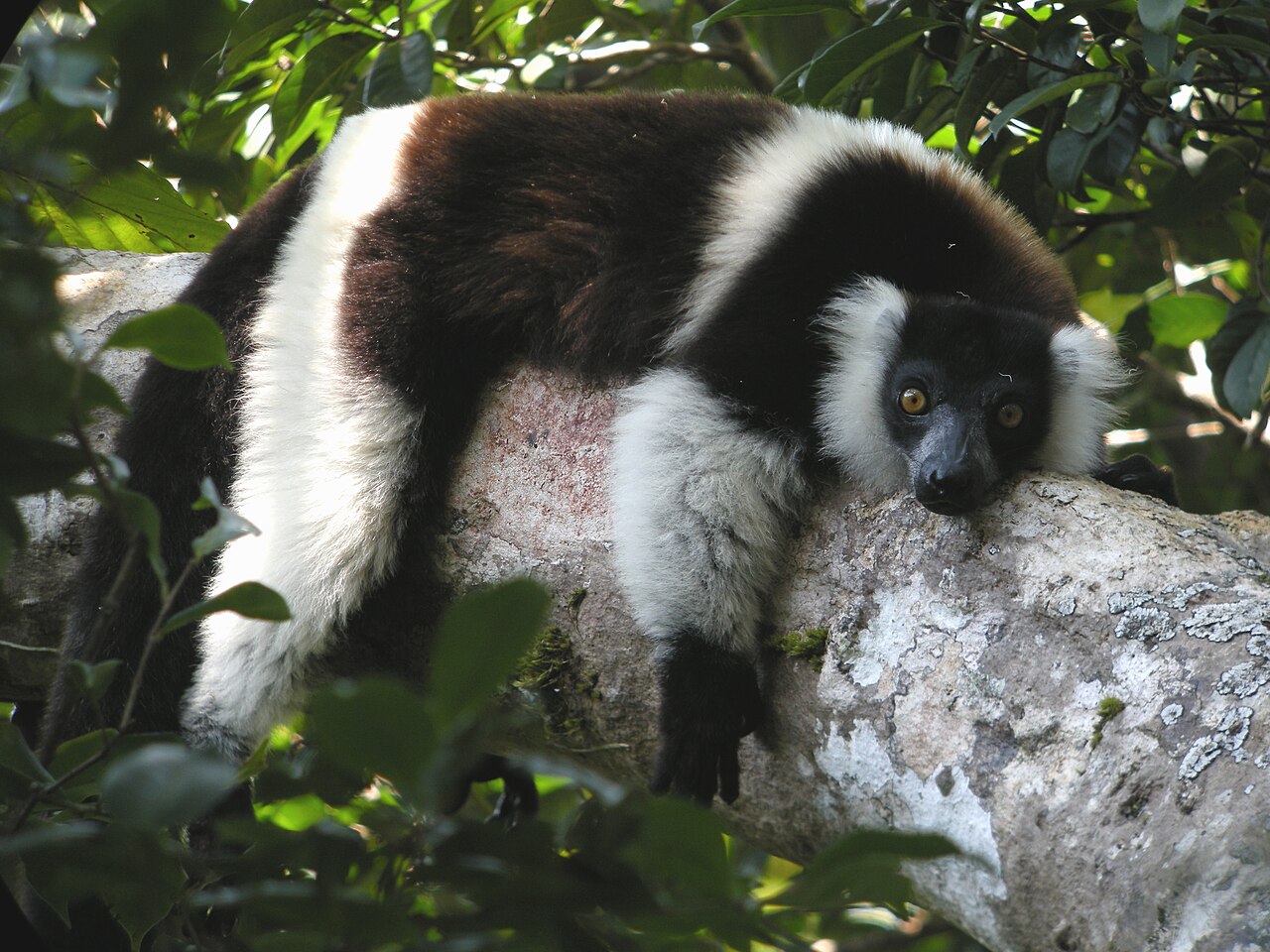
Fruit first, flowers too
The Duke Lemur Center describes a diet dominated by fruit, with nectar and pollen also important when available.
As a lemur reaches into suitable flowers, its muzzle and facial fur collect pollen. Carrying that pollen between flowers can help pollination. This does not mean every flower it visits depends on lemurs, but for certain plants the relationship matters.
A meal can therefore connect one tree to another in a way we would never notice from the ground.
Loud families and sheltered infants
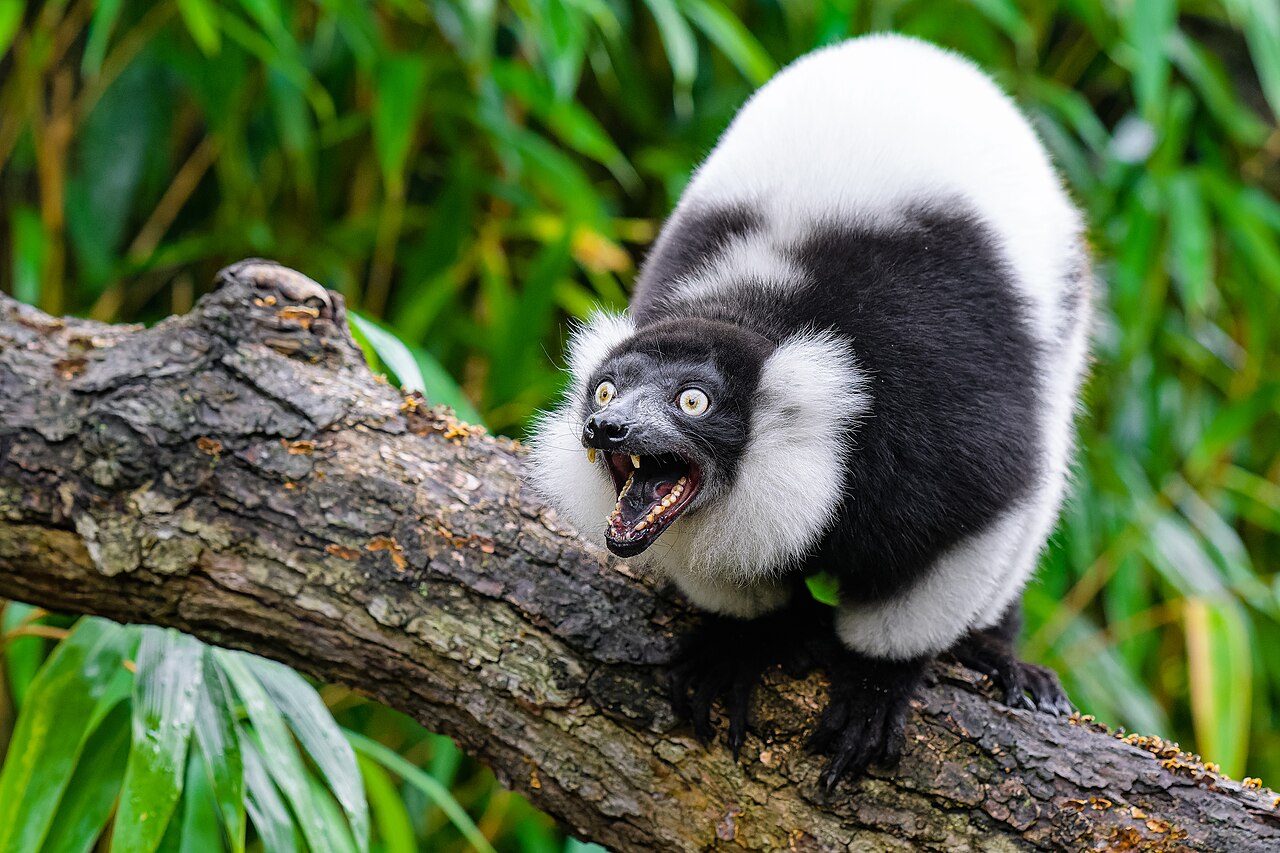
Ruffed lemurs have powerful calls. Group members may join in a chorus that carries through the forest.
Their infant care also differs from the image many people have of baby lemurs clinging constantly to a parent. Mothers make nests and can leave infants there while they forage.
Perth Zoo also describes social grooming and a toothcomb: modified teeth used to help care for the fur.
A rainforest relationship at risk
The black-and-white ruffed lemur is Critically Endangered. Hunting, capture, and forest loss threaten its future.
Losing large fruit trees can remove food as well as change the structure of the habitat. Saving a lemur means preserving the forest relationships that support its life.
Its dramatic coat makes a wonderful portrait. Its pollen-dusted face tells an even better story: animals and plants helping shape each other's world, one flower visit at a time.
Photo credits
Featured image: Black and white ruffed lemur (Varecia variegata variegata).jpg — Charles J. Sharp, CC BY-SA 4.0.

Body image 1: Black-and-white ruffed lemur resting on a tree limb in Madagascar.jpg — Frank Vassen, CC BY 2.0.

Body image 2: Black and white ruffed lemur - 52673767993.jpg — Mathias Appel, CC0.

Photographs resized to up to 1,280 pixels wide for web display.