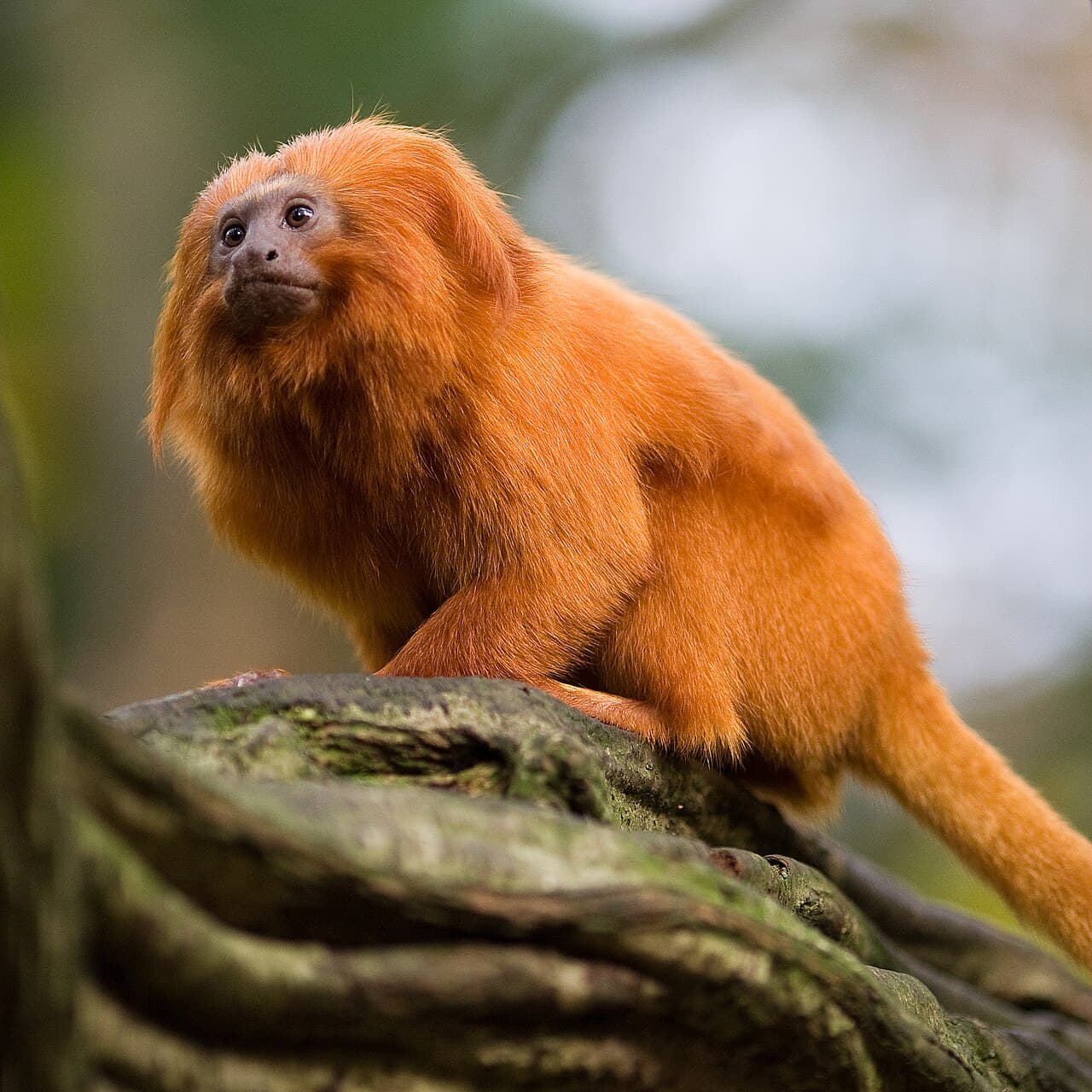
A golden lion tamarin has a mane fit for a much larger animal, yet this bright little monkey weighs well under a kilogram. Its fiery coat makes it instantly memorable. Its recovery story shows what long-term conservation can achieve.
The golden lion tamarin, Leontopithecus rosalia, lives in Brazil's Atlantic Forest, in the state of Rio de Janeiro. That small corner of the world is the species' only natural home.
Why the lion name?
Long hair frames its dark face and covers the ears, creating the mane that inspired its common name. The rest of the coat is reddish gold.
It is a monkey, with narrow hands and feet and a long tail. The Smithsonian's National Zoo describes adults weighing roughly 482–680 grams.
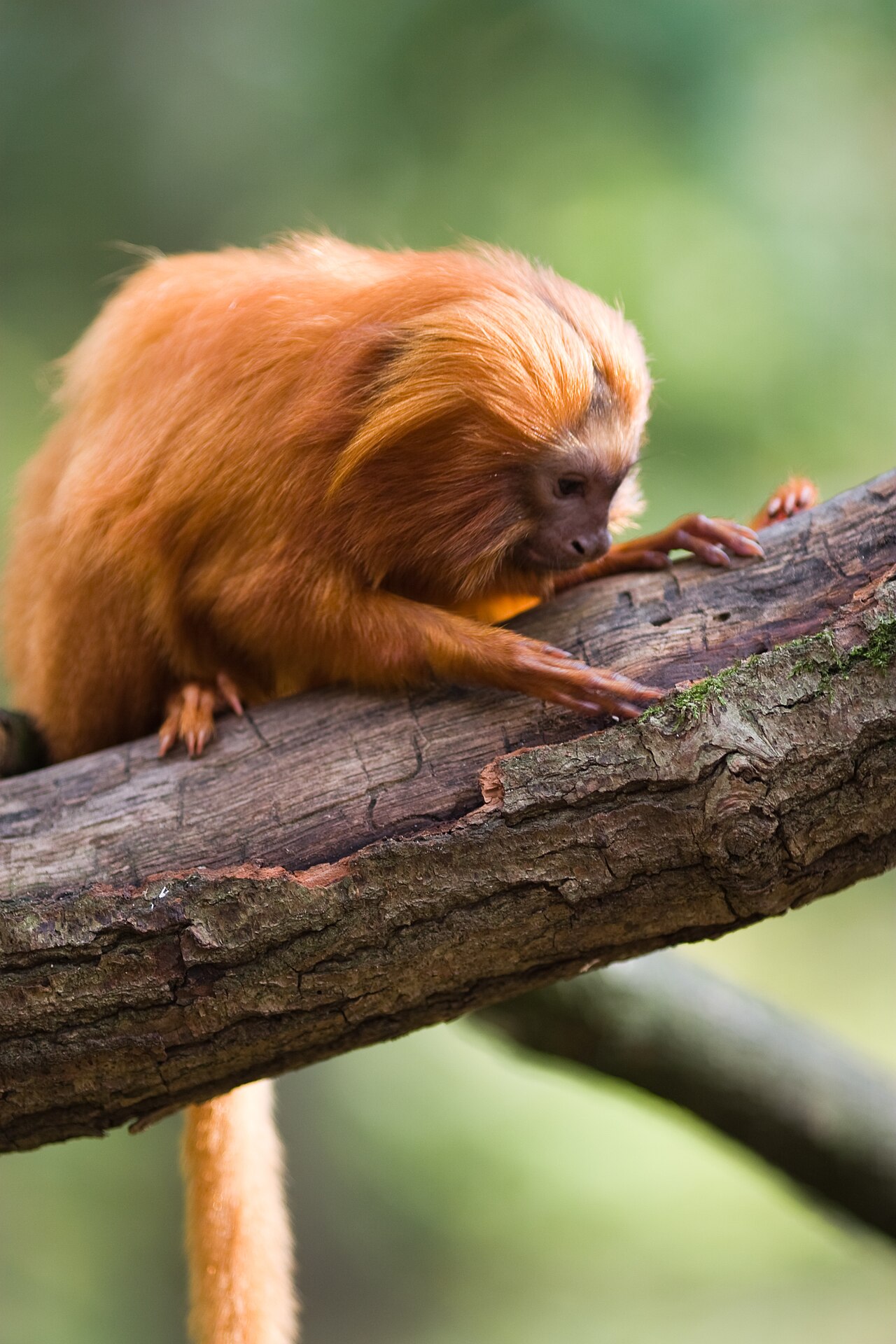
Fingers that search hidden spaces
Golden lion tamarins eat fruit and small animals. Their long, slender fingers probe cracks in bark and spaces among plants, searching for food that a quick glance would miss.
Bromeliads and other plants growing on trees help make the forest a three-dimensional feeding ground. A tree can hold many tiny hiding places.
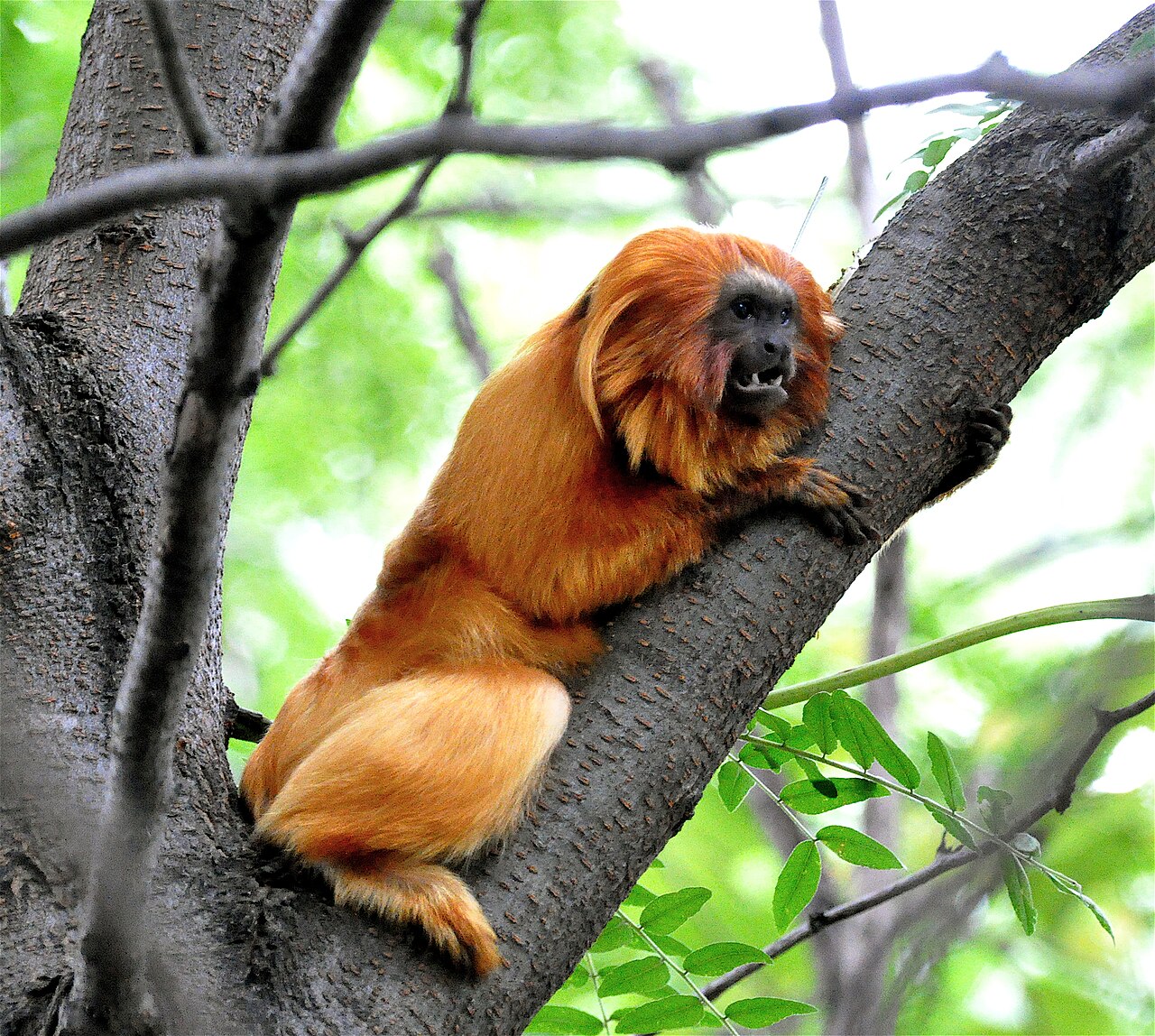
At night, tamarins sleep in tree holes. They also live in family groups, where several members help carry and care for infants. Twins are usual, making that shared effort especially useful.
Recovery needs more than more monkeys
In the 1970s, the wild population had fallen to only a few hundred. Breeding, reintroduction, research, and habitat work helped bring the species back from that low point.
Save the Golden Lion Tamarin reports a 2023 estimate of about 4,800 animals after earlier losses to yellow fever. That dated estimate is a snapshot, not a live count.
Connecting the remaining forest
The species remains Endangered. Roads, pasture, and development divide forest patches, making it difficult for monkeys to move between them.
Conservation partners restore wooded corridors and monitor populations. Vaccination against yellow fever is another part of the effort.
A golden lion tamarin is more than a beautiful orange face. Its future shows why wildlife recovery must include the connections between habitats. A growing population still needs a forest large enough—and joined enough—to support it.
Photo credits
Featured image: Golden lion tamarin portrait 2.jpg — Jeroen Kransen, CC BY-SA 2.0.

Body image 1: Golden lion tamarin climbing.jpg — Kevin Burkett, CC BY-SA 2.0.

Body image 2: Golden lion tamarin forage.jpg — Jeroen Kransen, CC BY-SA 2.0.

Photographs resized to up to 1,280 pixels wide for web display.