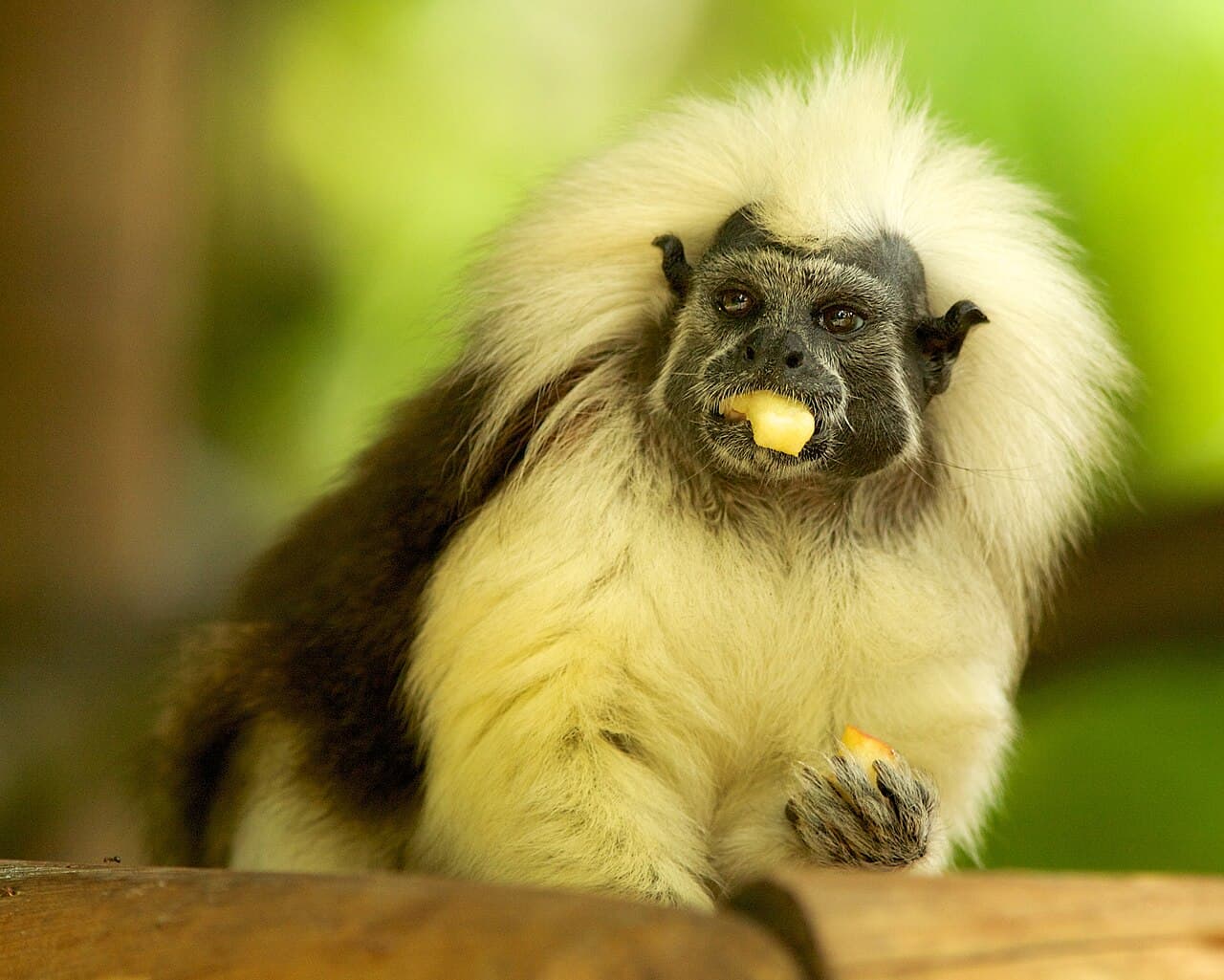
A cotton-top tamarin can raise its brilliant white crest when alert, making a tiny monkey look more imposing. That sweeping hair is unforgettable, but the animal behind it has an equally remarkable family life.
The cotton-top tamarin, Saguinus oedipus, is native only to forests in northern Colombia. Its future depends on keeping those forests alive and connected.
A crest, claws, and a balancing tail
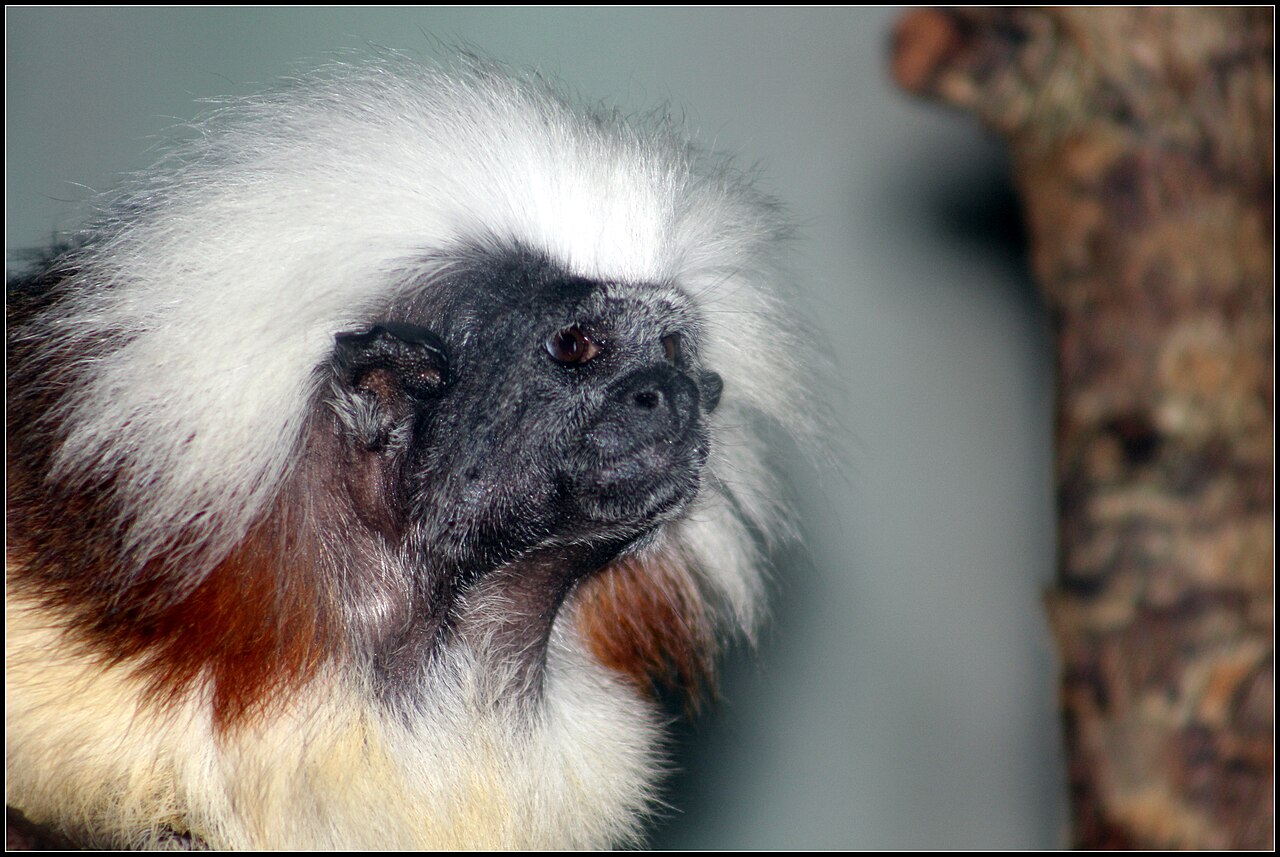
The white hair runs from the forehead toward the back of the neck. Beneath it is a small, dark face and a body with brown, gray, and pale fur.
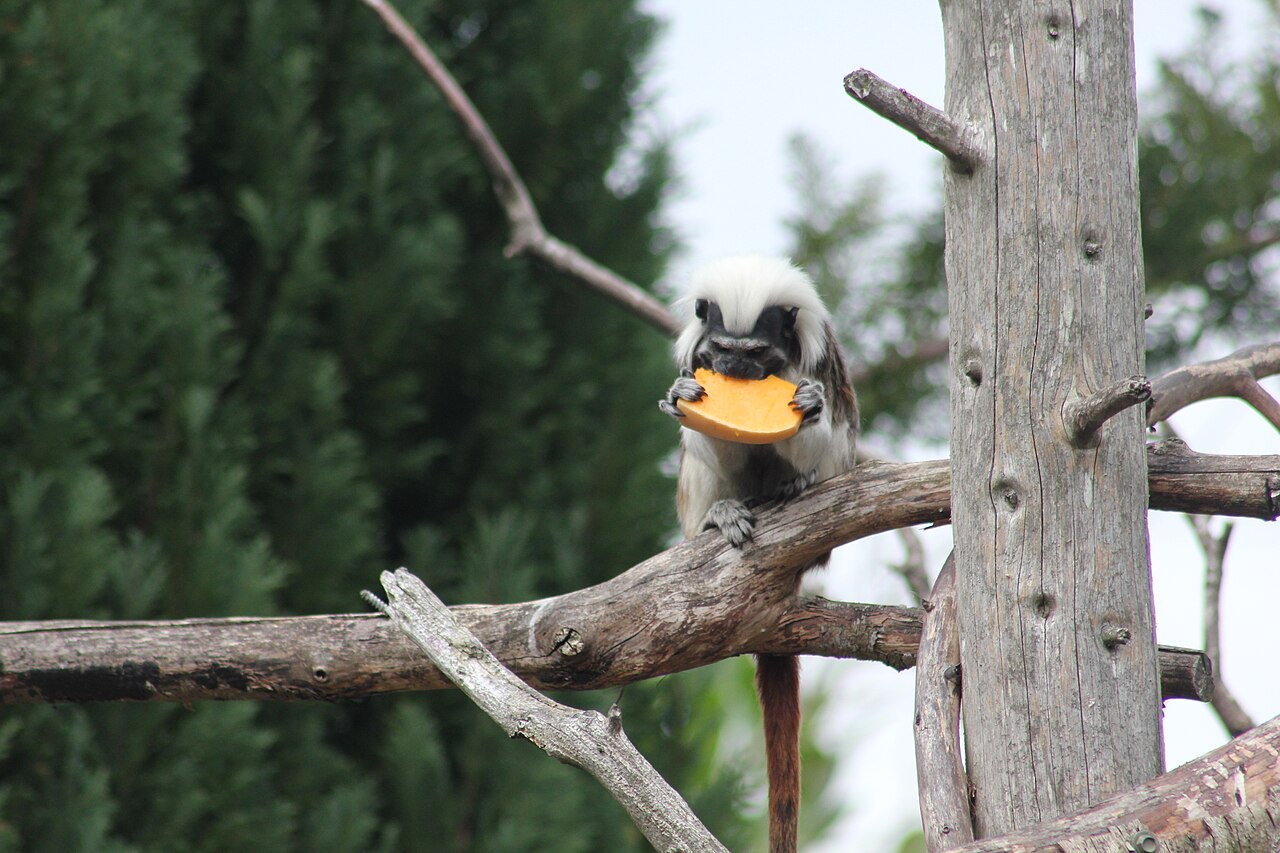
The Smithsonian's National Zoo describes adults weighing around half a kilogram. Their long tails help with balance, while clawlike nails assist movement along branches.
Those tails do not grip branches like an extra hand. They are useful without being prehensile.
Raising young is a group effort
Cotton-top tamarins live in social groups. Young animals benefit from care and experience shared by other group members, rather than learning every skill alone.
Twins are common. For a small parent, raising two infants is a major investment, making family cooperation an important part of the story.
Their calls also help hold social life together. Whistles, chirps, and other sounds carry information through a habitat where leaves often block a clear view.
A forest menu worth studying
Fruit, insects, and plant gums are among their foods. Proyecto Tití's field research documents what wild tamarins eat and how they use their habitat.
That knowledge has practical value. Restoring trees is more effective when researchers understand which plants provide food and which areas groups actually need.
Protecting Colombia's white-crested monkey
Proyecto Tití identifies the species as Critically Endangered. Forest clearing for agriculture, development, mining, and logging, along with illegal pet capture, puts pressure on wild populations.
Its conservation work combines research, forest protection, education, and community projects. Local families are part of the solution because the monkeys' habitat is also a human landscape.
A cotton-top's crest may bring us to a photograph. Its story asks us to look beyond the hair, toward the living Colombian forest that supports every leap and every new generation.
Photo credits
Featured image: Cotton top tamarin (13945323781).jpg — Chi King, CC BY 2.0.

Body image 1: Chester tamarin eating.jpg — Echo Severs, CC BY-SA 4.0.

Body image 2: COTTON-TOP TAMARIN (7423227558).jpg — cuatrok77, CC BY 2.0.

Photographs resized to up to 1,280 pixels wide for web display.