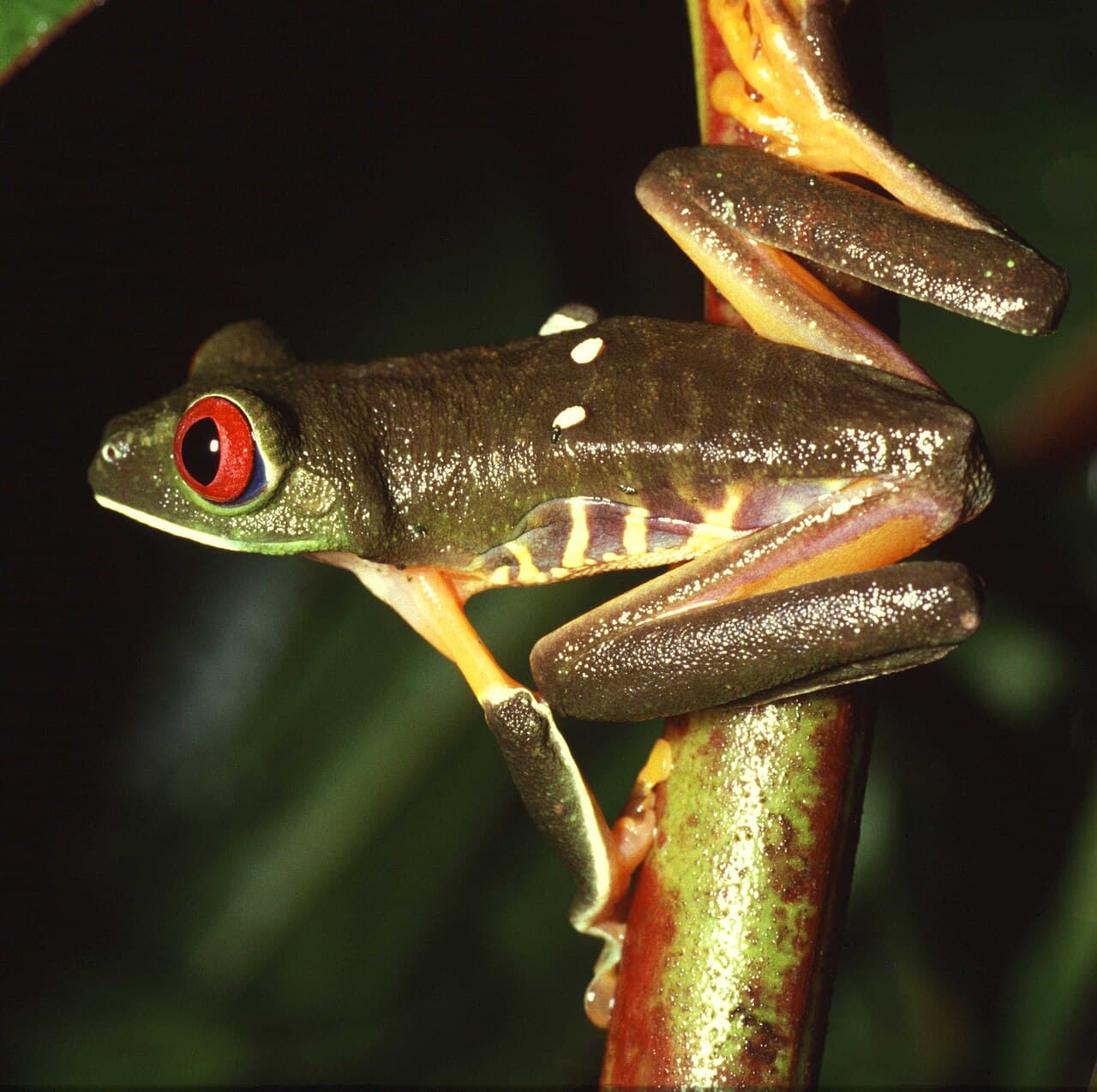
A red-eyed tree frog can respond to danger before it has even left its egg. Developing embryos can hatch early when predators disturb their clutch.
That hidden ability is every bit as remarkable as the adult's famous scarlet eyes.
A colorful forest climber
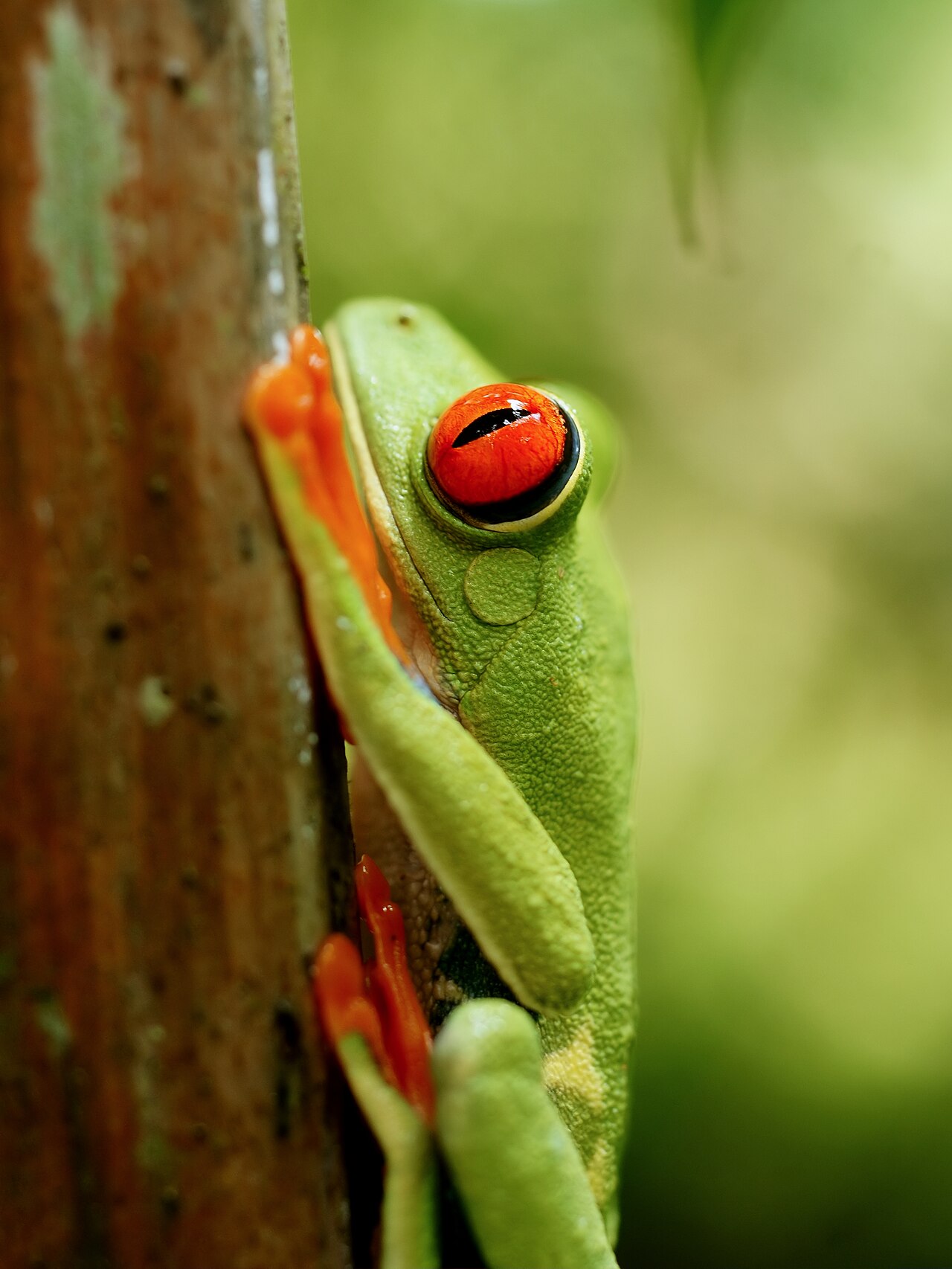
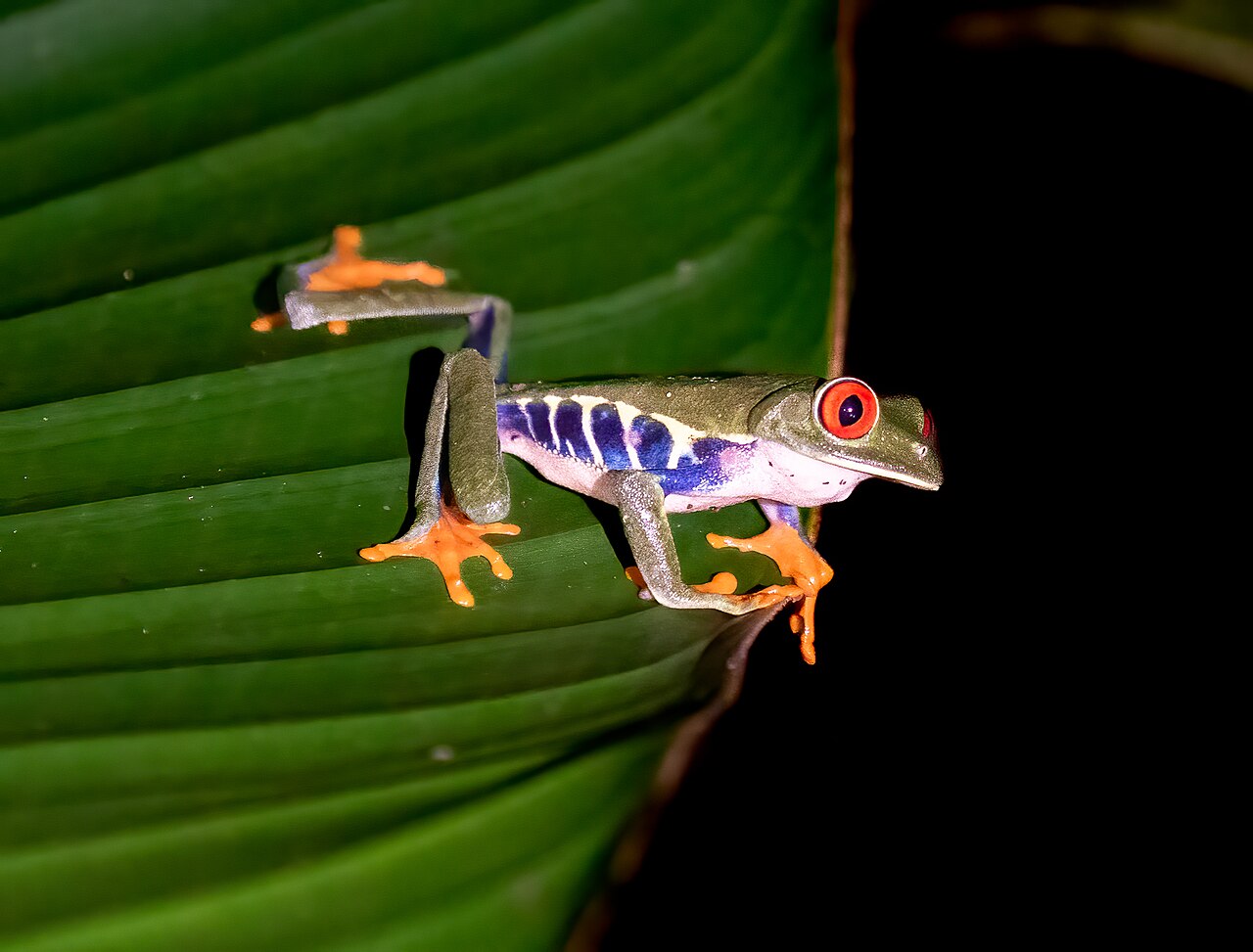
The red-eyed tree frog, Agalychnis callidryas, comes from Central America. Adults combine green backs with vivid eyes, colorful flanks, and orange feet.
Rounded toe pads help them grip vegetation. These nocturnal frogs can keep much of their bright coloring tucked away while resting.
The Smithsonian's National Zoo introduces the species and its tree-dwelling habits.
Listening to danger through an egg
Research by Boston University's Warkentin Lab has explored how embryos respond to disturbances.
They can use vibrations associated with predator attacks as cues to hatch early. The response is not simply a reaction to every movement: harmless disturbances such as heavy rain usually do not cause the same escape behavior.
For an embryo, leaving the egg changes one set of risks for another. This makes hatching an active part of survival, rather than only a fixed point on a timetable.
Looking beyond the famous eyes
Photographs naturally draw us toward the adult's colors. The egg stage reveals another side of the same animal: a small developing life responding to its surroundings.
At Amazing Nature, the red-eyed tree frog reminds us that extraordinary behavior can be hidden inside an ordinary-looking cluster of eggs. The wonder begins long before the bright-eyed frog climbs its first branch.
Photo credits
Featured image: Agalychnis callidryas.jpg — Christian R. Linder; CC BY-SA 3.0.

Body image 1: Agalychnis callidryas (eye detail).jpg — Hans Hillewaert; CC BY-SA 4.0.

Body image 2: Red-eyed tree frog (03265).jpg — Rhododendrites; CC BY-SA 4.0.

Photographs resized for web display where available.