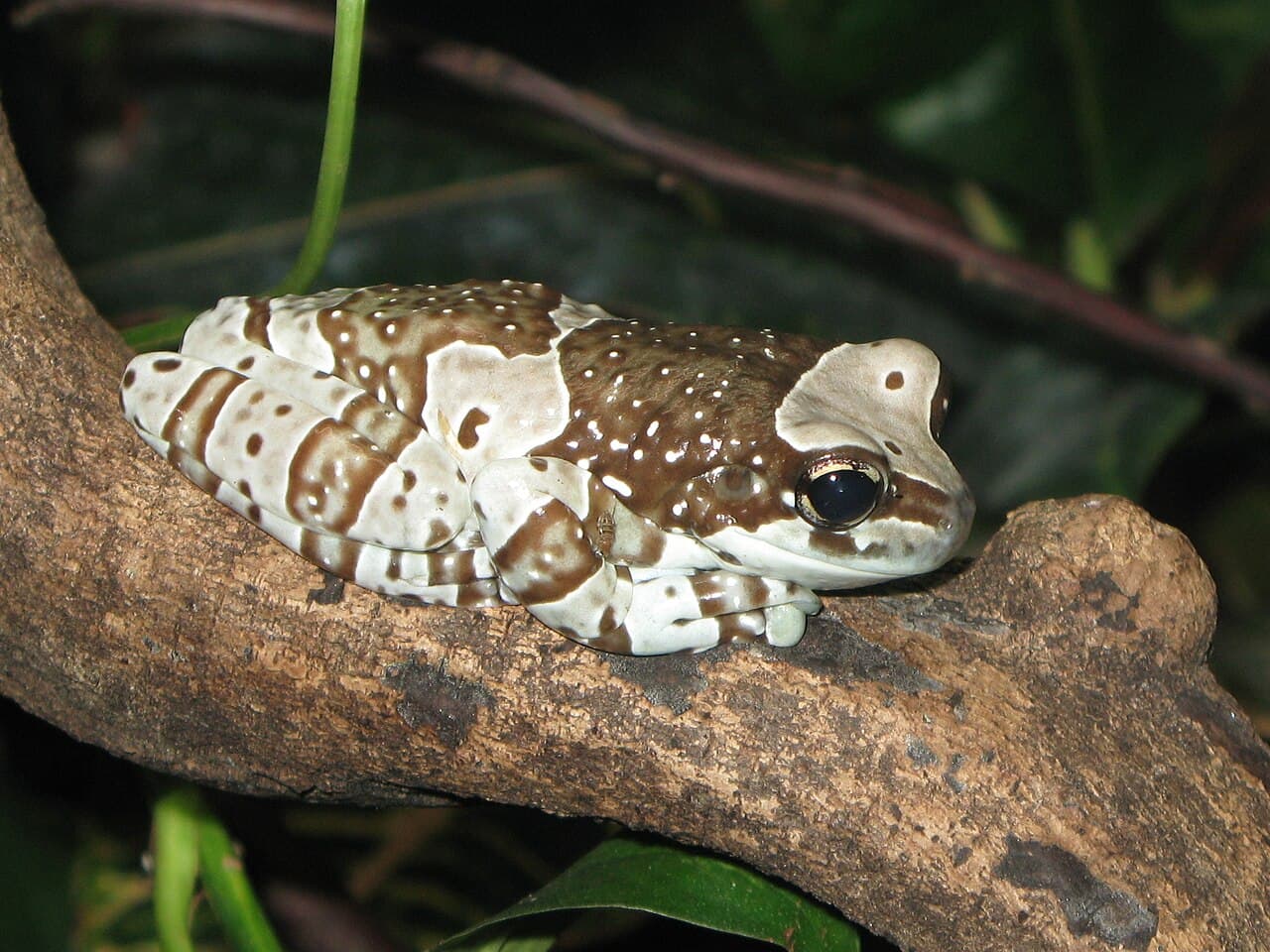
The Amazon milk frog gets its name from a milky-looking skin secretion. It does not produce milk to feed its young.
That surprising name belongs to a beautifully patterned frog adapted to life in the trees.
Where the name comes from
The Amazon milk frog, Trachycephalus resinifictrix, can release a sticky, pale secretion when threatened. The secretion is associated with defense.
The Smithsonian's National Zoo explains the name and introduces this rainforest amphibian.
Its pale and dark markings make it instantly memorable. Color and contrast can change as individuals grow, so youngsters and adults may not look exactly alike.
A climber with gripping toes
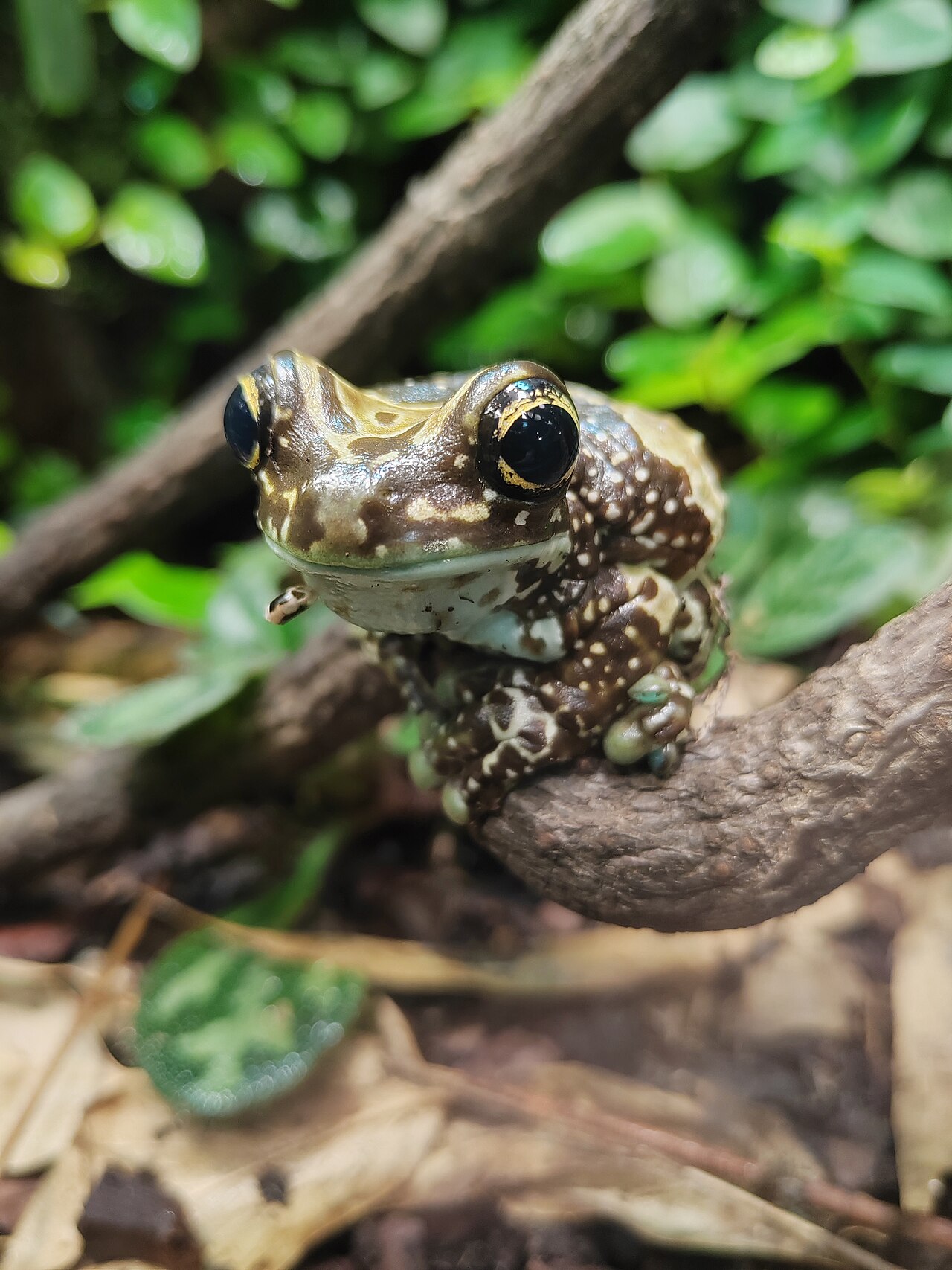
Amazon milk frogs live in South American rainforests. Their expanded toe pads help them hold onto vegetation, making branches and leaves part of their everyday world.
They feed on small invertebrates. A frog sitting quietly on a perch is an animal waiting, resting, or watching within a busy forest community.
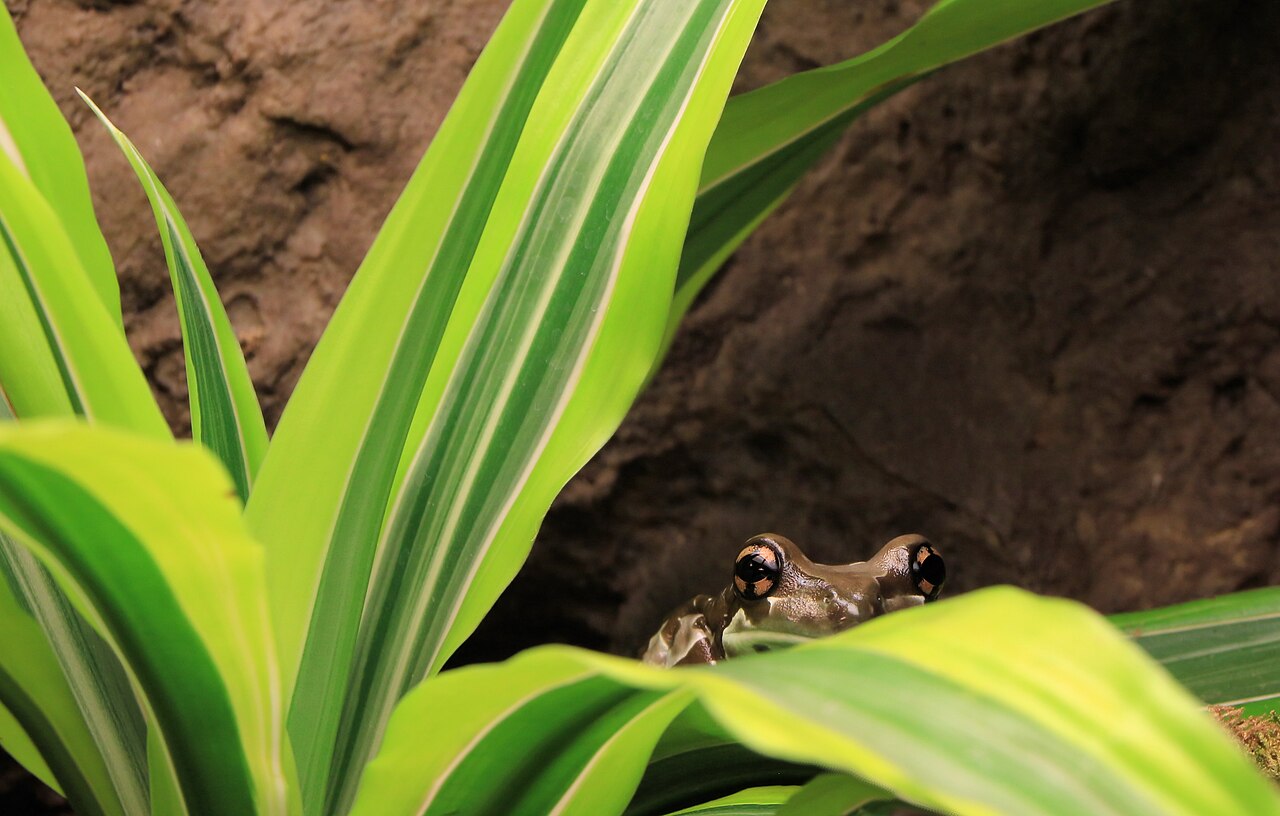
The photographs here show the species in planted zoo enclosures, where its markings and climbing posture are easier to observe.
Seeing more than a curious name
An unusual common name can be a useful doorway into an animal's story. It becomes more rewarding when we ask what the feature actually does.
For Amazing Nature readers, the Amazon milk frog combines several small surprises: a defensive secretion, gripping toes, and a pattern that looks different from one angle to the next.
Its beauty gives us a reason to pause. Its biology gives us a reason to keep learning.
Photo credits
Featured image: Phrynohyas resinifictrix Warsaw Zoo 02.jpg — Crusier; CC BY 3.0.

Body image 1: Milk Frog (Trachycephalus resinifictrix).jpg — Borealex; CC0.

Body image 2: Amazon Milk Frog Trachycephalus resinifictrix 3488.jpg — Paul Harrison; CC BY-SA 4.0.

Photographs resized for web display where available.