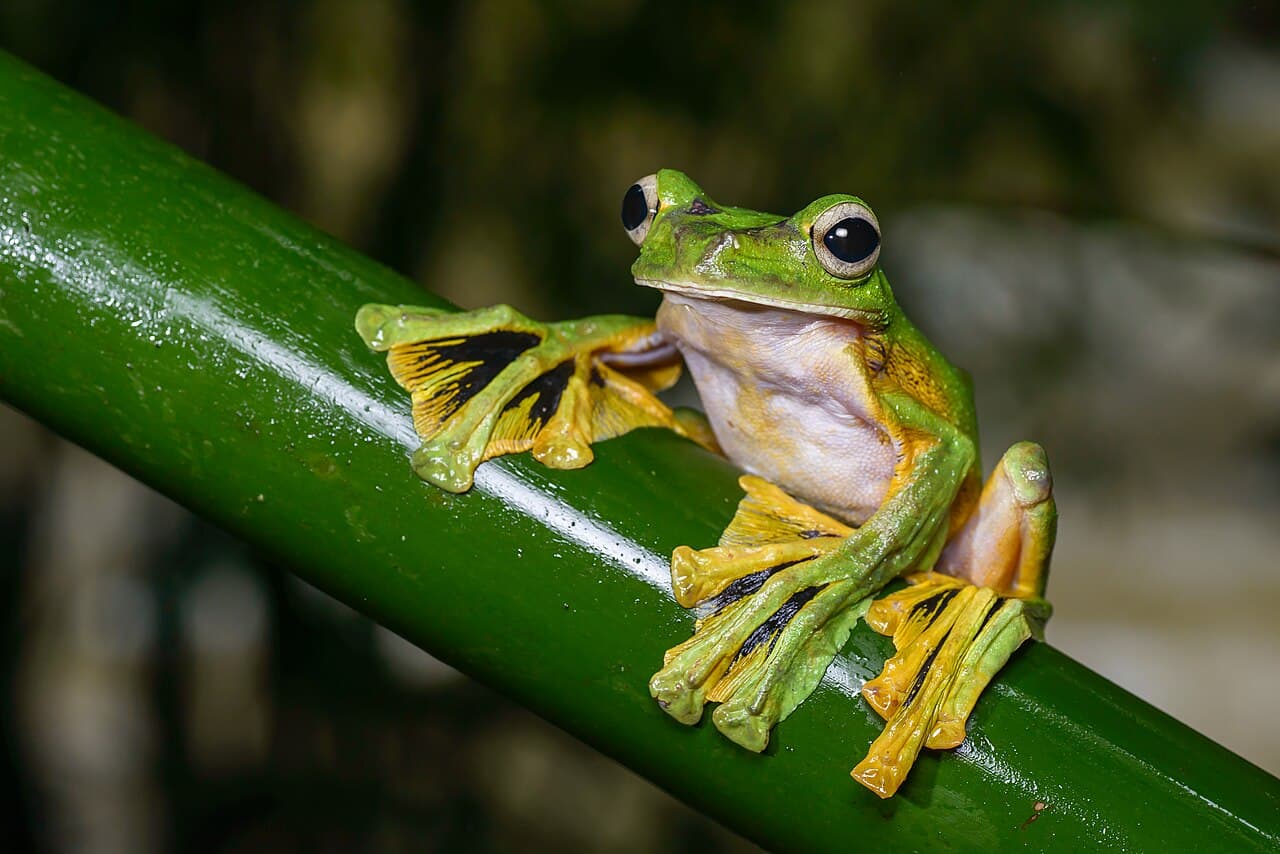
Wallace's flying frog can spread its limbs and glide down from a high perch. The broad webbing between its toes helps turn a leap into something far more controlled.
Its feet are remarkable even when the animal is sitting still.
A frog with a larger surface area
Wallace's flying frog, Rhacophorus nigropalmatus, inhabits Southeast Asian rainforests, including parts of Malaysia and Borneo.
When its limbs and toes spread, extensive webbing increases its surface area. This helps it move through the air during a descending glide. It does not flap its feet to sustain flight like a bird.
Animal Diversity Web describes these gliding structures.
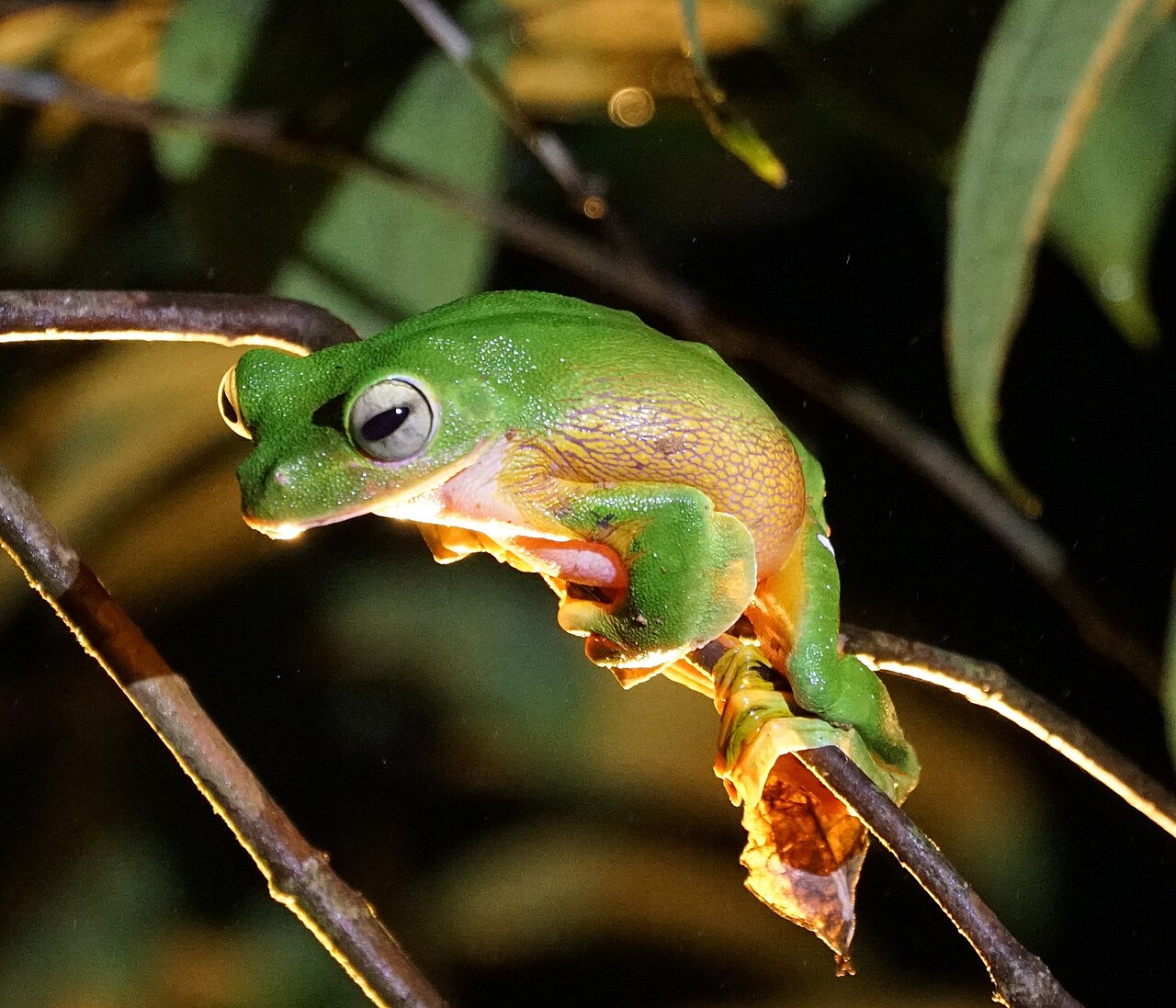
Bright colors and broad feet
Adults have green backs and pale undersides, with striking dark-and-yellow webbing. Their toe pads also help them cling to vegetation after landing.
A study involving frogs at Vienna Zoo describes these features and their breeding behavior. Females place eggs in protective foam nests on vegetation above forest pools.
That arrangement connects the trees with the water needed by the developing young.
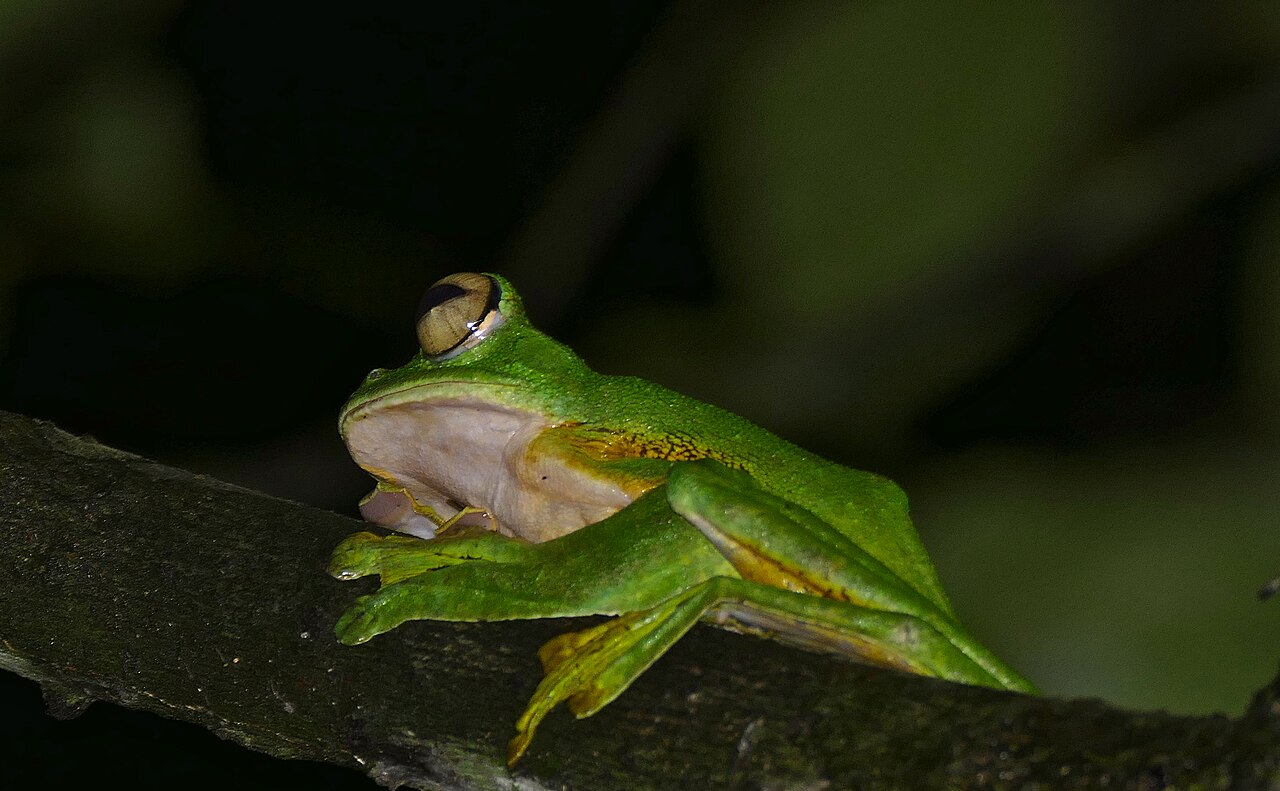
More than a name about flight
The photos here show resting frogs. They reveal the body and feet behind the gliding ability without pretending to capture the animal in midair.
For Amazing Nature readers, Wallace's flying frog offers a new way to imagine a rainforest. A branch can be a resting place, a launch point, or a site above a breeding pool. One animal brings all three parts of that world together.
Photo credits
Featured image: Rhacophorus nigropalmatus.jpg — Rushenb; CC BY-SA 4.0.

Body image 1: Rhacophorus nigropalmatus 227261158.jpg — Tim; CC BY 4.0.

Body image 2: Wallace's Flying Frog (Rhacophorus nigropalmatus) (22928752144).jpg — Bernard DUPONT from FRANCE; CC BY-SA 2.0.

Photographs resized for web display where available.