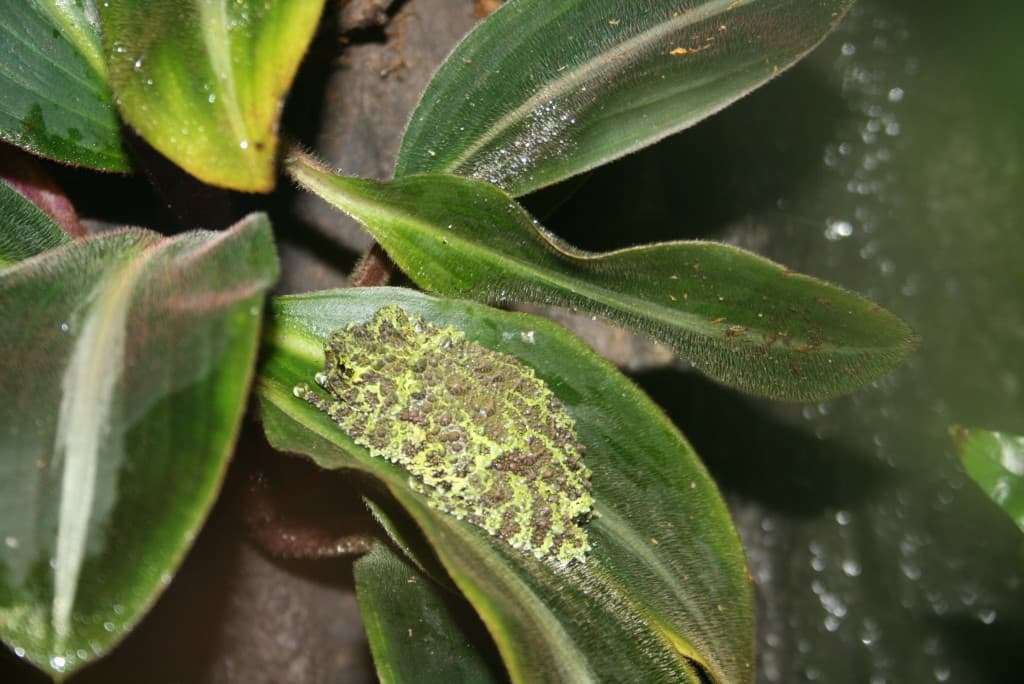
A Vietnamese mossy frog can look so much like moss that its eyes become the easiest clue to its identity. Green and dark patches cover a body textured with small bumps.
The result is a disguise that seems to borrow the surface of the surrounding forest.
Camouflage you can almost feel
The Vietnamese mossy frog, Theloderma corticale, has rough, uneven skin that helps break up its outline. Color and texture work together: it resembles a patch of moss rather than a smoothly shaped frog.
The Smithsonian's National Zoo describes this distinctive appearance and the animal's habits.
Life around water and stone
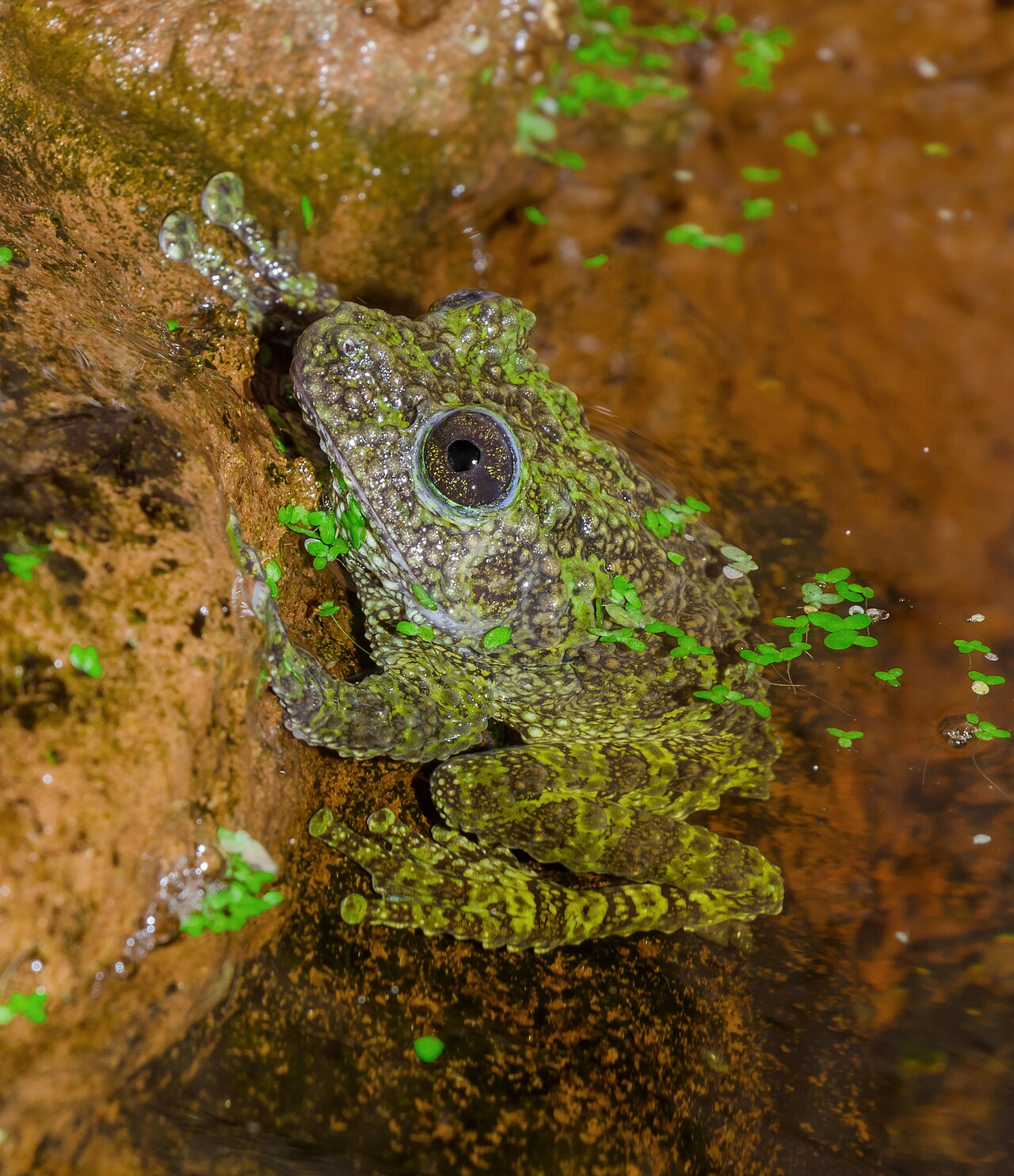
These frogs are associated with forest habitats in northern Vietnam, including rocky, water-filled places. They are mainly active at night and feed on insects.
Rounded toe pads help them cling to surfaces. In water, a frog can remain partly hidden with its eyes near the surface.
Its young have a different start. Eggs placed above water hatch into tadpoles that drop into the water below.
Keeping the disguise's home intact
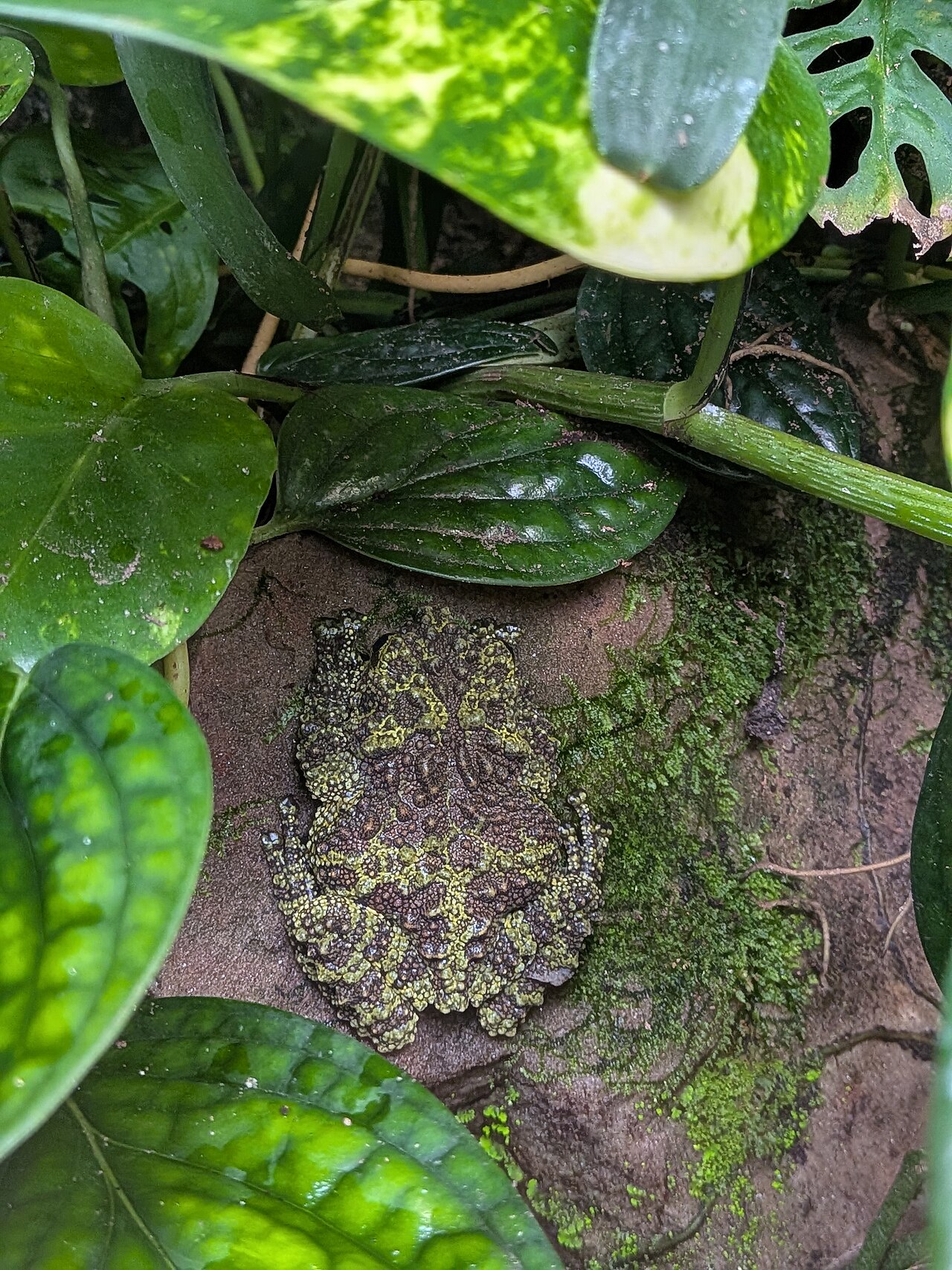
Habitat loss and collection for the pet trade are concerns for this unusual amphibian. Protecting forest and the water within it matters as much as protecting the individual frog.
For Amazing Nature readers, the mossy frog offers a playful challenge: can you trace its whole outline before looking at the caption?
That small act of attention makes its adaptation easier to appreciate. A bumpy green body becomes a beautiful example of how closely an animal can resemble its surroundings.
Photo credits
Featured image: Theloderma corticale.jpg — Jean-Etienne Poirrier; CC BY-SA 2.0.

Body image 1: Theloderma corticale - Karlsruhe Zoo 01.jpg — H. Zell; CC BY-SA 3.0.

Body image 2: Theloderma corticale Beauval.jpg — Pharma; CC0.

Photographs resized for web display where available.