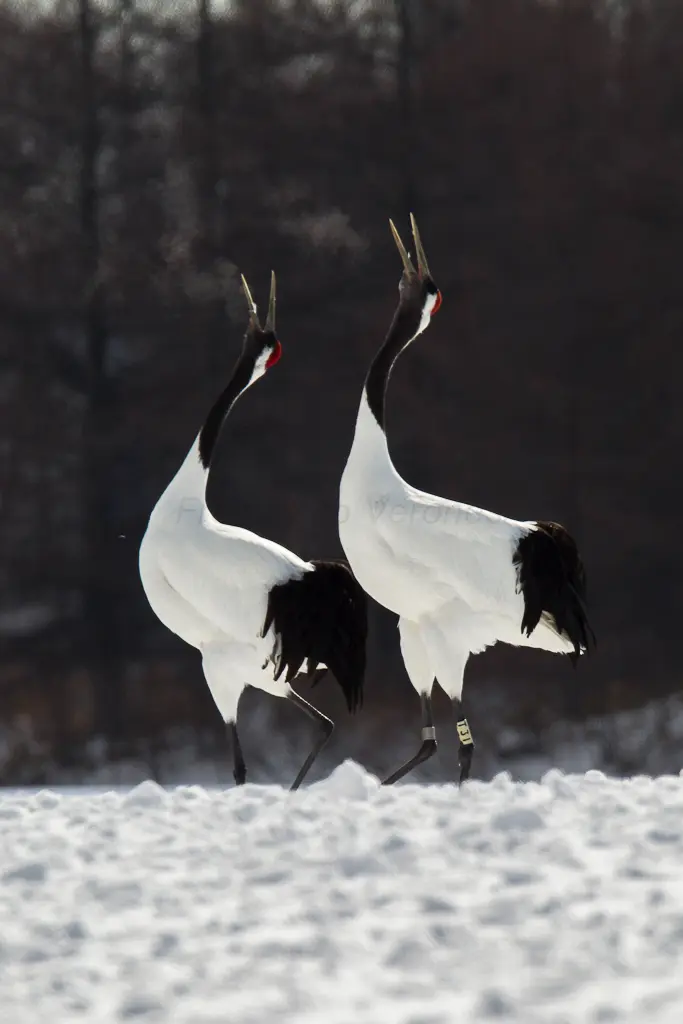
A small patch of red turns the Red-crowned Crane’s pale head into a striking portrait. Set against white body feathers and dark markings, the crown seems especially vivid.
Grus japonensis is one of East Asia’s most recognizable wetland birds. Its tall frame and measured movements make even a quiet moment beside water worth watching.
A crown unlike a feather crest
The red crown is an area of bare skin, rather than a spray of colored feathers. It is a useful reminder that birds create their distinctive appearances in more than one way.
A golden feather crown and a red skin patch may both inspire a crane’s name, but they are very different structures.
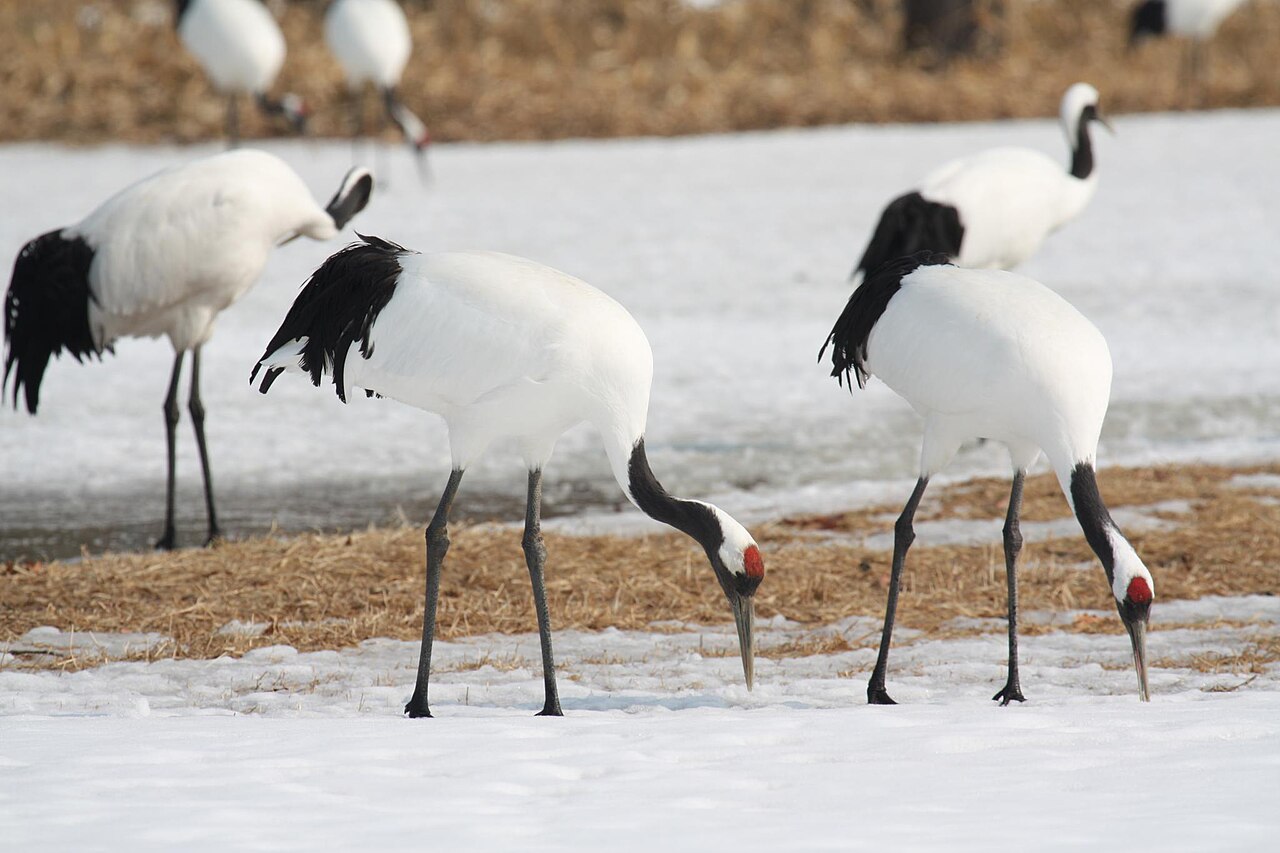
More than one seasonal story
The International Crane Foundation describes the species’ conservation and distribution. Red-crowned Cranes occur in mainland East Asia and Japan.
Their lives depend on suitable feeding and breeding habitat. Wetlands form important parts of that landscape, while different populations have different patterns of seasonal movement.
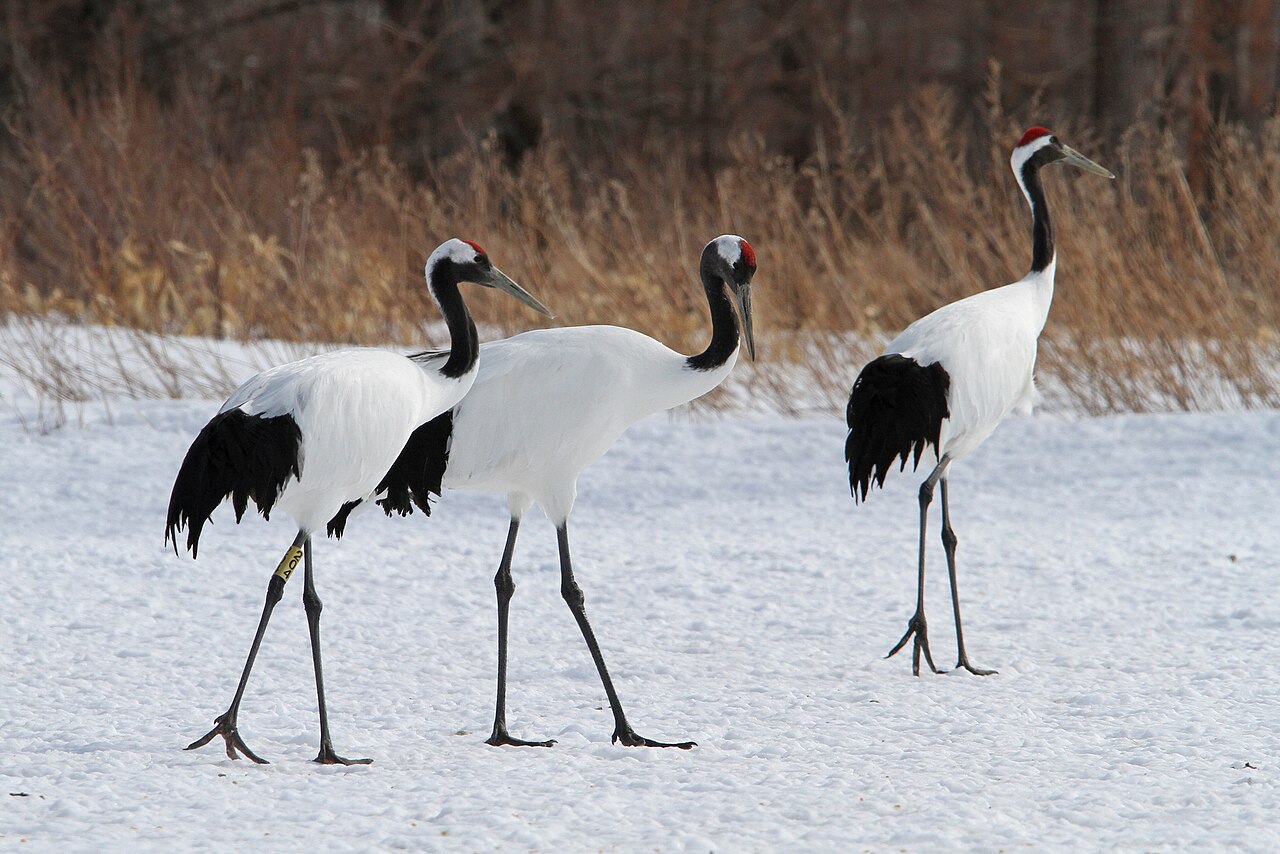
A beautiful bird with continuing needs
The Crane Foundation lists the species as vulnerable. Conservation progress does not remove the need to protect the places where cranes feed, rest, and breed.
A snowy photograph can make the bird seem separate from everyday concerns. In reality, its future remains tied to land and water management.
The Red-crowned Crane invites a slower kind of attention: notice the crown, then the whole bird, then the wetland that makes its presence possible.
Photo credits
Featured image: Red-crowned Cranes - Hokkaido - Japan S4E4202 (15525814846).jpg — Francesco Veronesi from Italy; CC BY-SA 2.0.

Body image 1: Grus japonensis -Hokkaido, Japan -several-8 (1).jpg — Alastair Rae from London, United Kingdom; CC BY-SA 2.0.

Body image 2: Grus japonensis 102480888.jpg — Christoph Moning; CC BY 4.0.

Photographs resized for web display where available. Existing crops are identified in their source filenames; captive birds and younger birds are identified in captions.