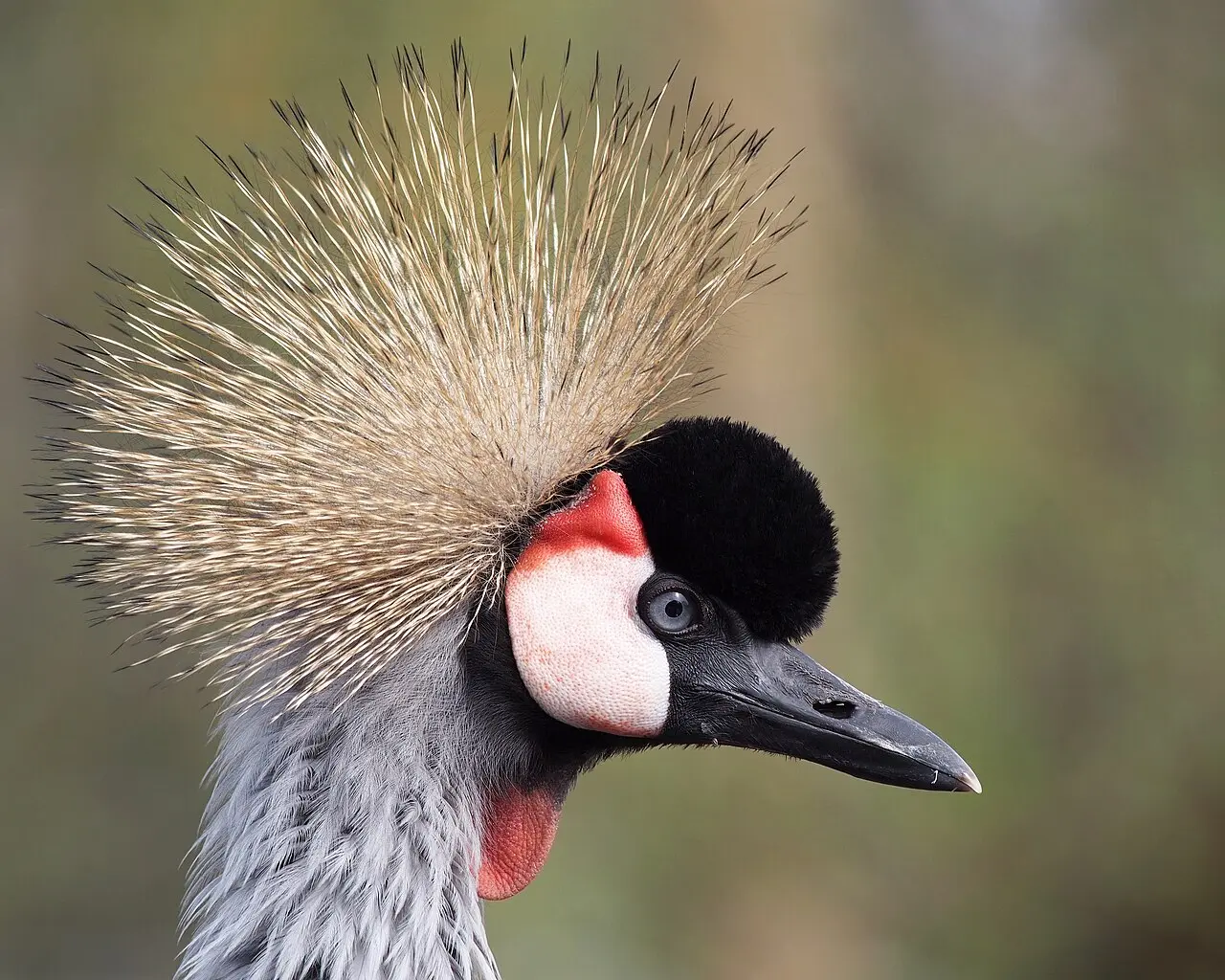
A Grey Crowned Crane carries a golden spray of feathers above its head. The crown catches the light like a small sunburst, making this one of Africa’s most memorable birds.
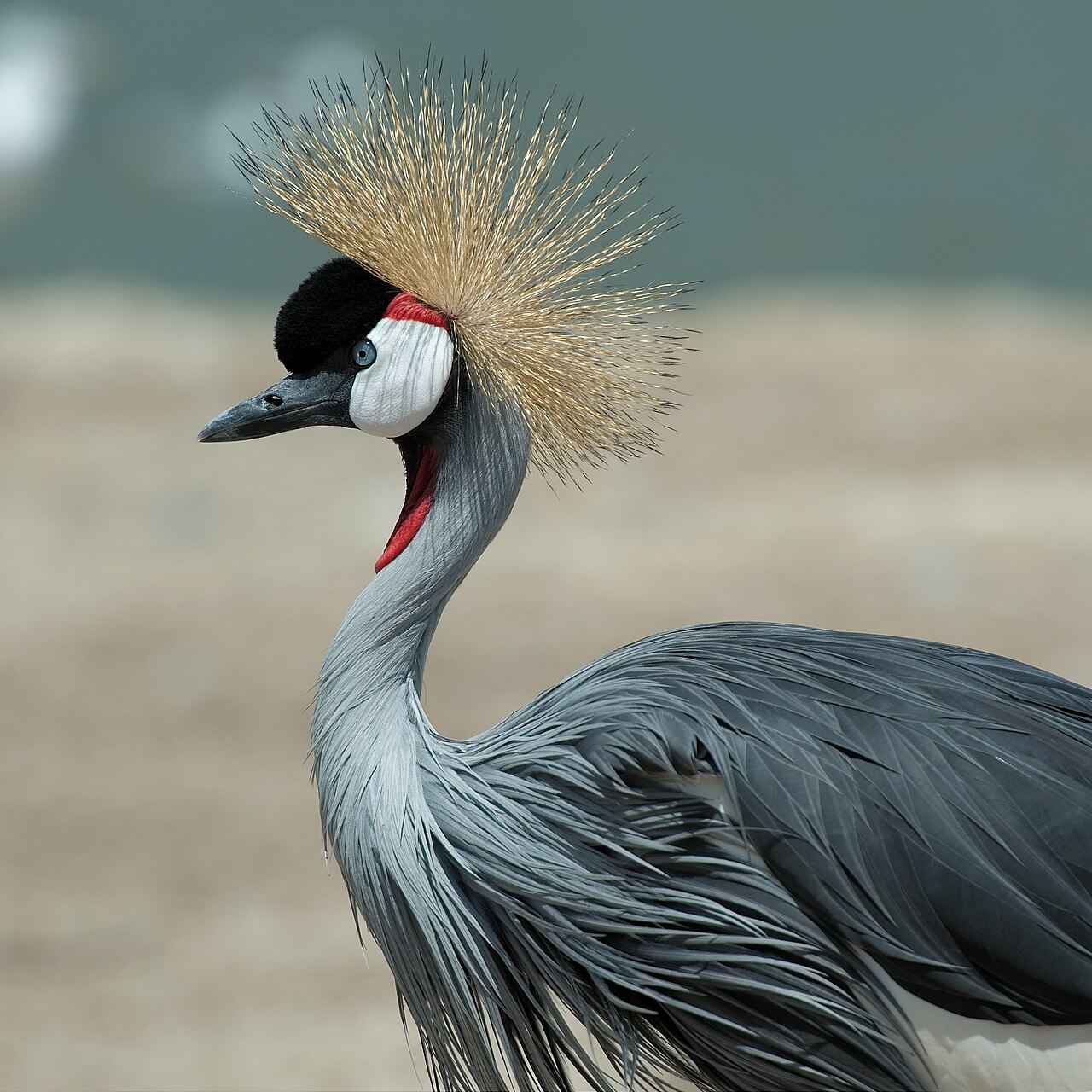
Balearica regulorum also has a gray neck, pale cheek patches, and a red throat ornament. A full view reveals a bird whose elegance extends well beyond its head.
A crown made of feathers
The stiff golden feathers are a natural part of the bird’s plumage. They are different from the bare red head patch of a Red-crowned Crane.
Looking closely at these details helps separate crane species that share similar names. The Grey Crowned Crane’s full combination of color and shape is distinctive.
A future tied to wetlands
The International Crane Foundation identifies the species as endangered. Protecting wetland habitat is central to its conservation.
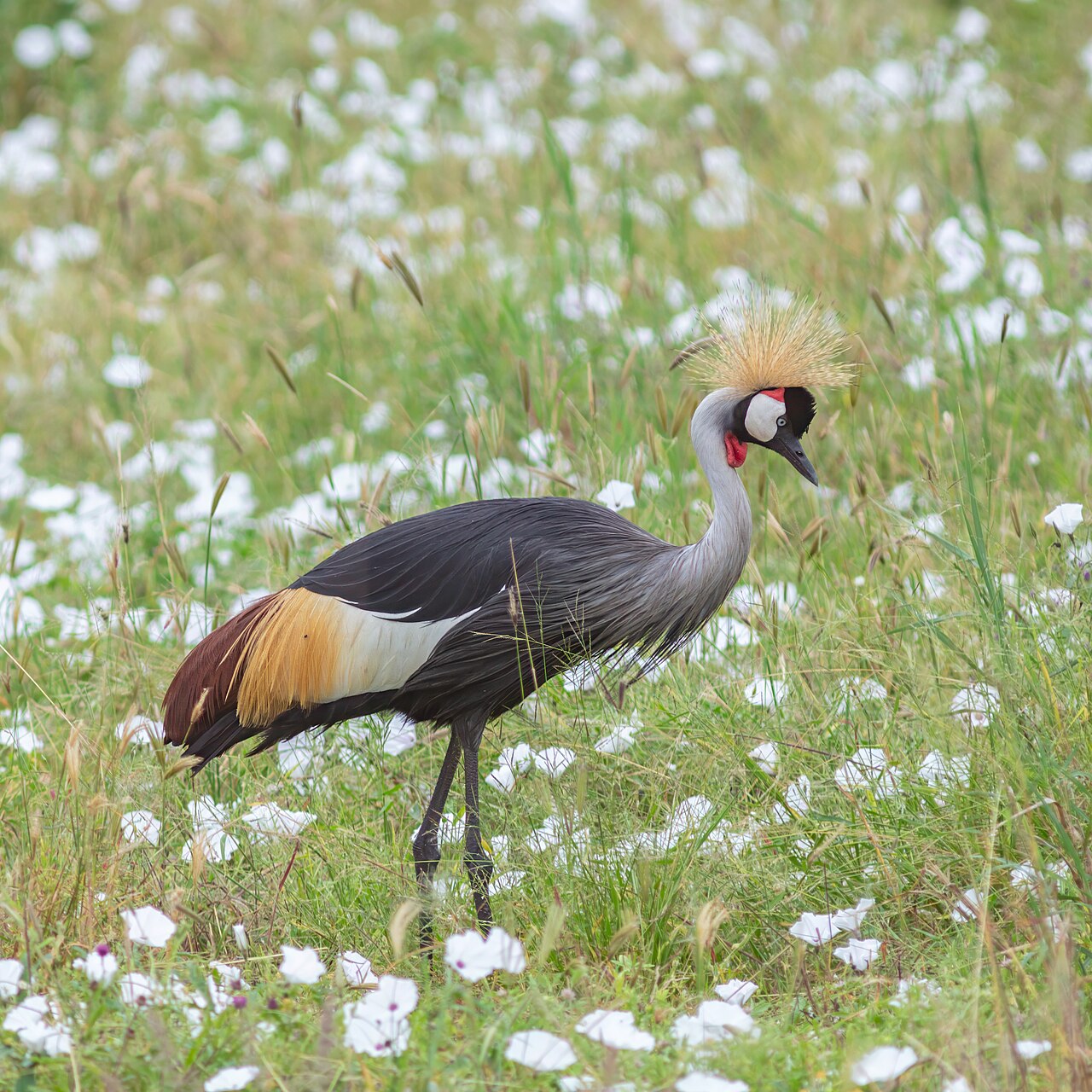
Wetlands are more than a scenic backdrop for a beautiful portrait. They provide places where cranes can feed, breed, and raise their young.
People have a part in the story
The Foundation’s Kenya Crane Festival report describes communities and schoolchildren calling for stronger protection of cranes and wetlands.
That connection matters. Habitat is easier to safeguard when people living nearby value the wildlife it supports.
The golden crown may be what first draws us in. The wider story asks us to notice the wet ground, surrounding landscape, and human choices that let this remarkable bird continue to thrive.
Photo credits
Featured image: Balearica regulorum portrait 3.jpg — Francis C. Franklin; CC BY-SA 3.0.

Body image 1: Balearica regulorum 1 Luc Viatour.jpg — Luc Viatour; CC BY-SA 3.0.

Body image 2: Grulla coronada cuelligrís (Balearica regulorum), parque nacional de Tarangire, Tanzania, 2024-05-24, DD 15.jpg — Diego Delso; CC BY-SA 4.0.

Photographs resized for web display where available. Existing crops are identified in their source filenames; captive birds and younger birds are identified in captions.