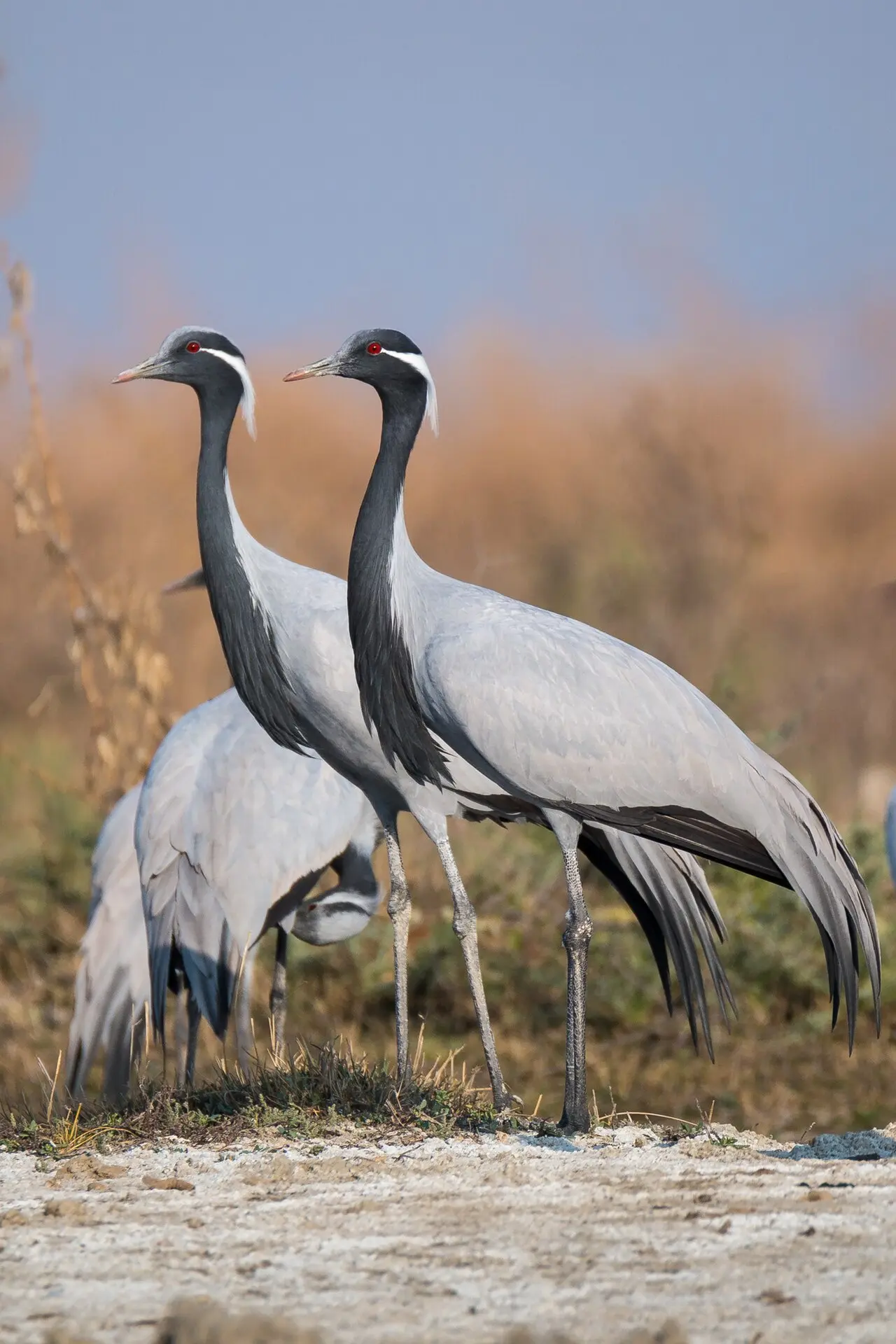
The smallest crane can make one of bird migration’s most dramatic mountain crossings. Some Demoiselle Cranes travel over the Himalayas on their way between breeding grounds and wintering areas in India.
Their slender gray bodies, dark necks, and trailing white head plumes give Anthropoides virgo an elegant outline. That delicate appearance hides an extraordinary traveler.
Not every flock takes the same route
The International Crane Foundation describes Himalayan crossings at very high altitudes.
Its conservation strategy also explains that migration differs across populations. Some cranes use routes through other mountain regions or toward different wintering grounds.
The famous Himalayan journey is real, but it is not the only Demoiselle story.
A journey needs places to pause
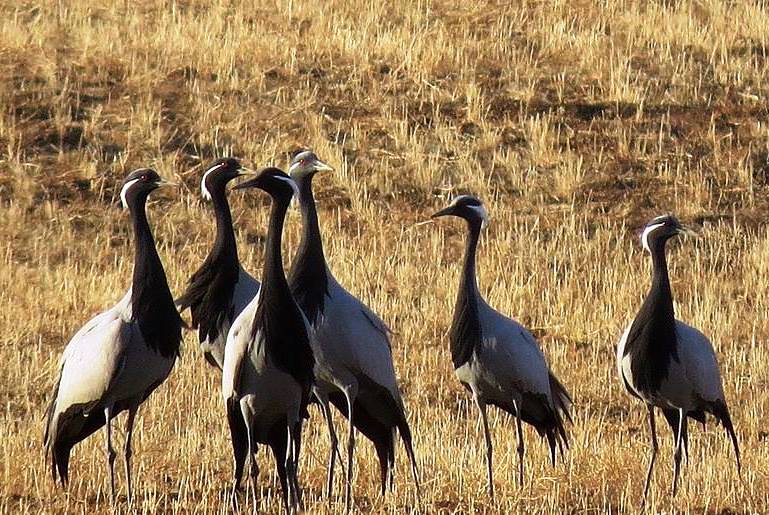
Breeding areas stretch across the Eurasian steppe. Wintering flocks can gather in places such as Rajasthan, where open landscapes become part of the annual migration cycle.
Resting and feeding sites matter alongside the spectacular flight itself. A long journey succeeds through a series of usable places, not just an ability to cross the highest obstacle.
Protecting the route as well as the bird
The Crane Foundation highlights the importance of habitat protection beyond reserves. Many cranes use landscapes shared with people.
Caring for feeding grounds and migration stops helps keep those connections intact.
Watch a flock settle in a field and imagine the mountains behind it. The quiet scene becomes the resting chapter of an immense journey.
Photo credits
Featured image: Demoiselle Cranes at Tal Chappar.jpg — Sumeet Moghe; CC BY-SA 3.0.

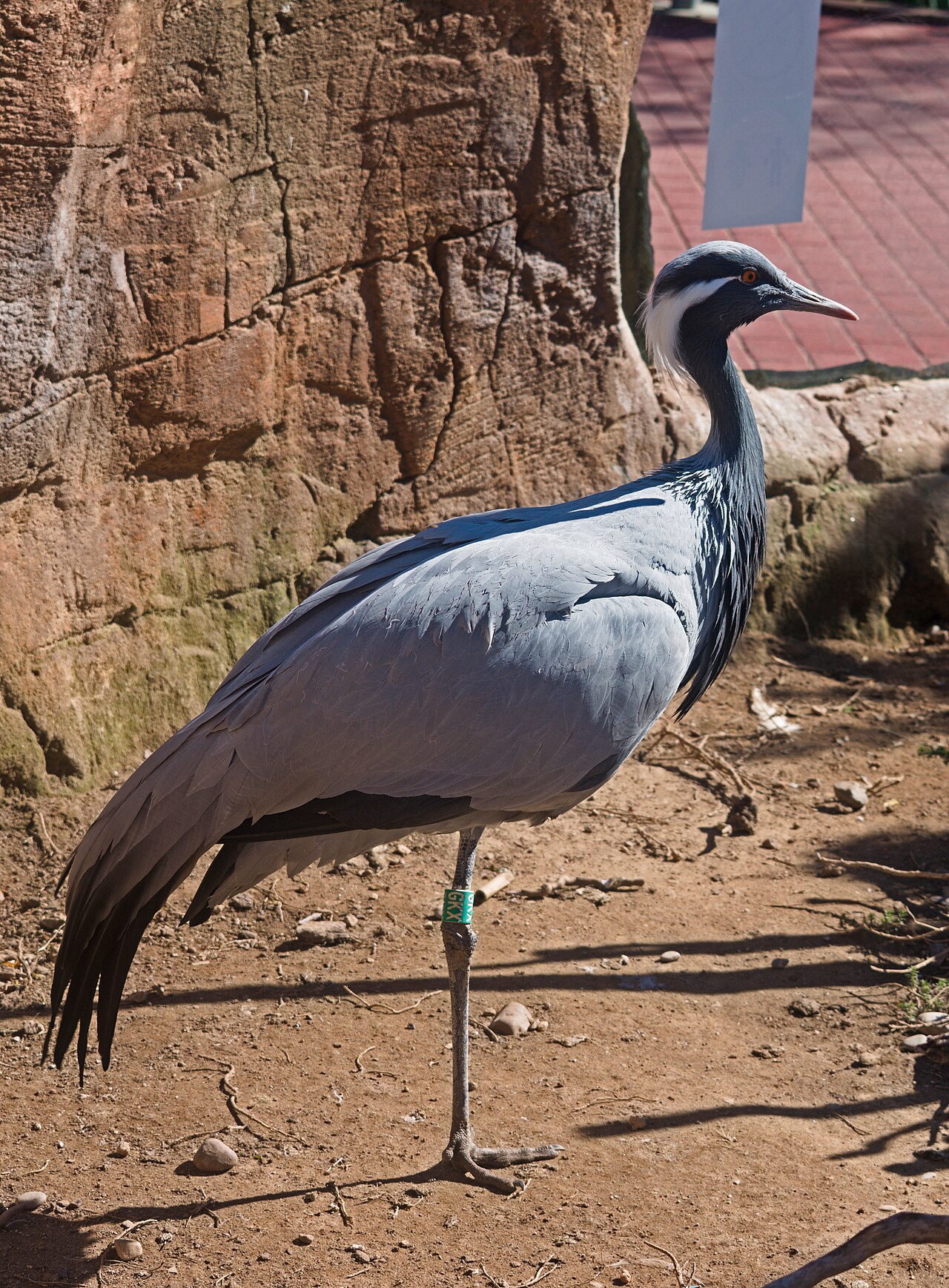
Body image 1: Valencia Oceanogràfic Grus virgo.jpg — Ymblanter; CC BY-SA 4.0.

Body image 2: Demoiselle Cranes in eastern Siberia.jpg — Bgelo777; CC BY-SA 4.0.

Photographs resized for web display where available. Existing crops are identified in their source filenames; captive birds and younger birds are identified in captions.