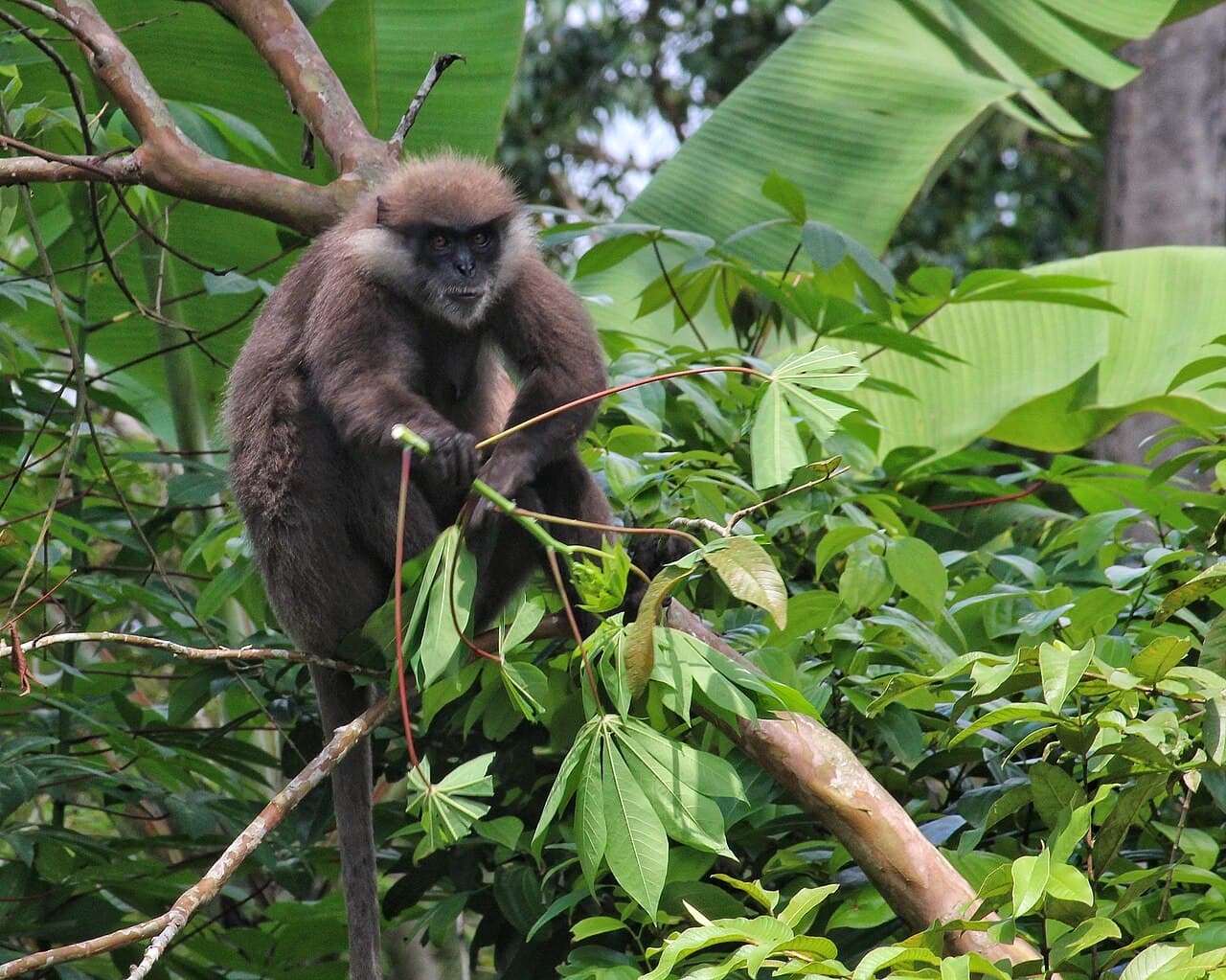
A dark face appears among the leaves, framed by pale whiskers. A long tail trails through the branches behind it.
The purple-faced langur is one of Sri Lanka's distinctive monkeys. Its appearance catches attention, but its close connection to trees explains much more about its life.
A Sri Lankan Monkey
Also called the purple-faced leaf monkey, this species is endemic to Sri Lanka: it occurs naturally nowhere else.
The name “Indian purple leaf monkey” can cause confusion. The animal described here is the Sri Lankan purple-faced langur, commonly listed as Semnopithecus vetulus. Some sources use the genus name Trachypithecus.
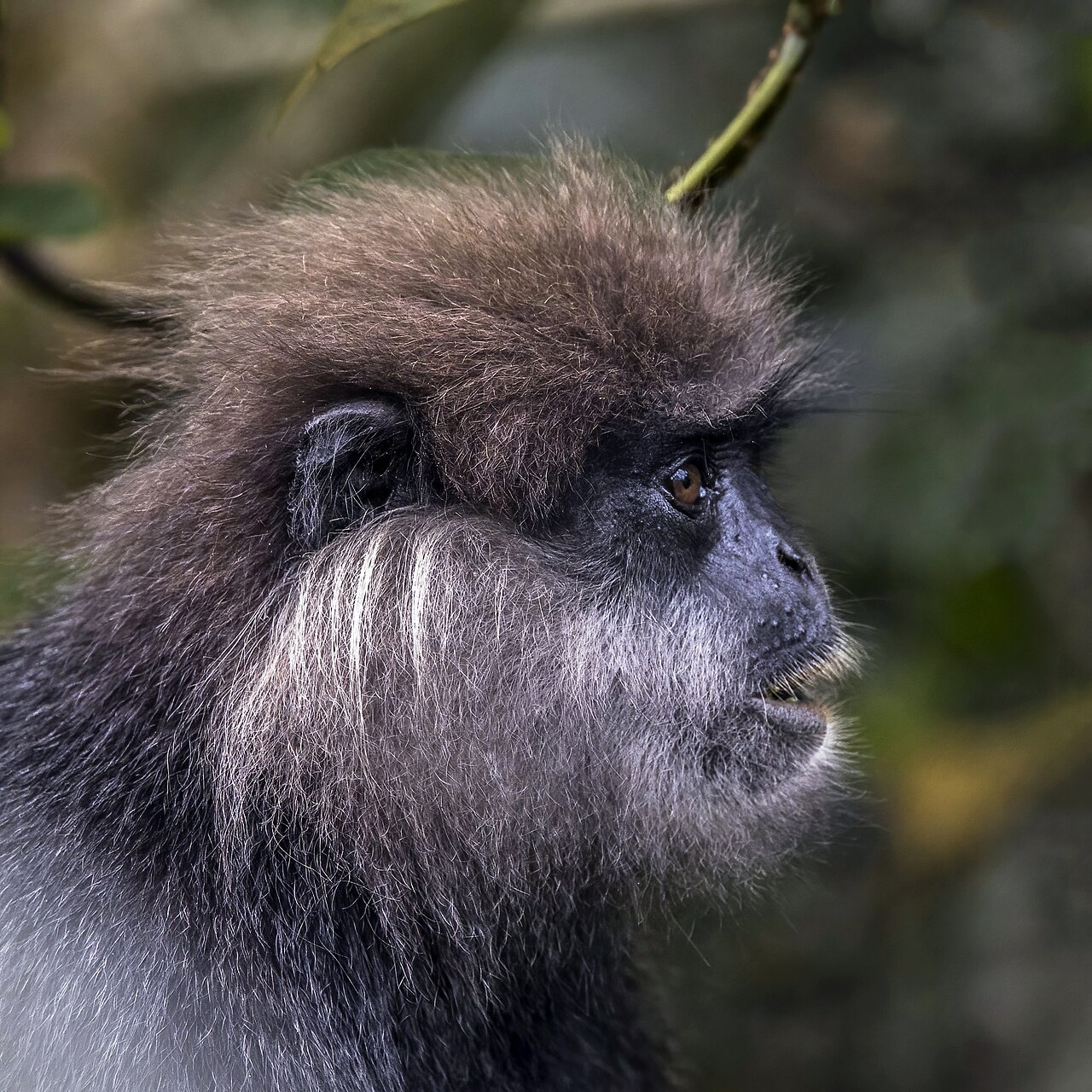
New England Primate Conservancy describes a face that is dark brown to black, rather than bright purple. The common name should not lead us to imagine a vividly violet monkey.
A Leaf-Eating Specialist
Leaves are central to the langur's diet, with other plant foods also eaten. Like other leaf monkeys, it has a digestive system adapted to processing fibrous vegetation.
The value of a tree is therefore more than a branch to sit on. It can provide food and a route to the next feeding place.
Different parts of Sri Lanka support different populations and subspecies, including monkeys in wetter lowlands and mountain forest.
Trees Connect Daily Life
Purple-faced langurs are strongly arboreal, spending much of their time above the ground.
When tree cover is broken into separate patches, reaching food or other group members can become harder. A narrow gap in the canopy can have a much larger meaning for an animal whose normal routes are branches.
A Forest Problem Beyond the Forest
The Primates in Peril conservation report documents habitat fragmentation and other pressures on purple-faced langur populations.
Some groups live close to people. That proximity does not mean gardens or scattered roadside trees replace every function of a connected forest.
Conservation needs to consider the routes between useful trees as well as the trees themselves.
An Animal With Its Own Expression
A langur's face can look thoughtful or solemn to a human observer. Those impressions are part of how we respond to photographs, rather than a reliable reading of its feelings.
The more rewarding story is its real one: feeding, moving, communicating, and raising young in a changing landscape.
Protecting Sri Lanka's purple-faced langur means making space for that whole life. A monkey among leaves is also a reminder that a forest is a network of living connections.
Photograph Credits
Featured image: Hirushini Dematagoda, CC BY-SA 4.0. Resized for display. Purple-faced langur, a monkey endemic to Sri Lanka.

Body image 1: Charles J. Sharp, CC BY-SA 4.0. Resized for display. Purple-faced langur in Sinharaja Forest, Sri Lanka.

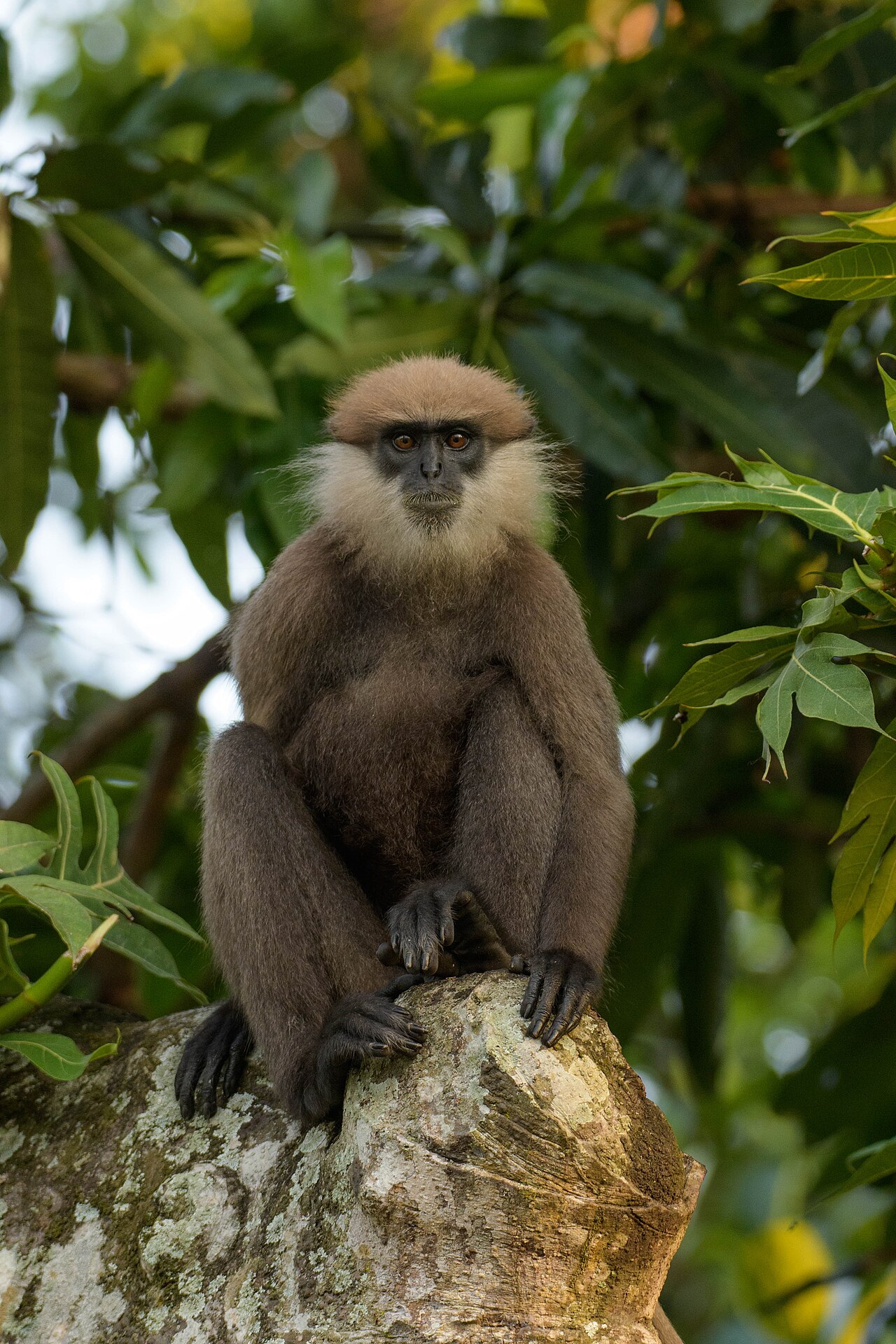
Body image 2: R.M.S. Ratnayake, CC BY-SA 4.0. Resized for display. Purple-faced leaf monkey photographed in Sri Lanka.
