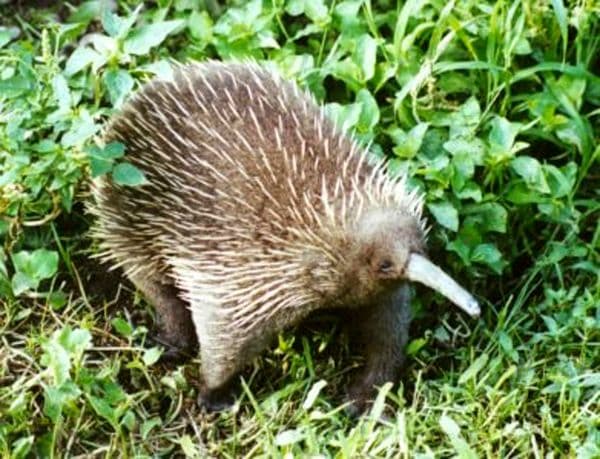
A mammal covered in spines pushes a long, curved snout into soft soil. It is searching for small animals beneath the surface.
Then comes the feature that makes the story even stranger: long-beaked echidnas lay eggs.
A Different Branch of Mammal Life
Echidnas and the platypus belong to the monotremes, the living egg-laying mammals.
Long-beaked echidnas belong to the genus Zaglossus. Three living species are generally recognized, all associated with New Guinea.
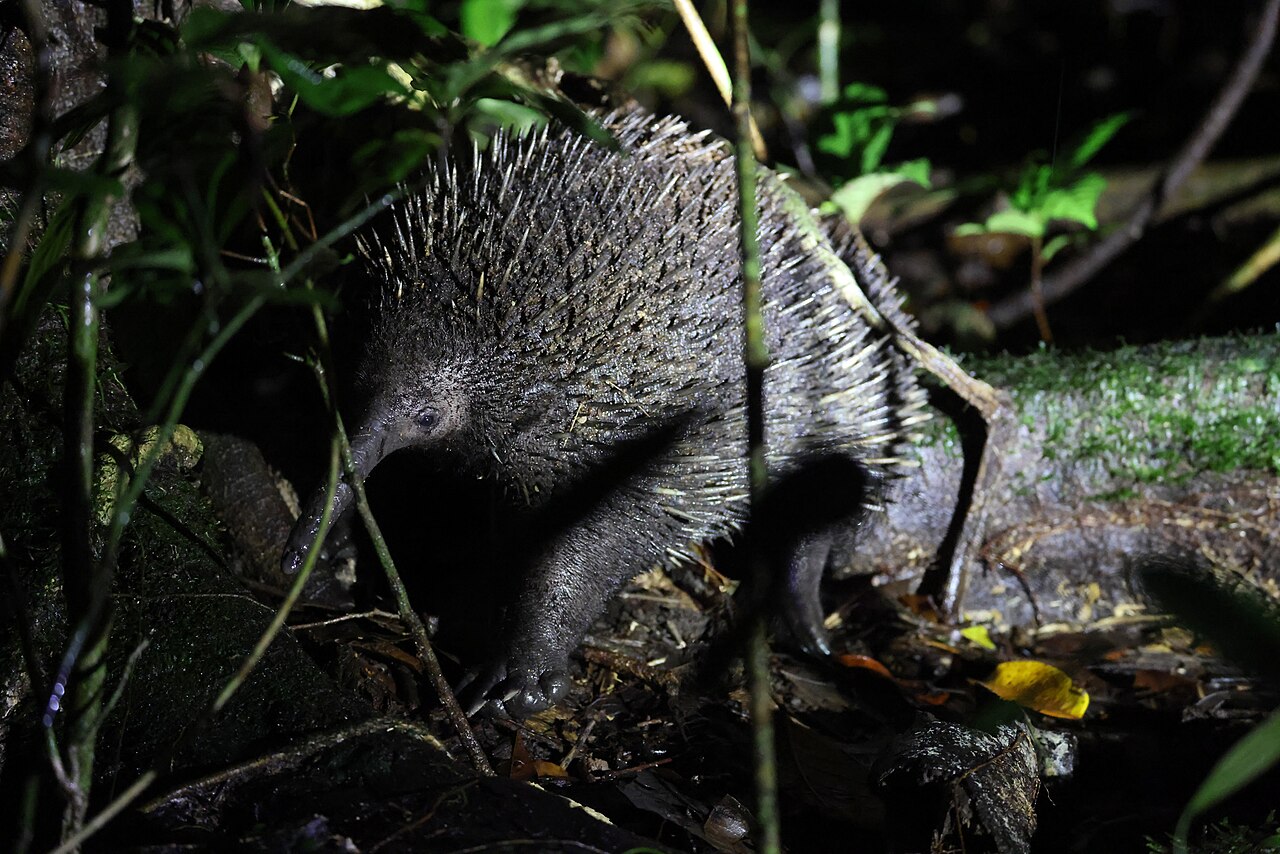
They should not be confused with the short-beaked echidna familiar from much of Australia. The photographs here include the western long-beaked echidna.
A Snout Built for Searching
Long-beaked echidnas use their downward-curving snouts to probe the ground.
In its account of animals in its care, Taronga Zoo describes searches for earthworms and insect larvae. Keepers found characteristic holes left by overnight foraging.
Spines sit among the fur, while strong feet help the animal work through soil. The overall form makes more sense when imagined at ground level, among roots and leaf litter.
Why Mammal Does Not Mean Live Birth
Laying an egg does not exclude an animal from being a mammal. Echidna young are nourished with milk, just as other mammal young are.
Monotremes preserve a different combination of reproductive features from the one most people know.
That combination is a reason to look beyond simple categories. Nature often has more than one working version of a familiar idea.
A Famous Relative Seen Again
In 2023, an expedition recorded Attenborough's long-beaked echidna, Zaglossus attenboroughi, with remote cameras in the Cyclops Mountains.
The University of Oxford's expedition report describes the first photographs and video of that species after decades without a confirmed scientific record.
That was not a rediscovery of every long-beaked echidna. It concerned a particular species in a particular place.
Protecting a Little-Seen Life
Hunting and forest clearance have put pressure on long-beaked echidnas. Their elusive habits also leave important gaps in knowledge.
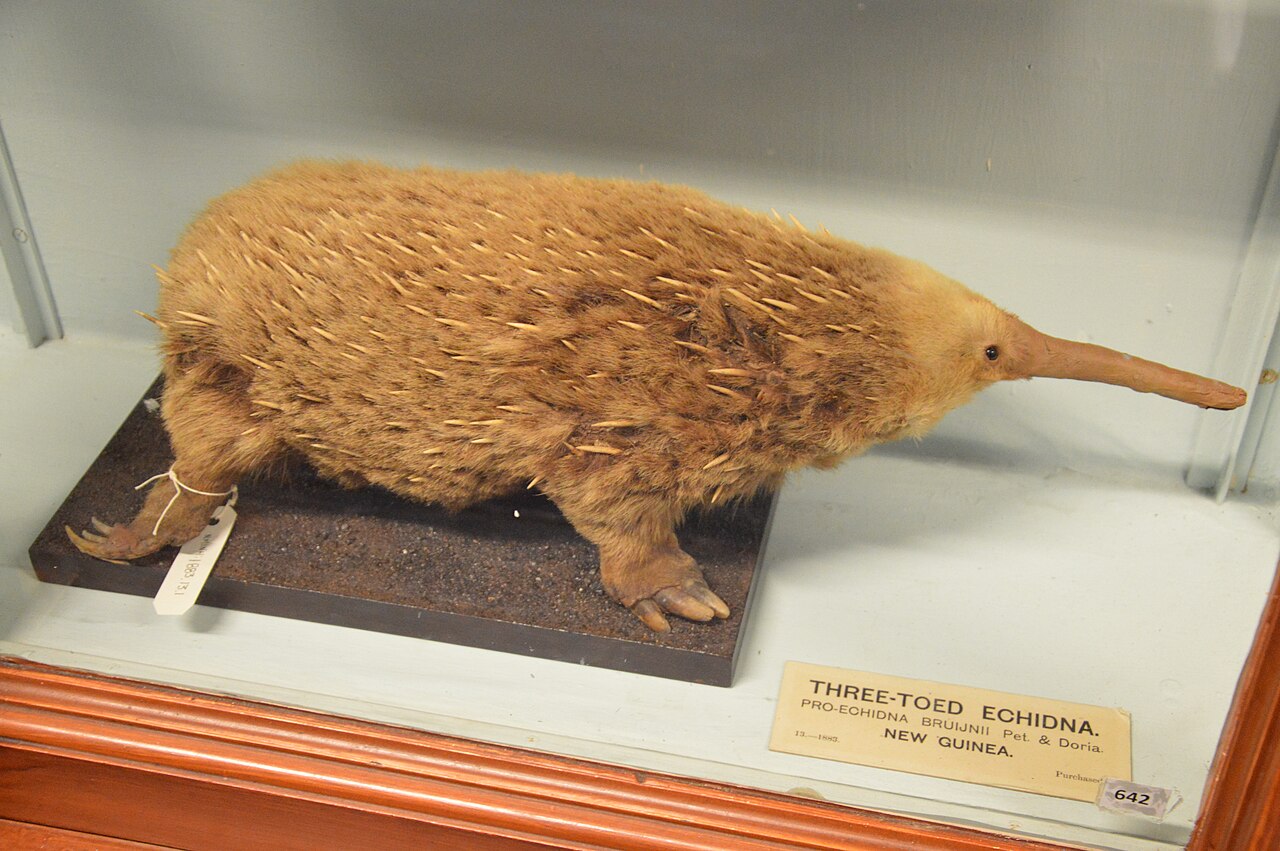
Museum specimens and living observations offer different kinds of evidence. The Dublin image here shows a preserved western long-beaked echidna and is labeled as such.
A curved snout, a coat of spines, an egg, and milk: the long-beaked echidna brings these features together in one animal. Its survival would keep an extraordinary branch of mammal life part of the living world.
Photograph Credits
Featured image: Jaganath, CC BY-SA 3.0. Resized for display. Long-beaked echidna; a photograph of a Zaglossus echidna.

Body image 1: Кирилл, CC BY 4.0. Resized for display. Western long-beaked echidna photographed in Indonesia.

Body image 2: Illustratedjc, CC BY-SA 4.0. Resized for display. Western long-beaked echidna at the National Museum of Ireland; preserved specimen.
