A tall, flightless bird walks through open grassland with a small crowd of chicks. The adult guarding them is their father.
The greater rhea combines an impressive running body with a family arrangement that surprises many people.
South America's Largest Bird
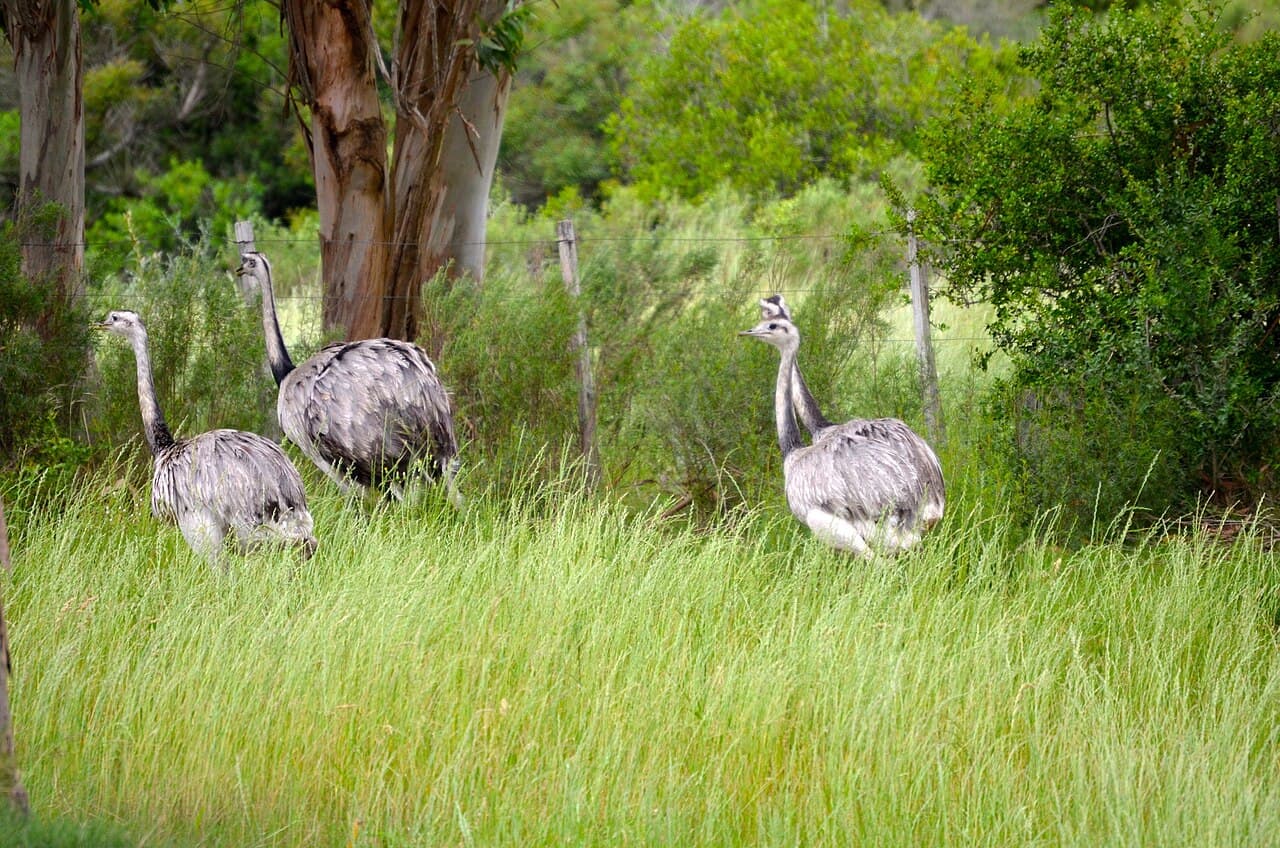
The greater rhea, Rhea americana, lives in parts of southeastern South America.
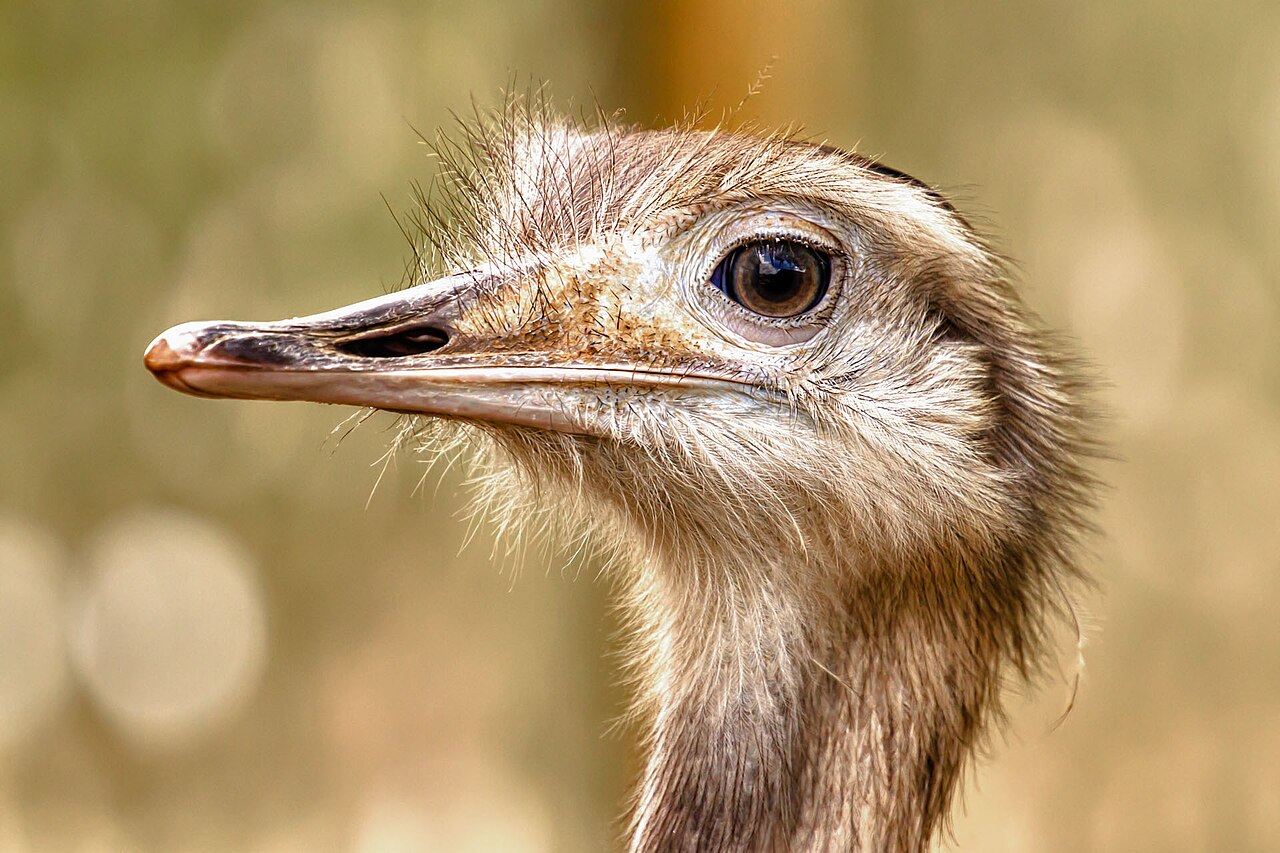
The Smithsonian's National Zoo describes long legs, a long neck, and gray-brown feathers. It resembles an ostrich, but is smaller and has three toes on each foot rather than two.
Those strong legs carry it through grasslands and open scrub. A high viewpoint can help it keep watch over the surrounding country.
Wings Still Have a Purpose
A greater rhea cannot fly. Its wings are nevertheless large and useful.
They help with balance and changes of direction while running. They are also part of displays.
Flightlessness does not mean every other role of a wing has disappeared. In the rhea, the same body parts help with movement and communication on the ground.
Food Gathered One Step at a Time
Greater rheas eat a varied diet, including leaves, seeds, fruit, insects, and some small vertebrates.
Animal Diversity Web describes birds walking and feeding while remaining alert. They can live in groups outside the breeding season, although social arrangements change as breeding begins.
Open habitats provide both food and visibility. Grasslands that look simple from a distance contain many different feeding opportunities.
One Nest, Several Mothers
A breeding male prepares a shallow nest on the ground. Several females may lay eggs there.
The male incubates the eggs and cares for the chicks after hatching. He also guards them, sometimes responding forcefully when another animal approaches.
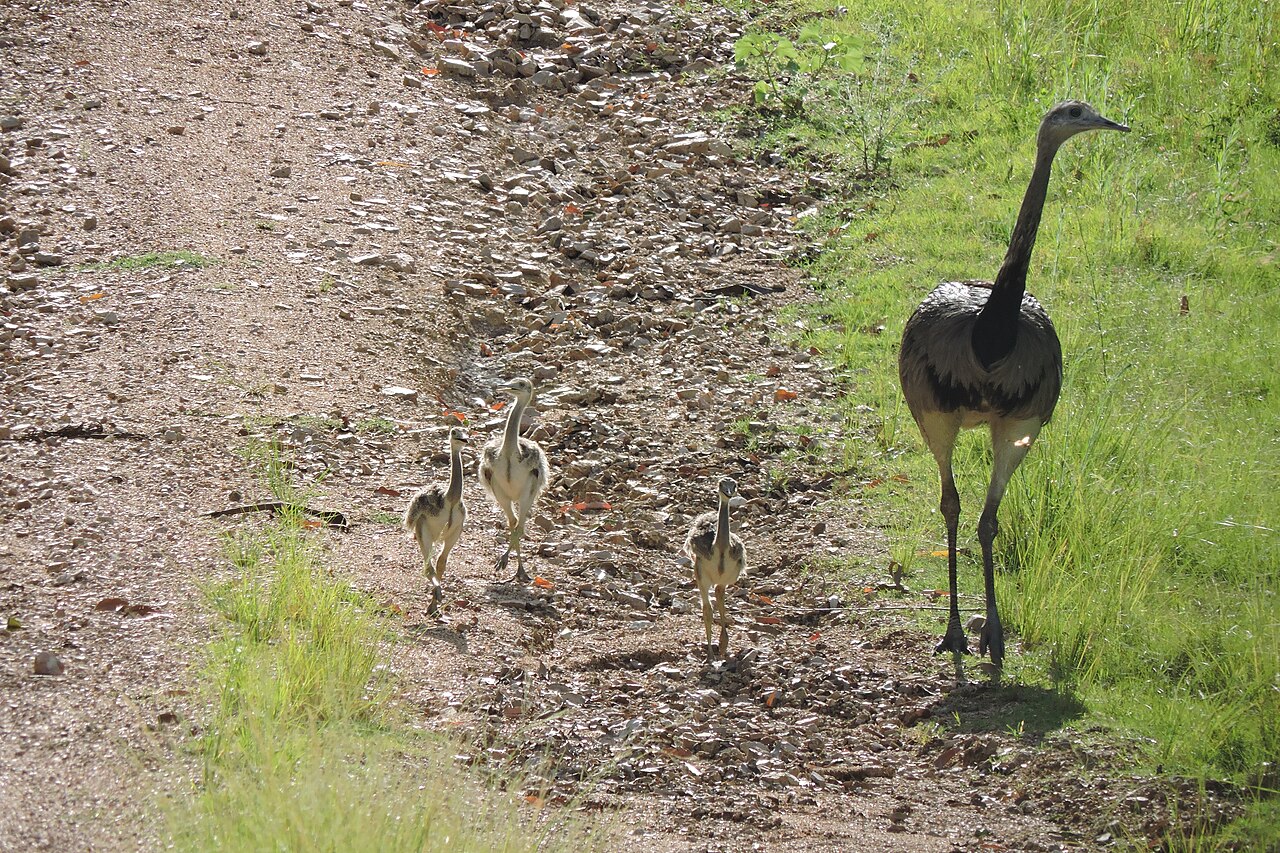
The sight of chicks around an adult therefore tells only part of the story. That one father may be tending offspring from eggs laid by several females.
Grassland Life Under Pressure
Hunting and habitat loss have affected greater rhea populations. Living in farmland can also bring conflict where birds eat crops.
Conservation needs to account for a whole grassland life: feeding areas, safe nesting places, and room for adults and chicks to move.
When watching a family, keep a respectful distance. The father's attention belongs on his young, rather than on people edging closer for a photograph.
A greater rhea is much more than a bird that cannot fly. It is a runner, a watchful grazer, and—during breeding—a remarkably committed father.
Photograph Credits
Featured image: Adrian Vallarino Chiossi, CC BY-SA 3.0. Resized for display. Greater rheas near Laguna de Rocha, Uruguay.

Body image 1: Michael Palmer, CC BY-SA 4.0. Resized for display. Close view of a greater rhea's head and neck.

Body image 2: Cássio Gomes Lopes, CC BY-SA 4.0. Resized for display. Adult greater rhea with chicks.
