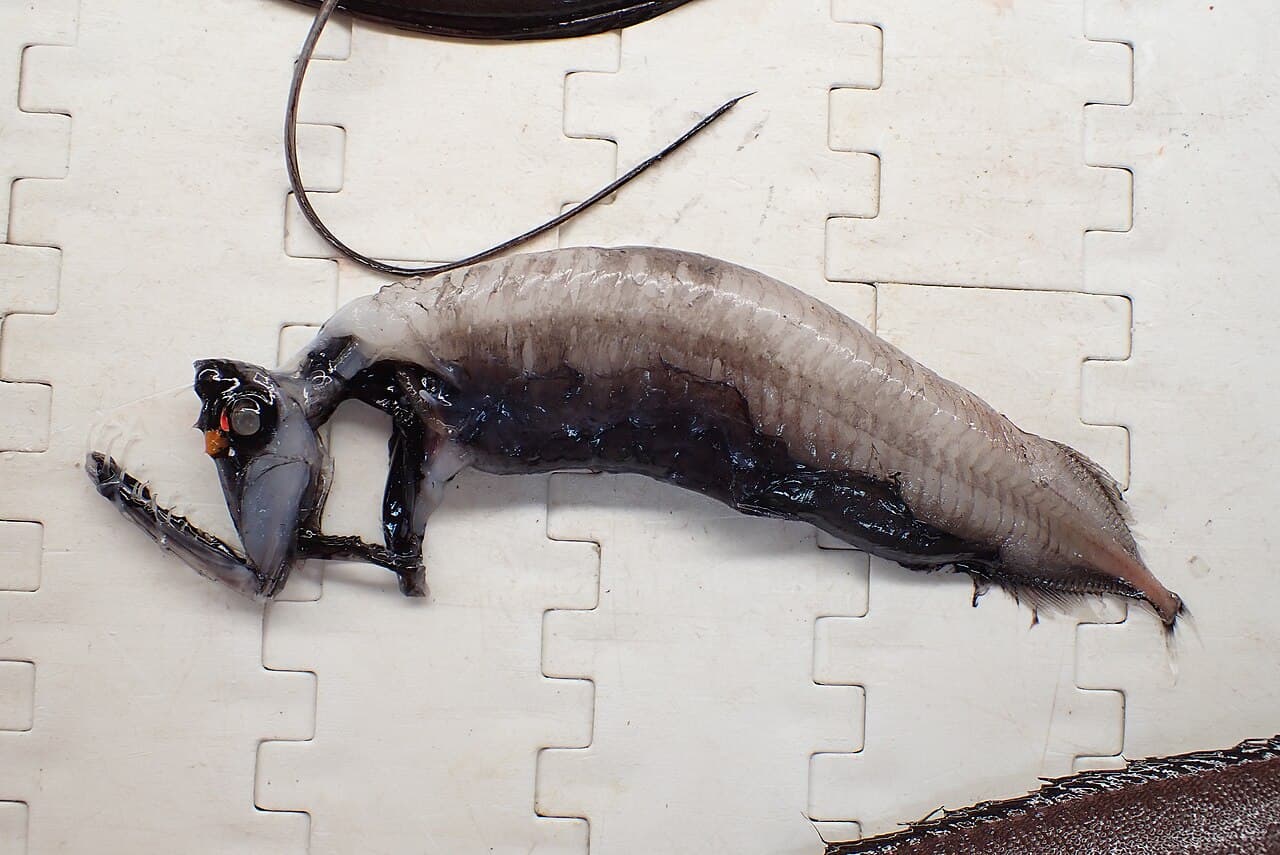
In deep ocean water, a small light can be a signal—or a trap. Some dragonfishes carry a glowing lure beneath their chin, close to a mouth lined with sharp teeth.
Deep-sea dragonfish describes a group of fishes, not one species. Their variety makes the real story even richer than the name suggests.
Meet the Dragonfish Family
Many fishes called deep-sea dragonfishes belong to the family Stomiidae.
MBARI researchers describe predators that often wait for prey rather than pursue it continuously. Fishes and crustaceans can become meals when they come within reach.
Big jaws and pointed teeth help seize food in an environment where a useful encounter may be brief.
Darkness Can Be Camouflage
Many dragonfishes have very dark skin. That helps conceal them from other animals, including prey.
Darkness at depth is not always complete. Living organisms can produce light, so avoiding detection can mean reducing the light reflected from the body.
The result is a predator whose shape may be much easier to see under a research camera's illumination than in its normal surroundings.
Light From a Living Body
Bioluminescence means light made through a chemical process in a living organism.
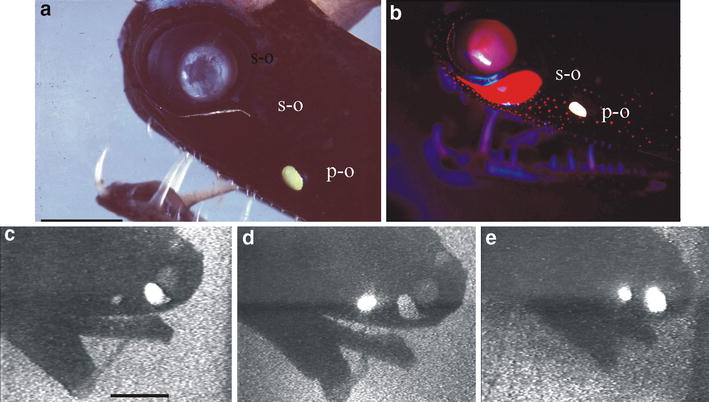
Some dragonfishes use a luminous chin barbel as a lure. Light-producing organs elsewhere on the body vary among species.
Research by P. J. Herring and C. Cope examined light organs in Malacosteus, Pachystomias, and Aristostomias. These fishes include unusual examples of red light production.
The scientific image here combines different lighting conditions and recorded flashes. It should not be read as an ordinary photograph of a brightly glowing fish.
A Photograph Is Not the Whole Animal
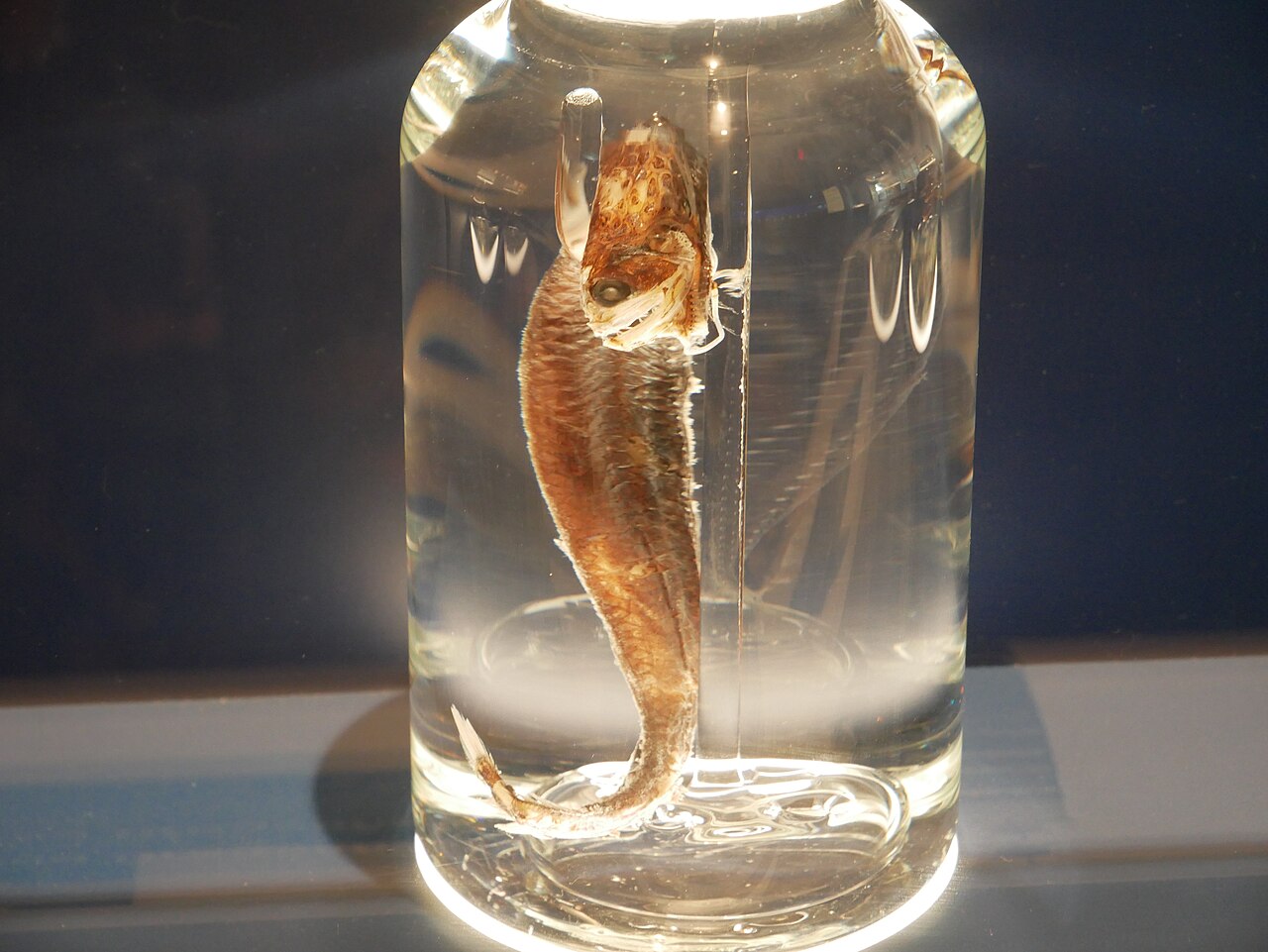
The featured Aristostomias image shows a freshly collected specimen whose exact species was not identified. The Stomias boa image shows a preserved specimen.
They reveal anatomy, but living behavior requires underwater observations. MBARI's remotely operated vehicles provide another view by recording animals in their habitat.
No single image should be used to give every dragonfish the same color, lure, or light organs.
An Ocean Still Being Discovered
Deep-sea food webs are difficult to observe, and direct encounters remain valuable evidence.
A dragonfish's fearsome face is only the beginning. Its darkness, light, and patient hunting reveal an animal shaped by conditions far removed from a sunlit reef.
The more carefully we observe it, the more extraordinary the real fish becomes.
Photograph Credits
Featured image: HulloThere, CC0. Resized for display. Freshly collected Aristostomias specimen; the exact species is unidentified.

Body image 1: P. J. Herring and C. Cope, CC BY-SA 3.0. Resized for display. Malacosteus light-organ photographs and video frames from Herring and Cope; lighting conditions differ between panels.

Body image 2: Skye McDavid, CC BY 4.0. Resized for display. Preserved Stomias boa specimen; not a live underwater photograph.
