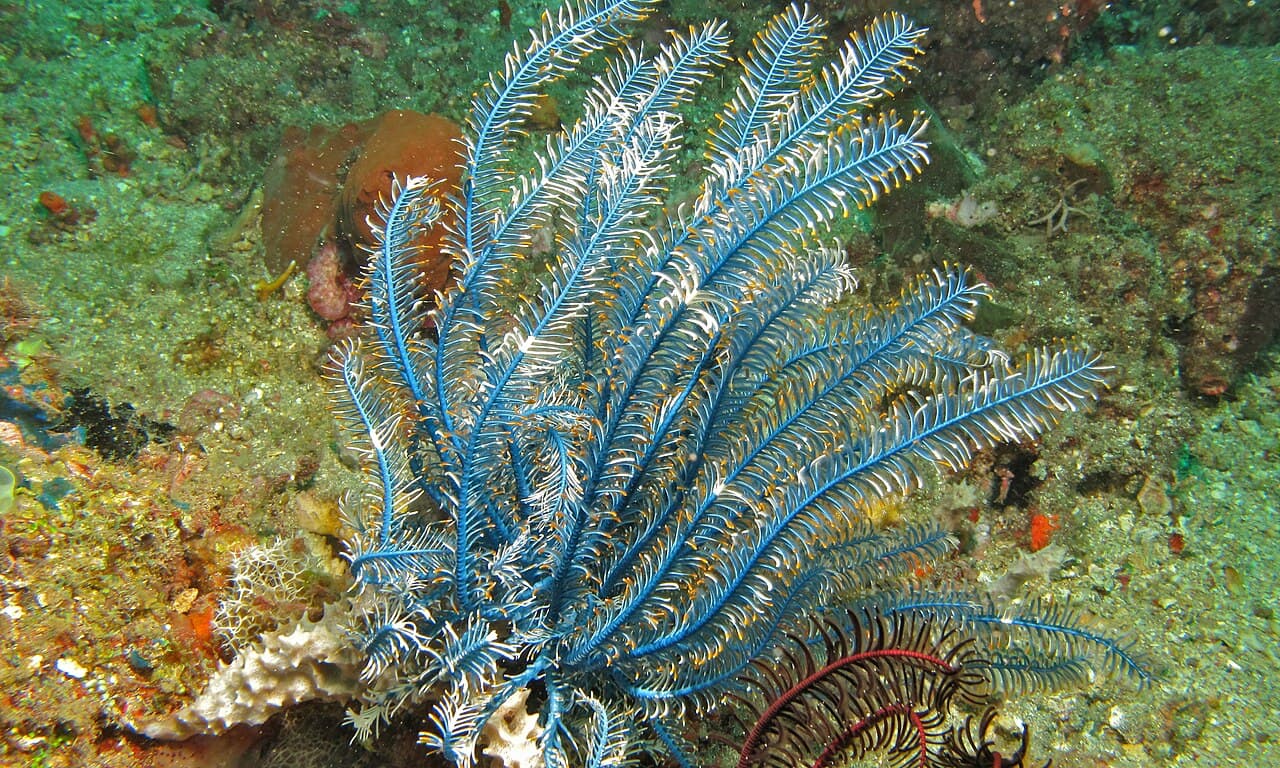
A cluster of feathery arms spreads into the water. It could be mistaken for a small underwater plant, until the arms begin to move.
This is a feather star, an animal whose elegant shape is also a feeding system.
Feathers Without a Bird
Feather stars are crinoids, a group within the echinoderms. That larger group also includes sea stars, sea urchins, and sea cucumbers.
Their arms are not covered in bird feathers. Fine side branches called pinnules create the feather-like appearance.
The Smithsonian's ocean resource shows how a feather star can cling above the bottom while its arms intercept drifting food.
A Meal Delivered by the Current
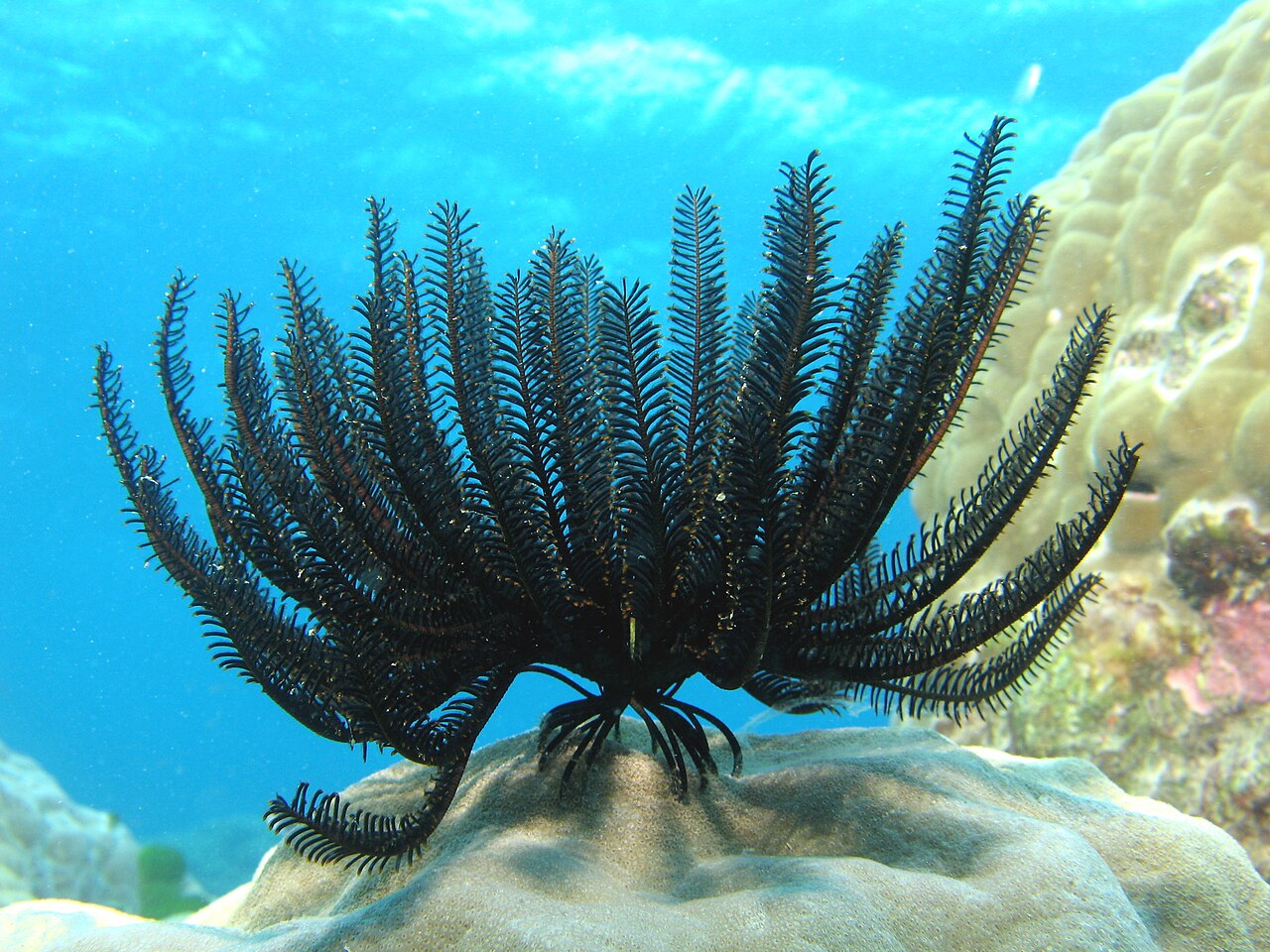
Feather stars are suspension feeders. They collect small particles carried in seawater.
The University of Washington's Ocean Observatories Initiative explains that sticky tube feet on the pinnules catch food and pass it into grooves. Tiny cilia then help move it toward the mouth.
The mouth sits on the upper surface, surrounded by the arms. That arrangement makes sense for an animal gathering food from the water above and around it.
A Whole Group of Different Forms
“Feather star” covers many species. Their colors, arm patterns, and habitats differ.
The photographs here show examples from Indonesian waters and a deep-sea NOAA expedition. The deep-sea animal was identified to the family Thalassometridae, not to a confirmed species.
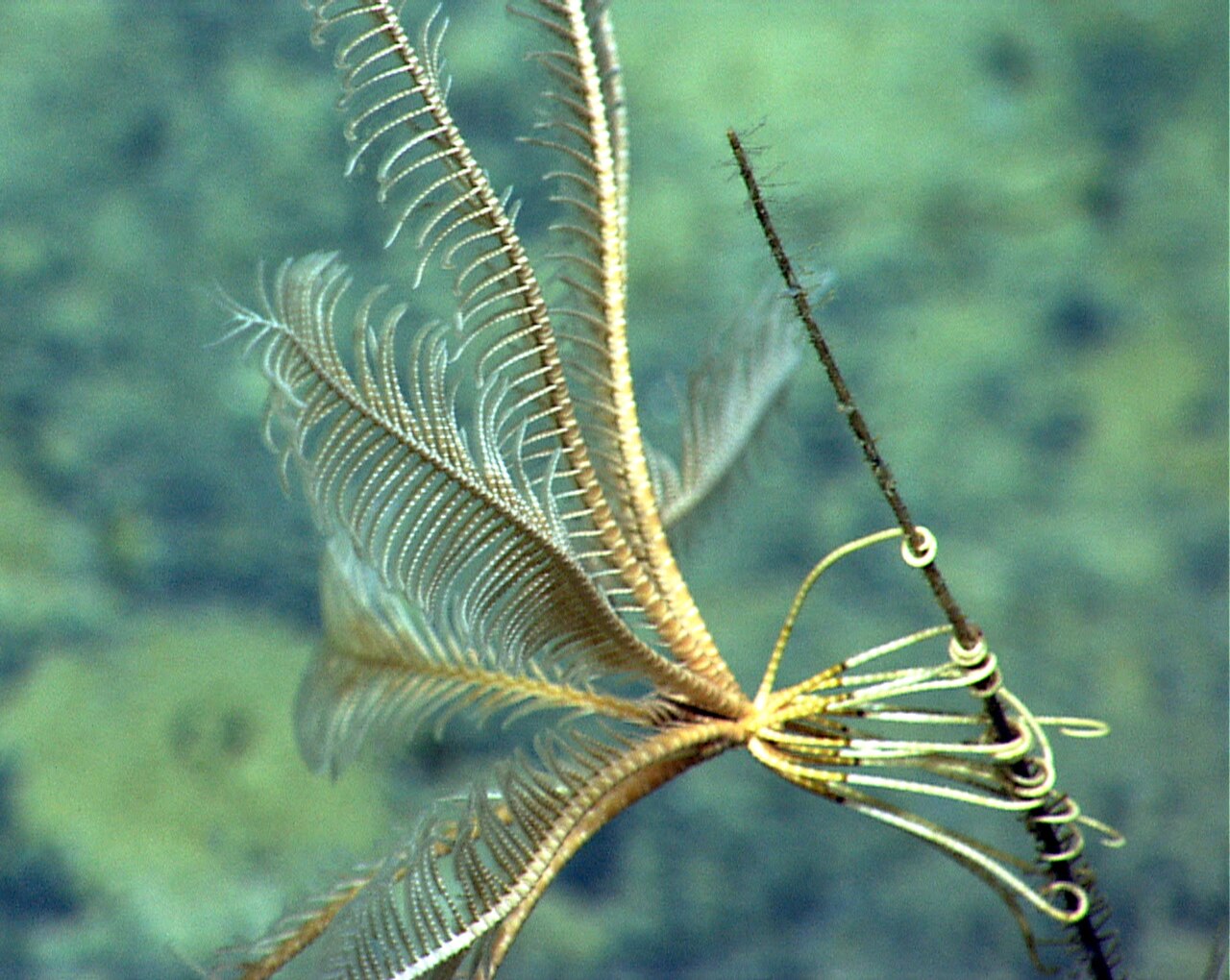
Those differences matter. A shallow reef photograph and a deep-sea image can illustrate the same broad group without depicting the same kind of feather star.
Not Rooted Like a Plant
Unlike the familiar image of a sea lily on a stalk, many adult feather stars are unstalked. Some crinoids attach only during an early stage and later become free-moving.
Their branching arms may make them look delicate, but the shape has a practical role: it places many small food-catching surfaces in moving water.
Look Closely, Leave Gently
Avoid handling a feather star or pulling it away from where it is attached. A close photograph should not interrupt the animal's feeding or shelter.
The wonder of a feather star lies in that living detail. What seems like decoration is a working arrangement of arms, branches, tube feet, and moving food—a meal gathered from the current, one tiny particle at a time.
Photograph Credits
Featured image: Bernard DUPONT, CC BY-SA 2.0. Resized for display. Blue feather star photographed in Lembeh Strait, Indonesia.

Body image 1: Preview_H, CC BY-SA 2.0. Resized for display. A feather star; the source suggests Anneissia bennetti but does not confirm the species.

Body image 2: NOAA Ocean Explorer, CC BY-SA 2.0. Resized for display. A feather star in the family Thalassometridae, documented during a NOAA Gulf of Mexico expedition in 2014.
