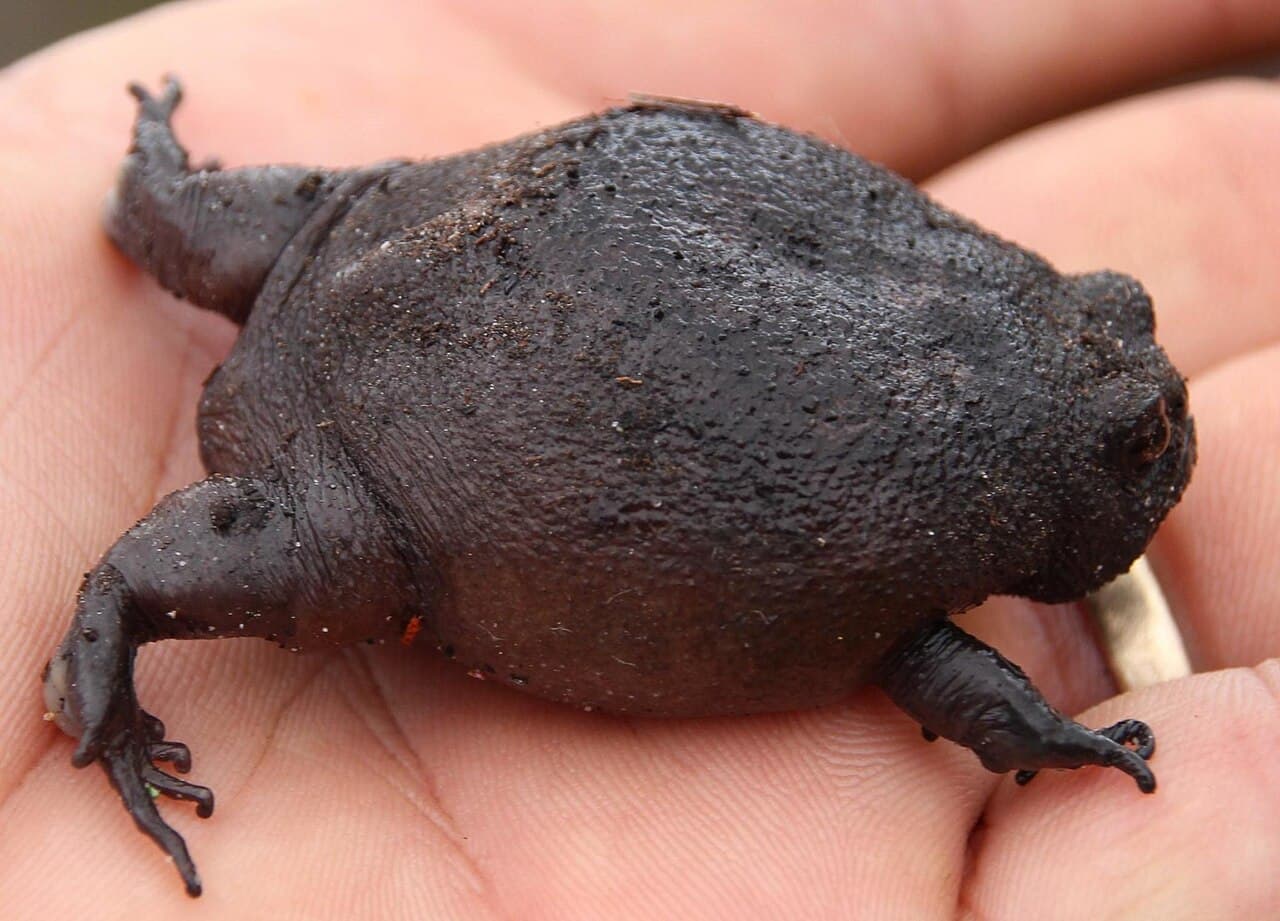
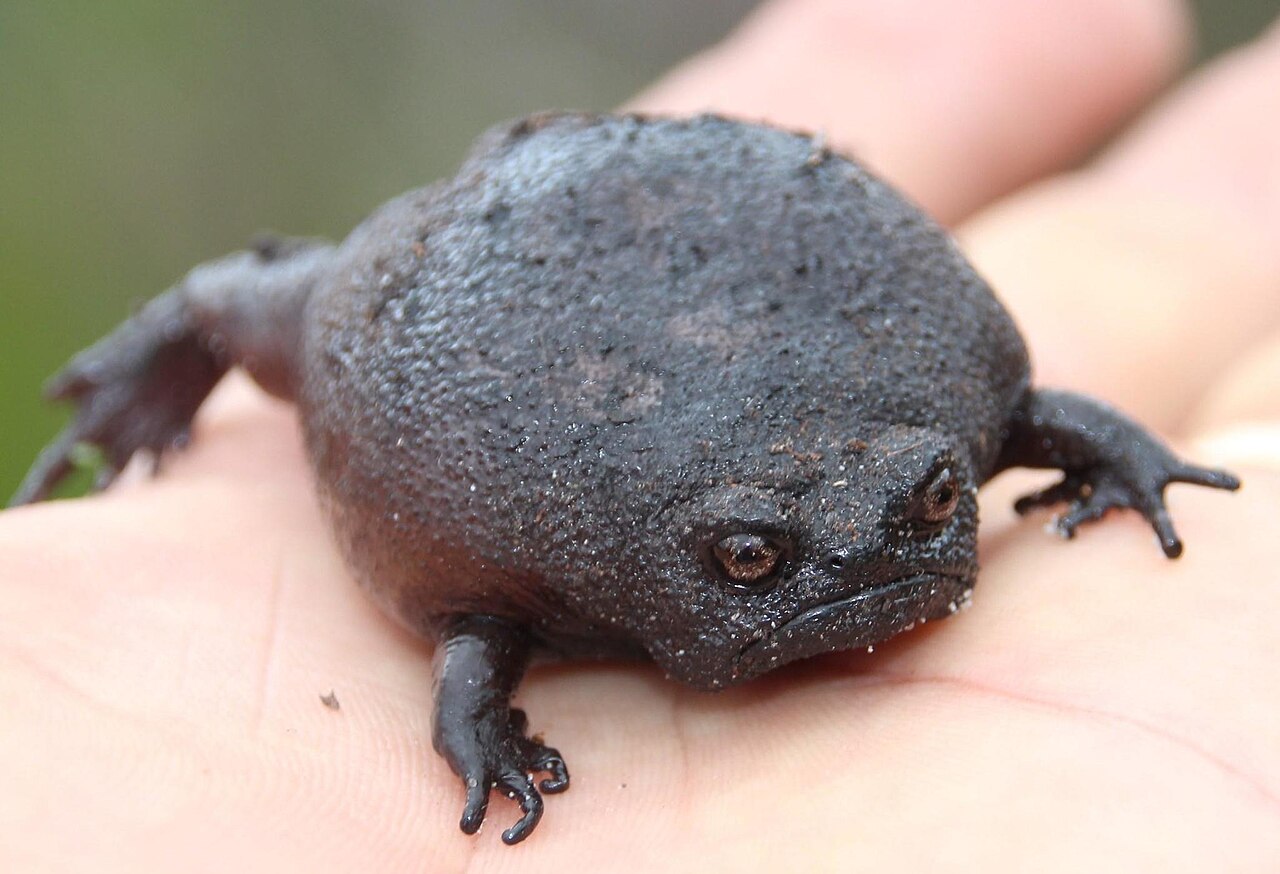
With its round body and downturned-looking mouth, the black rain frog seems permanently unimpressed. That expression has made it famous, but a photograph cannot tell us whether a frog is feeling grumpy.
Its real life is more interesting: digging backward, sheltering underground, and raising young without an open pond.
Meet South Africa's Black Rain Frog
The black rain frog, Breviceps fuscus, is also known as the plain rain frog.
The Biodiversity and Development Institute's species account describes a stout frog with short legs, small eyes, and dark brown to black upperparts.
It is native to South Africa's southern Cape Fold Mountains and associated habitats. This is a specific species, rather than a name for every dark-colored rain frog.
Feet That Work Like Digging Tools
Black rain frogs spend much of their time in burrows.
WWF's species feature describes spade-like structures on the feet that help push soil away as the frog digs backward.
Moist soil matters to this way of life. The frog can absorb moisture through its skin while sheltered beneath the surface.
That rounded shape belongs to a capable burrower, even if it looks awkward to a person expecting a long-legged pond frog.
Puffing Up Has a Purpose
When disturbed, black rain frogs can inflate their bodies.
Inside a tunnel, becoming wider can make it harder for a predator to pull the frog out. Researchers and observers have documented this defensive response.
It is a reason to leave a sheltering frog alone. The most dramatic pose is not necessarily the one that tells us how it behaves when undisturbed.
Froglets Without a Pond
Females lay eggs in underground nests. The young develop and emerge as tiny froglets, rather than leaving the nest as free-swimming tadpoles.
This is called direct development. It provides a striking alternative to the pond-and-tadpole life cycle many people learn first.
During the breeding season, males can form choruses in rainy weather. An animal hidden from sight may still make its presence heard.
A Small Life Tied to Its Habitat
Native forest use and conversion to plantations have affected some populations, according to the BDI account. Protecting suitable habitat preserves both the surface vegetation and the sheltered world below it.
The black rain frog does not need a human mood attached to its face. Its own adaptations are enough: a compact body, digging feet, a defensive puff, and a nursery hidden in the soil.
Photograph Credits
Featured image: Tony Rebelo, CC BY-SA 4.0. Resized for display. Black rain frog, Breviceps fuscus.

Body image 1: Tony Rebelo, CC BY-SA 4.0. Resized for display. A second view of Breviceps fuscus.

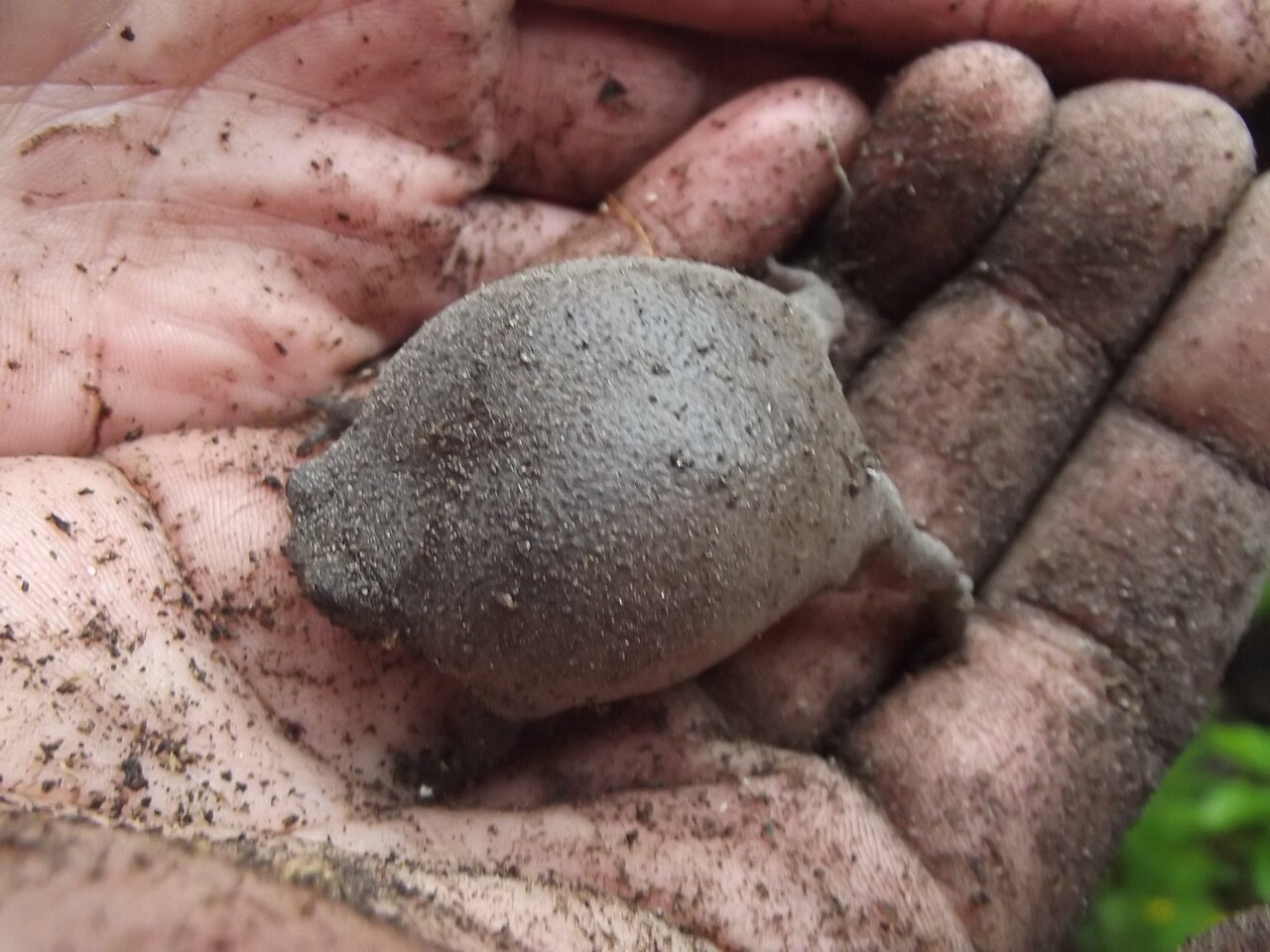
Body image 2: ludwig_muller, CC0. Resized for display. Black rain frog documented in an iNaturalist observation.
