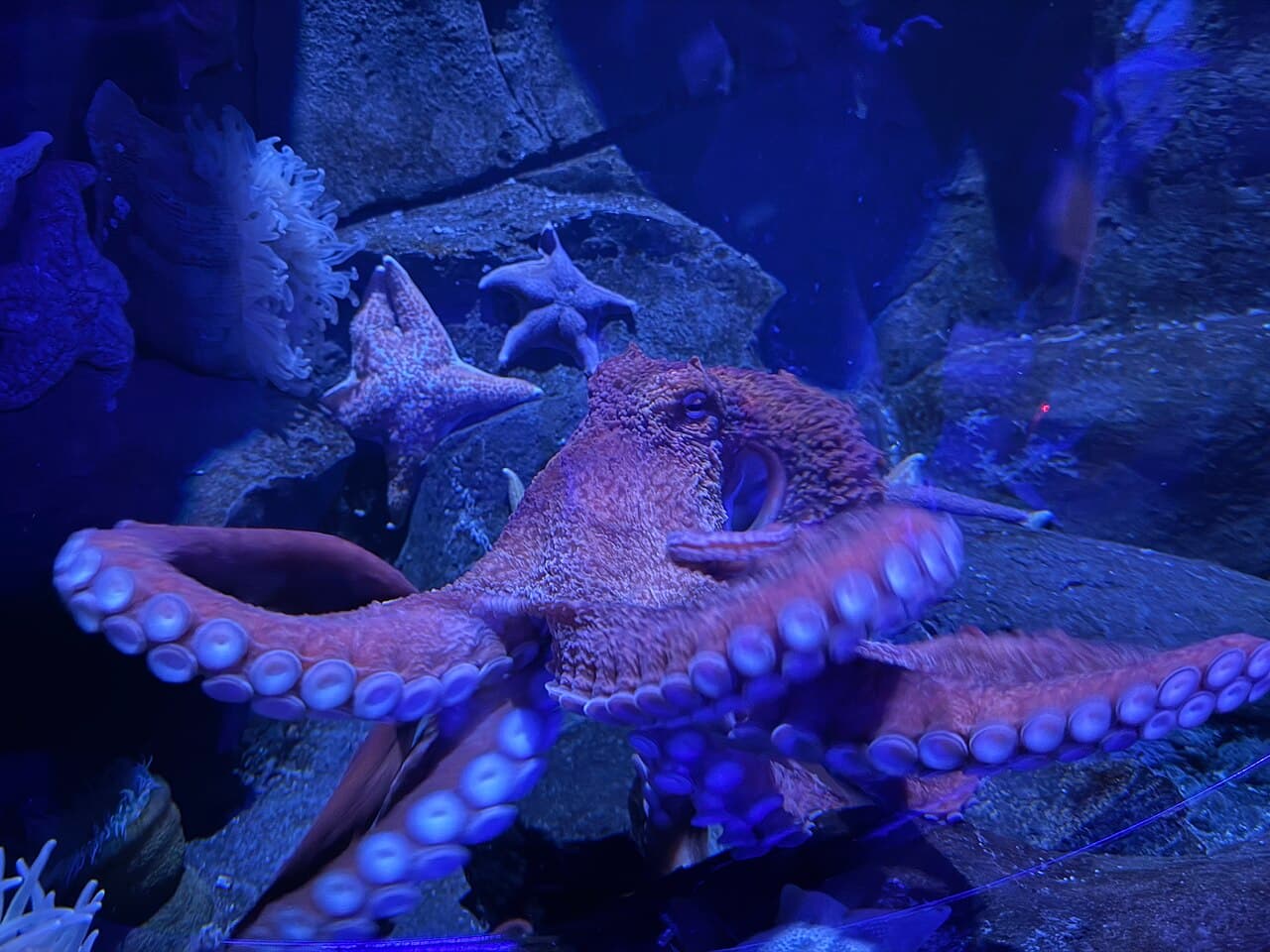
A reddish shape against a rock becomes pale, mottled, and rough-looking. The animal has changed its skin, making its outline harder to follow.
The giant Pacific octopus brings together remarkable camouflage, strong arms, and behavior that keeps surprising the people who study it.
A Giant of Cool Pacific Waters
The giant Pacific octopus, Enteroctopus dofleini, lives in temperate North Pacific waters.
The Alaska Department of Fish and Game describes a range extending around the North Pacific, including Alaska and Japan.
It is among the largest living octopuses. Reported sizes vary, so an exceptional record should not be treated as the size of every adult.
How Does It Change Color?
The skin contains pigment-bearing structures called chromatophores. Expanding or contracting them changes the visible pattern.
Oregon Sea Grant explains how these changes help an octopus blend with its surroundings. Color can also change during activity such as feeding.
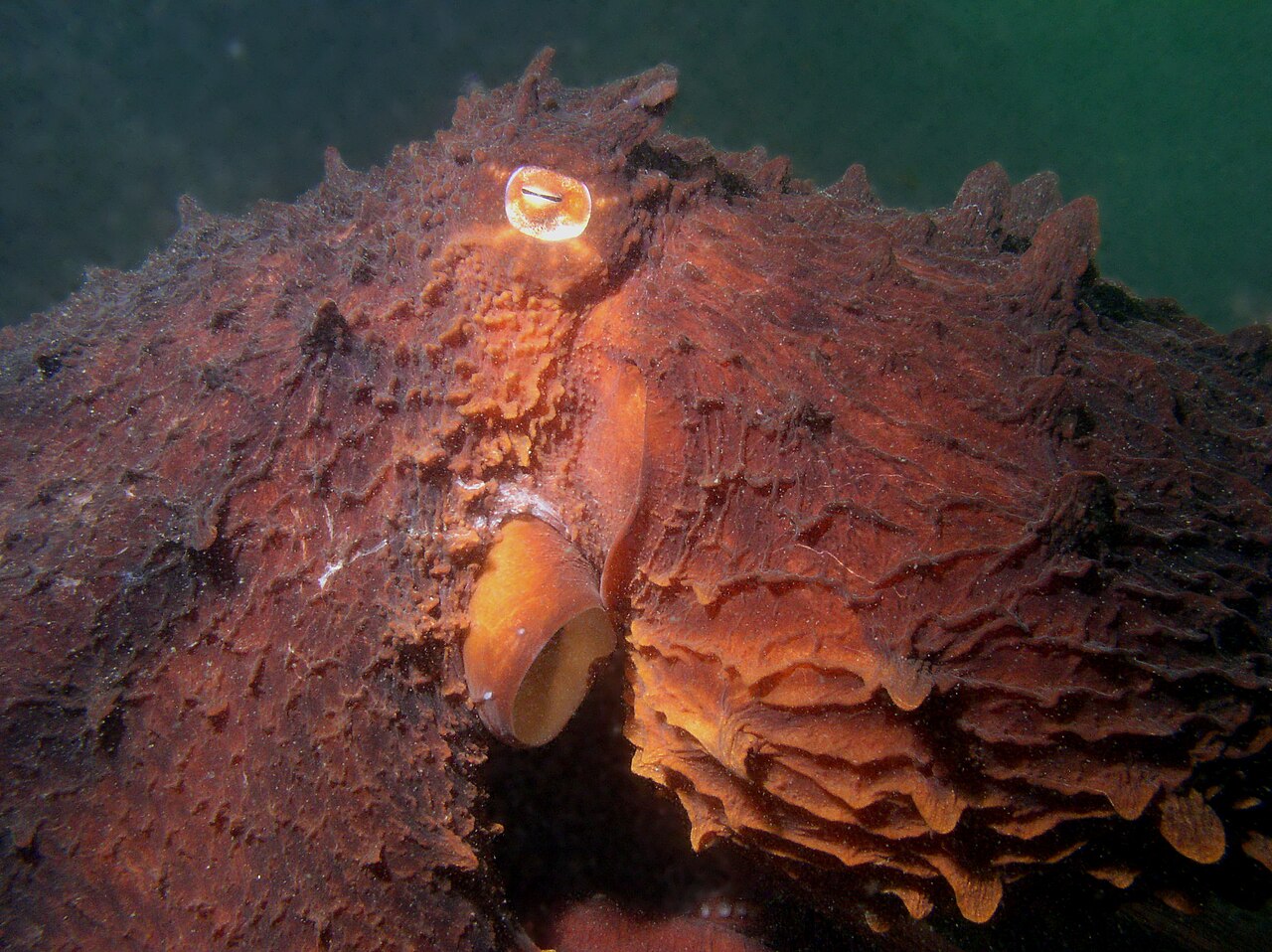
Raised structures called papillae add texture. The close-up photograph here shows folds and papillae on a giant Pacific octopus's skin.
Camouflage is therefore more than choosing a color. It can involve pattern, surface shape, and the position of the body.
Eight Arms Explore a Complicated World
An octopus can reach into cracks and investigate spaces that a rigid-bodied animal might struggle to enter.
Its suckers help grip surfaces and handle food. Much of the animal's life happens through contact with rocks, shelter, and prey.
These movements can look almost effortless. They are also a useful reminder that this hunter experiences the world in ways very different from ours.
What Does Octopus Intelligence Look Like?
Animal-care teams use puzzles and food containers to provide enrichment.
Oregon Sea Grant describes octopuses figuring out how to reach food placed inside jars or toys. Those observations show learning and flexible behavior, without needing to claim the animal thinks exactly like a person.
Careful observation is more revealing than a dramatic intelligence ranking.
A Short Life With Intensive Care
Giant Pacific octopuses generally live only a few years. Females guard their eggs through the final stage of life, helping protect and aerate them.
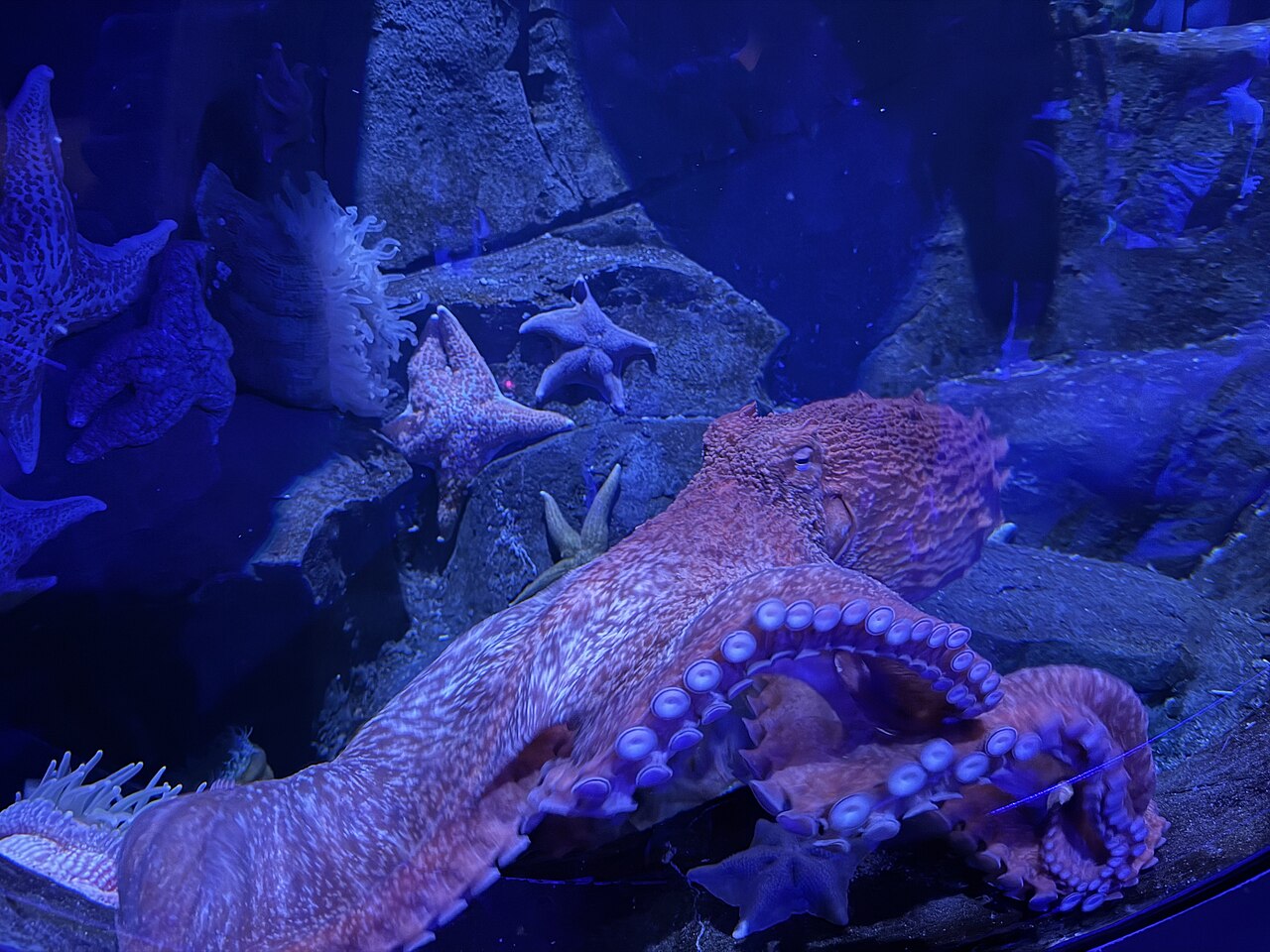
The aquarium photographs here show captive animals and are labeled accordingly. Such encounters can help people appreciate an animal that can be difficult to spot in the wild.
An Ocean Neighbor Worth Noticing
Give wild octopuses space and leave their dens undisturbed. A hidden animal still needs its shelter.
The giant Pacific octopus shows how much can happen in one soft-bodied form: a changing surface, exploring arms, patient hunting, and learning. Its real abilities make a patch of rocky seabed feel full of possibility.
Photograph Credits
Featured image: Famartin, CC BY-SA 4.0. Resized for display. Giant Pacific octopus at Adventure Aquarium, Camden; captive photograph.

Body image 1: Kirt L. Onthank, CC BY-SA 3.0. Resized for display. Close view of giant Pacific octopus skin, including raised papillae.

Body image 2: Famartin, CC BY-SA 4.0. Resized for display. A second view of the giant Pacific octopus at Adventure Aquarium; captive photograph.
