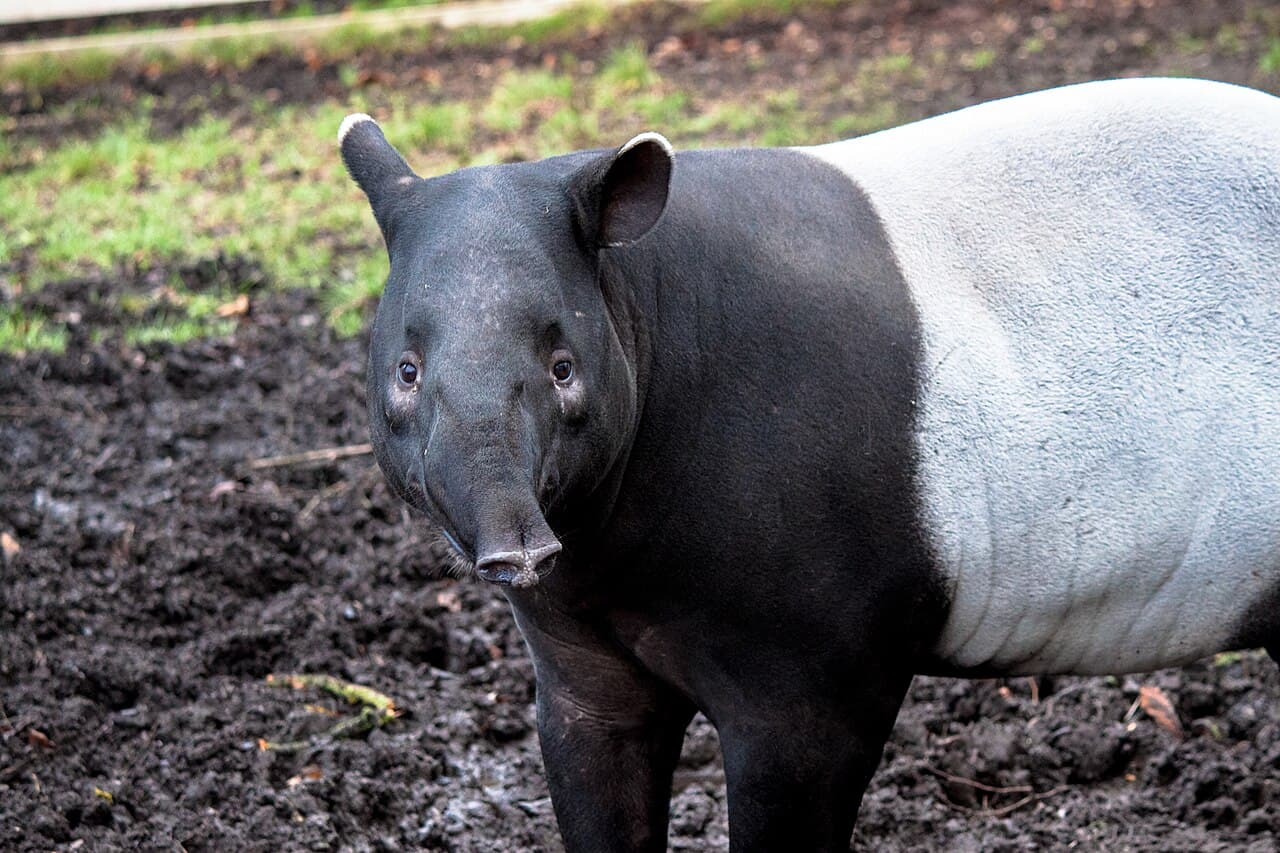
A short, flexible snout reaches for a leaf and pulls it toward a waiting mouth. Behind it stands a large mammal with a startling black-and-white coat.
The Malayan tapir looks unlike most animals in its forest home. Its shape and colors become even more interesting when we look at how it lives.
A Small Trunk With a Useful Job
A tapir's nose and upper lip form a movable snout.
San Diego Zoo describes this gripping structure as a tool for gathering leaves and fruit. It also helps the animal explore smells in dense vegetation.
The resemblance to an elephant's trunk is striking, but tapirs are more closely related to horses and rhinoceroses. A similar-looking feature can appear in animals with very different family histories.
Why the Black-and-White Pattern?
The Malayan tapir, Tapirus indicus, is the only living tapir species native to Asia.
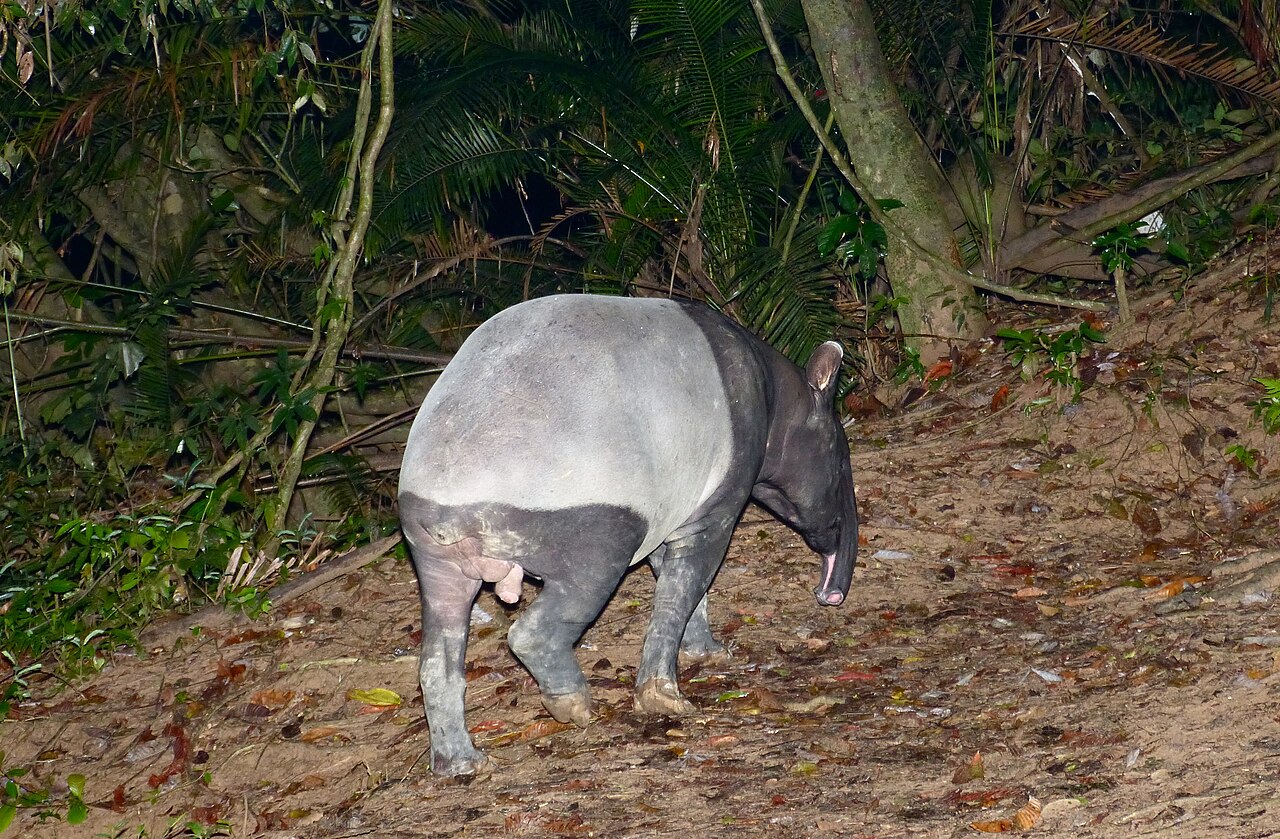
Its dark head and front end contrast with a broad pale area across the middle and rear body. In forest shade, the pattern can help break up its outline.
Against a plain background, it is hard to miss. Among trunks, leaves, and patches of light, the same pattern has a different effect.
A Forest Eater Near Water
Malayan tapirs live in parts of Southeast Asia, including Malaysia, Thailand, Myanmar, and Sumatra.
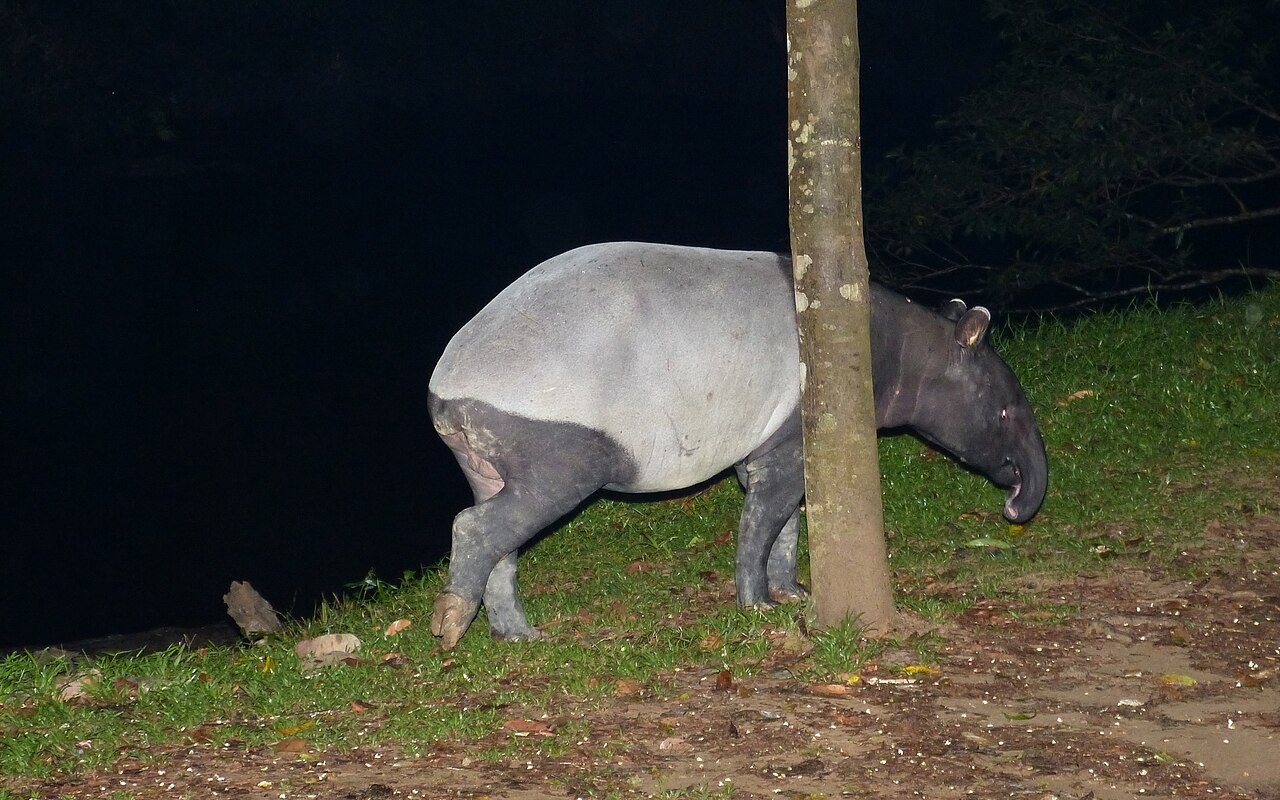
They feed on plants and make use of forest cover and water. Their flexible snout helps bring vegetation within reach without needing to move the whole head.
The body looks solid, but tapirs are capable swimmers. Water provides another part of their habitat rather than a barrier at its edge.
The Calf Wears a Different Coat
A young Malayan tapir does not begin with the adult's bold pattern. Calves have spots and stripes.
Chester Zoo's account of a calf's birth describes that patterned youngster and a pregnancy lasting about 13 months.
The change in coat is a reminder that an animal's appearance can tell us something about its stage of life.
Forest Loss Has a Cost
The Malayan tapir is listed as Endangered. Chester Zoo identifies hunting, logging, and deforestation among pressures on the species.
Protecting forest habitat means preserving places to feed, shelter, and reproduce. Breeding programmes can support conservation, while wild populations still need safe landscapes.
The Malayan tapir's extraordinary snout and coat are worth noticing. So is the quieter story behind them: a plant-eating mammal making its way through a forest that needs room to remain alive.
Photograph Credits
Featured image: Andy Hay, CC BY 2.0. Resized for display. Malayan tapir, Tapirus indicus.

Body image 1: Bernard DUPONT, CC BY-SA 2.0. Resized for display. Malayan tapir at Taman Negara National Park, Malaysia.

Body image 2: Bernard DUPONT, CC BY-SA 2.0. Resized for display. A second view of a Malayan tapir at Taman Negara.
