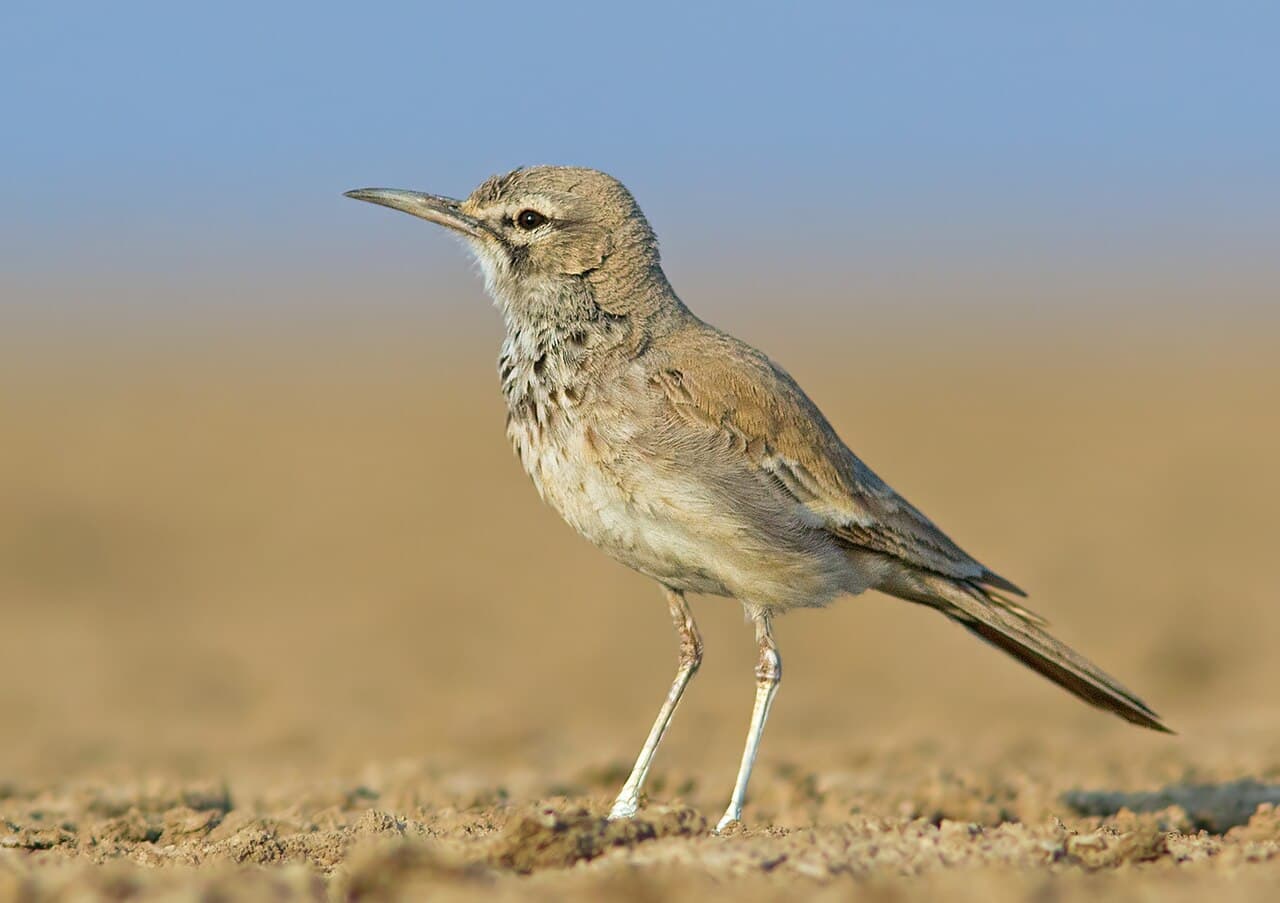
On the sand, a greater hoopoe-lark can seem almost the color of the desert itself. When it opens its wings, bold light-and-dark markings transform its appearance.
The greater hoopoe-lark, Alaemon alaudipes, rewards anyone willing to watch a quiet stretch of open country for a little longer.
A Lark With a Long Bill
This is a member of the lark family, despite the “hoopoe” in its name.
Its long legs and slender, curved bill suit a life spent moving over the ground and searching for food. KuwaitBirds describes birds running and digging in desert sand.
The pale body is easy to overlook. The flight pattern is much more conspicuous, with striking white areas contrasting against darker feathers.
A Wide Belt of Dry Country
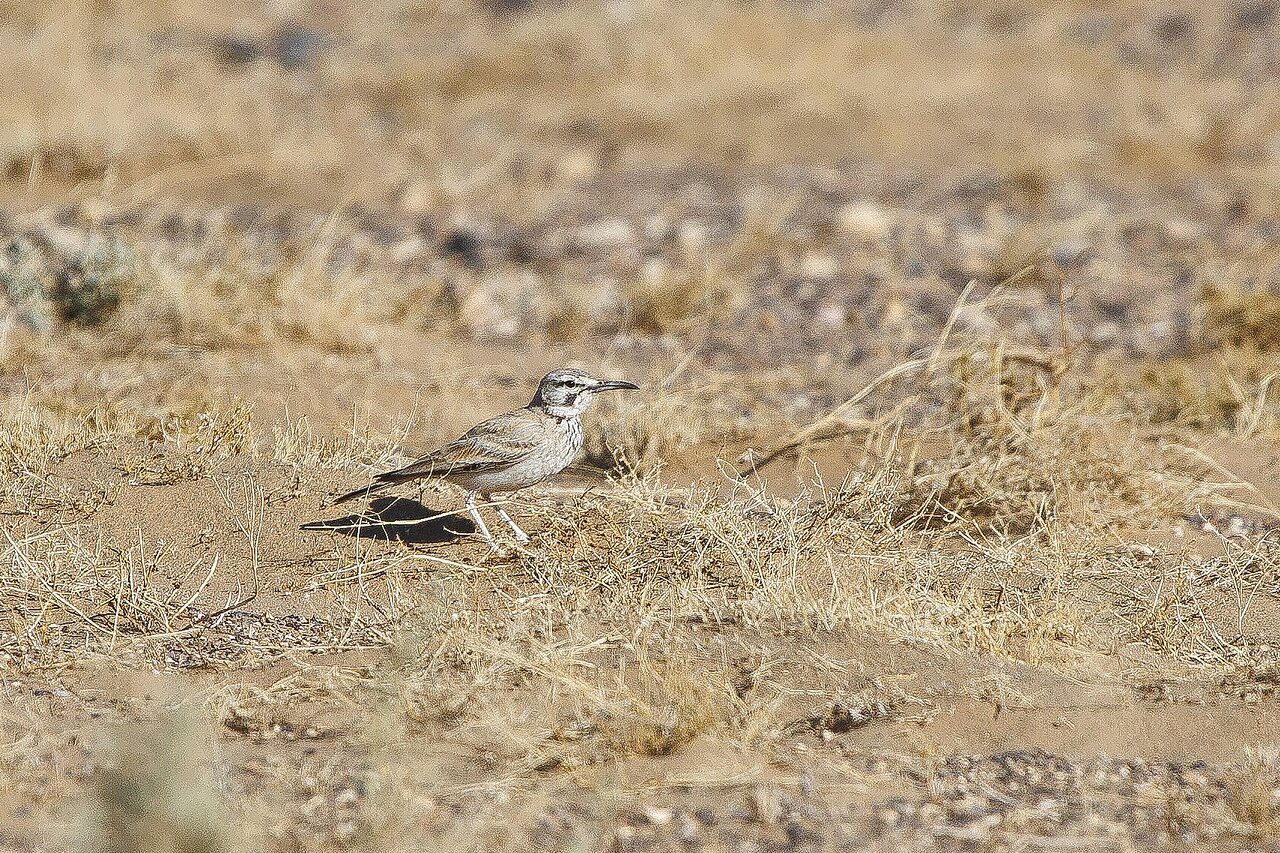
Greater hoopoe-larks occur across a broad region from the Cape Verde Islands and northern Africa through the Arabian Peninsula toward Pakistan and India.
Their world includes desert and semi-desert. That does not mean a landscape without life: small prey, vegetation, shelter, and shifting conditions all help determine where a bird can live.
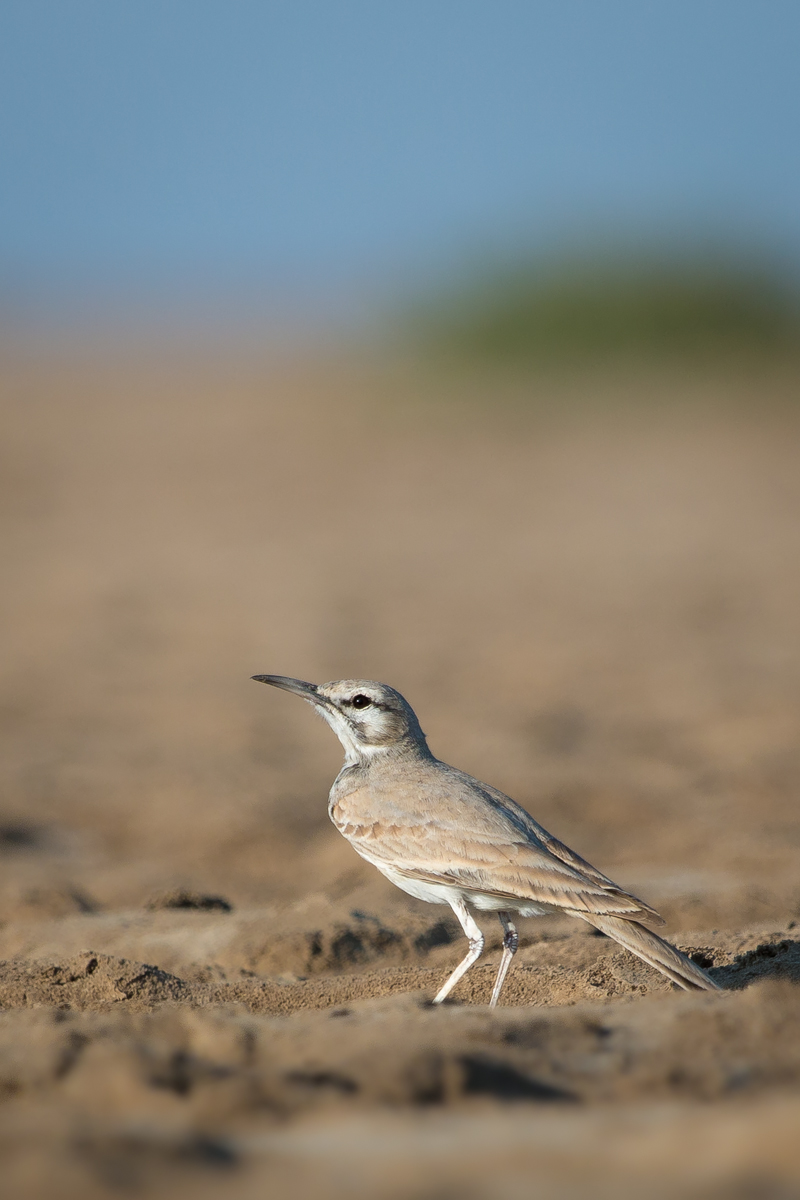
The photographs here include birds from India's Kutch region.
A Song Flight Above the Sand
During breeding, males perform aerial displays. KuwaitBirds describes a steep climb followed by twisting movements on the return toward a perch.
The spread wings turn plumage that was partly hidden on the ground into a clear visual signal.
That contrast is part of the pleasure of watching birds. A resting outline may reveal only a fraction of what happens when the animal begins to move.
Surviving Heat Takes More Than Pale Feathers
Scientists have studied how hoopoe-larks balance time, water, and energy in the Arabian Desert.
A field study in Functional Ecology examined these demands across different conditions. Related experimental work showed that decisions about feeding and cooling depend on the birds' physical state.
The lesson is simple even when the physiology is complex: survival involves changing behavior as conditions change.
Protecting an Apparently Empty Landscape
Local observers identify habitat loss and degradation as threats. Desert wildlife needs space even where vegetation is sparse.
Keeping vehicles on appropriate routes and watching from a distance can help avoid disturbing ground-dwelling birds.
The greater hoopoe-lark reminds us that a desert is not empty. Sometimes its colors are simply quiet—until a pair of wings opens.
Photograph Credits
Featured image: Supreet Sahoo, CC BY-SA 4.0. Resized for display. Greater hoopoe-lark in Kutch, India; source photograph cropped.

Body image 1: Mike Prince, CC BY 2.0. Resized for display. Greater hoopoe-lark, Alaemon alaudipes.

Body image 2: Sumeet Moghe, CC BY-SA 3.0. Resized for display. Greater hoopoe-lark in India's Little Rann of Kutch.
