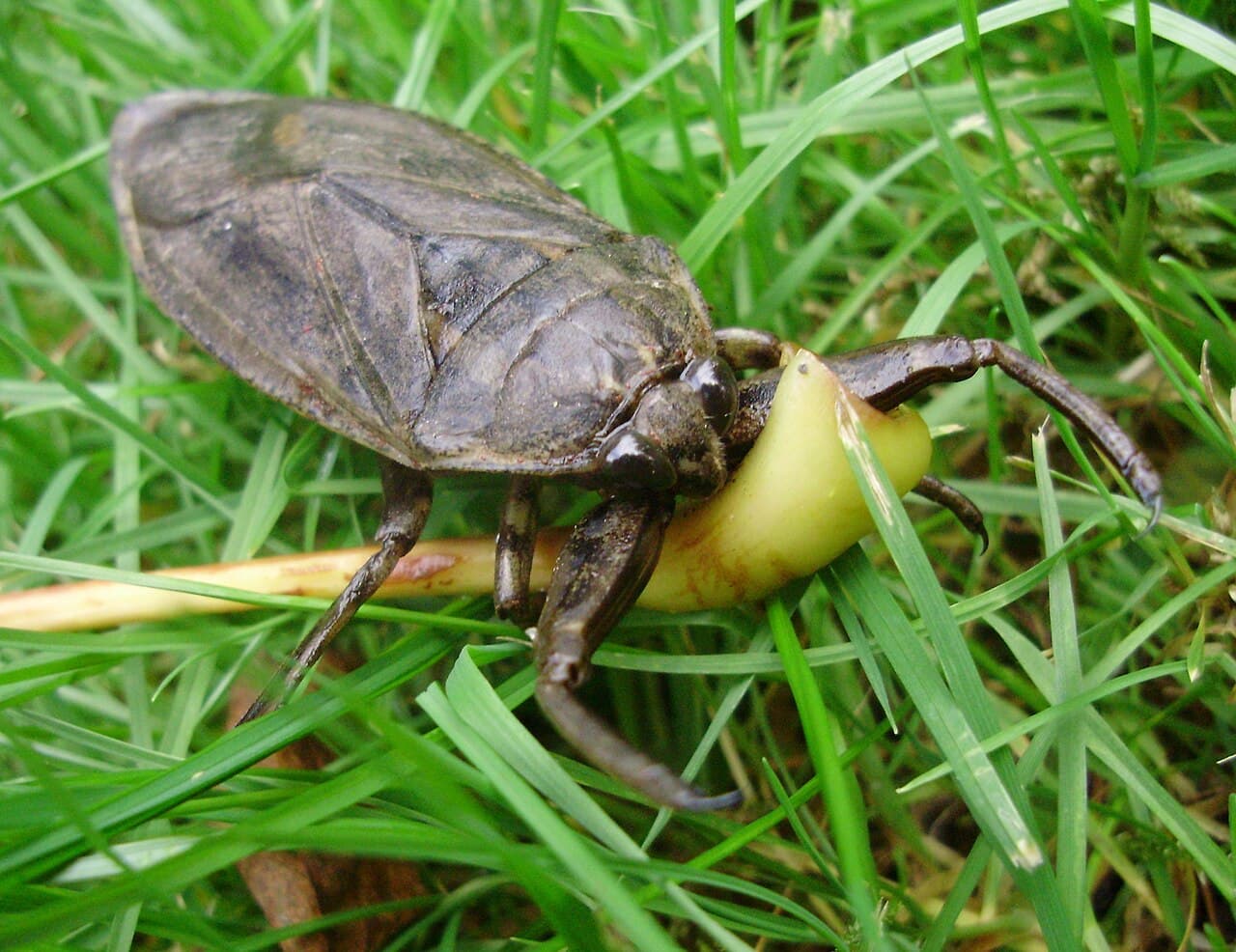
A pond insect sits almost motionless, its front legs ready. A small fish or tadpole passes close—and the still shape suddenly grabs it.
The giant water bug is a powerful predator on a small scale. Its life combines an ambush hunter's equipment with an unexpectedly careful approach to raising eggs.
What Makes It a True Bug?
Giant water bugs belong to the family Belostomatidae, within the true bugs.
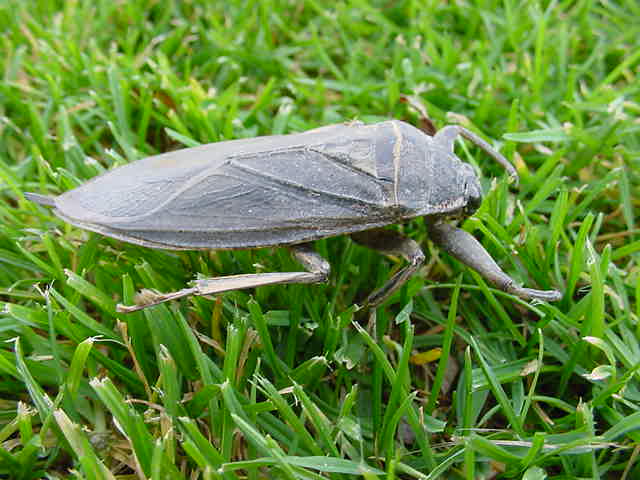
The Missouri Department of Conservation describes flattened bodies, grasping forelegs, and rear legs suited to swimming.
Their mouthparts form a piercing tube. Rather than chewing pieces from prey, the insects inject digestive saliva and take in the resulting liquid.
Can an Insect Catch a Fish?
Yes. Giant water bugs eat a range of aquatic prey, including insects, tadpoles, and small fishes. Some can overpower animals larger than themselves.
They often wait among vegetation rather than chase continuously. The front legs hold prey while the mouthparts do their work.
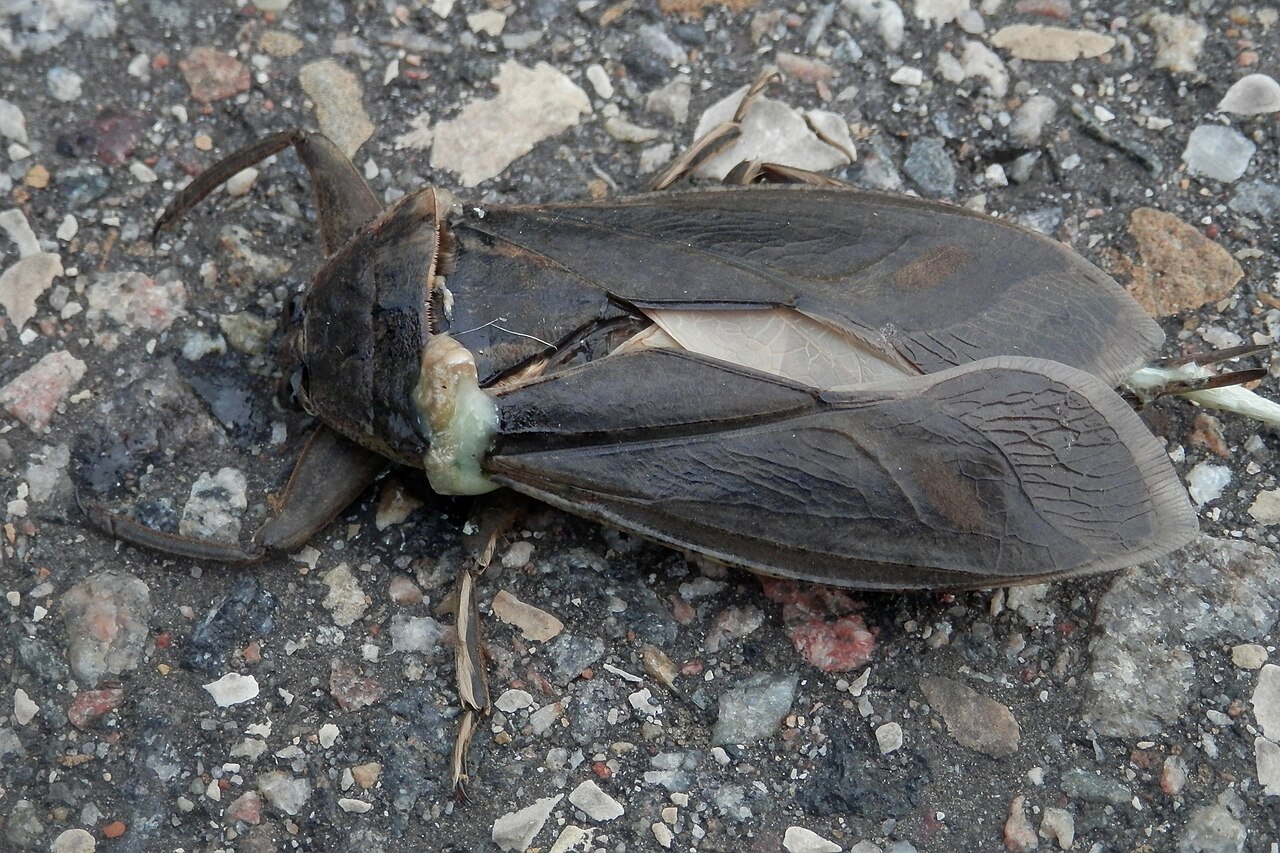
The photographs here show the American giant water bug, Lethocerus americanus, one member of a much larger family. Maximum size and prey choice vary among species.
An Underwater Animal That Breathes Air
The U.S. National Park Service explains that giant water bugs use an opening near the rear of the body to collect air at the surface.
They can also carry an air supply beneath their wings during a dive. Their underwater world still requires a connection to the air above it.
Some adults fly and are attracted to lights at night. That explains why a pond predator can sometimes appear surprisingly far from a pond.
Two Ways for Fathers to Guard Eggs
In some giant water bugs, females attach eggs to the male's back. He carries and tends them until they hatch.
That is not the rule for every species. In Lethocerus, males guard eggs attached to vegetation instead.
Both are examples of male parental care. They show why a striking animal fact becomes more interesting when we know exactly which animals it describes.
A Pond Worth Respecting
Giant water bugs can deliver a painful defensive bite. Observe them without handling them or disturbing their cover.
They are hunters, but they also become food for other wildlife. A healthy freshwater habitat supports both sides of that relationship.
The giant water bug turns an ordinary pond into a place of gripping drama—and reminds us that careful parenting can appear in unexpected forms.
Photograph Credits
Featured image: The High Fin Sperm Whale, CC BY-SA 3.0. Resized for display. American giant water bug, Lethocerus americanus, in British Columbia.

Body image 1: Ken Aycock, CC BY-SA 3.0. Resized for display. Lethocerus americanus photographed in Montana.

Body image 2: Ryan Hodnett, CC BY-SA 4.0. Resized for display. American giant water bug in Saskatoon, Saskatchewan.
