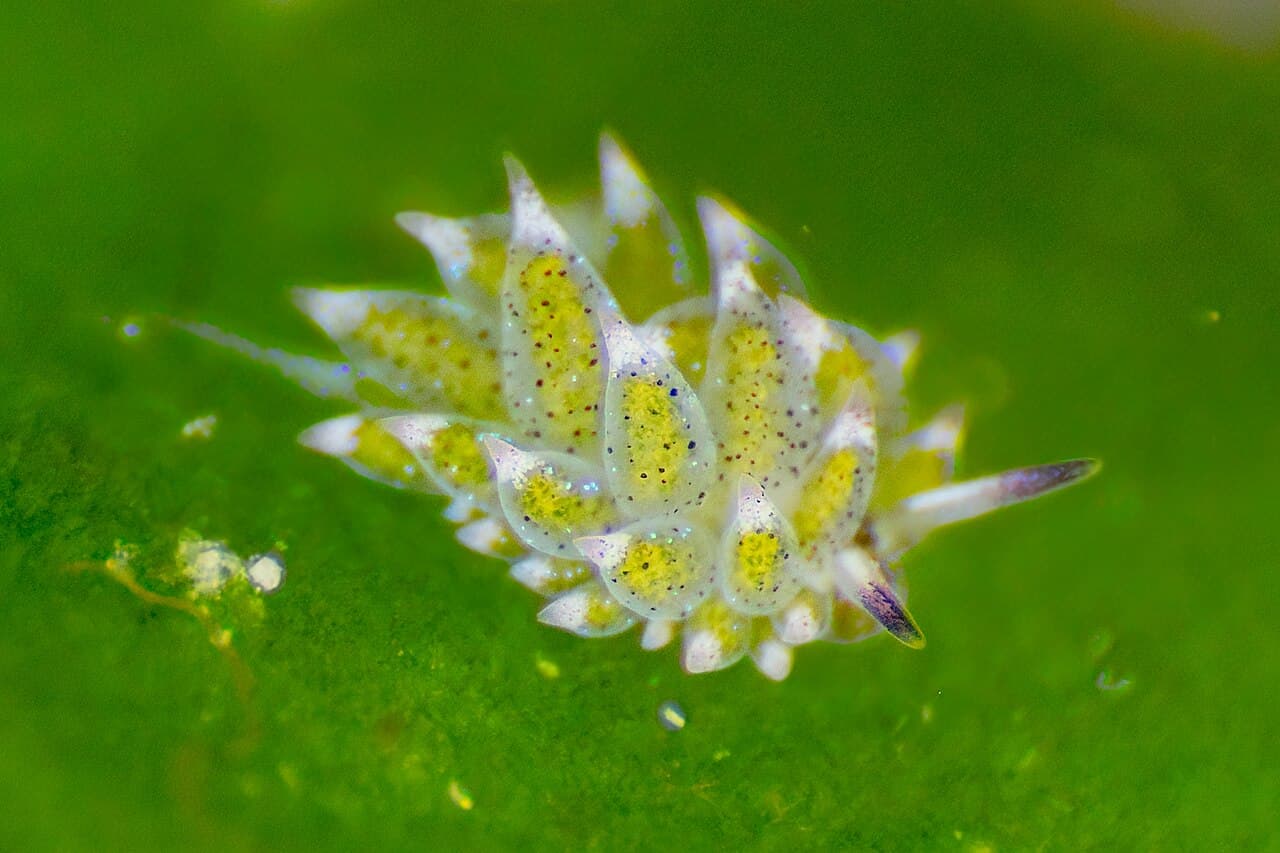
It looks a little like a green sheep, complete with a pale face and dark-tipped “ears.” Yet this tiny creature lives on algae beneath the sea.
The leaf sheep, commonly identified as Costasiella kuroshimae, is a sea slug. Its charm is real, but the biology behind its appearance is even more interesting.
A Sheep-Like Face, Explained
The upright structures on the head are rhinophores, sensory organs rather than ears.
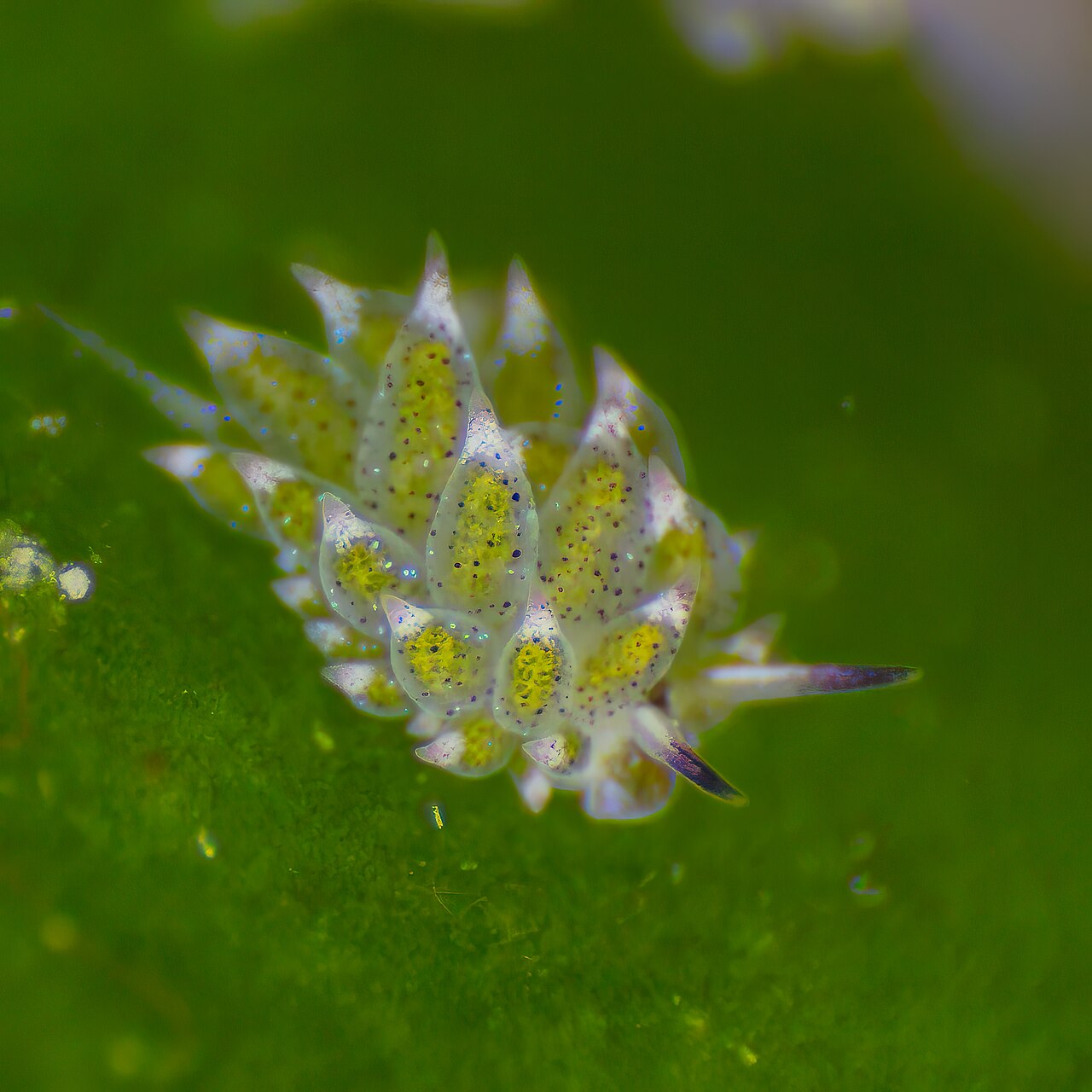
Behind the head are many leaf-like projections called cerata. The Australian Museum's Sea Slug Forum describes green cerata with pale tips and a white head marked with darker lines.
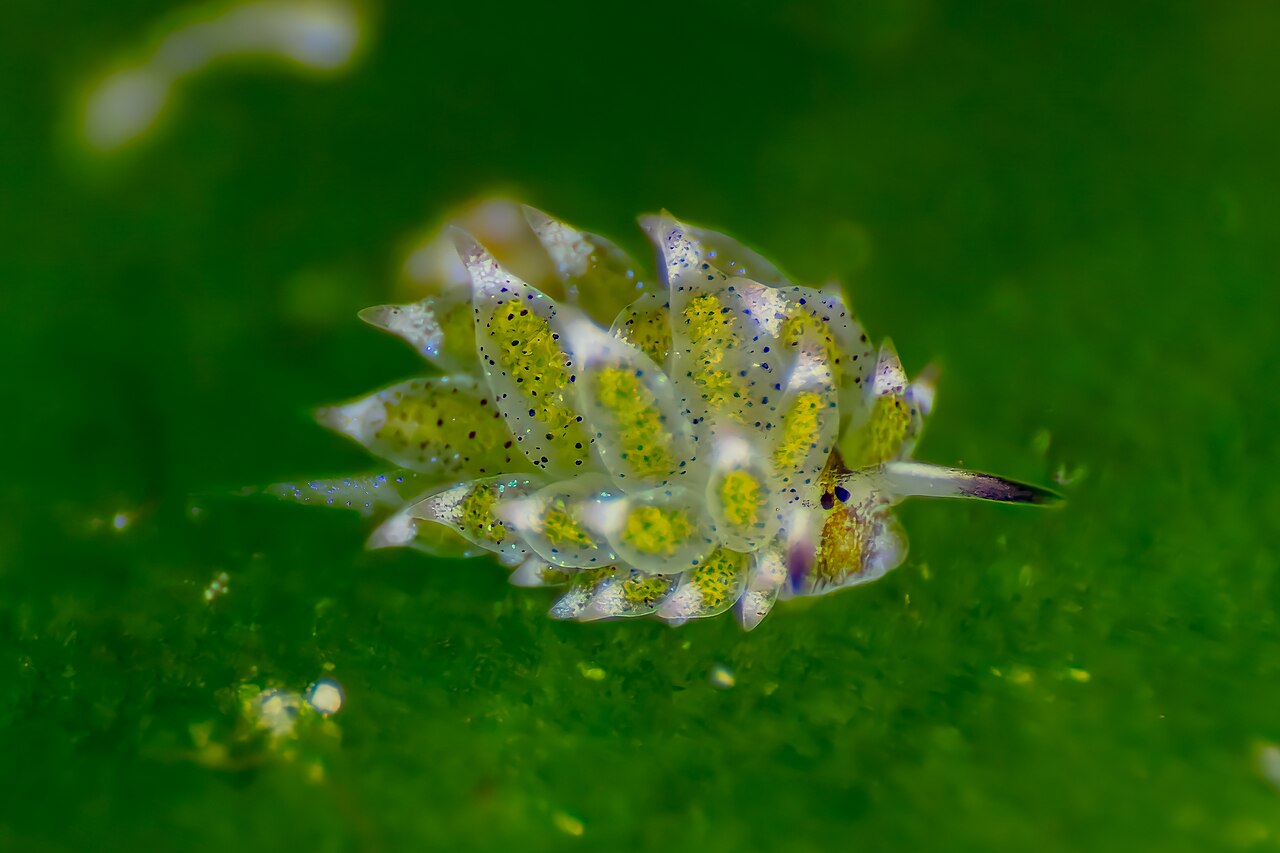
Magnified photography makes this minute animal look much larger. The pictures here are macro photographs taken in Anilao, Philippines.
A Grazer Among Algae
Leaf sheep belong to the sacoglossan sea slugs, a group associated with feeding on algae.
The green appearance is connected to that food. Some sacoglossans can retain chloroplasts—the light-capturing parts of algal cells—after eating the algae.
This process is called kleptoplasty. The word refers to “stolen” chloroplasts, though no human idea of theft is involved.
Does the Leaf Sheep Photosynthesize?
The careful answer is that retained algal chloroplasts can carry out photosynthesis within certain sea slugs.
Experimental research on chloroplast retention includes Costasiella material identified near C. kuroshimae. It places the phenomenon within a wider range of abilities among sea slugs.
That does not make the animal a plant. Nor does it mean every green slug can live indefinitely on sunlight. How long chloroplasts remain functional, and how much they help, depends on the species and conditions.
Why Identification Takes Care
The Sea Slug Forum also records expert uncertainty about separating similar Costasiella species from photographs alone.
That is a useful reminder: an appealing face is easier to recognize than every detail needed for a scientific identification. Photographs here follow their source identification as C. kuroshimae.
A Small Animal Worth a Closer Look
Observing tiny reef animals calls for patience and gentle behavior. Leave algae and the animals attached to them in place, rather than repositioning them for a picture.
The leaf sheep's wonder is not just that it resembles something familiar. It is that an animal a few millimeters long can open a window into one of biology's most unusual partnerships: an animal cell and a chloroplast from its food.
Photograph Credits
Featured image: Diego Delso, delso.photo, CC BY-SA 4.0. Resized for display. Leaf sheep, Costasiella kuroshimae, photographed in Anilao, Philippines.

Body image 1: Diego Delso, delso.photo, CC BY-SA 4.0. Resized for display. A macro view of a leaf sheep's leaf-shaped cerata in Anilao.

Body image 2: Diego Delso, delso.photo, CC BY-SA 4.0. Resized for display. Another macro view of Costasiella kuroshimae in Anilao.
