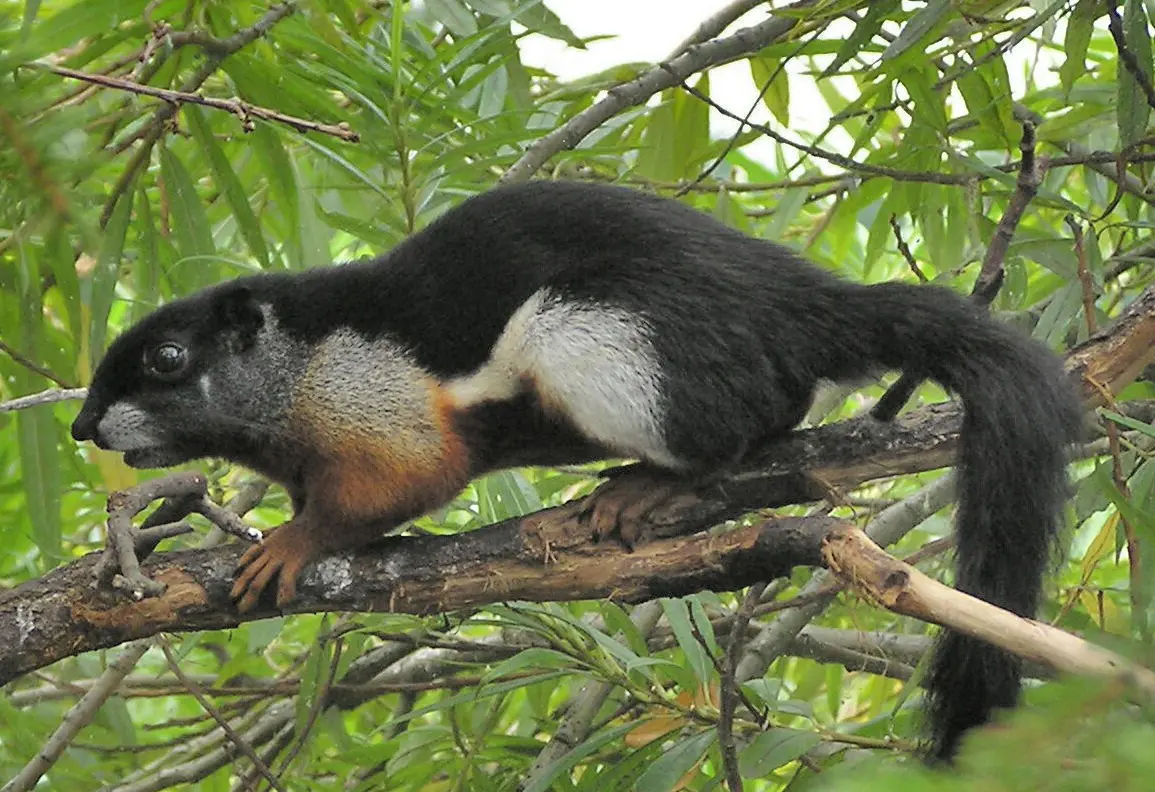
Black above, reddish below, and divided by a pale stripe: Prevost’s squirrel wears one of the most striking coats in the squirrel family.
Callosciurus prevostii is a Southeast Asian tree squirrel. Its markings vary across its range, but the familiar three-color pattern makes many individuals easy to recognize.
Made for bark and branches
The Smithsonian’s National Zoo describes sharp-clawed toes that grip tree trunks and a tail that helps with balance during climbing and jumping.
A branch is more than a perch. It is part of a route through a layered forest, connecting food, shelter, and the next place to explore.
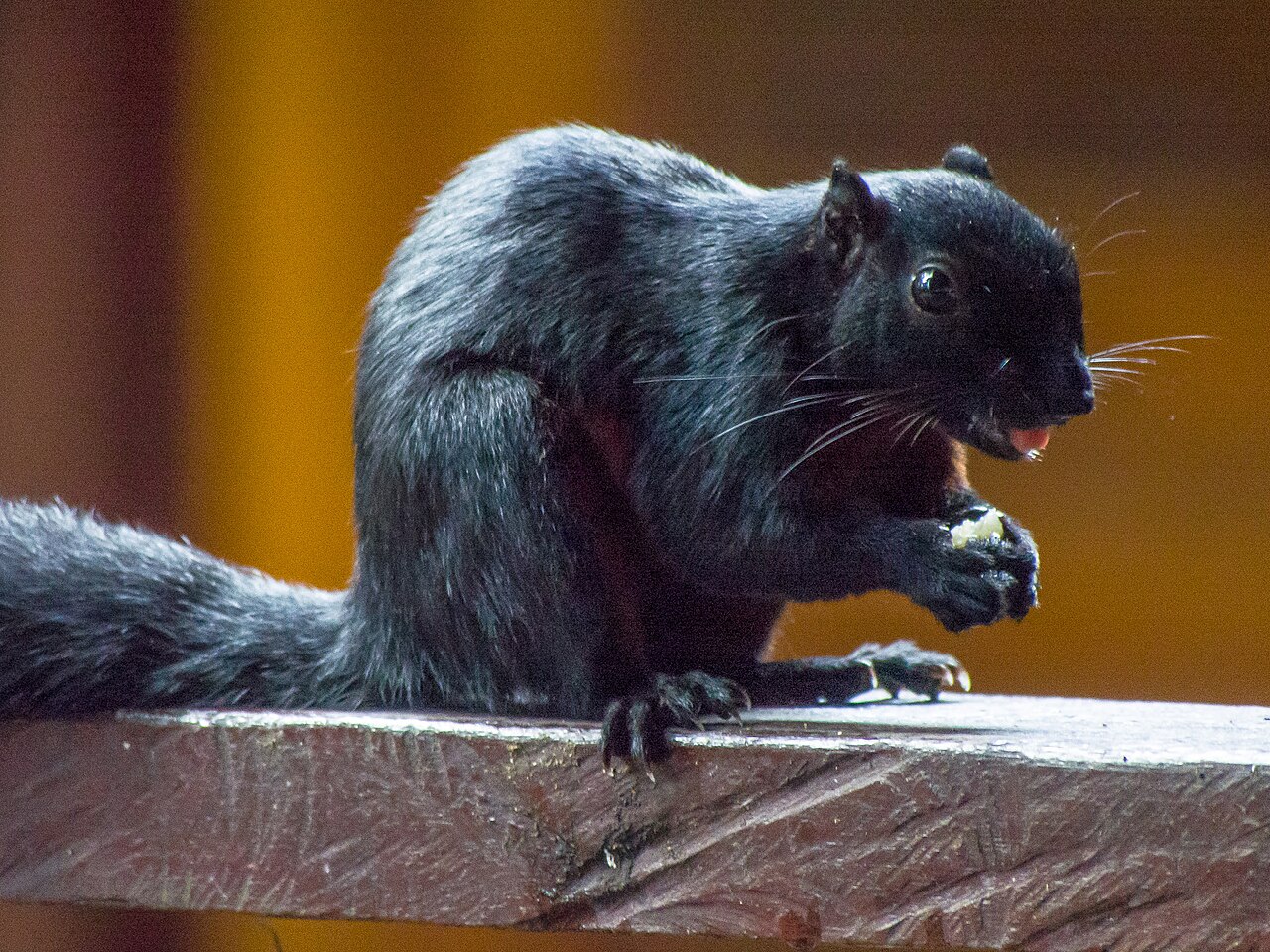
A tail with more than one job
The tail can also be used like a signaling flag. Calls, including trills and loud whistles, add another way to communicate.
Fruit, nuts, seeds, buds, flowers, and some animal foods appear on the menu. At night, these squirrels can rest in tree hollows or nests of leaves and twigs, wrapping their tails around themselves.
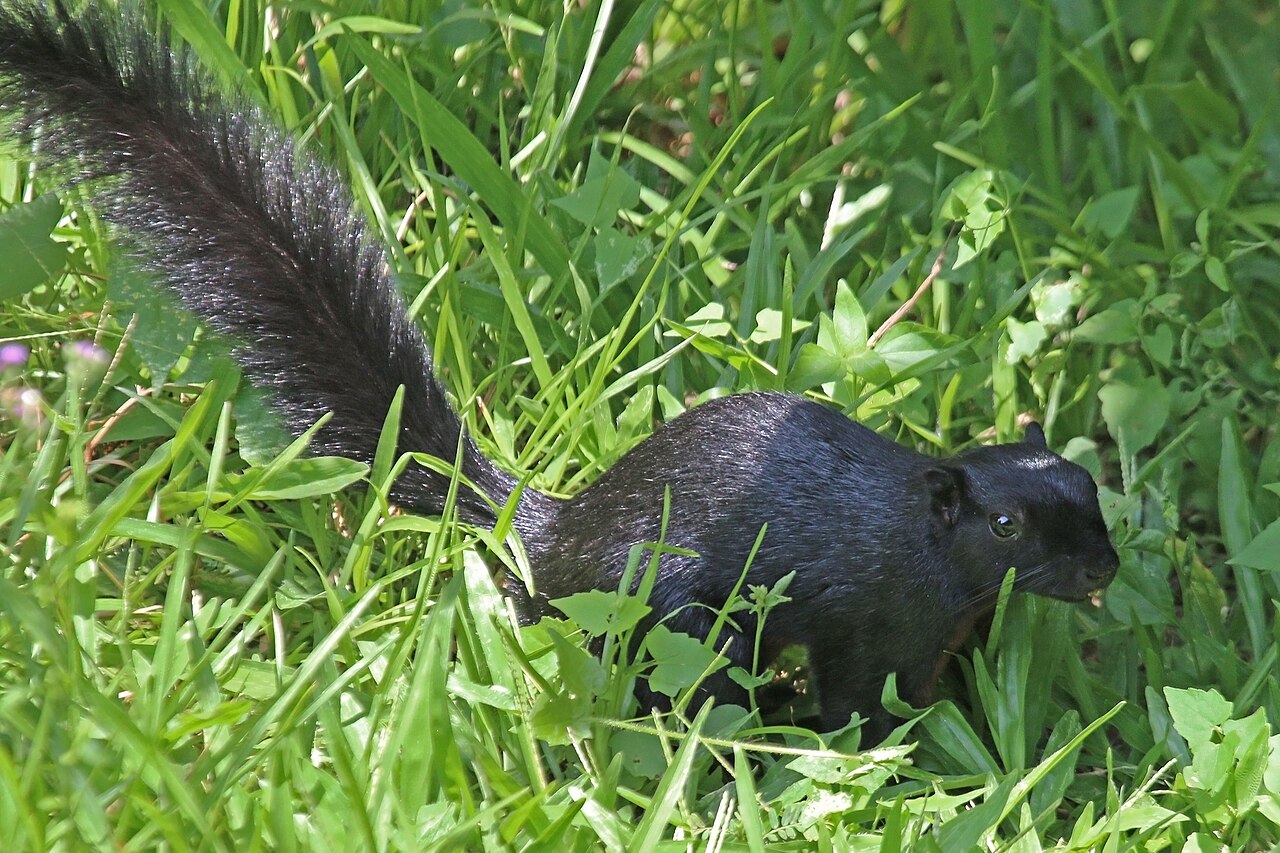
Beauty needs a home
Plantation expansion has reduced habitat, while collection for the pet trade adds pressure in parts of the range. Keeping suitable forests intact gives these animals room to remain wild.
A bright coat is the first reason to look. Watching the paws grip, the tail shift, and the animal choose its next branch reveals a deeper kind of beauty: every movement belongs to a life shaped by trees.
Photo credits
Featured image: Callosciurus prevosti.jpg — Karakal; CC BY-SA 3.0.

Body photograph: Prevost's Squirrel (14157558424).jpg — Mike Prince from Bangalore, India; CC BY 2.0.

Body photograph: Prevost's squirrel (Callosciurus prevostii pluto).jpg — Charles J. Sharp; CC BY-SA 4.0.

Photographs resized for web display where available. Existing crops are identified in their source filenames.