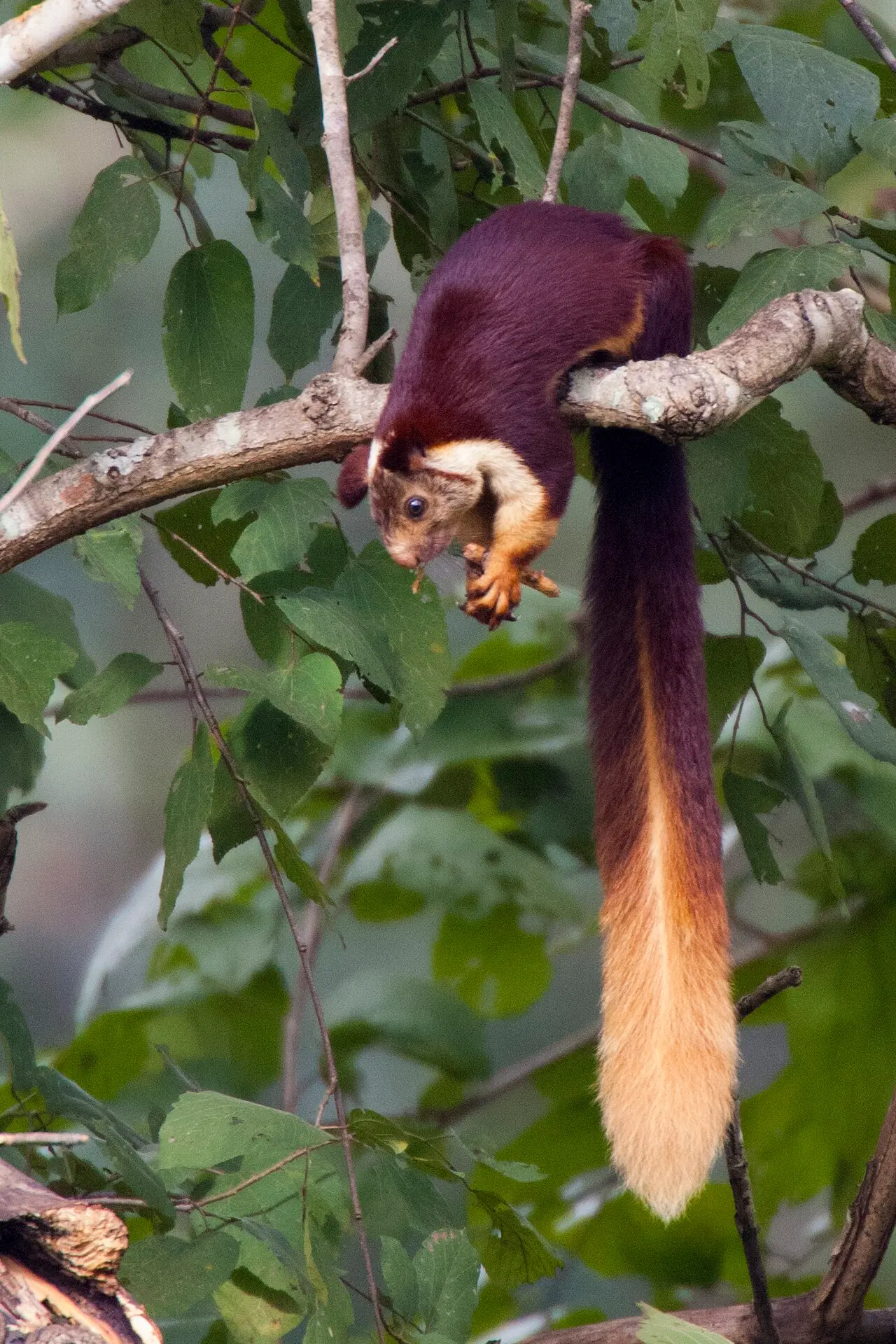
A squirrel with a long, flowing tail and rich patches of dark red, brown, and cream can look almost unreal. The Indian giant squirrel is real—and its remarkable coat belongs to an animal built for the treetops.
Ratufa indica, also called the Malabar giant squirrel, lives in peninsular India. Its colors vary, so no single photograph represents every individual.
A giant on the branches
Animal Diversity Web describes a squirrel whose tail can be about as long as its body. Strong claws and broad gripping paws help it hold onto bark and branches.
These details matter more than a colorful portrait alone can show. An animal living high above the ground needs dependable contact with a moving, uneven world.
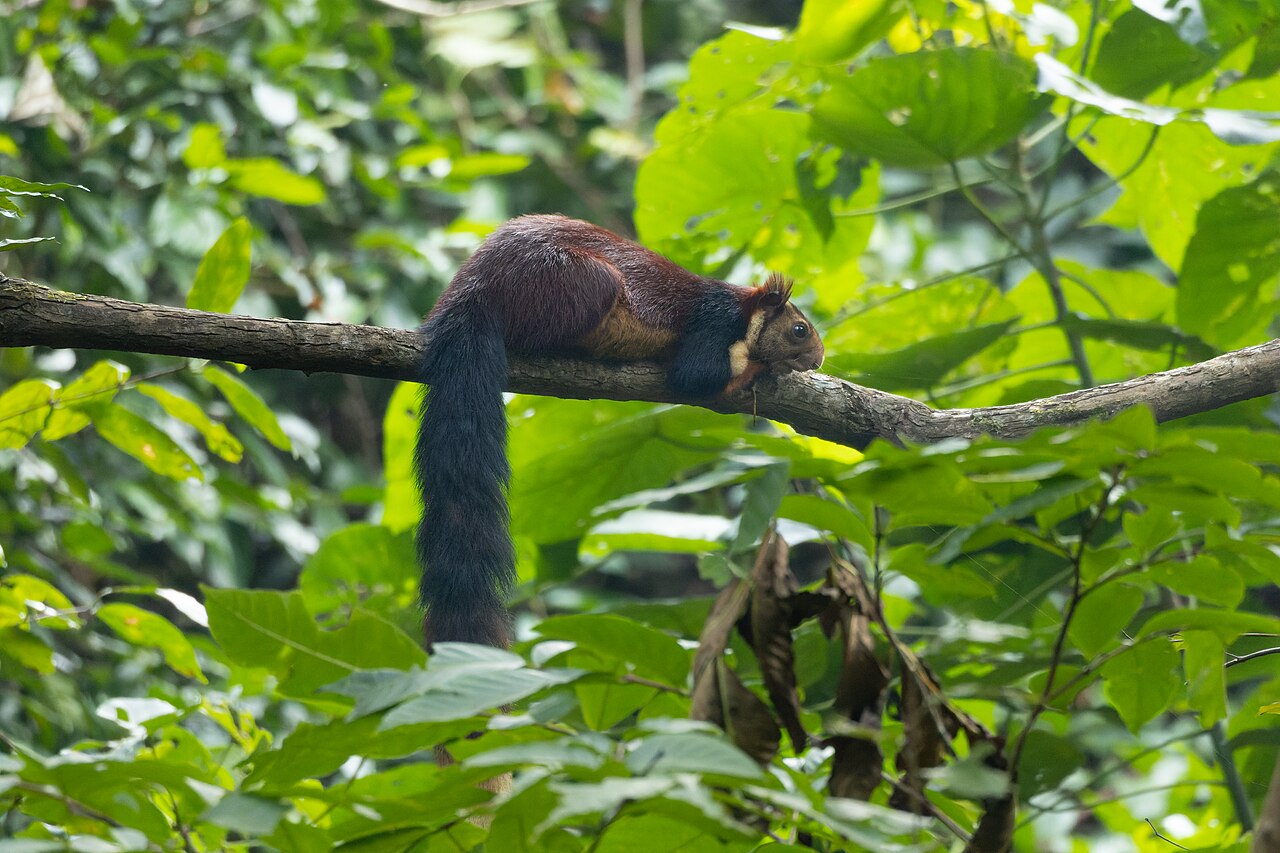
A forest life overhead
Indian giant squirrels spend much of their time in trees and can make impressive leaps between them. Their lives depend on the structure of the canopy as well as the presence of individual trees.
Look closely at an overhead branch and a shape that seemed like a dark bundle of leaves may resolve into a squirrel, complete with a long tail.
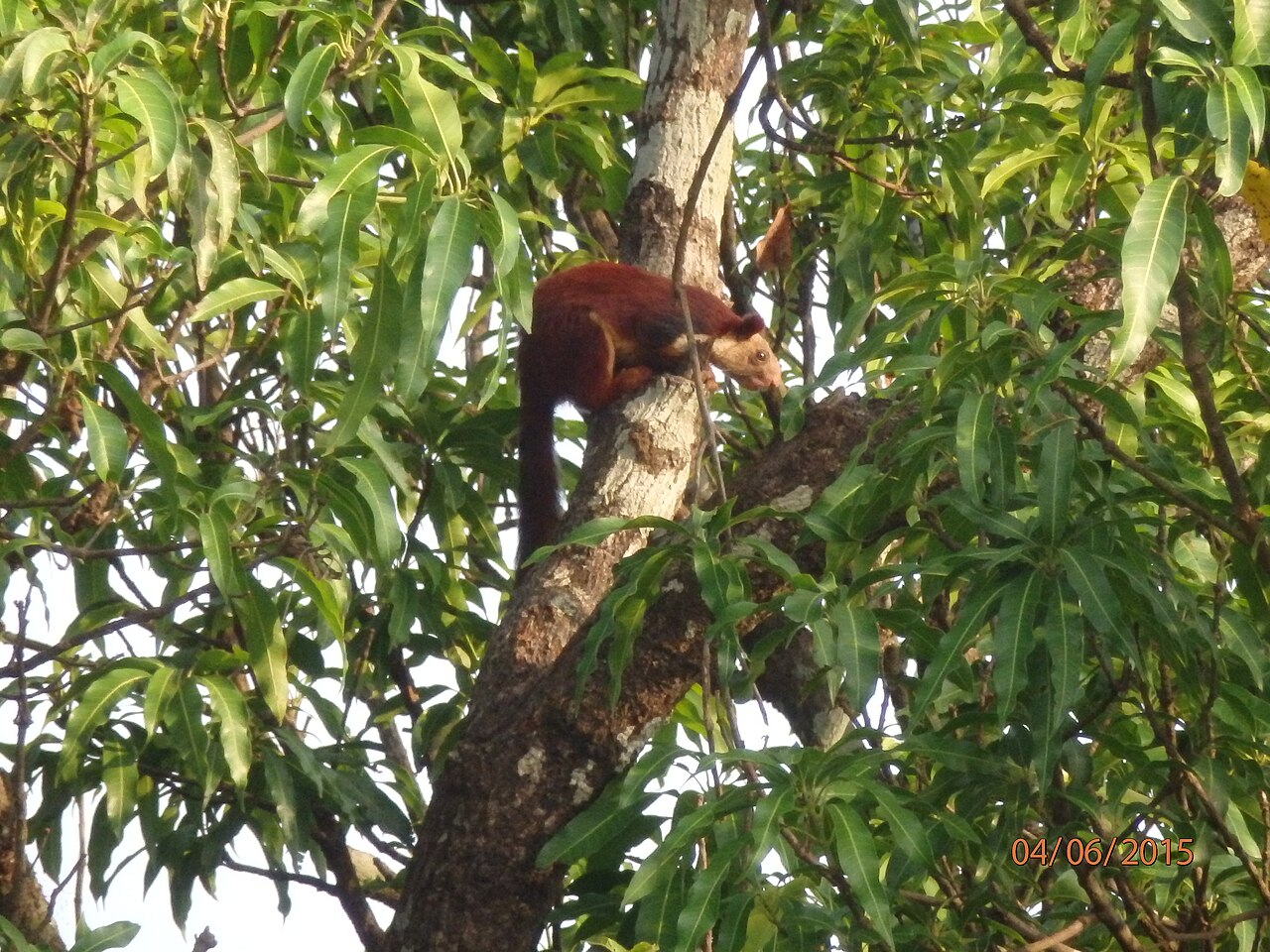
Keep the canopy connected
Deforestation reduces the forest available to these animals. Protecting linked stretches of habitat helps preserve places to feed, shelter, and move.
A giant squirrel is more than a beautiful visitor to a photograph. It is a living part of an Indian forest—and a reason to appreciate the busy world above our heads.
Photo credits
Additional body photograph: Indian Giant Squirrel in Amba.jpg — Phadke09; CC BY-SA 4.0.

Body photograph: Indian giant squirrel by Tisha Mukherjee 01.jpg — Tisha Mukherjee; CC BY-SA 4.0.

Featured image: Ratufa indica (Bhadra, 2006).jpg — Yathin S Krishnappa; CC BY-SA 3.0.

Photographs resized for web display where available. Existing crops are identified in their source filenames.