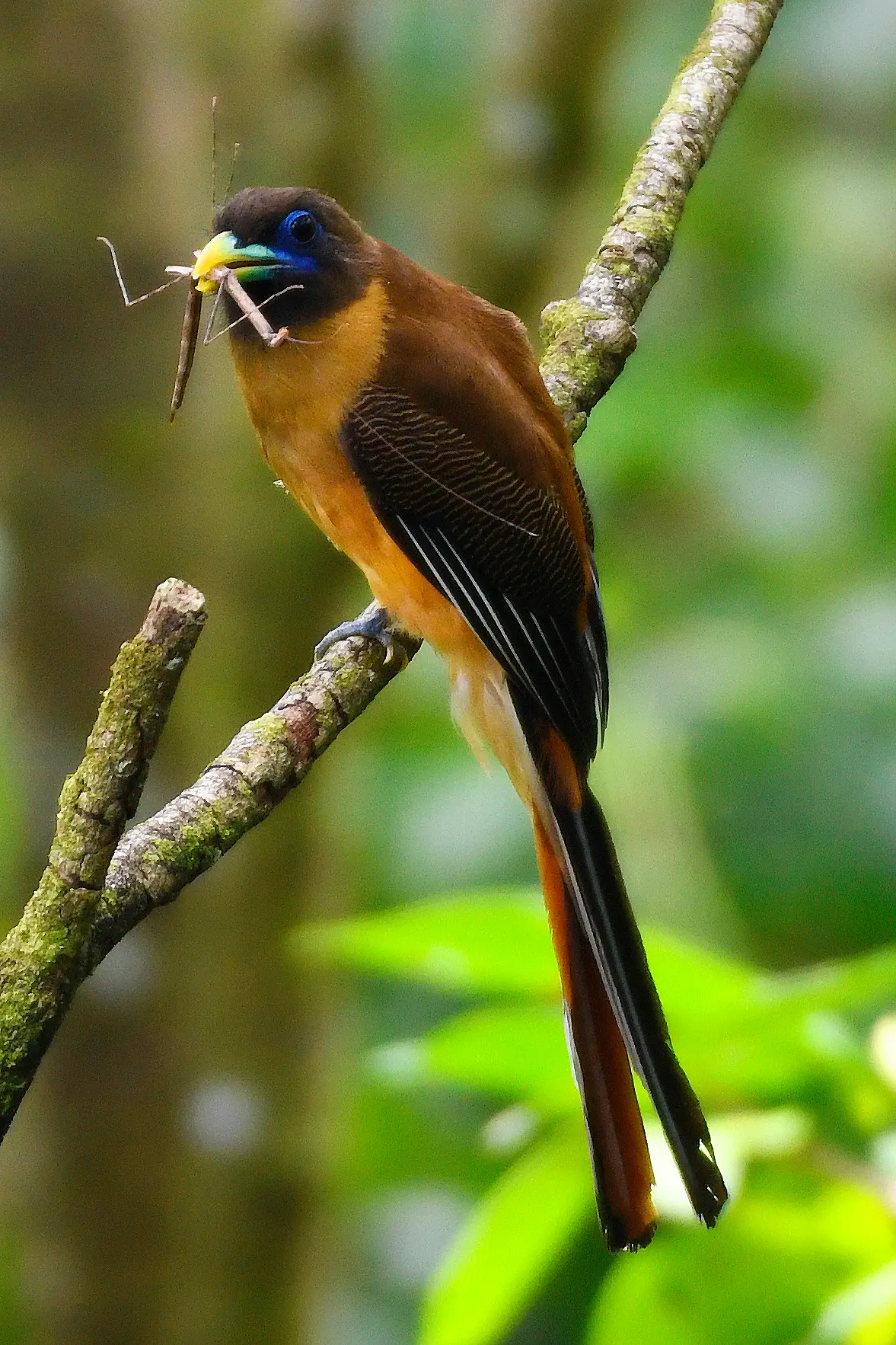
A male Philippine Trogon can turn a shaded branch into a flash of red. Dark head feathers, a pinkish chest, and a vivid belly create a striking contrast in the forest.
Harpactes ardens is found only in the Philippines. Its appearance has drawn comparisons with the legendary Ibong Adarna, but the living bird has its own story.
A patient search in the forest
A firsthand account by wildlife photographer and naturalist Gregg Yan describes the patience involved in watching these birds.
Brilliant color does not guarantee an easy sighting. Branches, leaves, shadow, and an unmoving bird can make a forest seem empty when it is not.
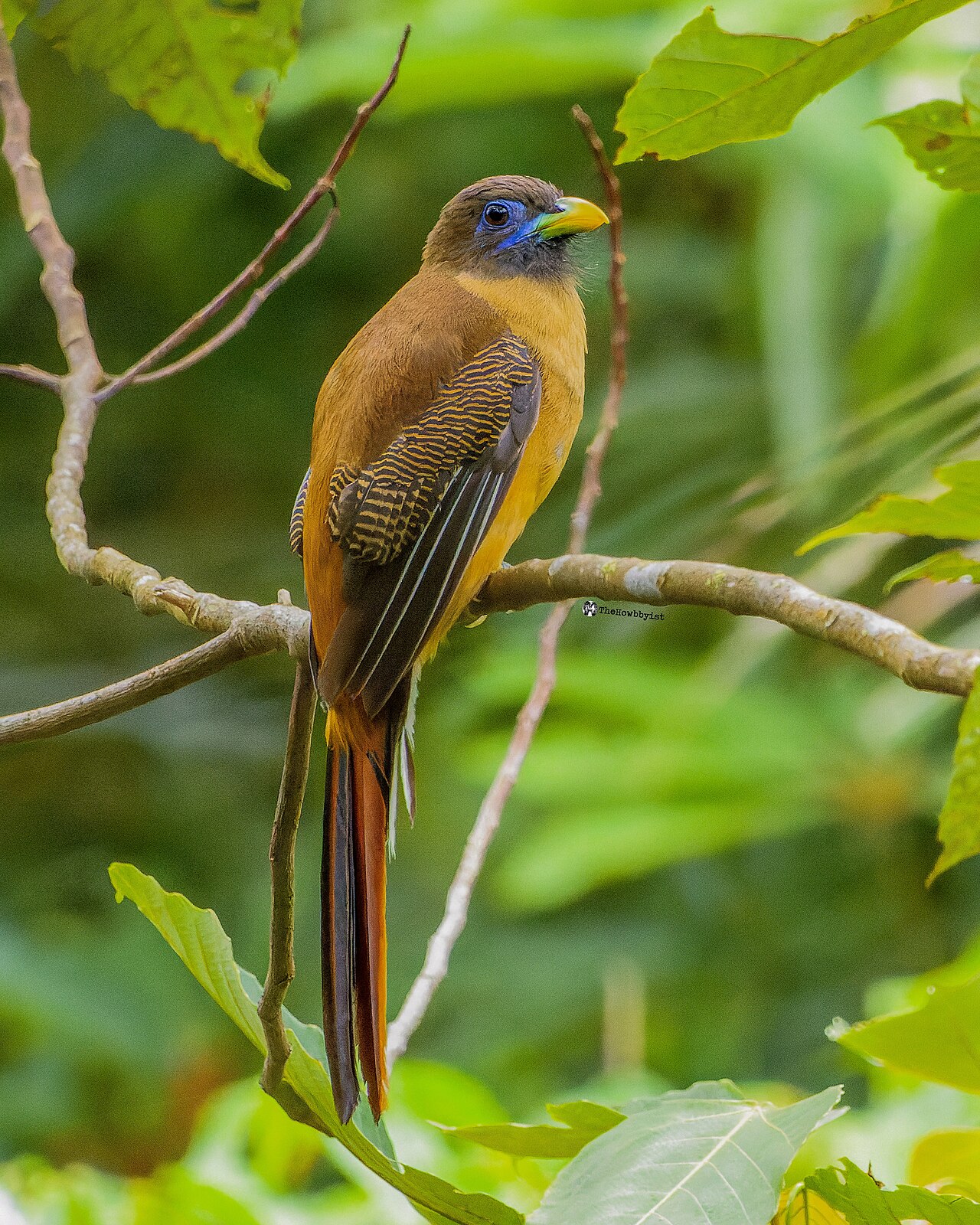
Two different portraits
Females are much more subdued, with warmer brown and mustard tones rather than the male’s dramatic red-and-dark combination.
That difference matters when looking through photographs. A quieter-colored trogon is not a less remarkable bird, and it should not be overlooked simply because the male is better known.
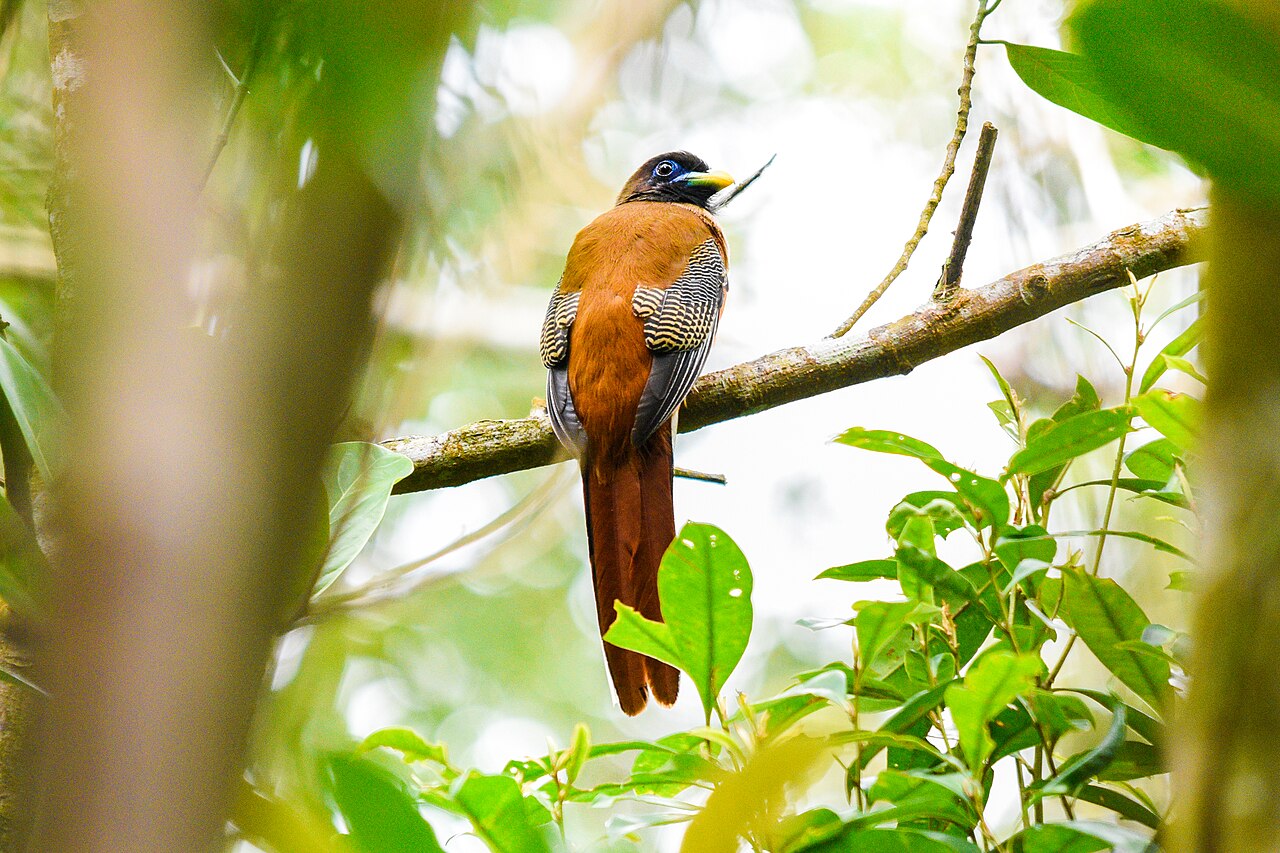
A reason to protect Philippine forests
The Philippines’ Department of Environment and Natural Resources recorded the species during a bird assessment at Bulusan Volcano Natural Park.
Such surveys help document the wildlife that forests support. Keeping those habitats intact protects the living community around each sighting.
A glimpse of a trogon is a reward for looking carefully. Its beauty becomes even richer when we see it as part of a Philippine forest, rather than only a colorful portrait.
Photo credits
Featured image: Philippine Trogon (Harpactes ardens).jpg — Ranieljosecastaneda; CC BY-SA 4.0.

Body image 1: PhilippineTrogonFemale.jpg — Albert Abadicio; CC BY 4.0.

Body image 2: Philippine Trogon Ibong Adarna.jpg — EMMAN A. FORONDA; CC BY-SA 4.0.

Photographs resized for web display where available. Existing crops are identified in their source filenames; captive birds and younger birds are identified in captions.