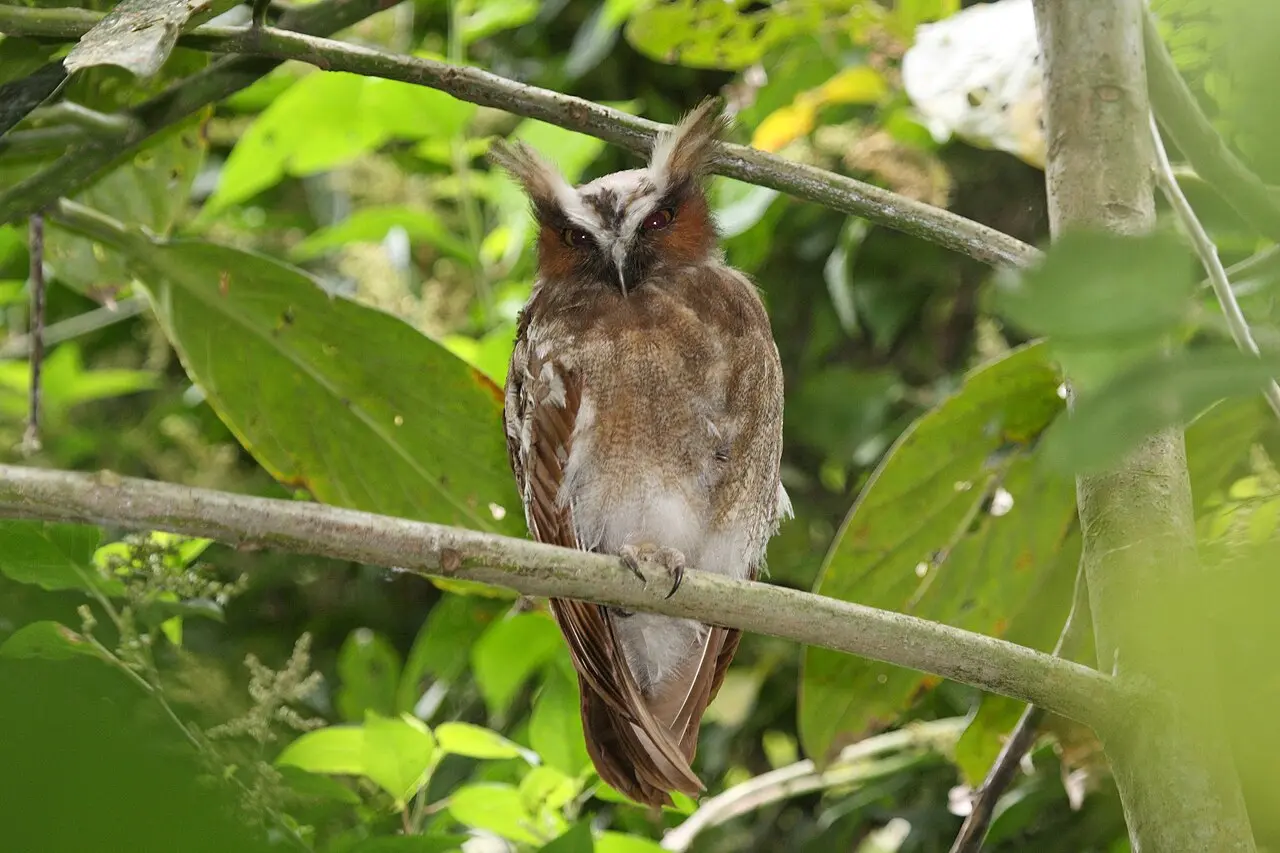
A Crested Owl can look as though two white flames rise from its head. Long pale feather tufts and bold brow markings create an extraordinary face in the dim forest.
Lophostrix cristata is a tropical American owl. Its appearance is memorable enough that even a brief view can become the highlight of a night walk.
Feathers rather than ears
The projecting tufts are feathers, not the owl’s actual ears. Like other owls, it has ear openings hidden beneath plumage.
That distinction helps us appreciate the head correctly. The visible “horns” are part of its outline, while hearing depends on structures we usually cannot see.
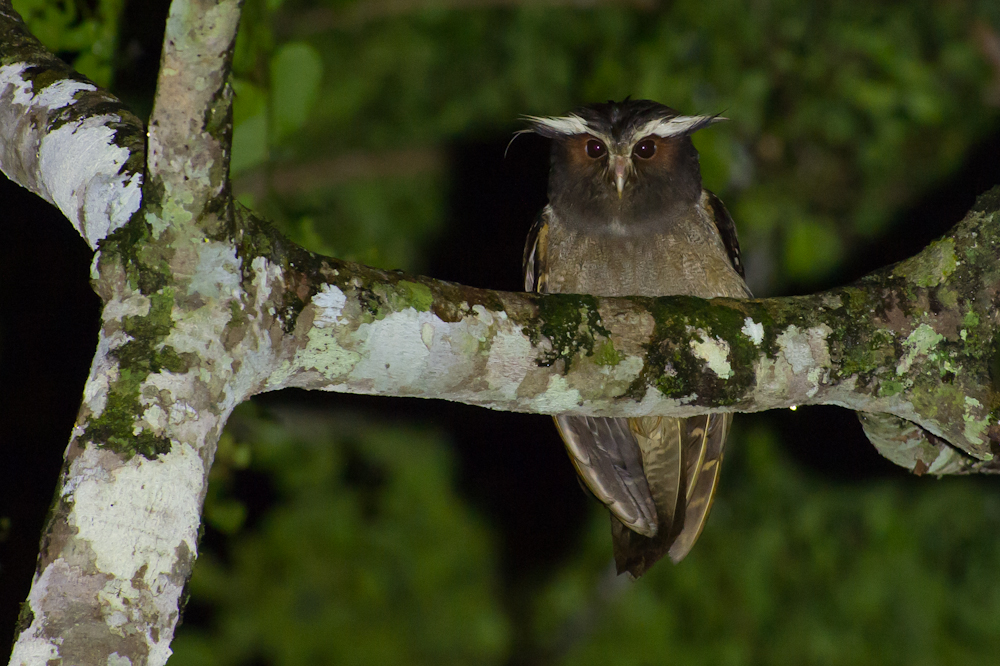
A resident of tropical forests
The American Ornithological Society checklist records Crested Owls in tropical evergreen forests from parts of Mexico through Central America and into northern South America.
Dense foliage can hide even such a distinctive bird. A forest full of life may reveal very little to someone passing through quickly.
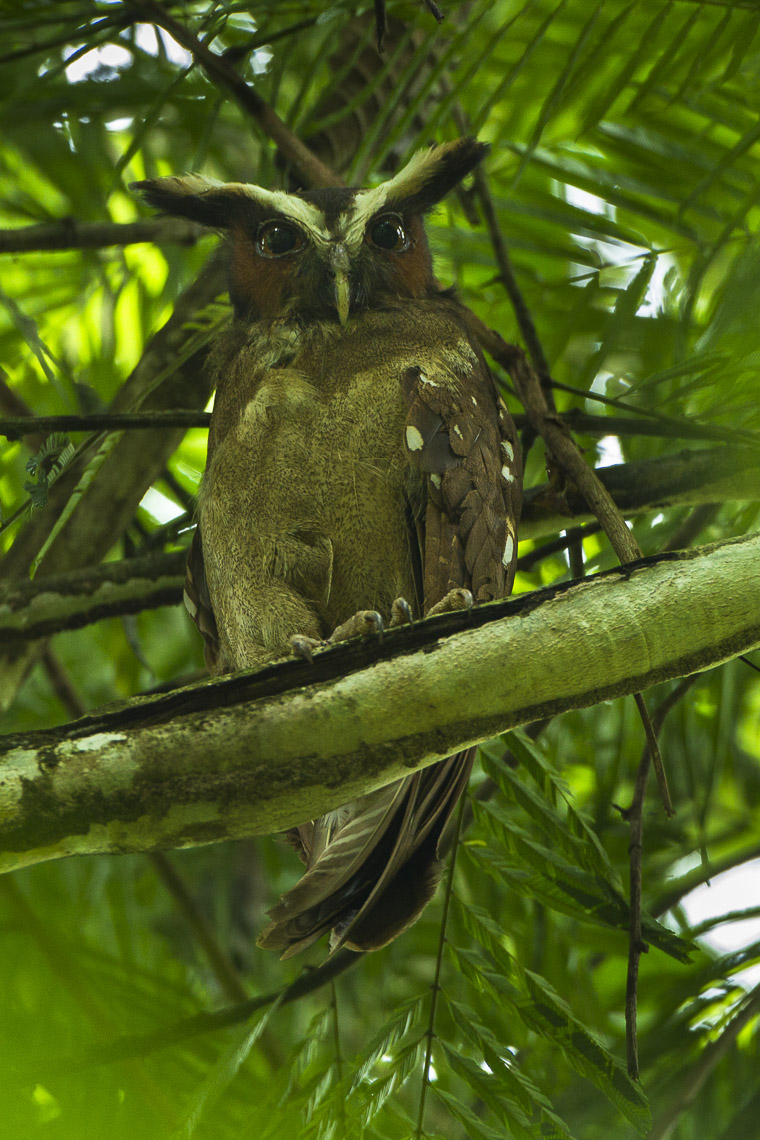
Room for an elusive neighbor
The IUCN species assessment provides a conservation reference for this forest resident.
Keeping woodland intact preserves places to shelter and feed. Quiet observation also gives resting birds space to remain undisturbed.
The Crested Owl rewards patience with a face unlike almost any other. Its pale tufts turn a shadowed branch into a reminder of how surprising tropical bird life can be.
Photo credits
Featured image: Lophostrix cristata -Panama-8.jpg — Dominic Sherony; CC BY-SA 2.0.

Body image 1: Crested Owl - Lophostrix cristata.jpg — Joao Quental; CC BY 2.0.

Body image 2: Crested Owl - Sarapiqui - Costa Rica S4E1124 (26404347190).jpg — Francesco Veronesi from Italy; CC BY-SA 2.0.

Photographs resized for web display where available. Existing crops are identified in their source filenames; captive birds and younger birds are identified in captions.