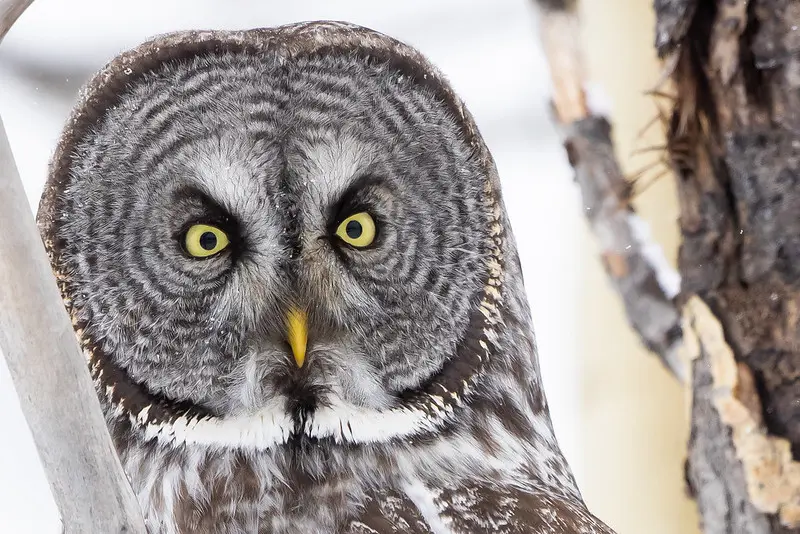
A Great Grey Owl’s face looks like a pattern of rings spreading across wood. That enormous circular disc is more than a striking portrait: facial feathers help guide sound toward the ears, as explained in Cornell’s account of research on snow hunting.
Strix nebulosa, also called the Great Gray Owl, lives across northern forests and some mountain regions. Its broad wings and thick plumage give it an imposing silhouette.
A face built around sound
Cornell Lab of Ornithology describes an owl that hunts small mammals around forest openings and meadows.
Excellent hearing helps it locate prey concealed from view. In snowy country, the hunter may listen for movements beneath the surface before making its strike.
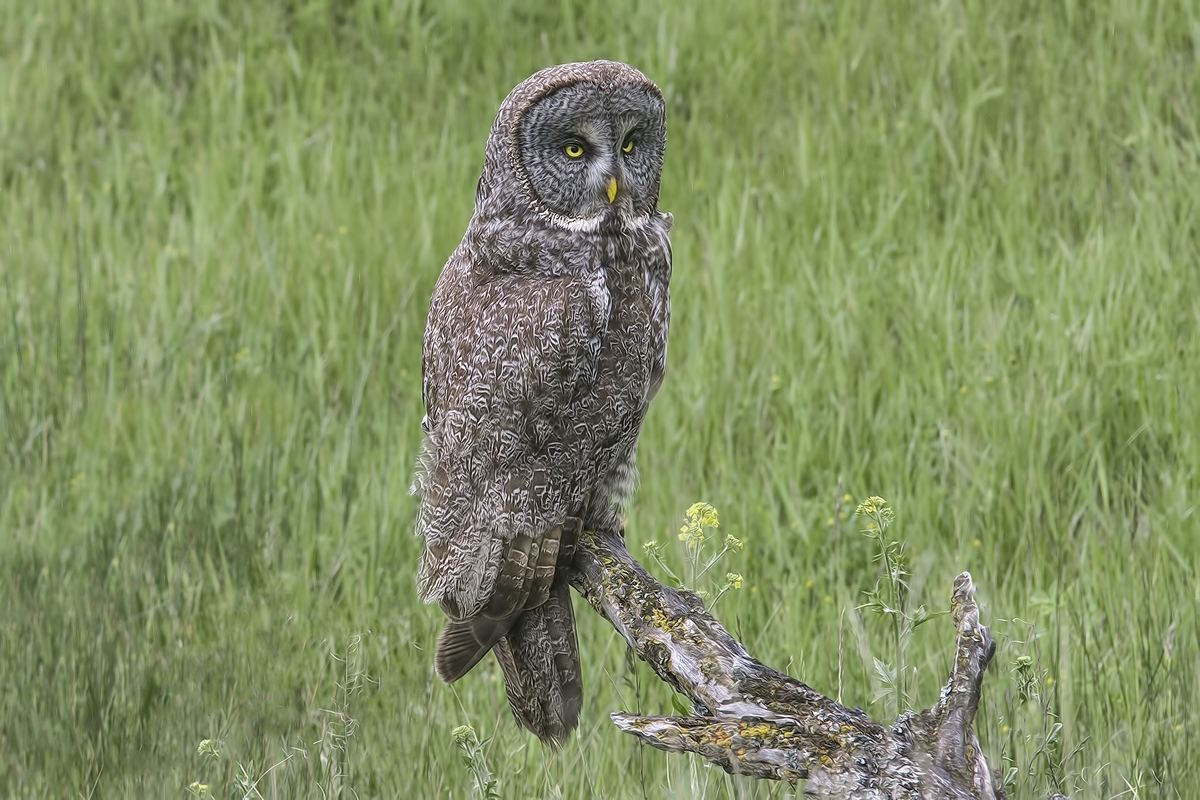
Big appearance, smaller body beneath
A great deal of the owl’s apparent size comes from feathers. It is not the heaviest owl simply because it looks enormous.
That distinction makes the bird more interesting, not less. A broad face, insulating plumage, and wings each contribute to a life in cold northern landscapes.
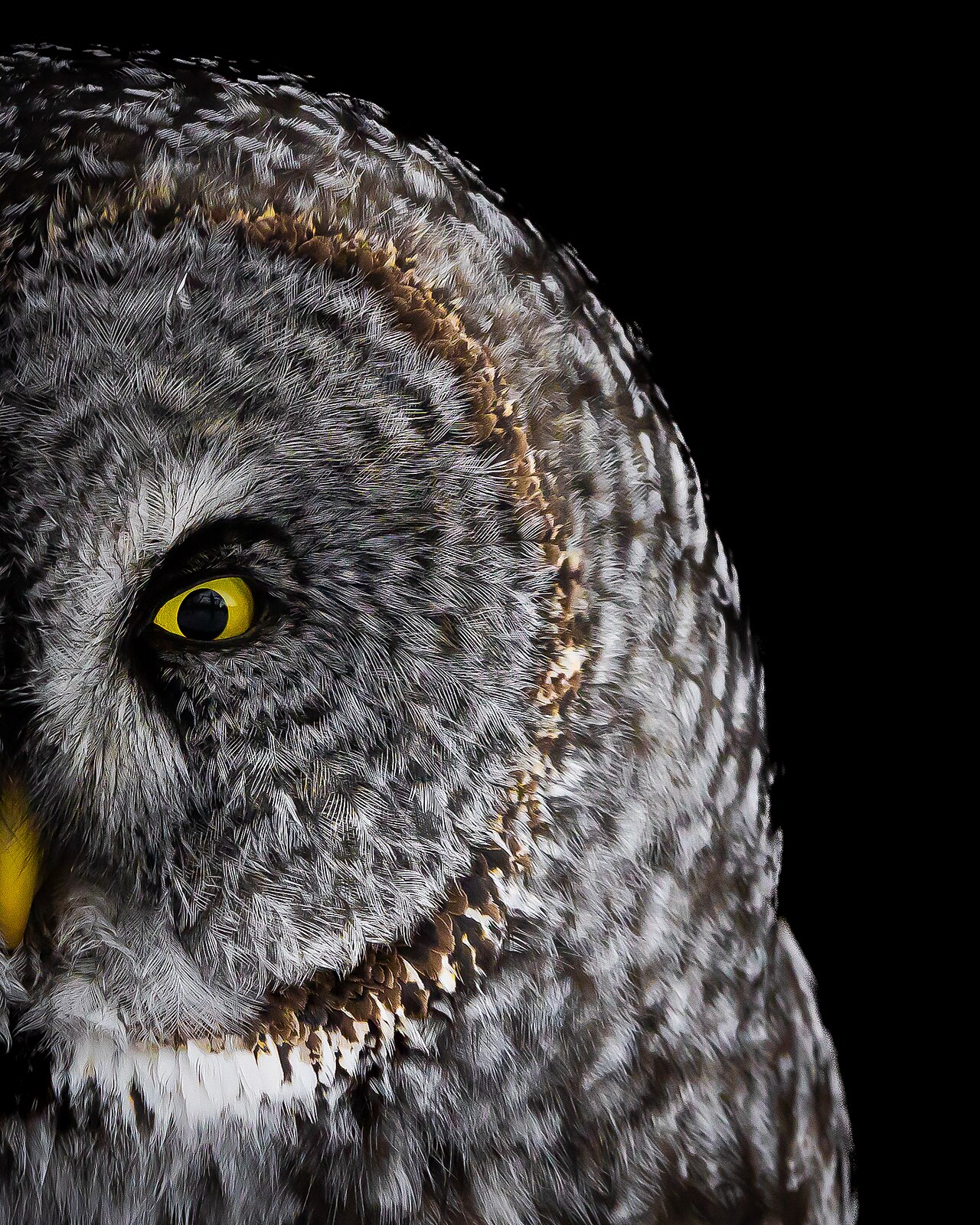
Quiet watching matters
Great Grey Owls can attract intense attention from photographers. Cornell advises against using playback or live mice to draw them closer.
An undisturbed bird can choose its perch, listen, and hunt naturally. That is the behavior worth seeing.
The magnificent face may first seem almost human in its expression. Its real story is more extraordinary: a finely equipped owl reading a world of faint sounds that most people never hear.
Photo credits
Featured image: Great Grey Owl face.jpg — Lisa Hupp/USFWS; Public domain.

Body image 1: Great Gray Owl.jpg — Elaine R. Wilson; CC BY-SA 3.0.

Body image 2: Great gray owl dramatic.jpg — Alaska Region U.S. Fish & Wildlife Service; Public domain.

Photographs resized for web display where available. Existing crops are identified in their source filenames; captive birds and younger birds are identified in captions.