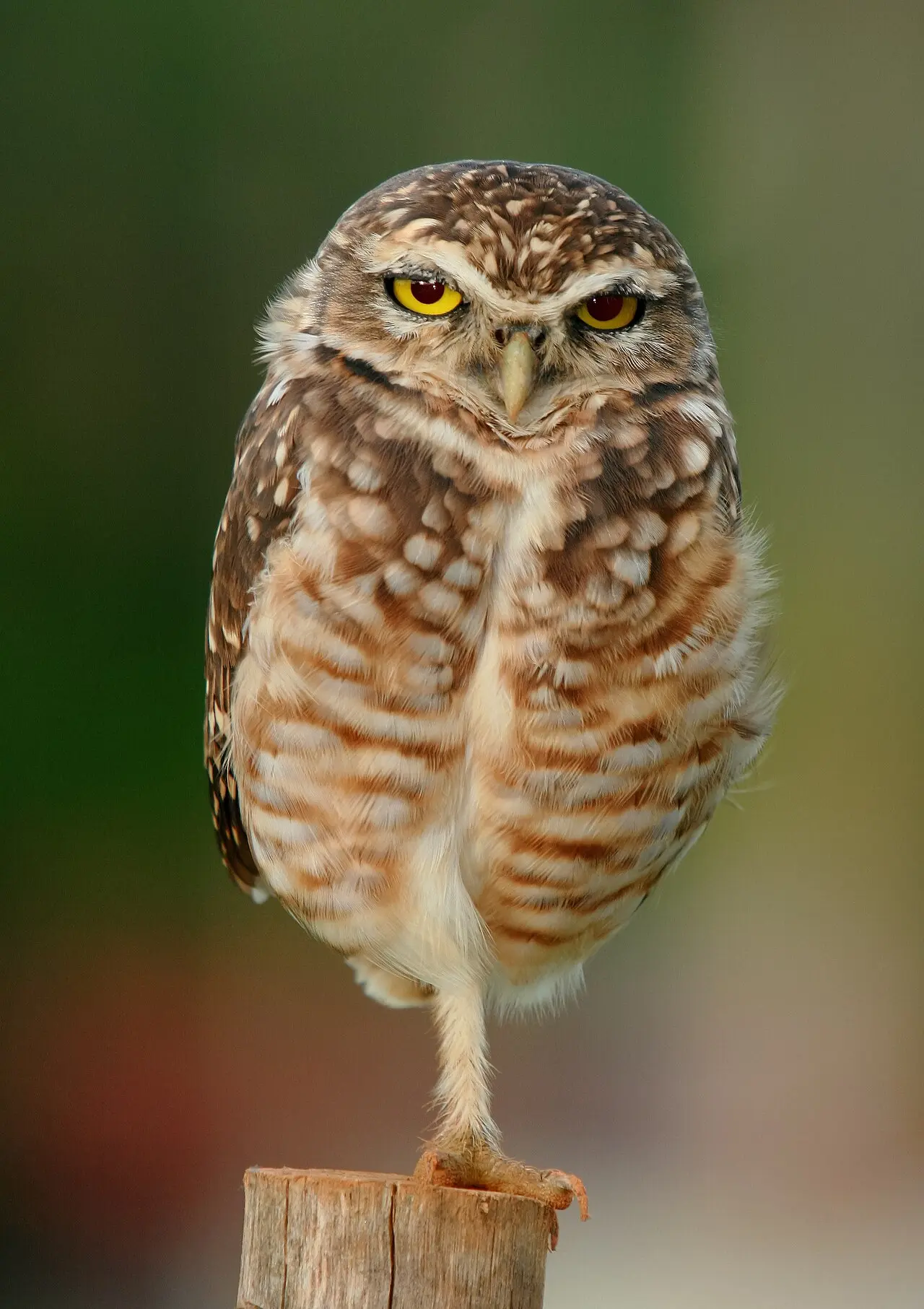
Some owls raise their young beneath the ground. A Burrowing Owl may stand beside its entrance in full daylight, looking across the grass with bright yellow eyes.
Athene cunicularia combines a small body with unusually long-looking legs. Its home is a reminder that an owl does not need a tree hollow to find shelter.
Borrowed homes—and some digging
Cornell Lab of Ornithology describes birds using burrows made by animals such as prairie dogs, ground squirrels, and tortoises. Some Burrowing Owls also excavate their own.
The details vary across the species’ range. Saying that every owl digs its own tunnel would miss an important connection with other burrowing animals.
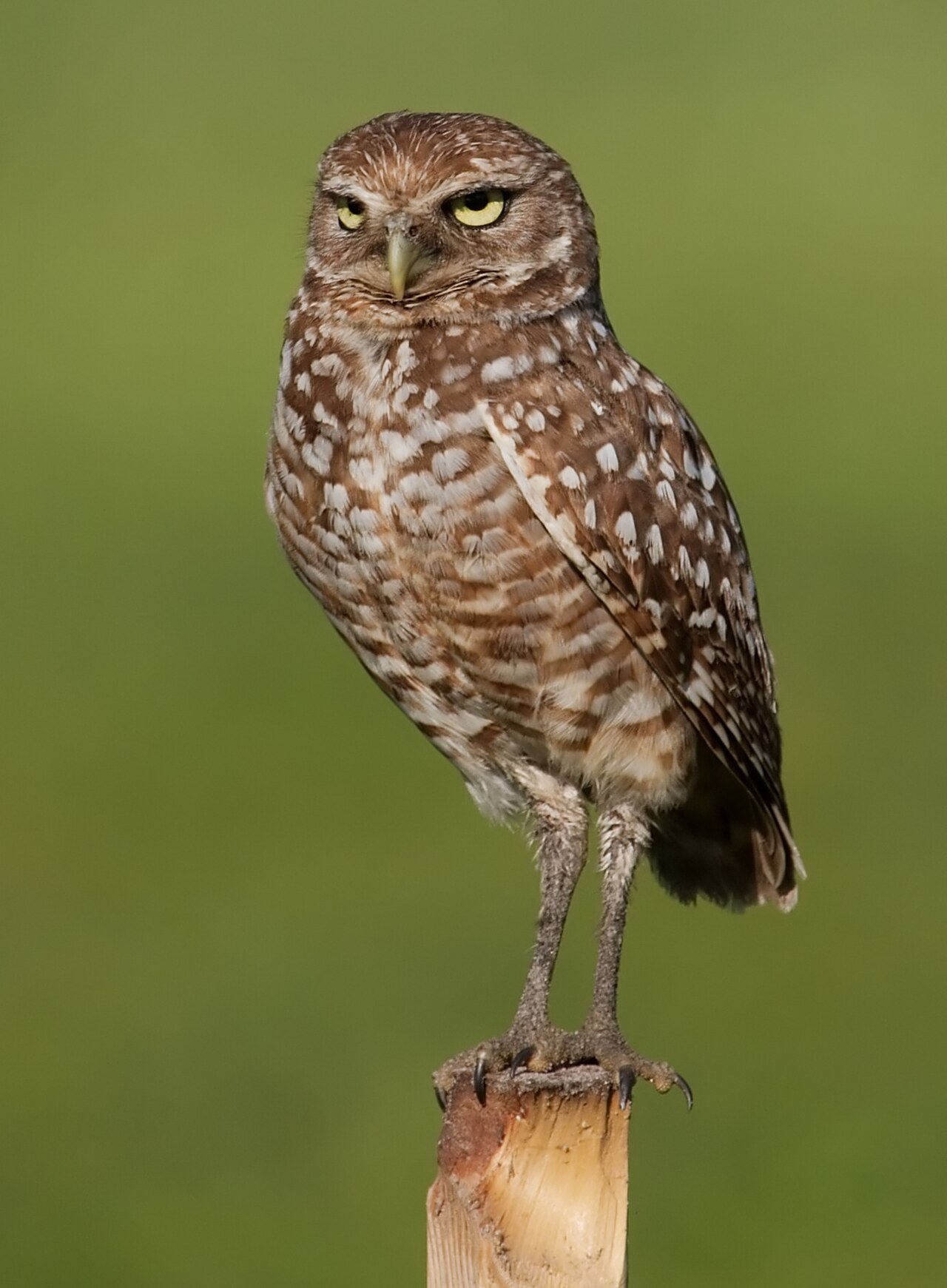
Hunting in an open world
Grasslands, deserts, and other open areas provide habitat. Insects and rodents are important foods, with other small animals also taken.
These owls can be active during daylight as well as at night. A bird on a dirt mound may be watching its surroundings, rather than waiting for darkness to begin its day.
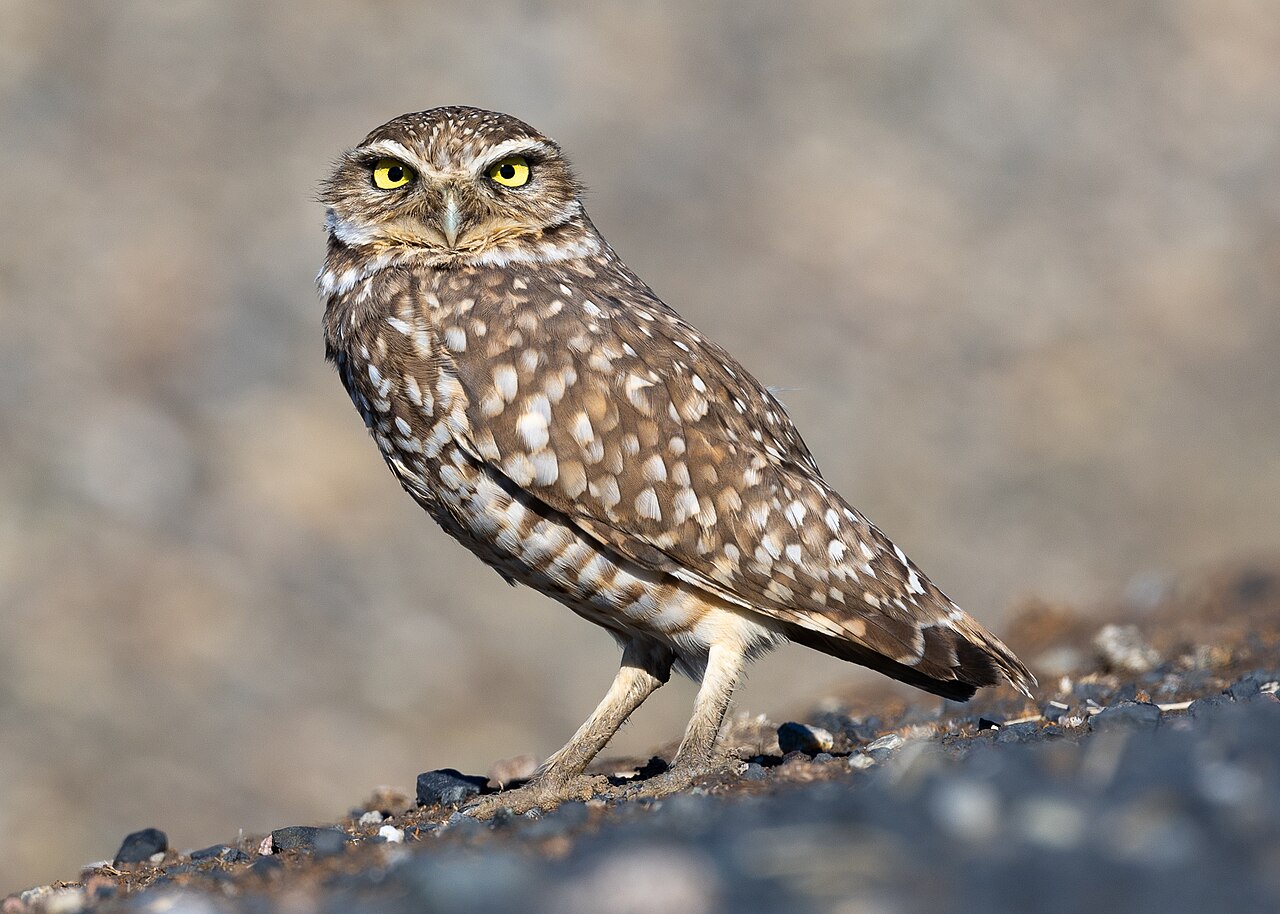
The burrow is only part of the habitat
Loss of open land and declines in burrow-making mammals can reduce nesting opportunities. Conservation needs both suitable shelter and nearby feeding space.
A Cornell life-history account shows how varied this owl’s food and daily activity can be.
Look across short grass carefully. The small figure beside a hole may be an owl whose entire neighborhood reaches below your feet.
Photo credits
Featured image: Athene cunicularia -near Goiania, Goias, Brazil-8 edit.jpg — Wagner Machado Carlos Lemes from Goiânia, Brazil; derivative work by King of Hearts; CC BY 2.0.

Body image 1: Burrowing Owl 4354.jpg — Dori; CC BY-SA 3.0.

Body image 2: Western burrowing owl, Glenn County-0550.jpg — Frank Schulenburg; CC BY-SA 4.0.

Photographs resized for web display where available. Existing crops are identified in their source filenames; captive birds and younger birds are identified in captions.