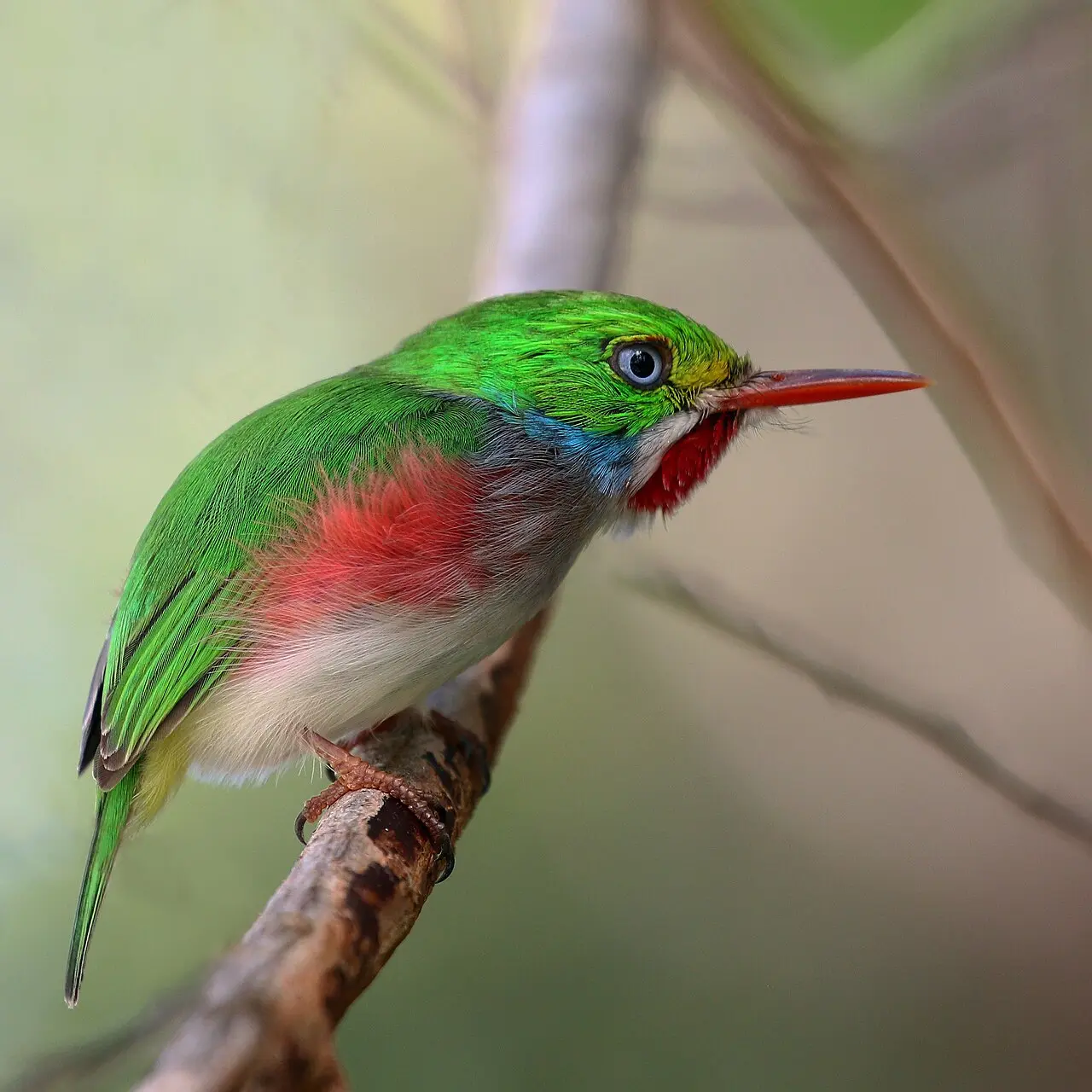
A Cuban Tody packs leaf-green feathers and a bright red throat into a body scarcely larger than a hummingbird’s. Its oversized-looking head and short tail make the combination even more striking.
Todus multicolor is a Cuban bird with a long, flattened bill. The delicate appearance belongs to a busy insect hunter.
A tiny bird with a useful bill
BirdNote’s account, published by Audubon, describes a bill well suited to catching insects.
The bright throat also includes touches of blue at the sides. Looking closely reveals a more detailed palette than the simple description “green bird” suggests.
Listen as well as look
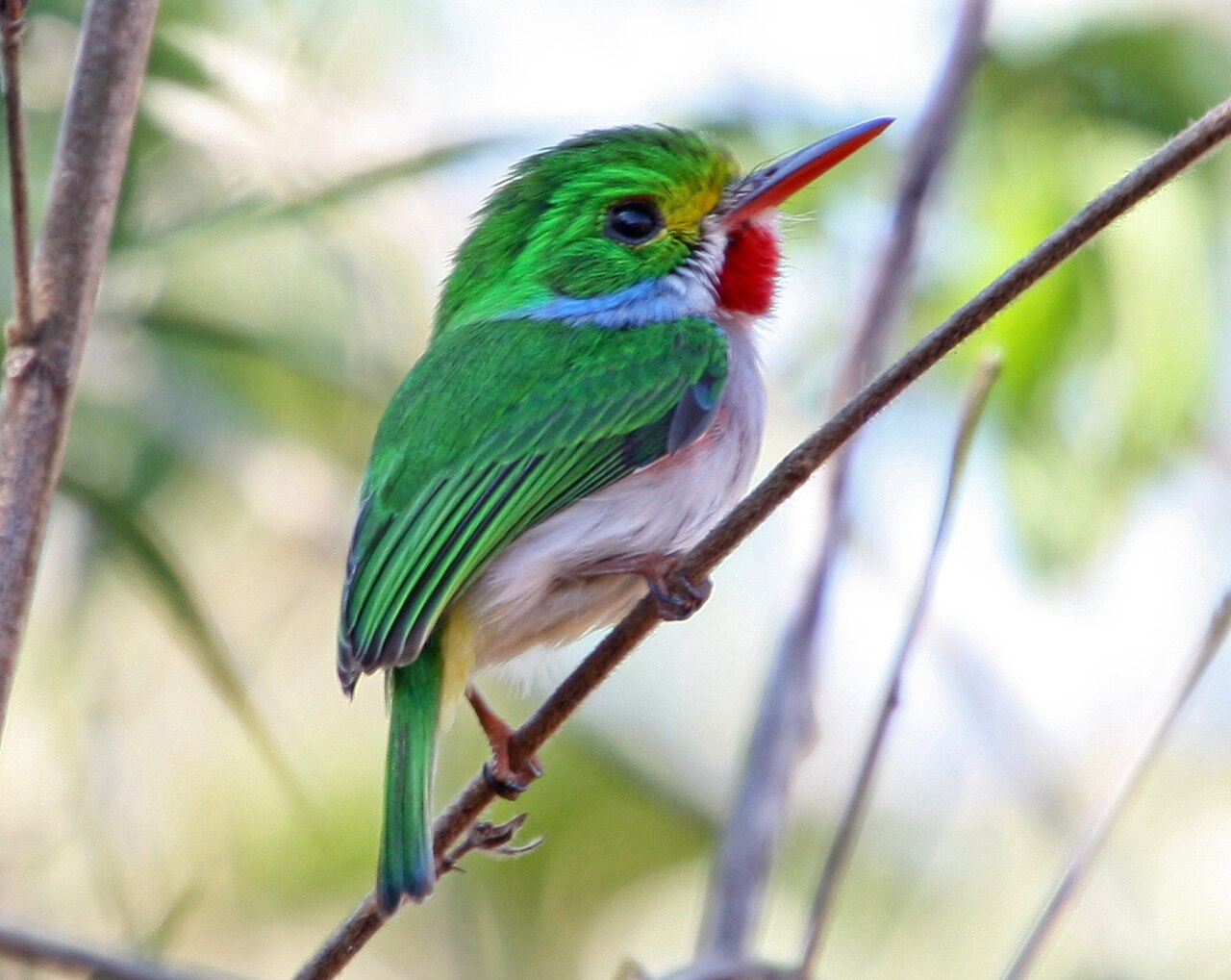
Cuban Todies have a distinctive short, repeated call. Sound can be the first clue to a bird tucked among woodland leaves.
That makes a walk through Cuban woodland more interesting when we slow down. A tiny animal does not need a loud silhouette to make its presence known.
A small part of Cuba’s natural heritage
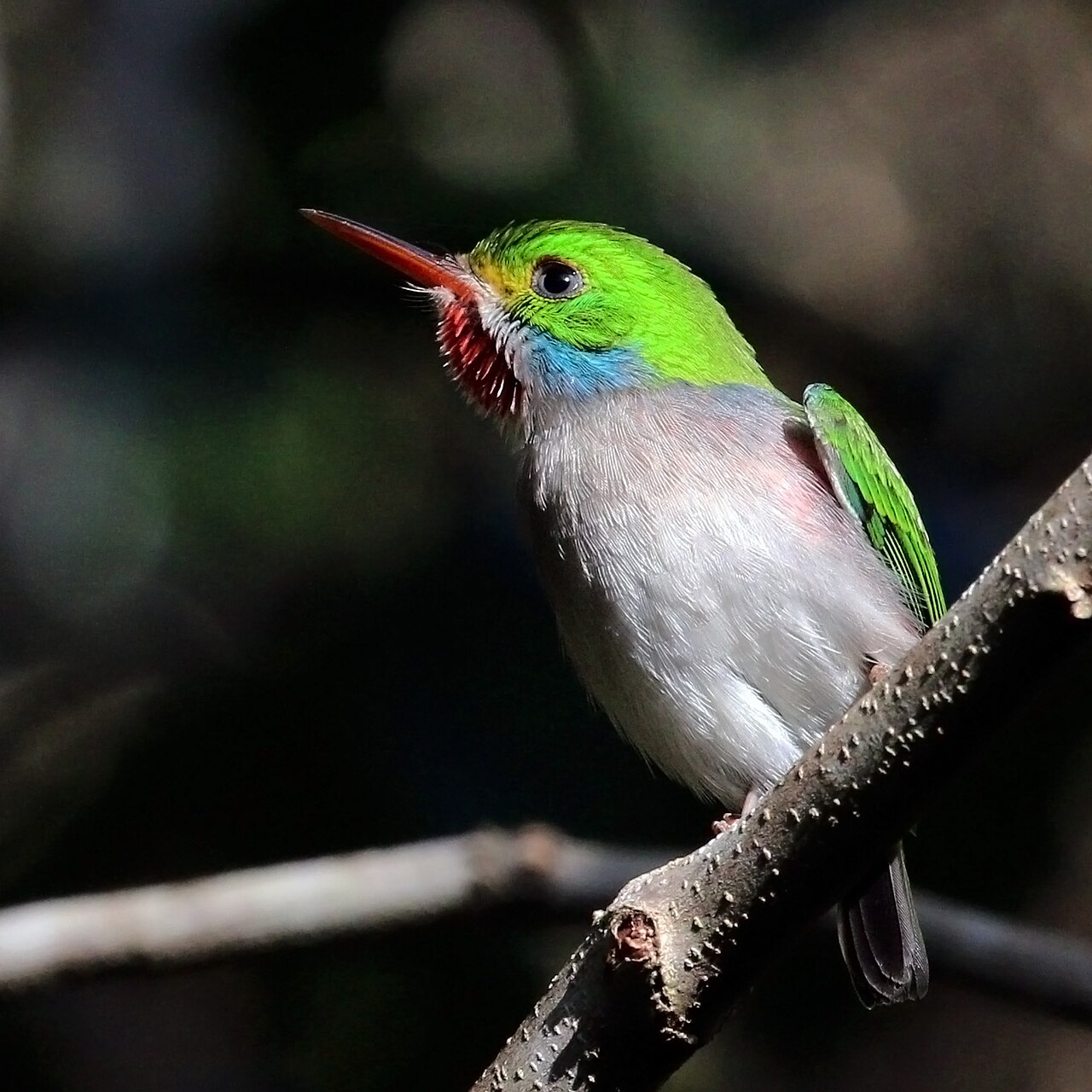
Audubon’s work on Cuban bird counts highlights the value of monitoring island birds, including endemic species such as the Cuban Tody.
Repeated observations help people understand where birds occur and how their surroundings change. Keeping wooded habitat healthy preserves room for the insects and birds that share it.
The Cuban Tody is a reminder to look at the smallest spaces between leaves. A whole burst of color may be waiting on a twig.
Photo credits
Featured image: Cuban tody (Todus multicolor).JPG — Charles J. Sharp; CC BY-SA 4.0.

Body image 1: SB100 Cuban tody 2 (cropped).jpg — Susanne Bollinger; CC BY-SA 4.0.

Body image 2: Cuban tody (Todus multicolor) juvenile.JPG — Charles J. Sharp; CC BY-SA 4.0.

Photographs resized for web display where available. Existing crops are identified in their source filenames; captive birds and younger birds are identified in captions.