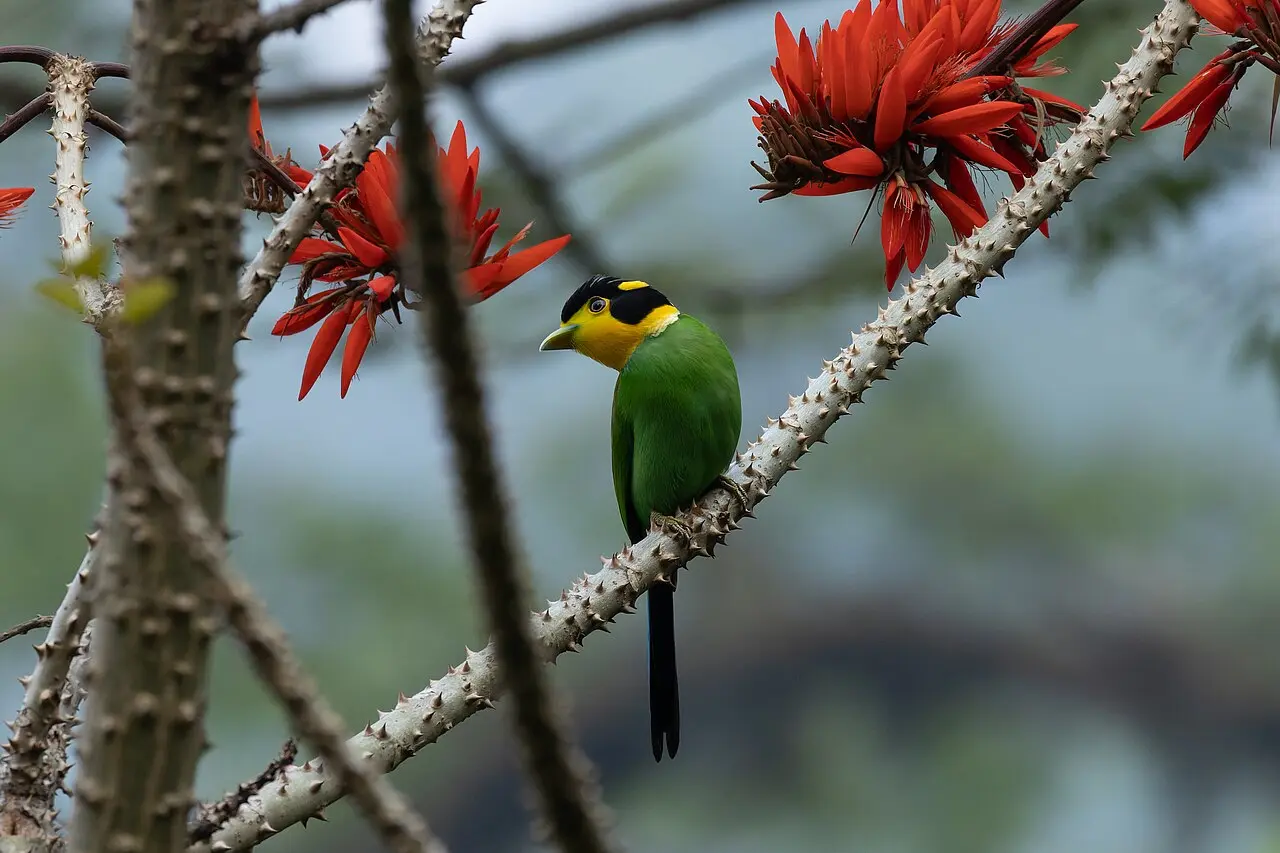
A Long-tailed Broadbill’s nest can hang from the end of a slender branch like a woven forest pouch. The builder is just as eye-catching, with a bright green body, a dark head, yellow face markings, and a long blue tail.
Psarisomus dalhousiae occurs in forests from the Himalayan region into Southeast Asia. Its outline makes it one of Asia’s most memorable broadbills.
The head that draws a second look
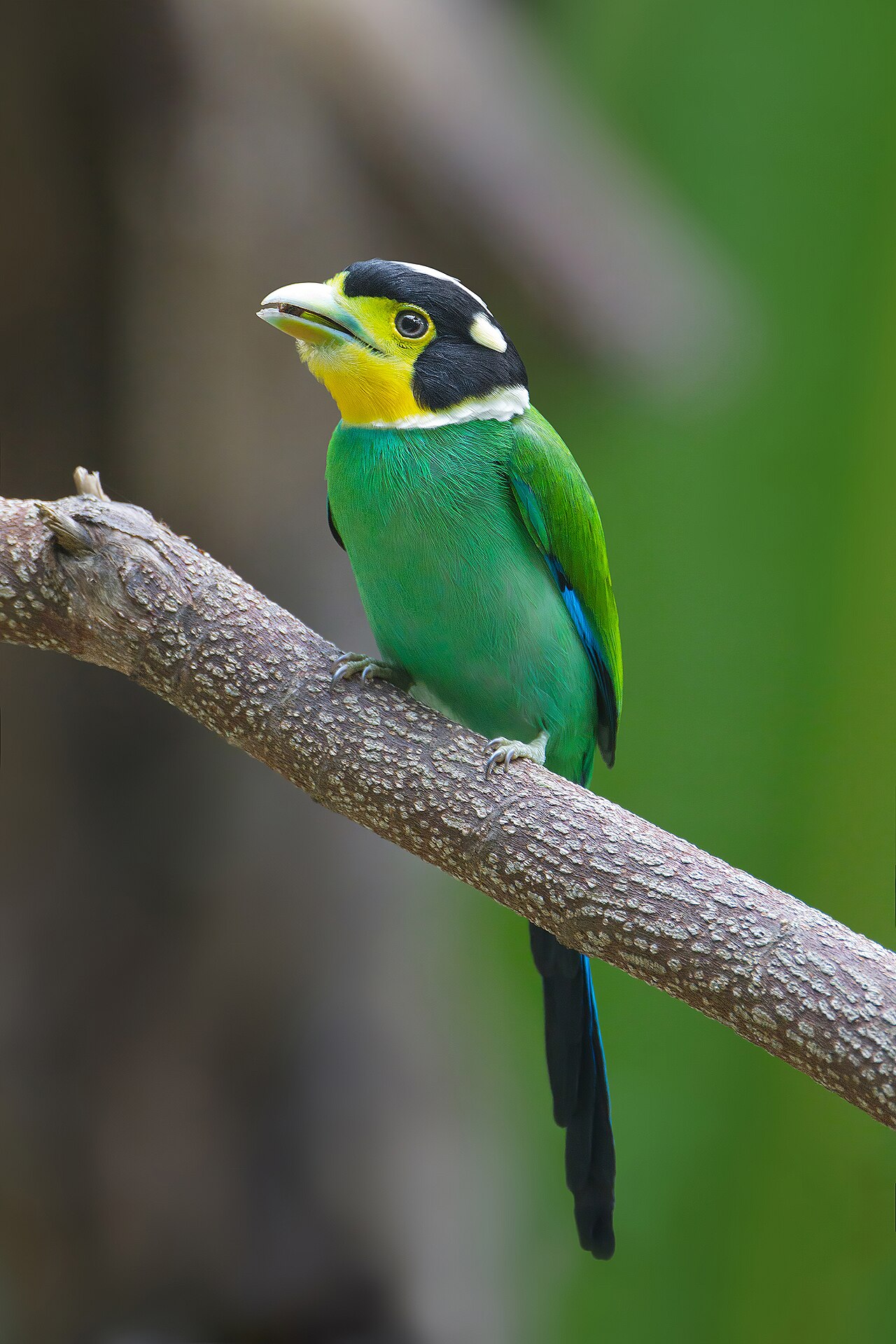
The bold dark-and-yellow pattern can give the head a helmet-like appearance. The long tail adds a very different shape to the compact body above it.
These are useful field marks, but a bird’s portrait is only the start. Its nesting behavior offers an equally interesting view.
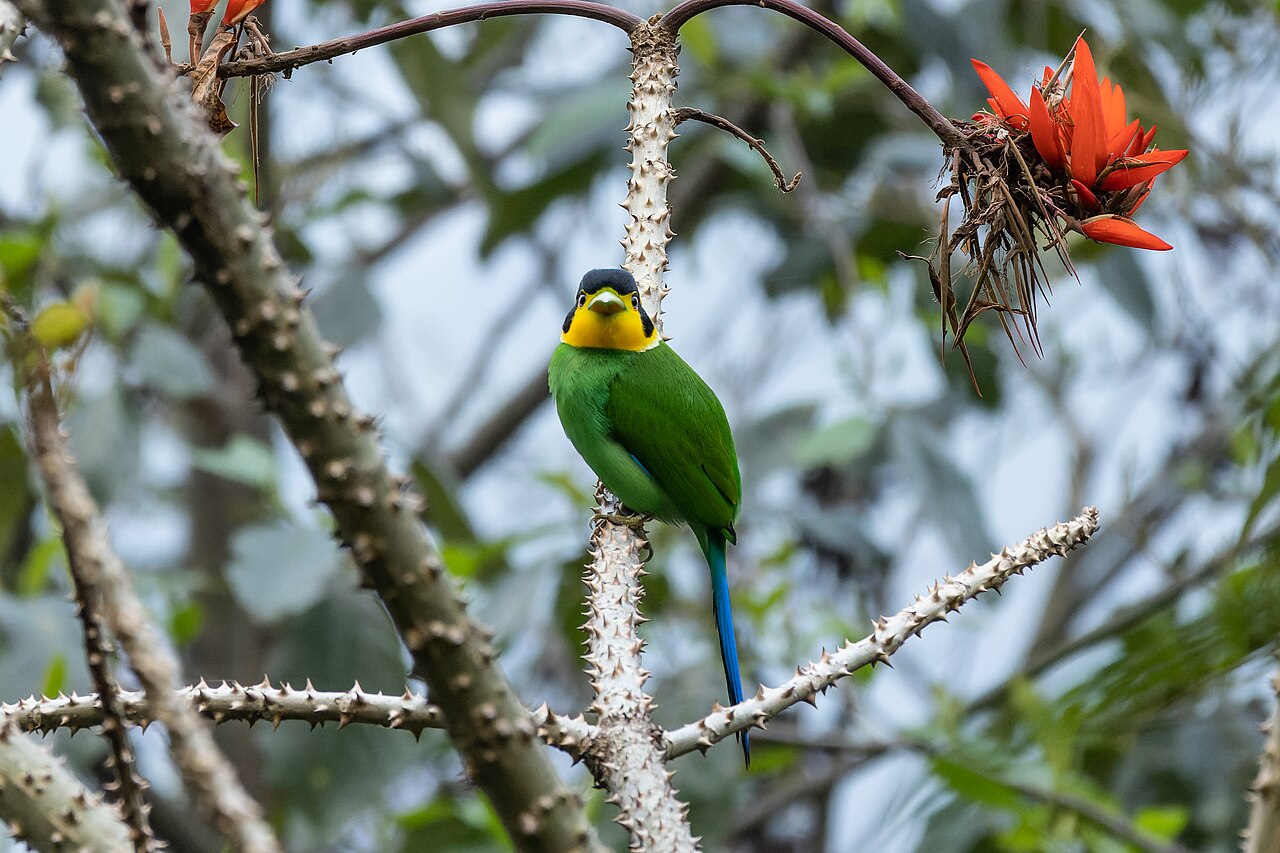
Building at the branch’s edge
A field report in Indian BIRDS describes both partners helping construct a hanging nest near Mussoorie.
The observers watched birds bring materials to a nest at the end of a thin branch. Twigs, roots, leaves, and grasses are among the materials used by the species.
A forest includes its small structures
The report describes nests near water and highlights the importance of nest-site choice. A slender twig can be a valuable building site, rather than an insignificant detail.
Keeping suitable forest intact preserves that variety of branches, cover, and nearby resources.
The Long-tailed Broadbill combines a spectacular outfit with careful construction. Its nest shows how a bird can turn small pieces of the forest into a home suspended in air.
Photo credits
Featured image: Long-tailed broadbill by Tisha Mukherjee 10.jpg — Tisha Mukherjee; CC BY-SA 4.0.

Body image 1: Long-tailed broadbill by Tisha Mukherjee 04.jpg — Tisha Mukherjee; CC BY-SA 4.0.

Body image 2: Psarisomus dalhousiae - Kaeng Krachan.jpg — JJ Harrison (https://www.jjharrison.com.au/); CC BY-SA 3.0.

Photographs resized for web display where available. Existing crops are identified in their source filenames; captive birds and younger birds are identified in captions.