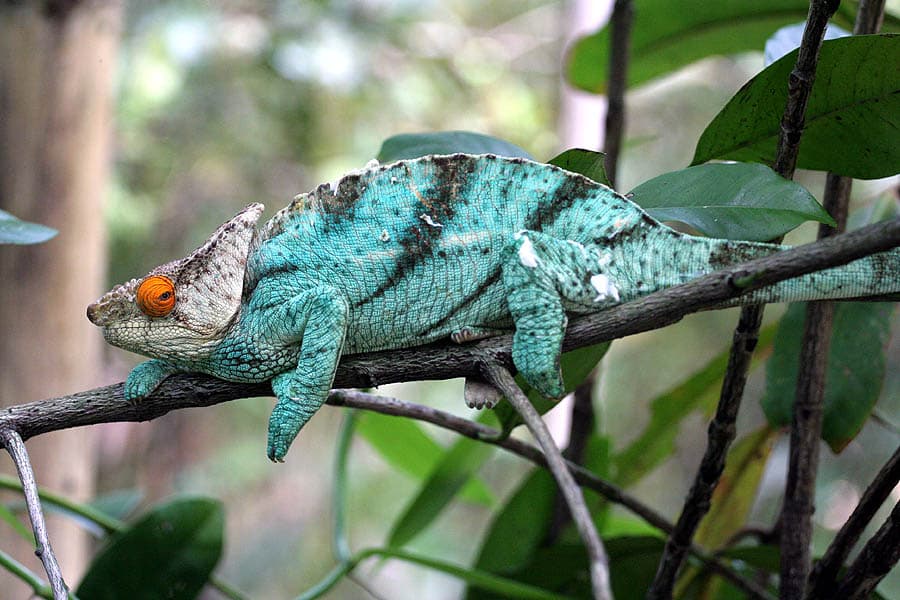
A Parson's chameleon can be surprisingly large for an animal that disappears so well among leaves. Its broad body, prominent eyes, and curled tail make a memorable sight once you finally spot it.
This is one of the largest chameleons, and its home is Madagascar.
A giant with a careful grip
Parson's chameleon, Calumma parsonii, inhabits humid forest environments in the eastern part of the island.
Its feet clasp branches, and its prehensile tail provides extra support. Instead of rushing through the canopy, it often moves with the deliberate pace we associate with chameleons.
Animal Diversity Web describes its habitat, appearance, and behavior.
Looking in more than one direction
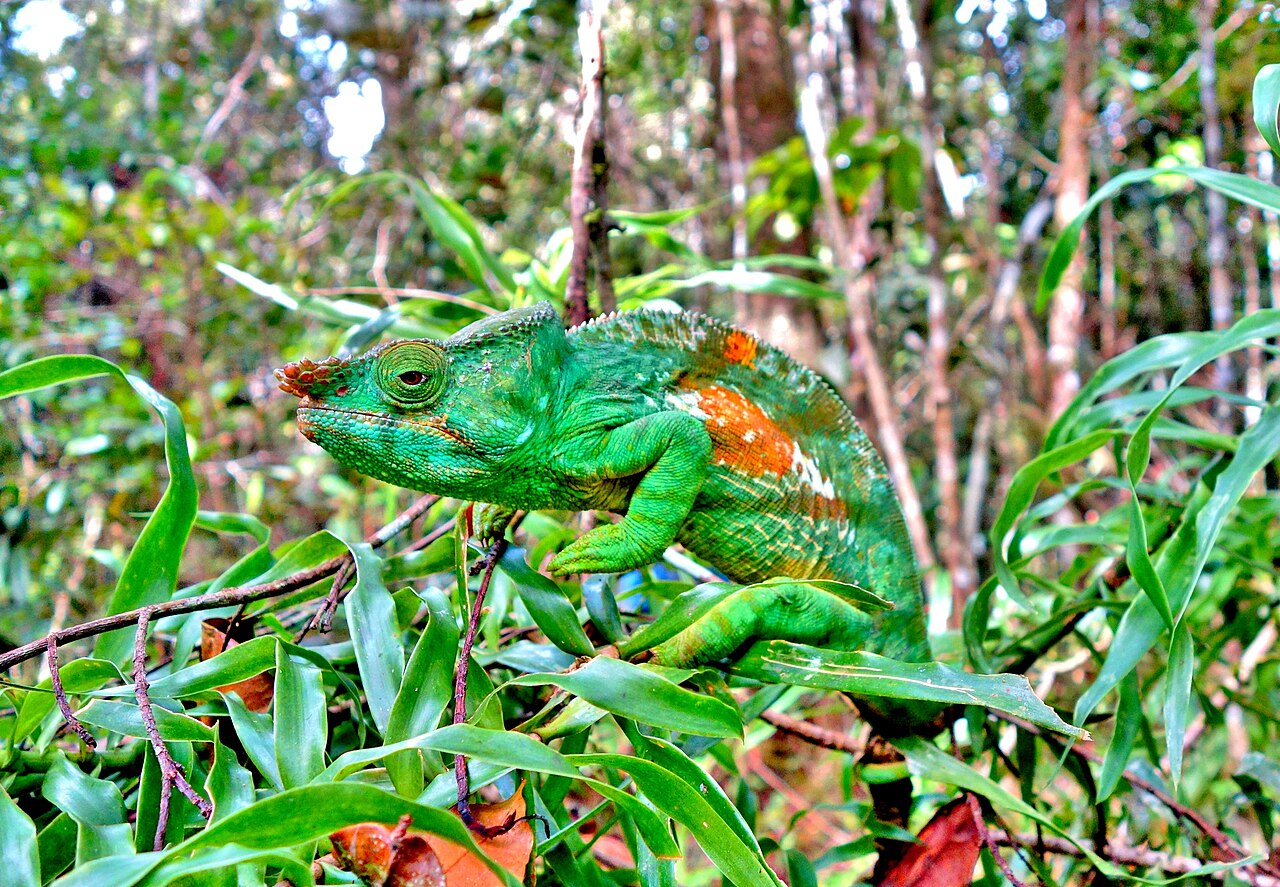
Prominent, mobile eyes help the animal survey its surroundings. Once prey is located, a long tongue can be projected toward it.
Much of the fascination comes from the contrast between those moments: slow movement along a branch, followed by a sudden feeding strike.
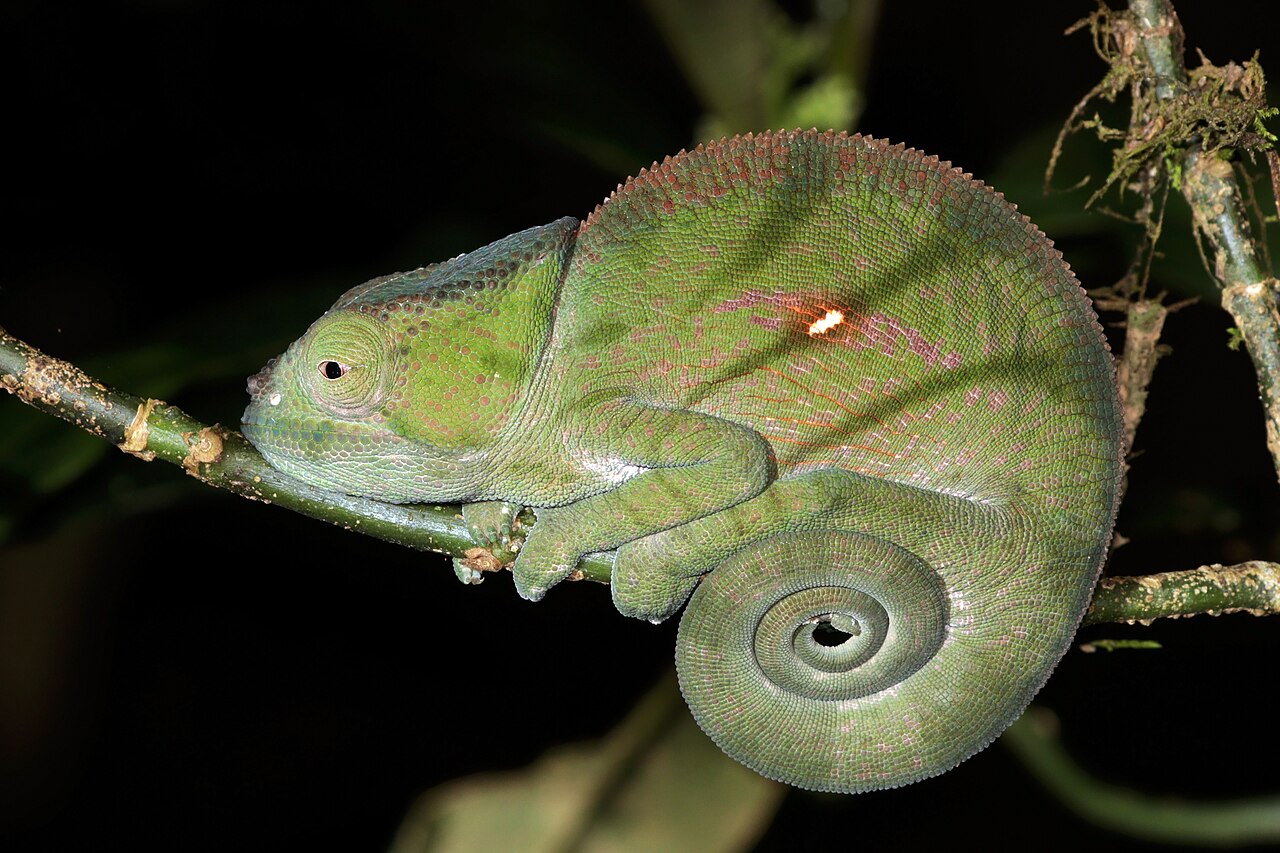
Males and females differ in appearance, and there is variation within the species. A photograph of one individual cannot show every form of this large chameleon.
A forest worth keeping
Madagascar's forests support many animals found nowhere else. Protecting forest habitat matters for Parson's chameleons and the other species sharing those trees.
The chameleon's size makes it impressive, but its dependence on branches, cover, and forest conditions is just as important.
For Amazing Nature readers, this quiet giant encourages patient observation. Pause at a leafy branch, follow the curves, and a shape that looked like foliage may resolve into an extraordinary living animal.
Photo credits
Featured image: Calumma Parsonii Ste Marie Madagascar.jpg — JialiangGao www.peace-on-earth.org; CC BY-SA 4.0.

Body image 1: Calumma parsonii 28551455.jpg — thibaudaronson; CC BY-SA 4.0.

Body image 2: Parson's chameleon (Calumma parsonii cristifer) female Andasibe.jpg — Charles J. Sharp; CC BY-SA 4.0.

Photographs resized for web display where available.