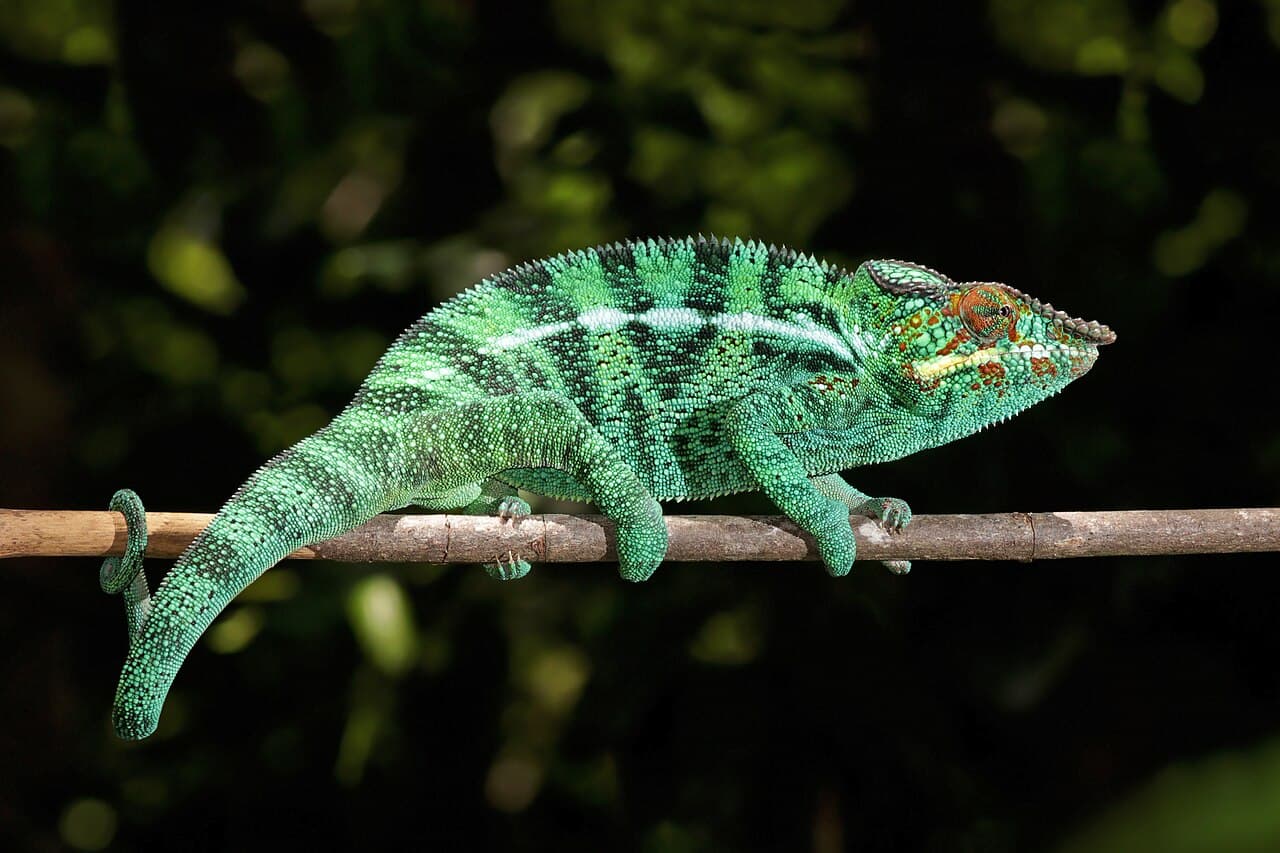
A panther chameleon's color change involves tiny crystals inside its skin. This animal's vivid appearance comes from a remarkable interaction between living cells and light.
Its colors are beautiful, but they also tell a more complicated story than simply matching a background.
Many palettes on one island
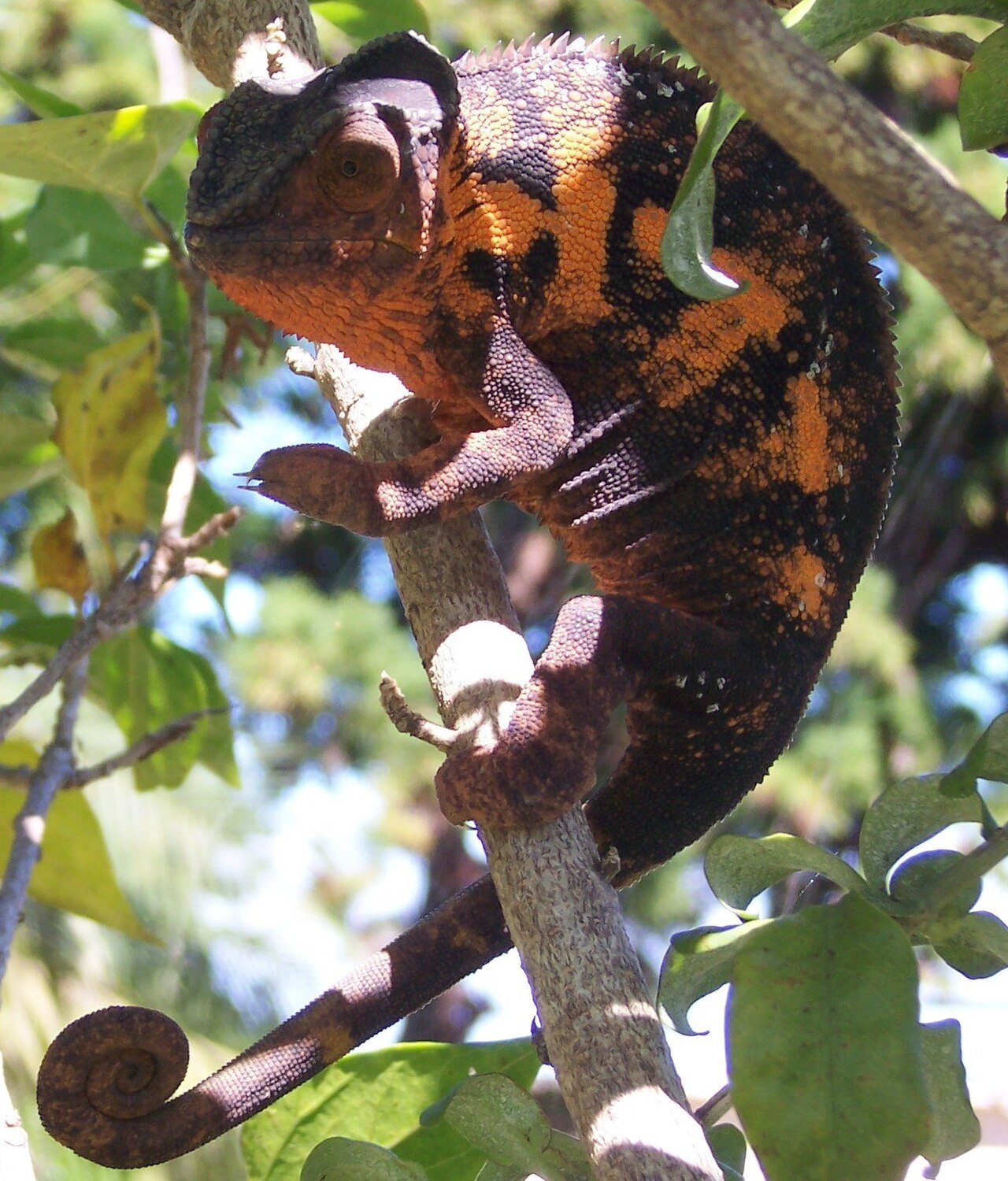
Panther chameleons, Furcifer pardalis, come from Madagascar. Males can display striking colors that vary between locations and individuals. Females usually have a different, less vivid palette.
Animal Diversity Web describes these differences and the species' tree-dwelling life.
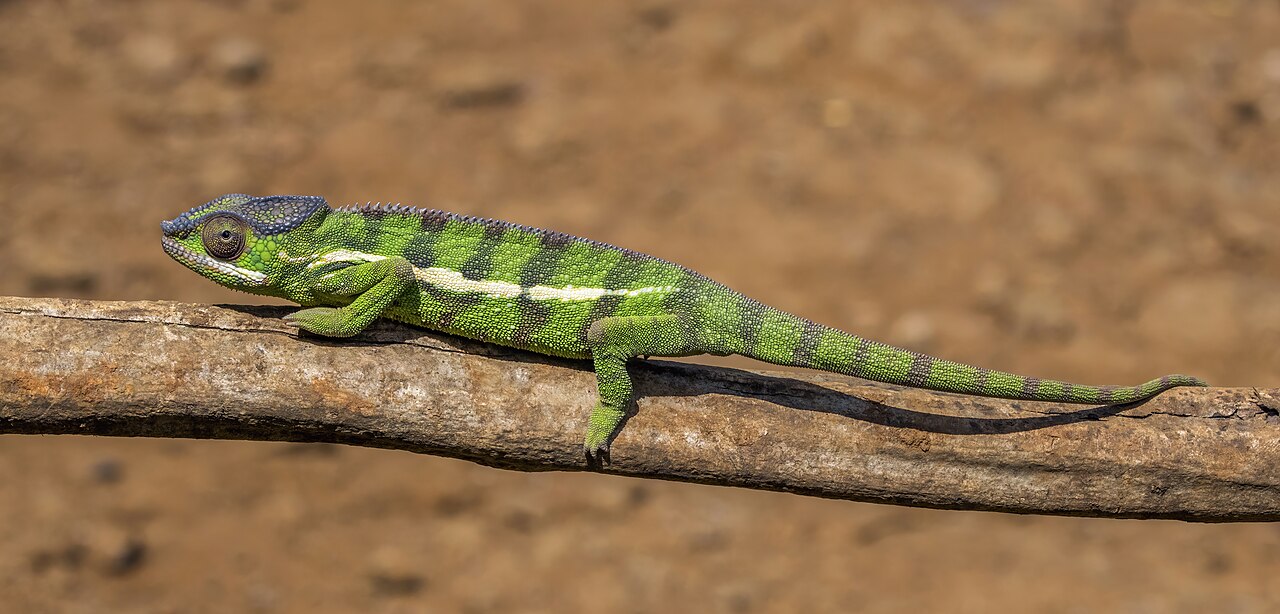
The science beneath the scales
A 2015 study in Nature Communications found that adult male panther chameleons can change the spacing of tiny guanine crystals in specialized skin cells.
Changing that spacing alters the wavelengths of light reflected by the skin. In simple terms, the arrangement of microscopic structures helps change the visible color.
The researchers studied changes during social encounters. That matters because chameleon colors can relate to signaling and an animal's state, rather than acting as a simple copy of its surroundings.
A whole animal behind the display
Grasping feet, a gripping tail, and eyes that scan widely help these reptiles move and hunt among branches. Their spectacular skin is one part of a much larger set of adaptations.
At Amazing Nature, the panther chameleon invites us to connect beauty with explanation. A brilliant patch of color becomes even more impressive when we learn that light is interacting with crystals too small to see.
Photo credits
Featured image: Panther chameleon (Furcifer pardalis) male Nosy Be.jpg — Charles J. Sharp; CC BY-SA 4.0.

Body image 1: Panther chameleon (Furcifer pardalis) male Montagne d’Ambre.jpg — Charles J. Sharp; CC BY-SA 4.0.

Body image 2: FurciferPardalisFemale.JPG — B.navez; CC BY-SA 3.0.

Photographs resized for web display where available.