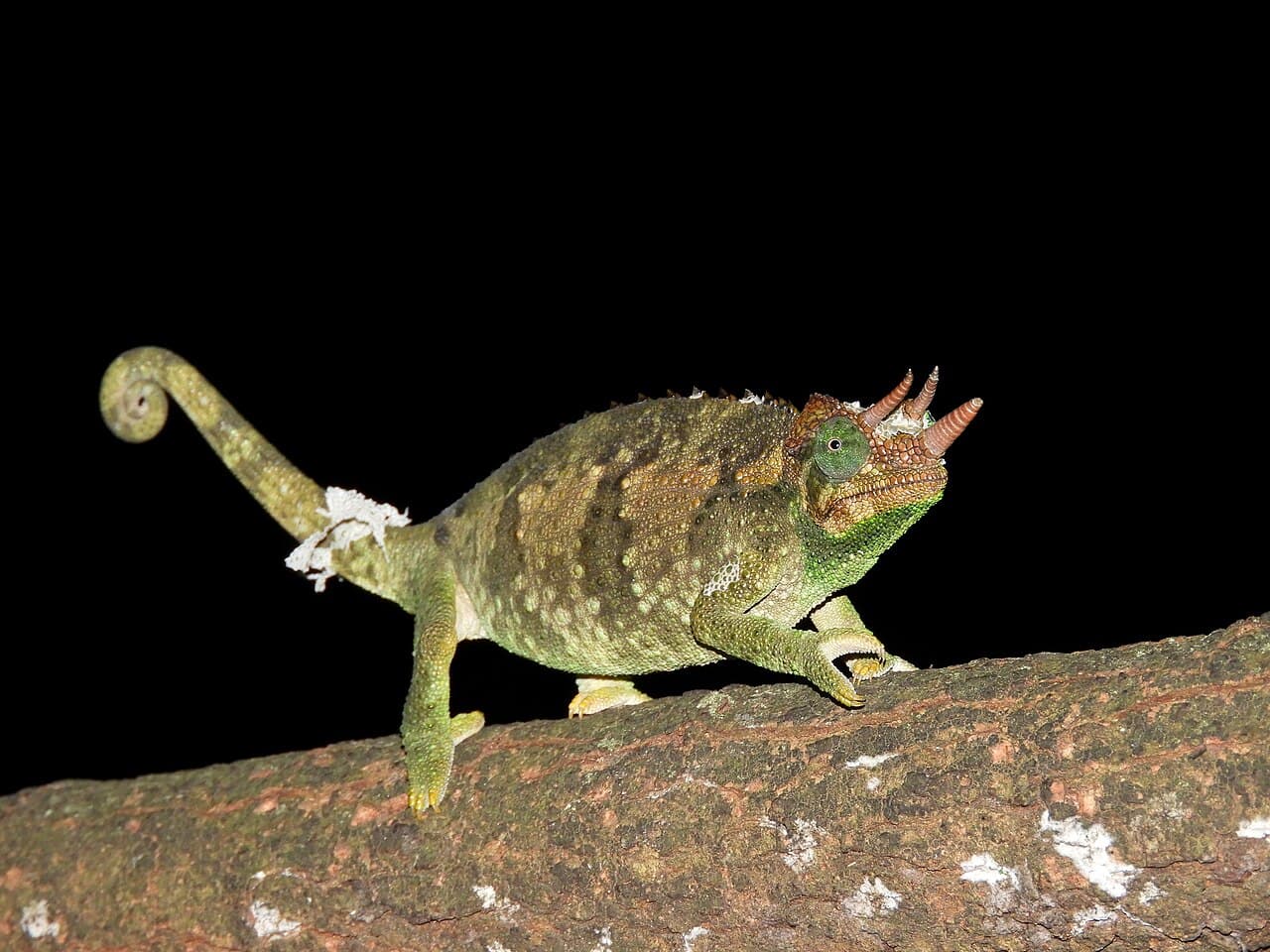
A male Jackson's chameleon carries three horns on its face, giving this small reptile an unforgettable silhouette. But its most surprising feature may have nothing to do with its appearance.
Unlike most chameleons, females give birth to live young.
Three horns among the branches
Jackson's chameleons, Trioceros jacksonii, are native to East Africa, including cool, humid mountainous areas of Kenya and Tanzania.
Males are famous for their three horns; females usually lack the same arrangement. Males can use the horns during contests with rivals.
San Diego Zoo Wildlife Alliance explains these features and the species' unusual reproduction.
Built for a careful grip
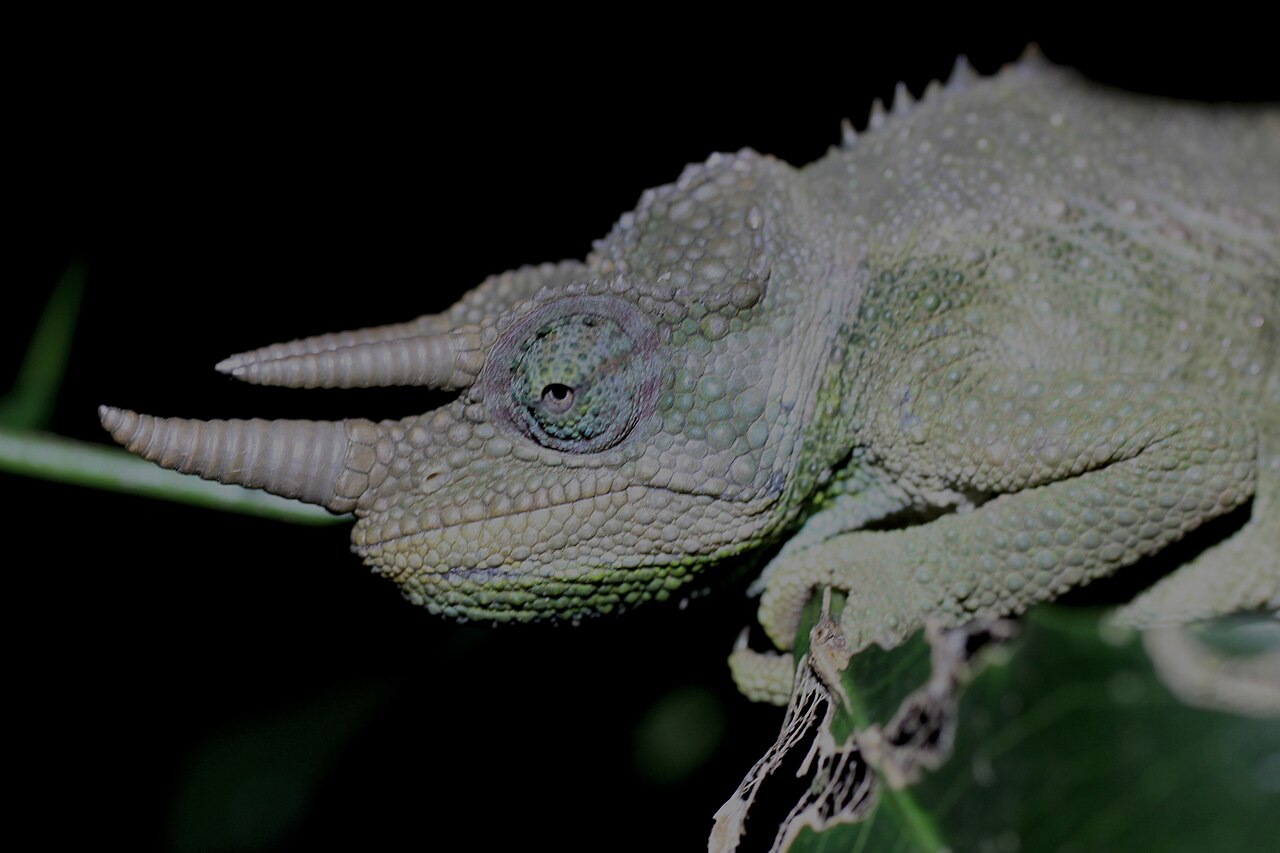
Grasping feet hold branches, while a prehensile tail acts as another anchor. Turret-like eyes can look in different directions, helping a chameleon scan its surroundings.
Insects are caught with a rapidly projected tongue. The quiet animal on a branch can turn into a fast-moving hunter in an instant.
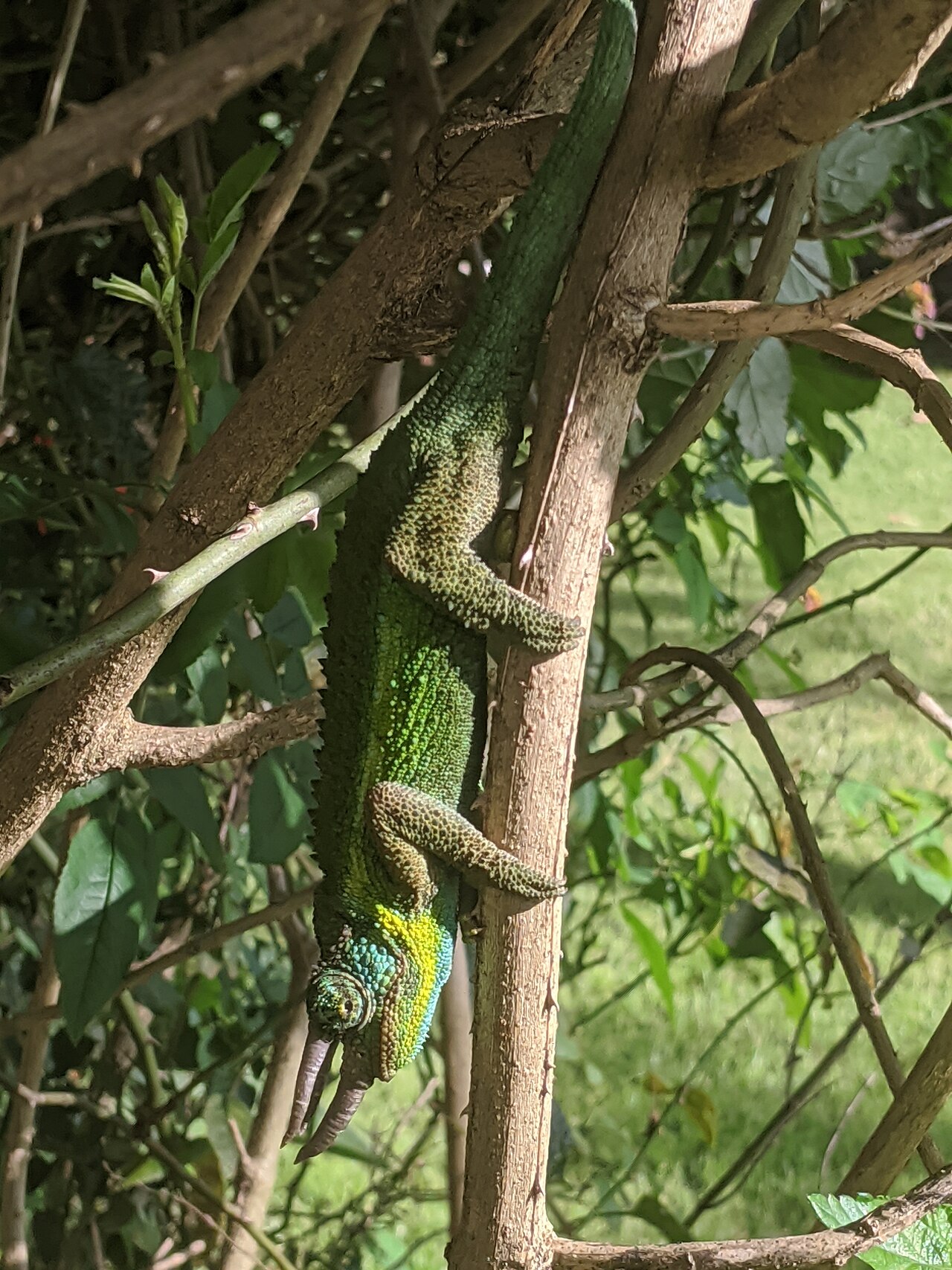
Animal Diversity Web describes its tree-dwelling behavior under the species' older scientific name.
A different beginning
Most female chameleons lay eggs. A female Jackson's chameleon instead carries developing young within her body and gives birth to miniature chameleons.
That difference makes the species a wonderful example of variation within one familiar animal group.
For Amazing Nature readers, the horns are just the opening chapter. Look past them, and this reptile reveals an equally remarkable story about gripping, hunting, and the many ways life begins.
Photo credits
Featured image: Trioceros jacksonii 114285602.jpg — Marius Burger; CC0.

Body image 1: Trioceros jacksonii 124092193.jpg — Ryan van Huyssteen; CC BY-SA 4.0.

Body image 2: Trioceros jacksonii jacksonii 68496694.jpg — pizzaraptor; CC BY 4.0.

Photographs resized for web display where available.