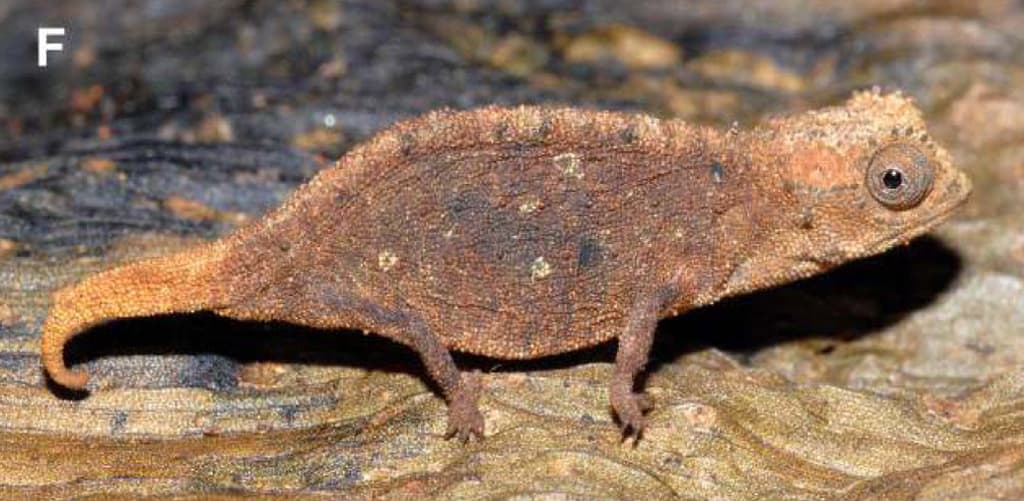
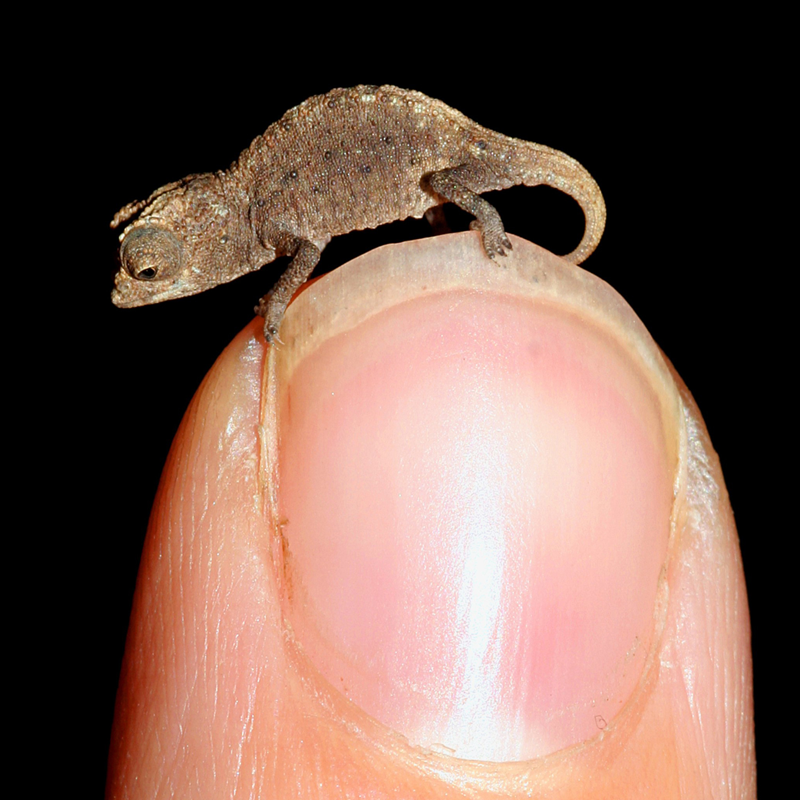
A young Brookesia micra can perch on a fingertip with room to spare. Even adults are among the smallest chameleons known.
Yet this tiny reptile has a complete life unfolding in the leaf litter of a very particular corner of Madagascar.
An island discovery
Scientists formally described Brookesia micra in 2012 from Nosy Hara, off northern Madagascar. The original study in PLOS ONE documented its miniature proportions and restricted known range.
Adults measure less than about three centimeters in total length, including the tail. The tiny animals pictured on fingertips are juveniles, so those images should not be mistaken for the size of every adult.
A small world near the ground
This chameleon is associated with dry forest and limestone terrain. It uses leaf litter and low vegetation rather than the high branches occupied by many larger chameleons.
At night, researchers found individuals resting on low twigs. On such a small scale, a thin stem can be a substantial perch.
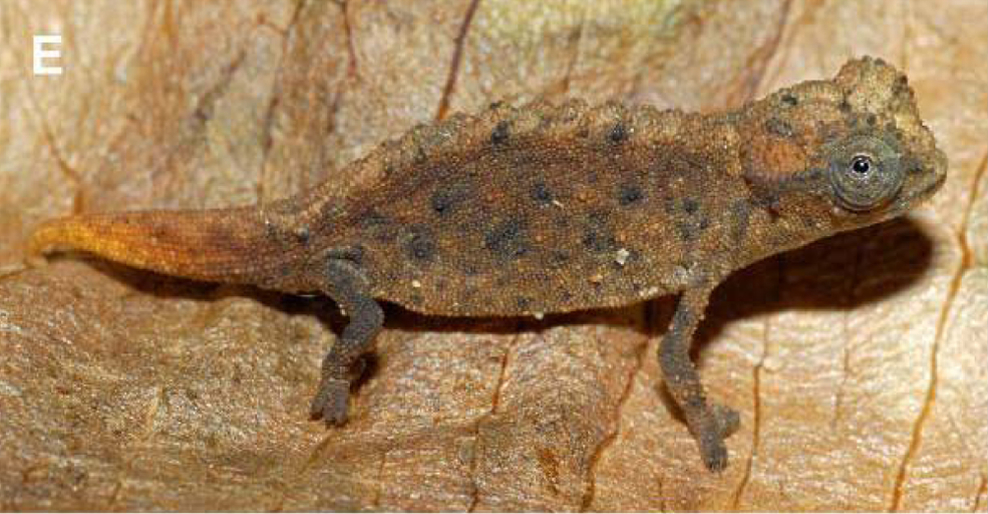
Its brownish coloring is less flashy than that of many familiar chameleons, but fits its quiet appearance among earthy surroundings.
Tiny does not mean unimportant
The discovery paper highlights how narrowly distributed Madagascar's miniature chameleons can be. When an animal occupies a small area, protecting that habitat becomes especially important.
It is safest to call Brookesia micra one of the smallest chameleons, rather than treating an old size record as permanent.
At Amazing Nature, this miniature island resident reminds us that a creature does not need to be large to expand our sense of wonder.
Photo credits
Featured image: Brookesia micra female.jpg — Frank Glaw, Jörn Köhler, Ted M. Townsend, Miguel Vences; CC BY 2.5.

Body image 1: Juvenile Brookesia micra on finger tip.png — Frank Glaw, Jörn Köhler, Ted M. Townsend, Miguel Vences; CC BY 2.5.

Body image 2: Brookesia micra male.jpg — Frank Glaw, Jörn Köhler, Ted M. Townsend, Miguel Vences; CC BY 2.5.

Photographs resized for web display where available.