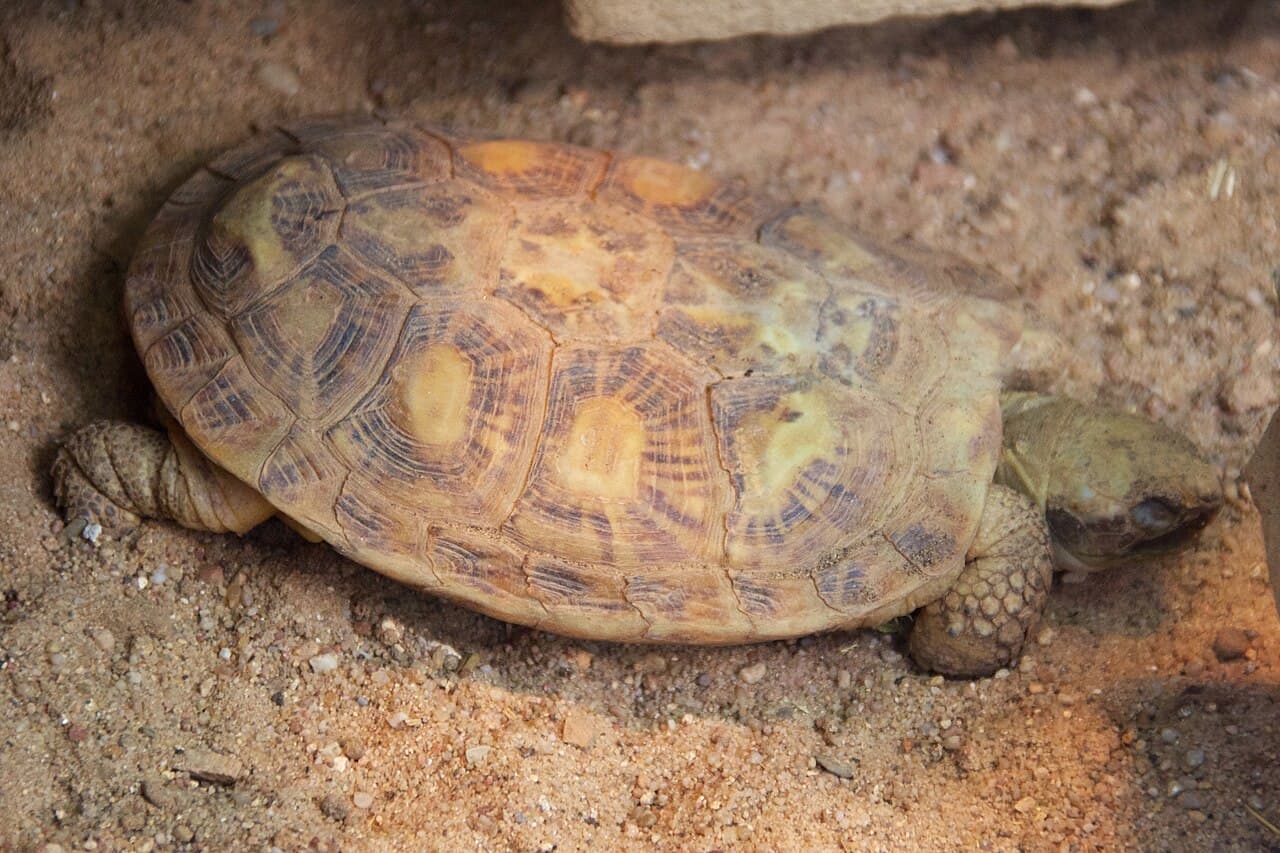
Most tortoises carry a high, rounded shell. The pancake tortoise has a different design: a thin, flattened shell that lets it slip into narrow spaces between rocks.
That unusual body belongs to Malacochersus tornieri, a tortoise of East Africa. Its appearance is more than a curious shape—it changes how the animal finds safety.
A shell that opens new hiding places
A pancake tortoise's shell is relatively flexible. Instead of relying on a heavy dome alone, it can retreat into rock crevices that would be difficult for many other tortoises to enter.
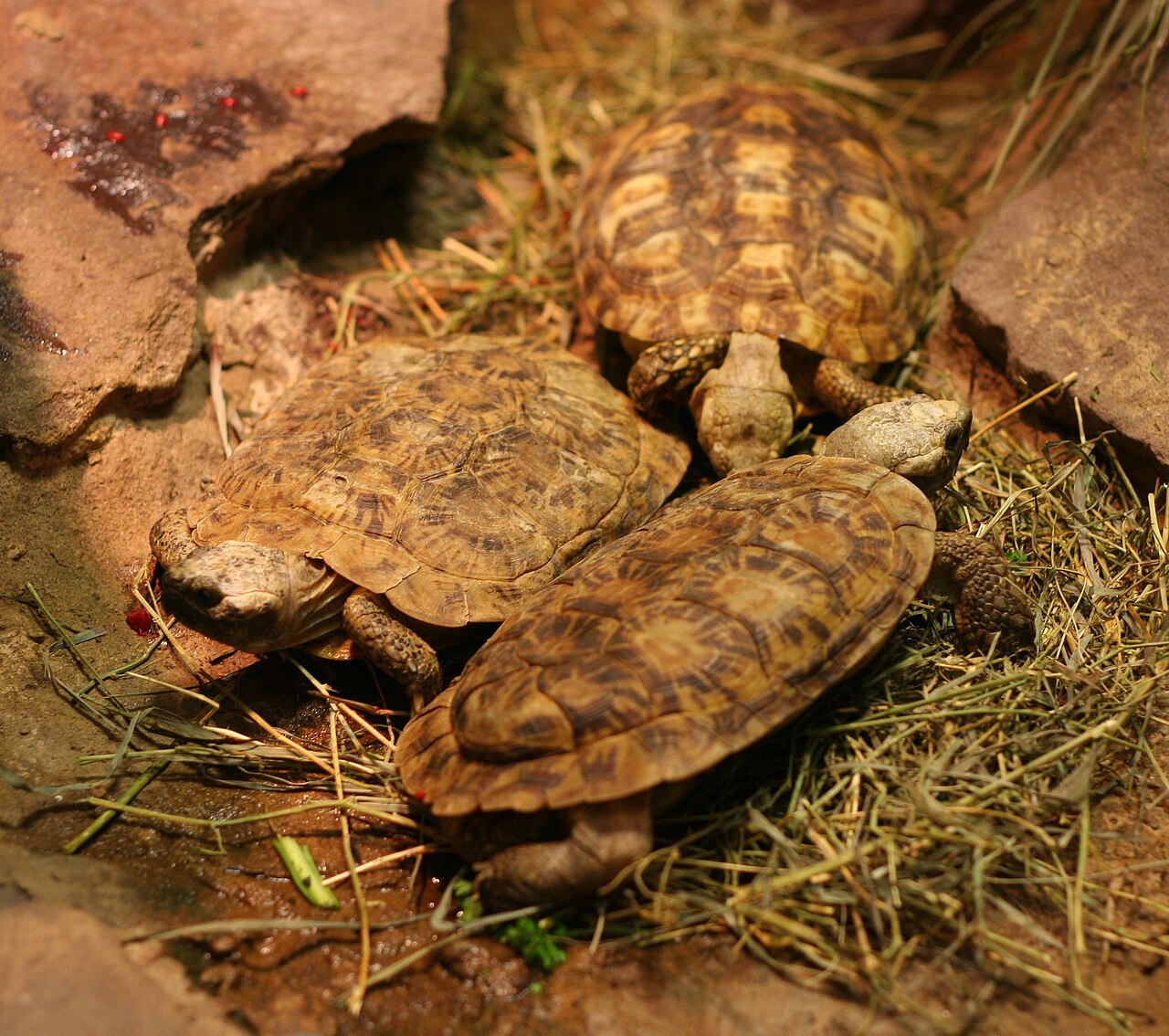
Brown markings also help it blend with its rocky surroundings. This is a body designed around a very particular kind of shelter.
Life among rocky outcrops
Pancake tortoises inhabit rocky hills and outcrops in dry landscapes, particularly in Kenya and Tanzania. Much of their time is spent close to crevices.
Grasses and other vegetation make up most of their wild diet. Smithsonian's National Zoo describes their food and rocky habitat.
An unusual shape needs protection
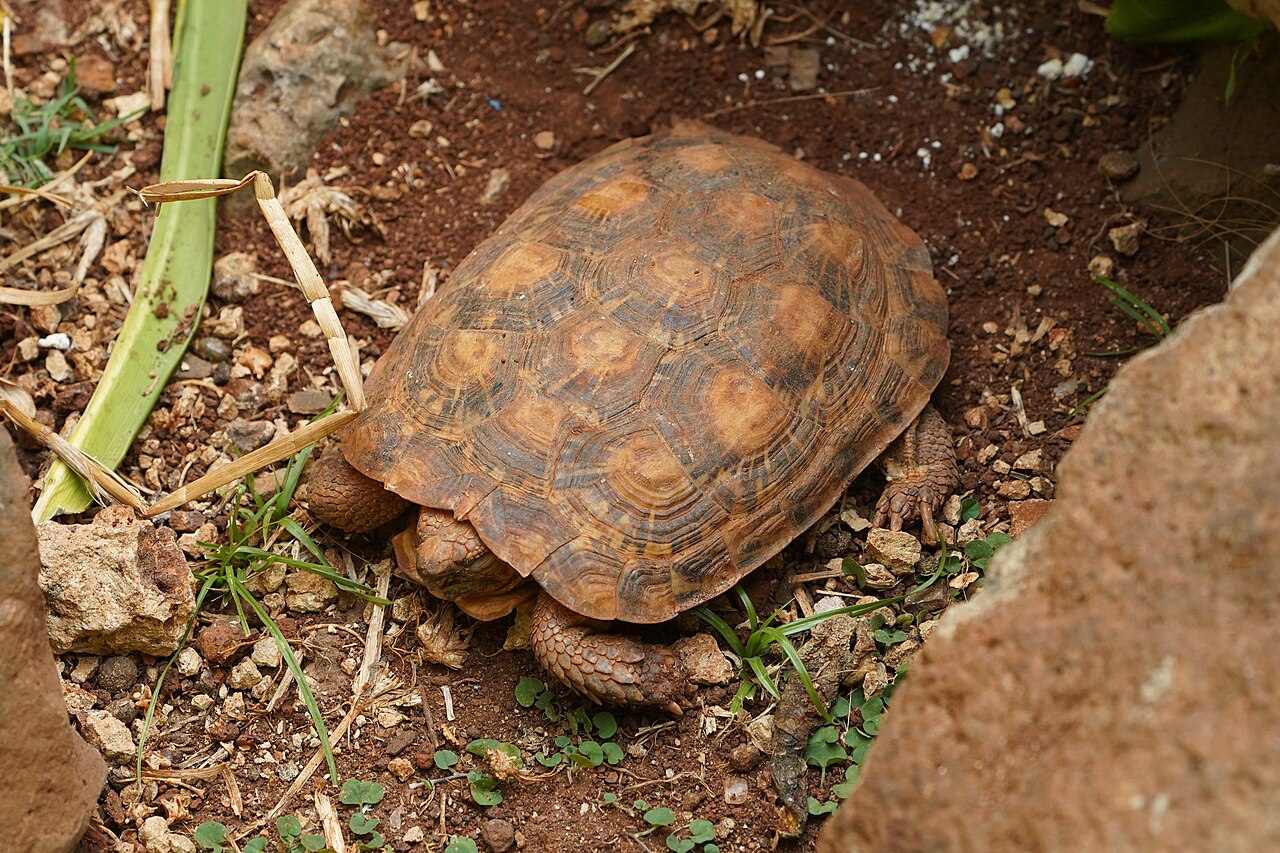
The very features that make this tortoise fascinating can make it attractive to collectors. San Diego Zoo Wildlife Alliance discusses its conservation challenges, including pressure from wildlife trade.
Protecting rocky habitats means leaving more than the largest landmarks intact. A narrow gap in a rock may be an animal's essential refuge.
The pancake tortoise shows that nature has many answers to the same problem. For this remarkable reptile, safety can mean being flat enough to fit where others cannot.
Photo credits
Featured image: Frankfurt Zoo - Pancake Tortoise.jpg — Photograph by Mike Peel (www.mikepeel.net).; CC BY-SA 4.0.

Body image 1: Malacochersus tornieri - Buffalo Zoo.jpg — Dave Pape; Public domain.

Body image 2: Pancake tortoise (Malacochersus tornieri) at Nairobi Snake Park.jpg — Ethmostigmus; CC BY-SA 4.0.

Photographs resized for web display where available. Existing crops are identified in their source filenames; captive animals and landscape context are identified in the captions.