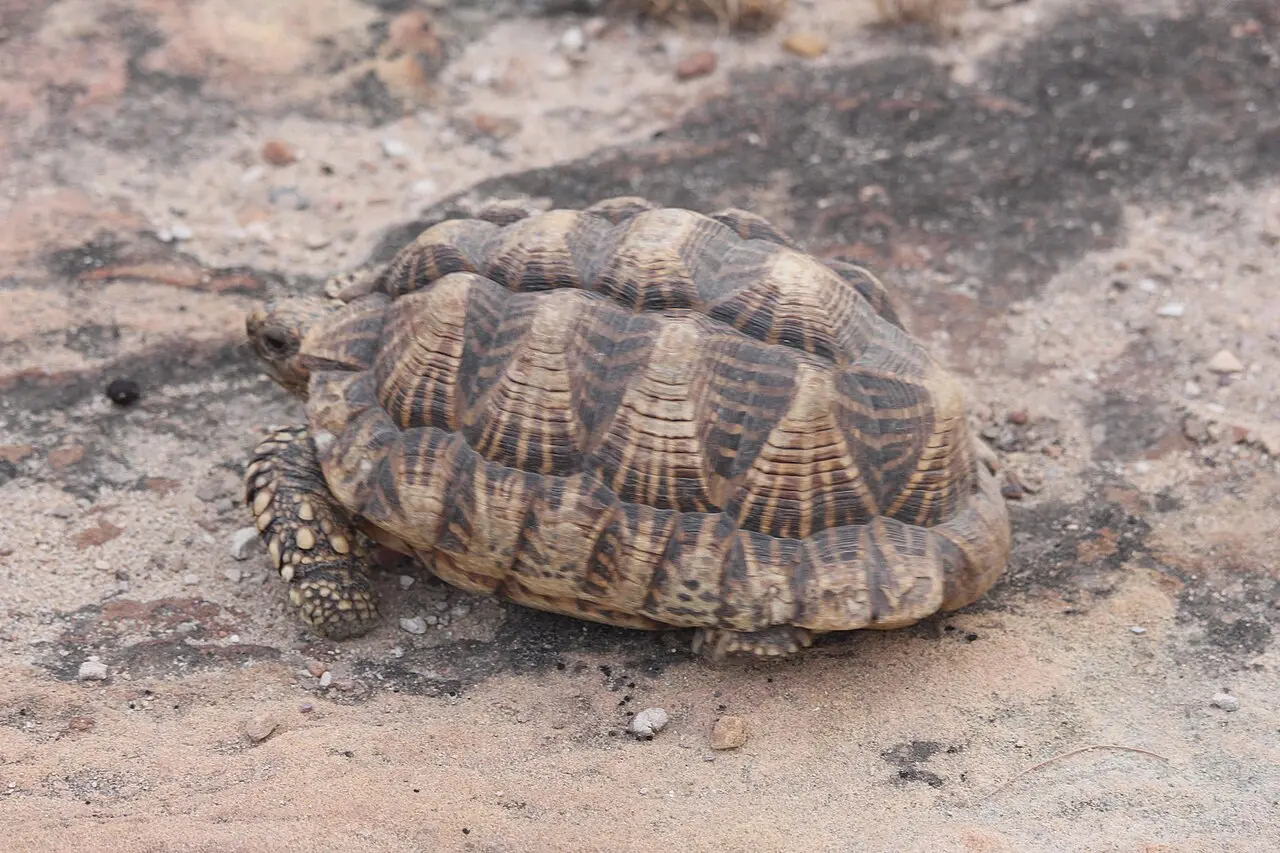
Bright lines spread across the Indian star tortoise's shell like little golden stars. Each pattern sits on a raised shell plate, turning a familiar tortoise shape into something extraordinary.
This is Geochelone elegans, native to India, southeastern Pakistan, and Sri Lanka. Its beautiful markings are part of a life among dry grasses, scrub, and seasonal change.
Stars that help it disappear
The pale lines contrast with the shell's darker background. Up close, the pattern looks bold and decorative.
Among dry vegetation, however, those broken lines can help disrupt the tortoise's outline. Cincinnati Zoo explains how the pattern provides camouflage. A striking design to our eyes can work very differently in the setting where an animal lives.
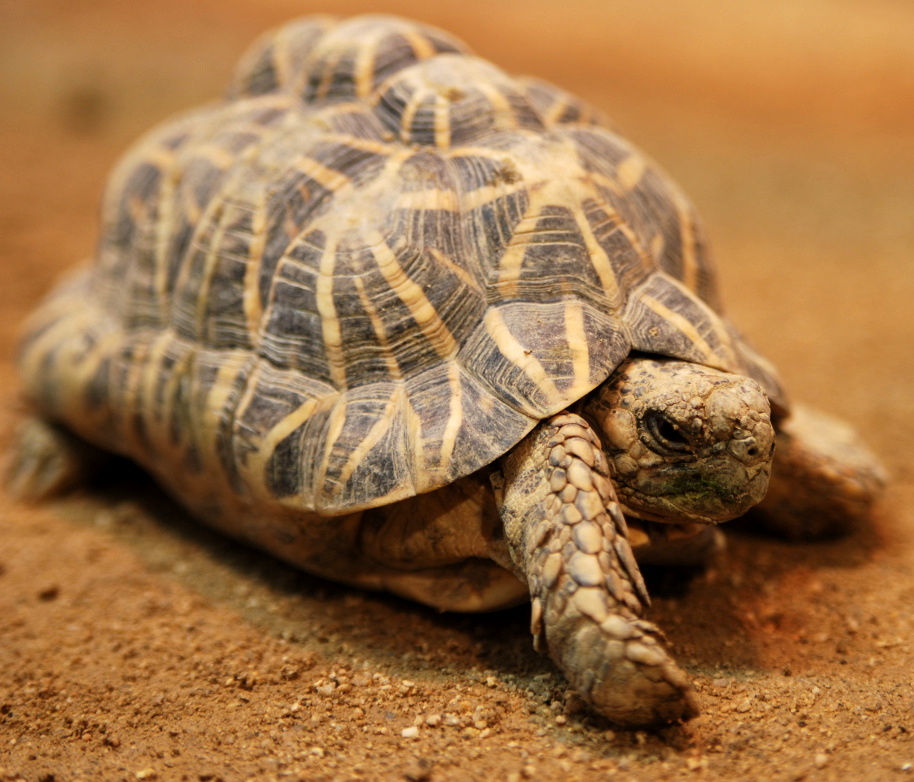
A slow search for plants
Indian star tortoises mainly feed on plant material. Grasses, leaves, flowers, and fruit are among the foods described in Animal Diversity Web's species account.
Their daily lives connect them closely to ground-level vegetation. The same plants that provide food can also offer shelter and visual cover.
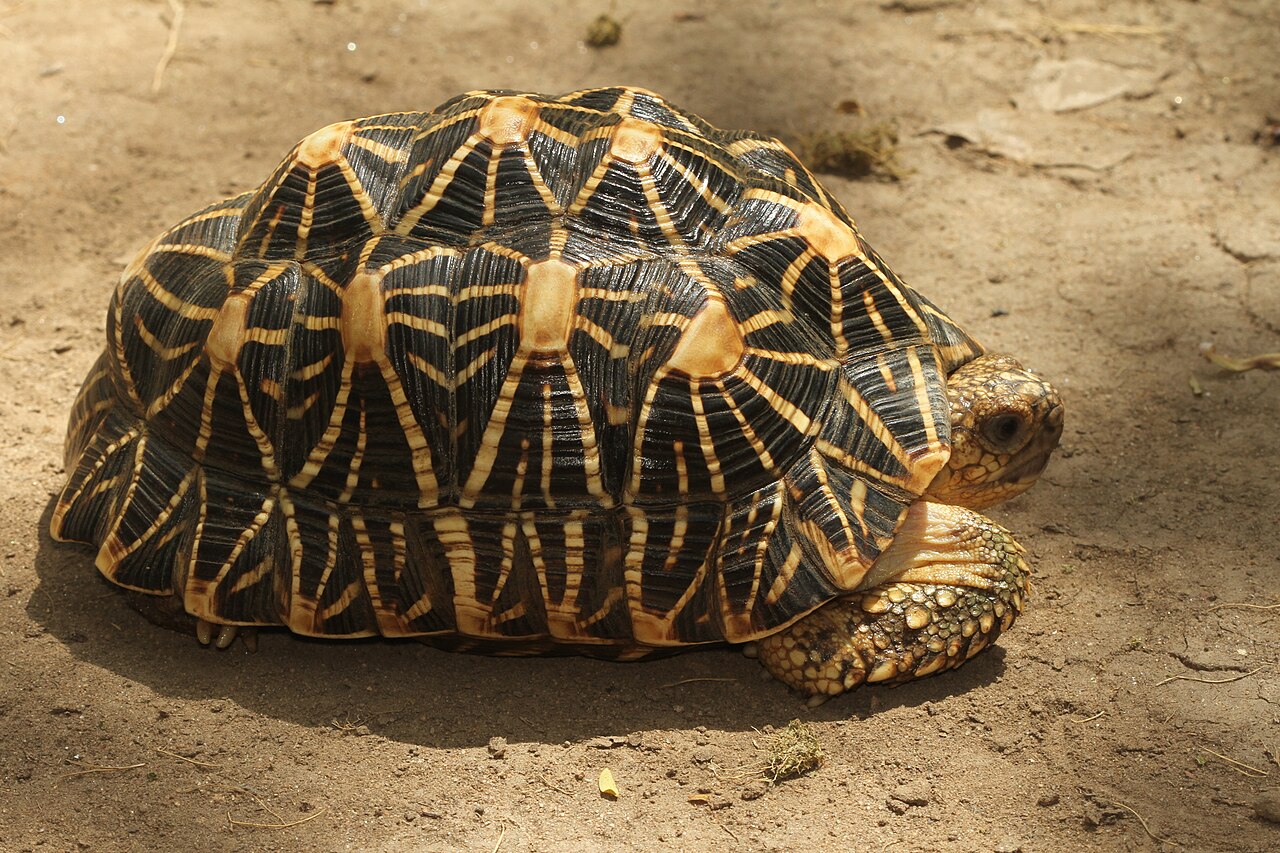
Beauty brings a challenge
The shell pattern has helped make this tortoise desirable in the pet trade. WWF identifies collection and illegal trade as serious concerns.
Admiring a wild animal should support its future in nature. Protecting habitat and reducing demand for wild-caught tortoises help keep those star-covered shells where they belong.
The Indian star tortoise offers a quiet kind of wonder: a small traveler carrying a remarkable pattern through a landscape that helps explain its beauty.
Photo credits
Featured image: Indian star tortoise (Geochelone elegans) in Gujarat.jpg — Malaika the jackal researcher; CC BY-SA 4.0.

Body image 1: Indian Star Tortoise Tennoji.jpg — Kuribo; CC BY-SA 3.0.

Body image 2: Indian star tortoise (2016) 7365.jpg — Davidvraju; CC BY-SA 4.0.

Photographs resized for web display where available. Existing crops are identified in their source filenames; captive animals and landscape context are identified in the captions.