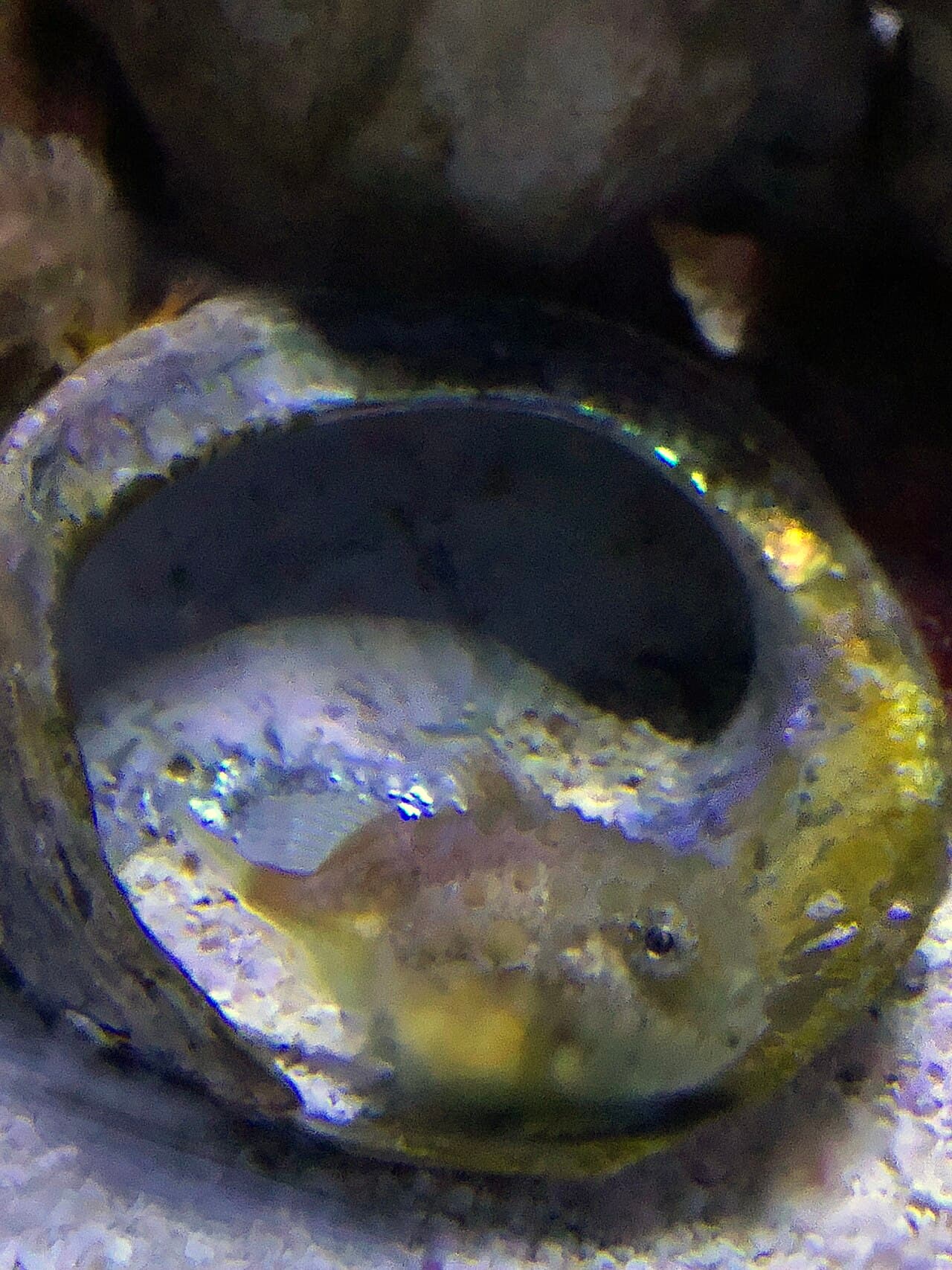
A tiny round fish clings to a rock as water moves around it. Its secret is underneath: a pair of fins transformed into a suction disc.
The Pacific spiny lumpsucker may look awkward, but its body is full of useful surprises.
The Fish That Holds On
The Pacific spiny lumpsucker's scientific name is Eumicrotremus orbis. Its pelvic fins have joined into a disc that helps it attach to rocks, kelp, and eelgrass.
Birch Aquarium at Scripps explains that this grip helps stop the fish from being swept away by currents.
A powerful tail is not the only solution to moving water. Sometimes staying in place is the useful skill.
Small, Round, and Made for Cold Water
The California Academy of Sciences gives the species a size range of roughly 1–3 inches. It lives in cold coastal waters around the North Pacific, including Alaska and Japan.
Its small fins and rounded body make it a less efficient swimmer than many familiar fish. It also lacks a swim bladder.
Under the skin, jelly-like deposits help lower its body density. The result is an animal whose balance and grip work together in a very particular way.
Where Do the Spines Come From?
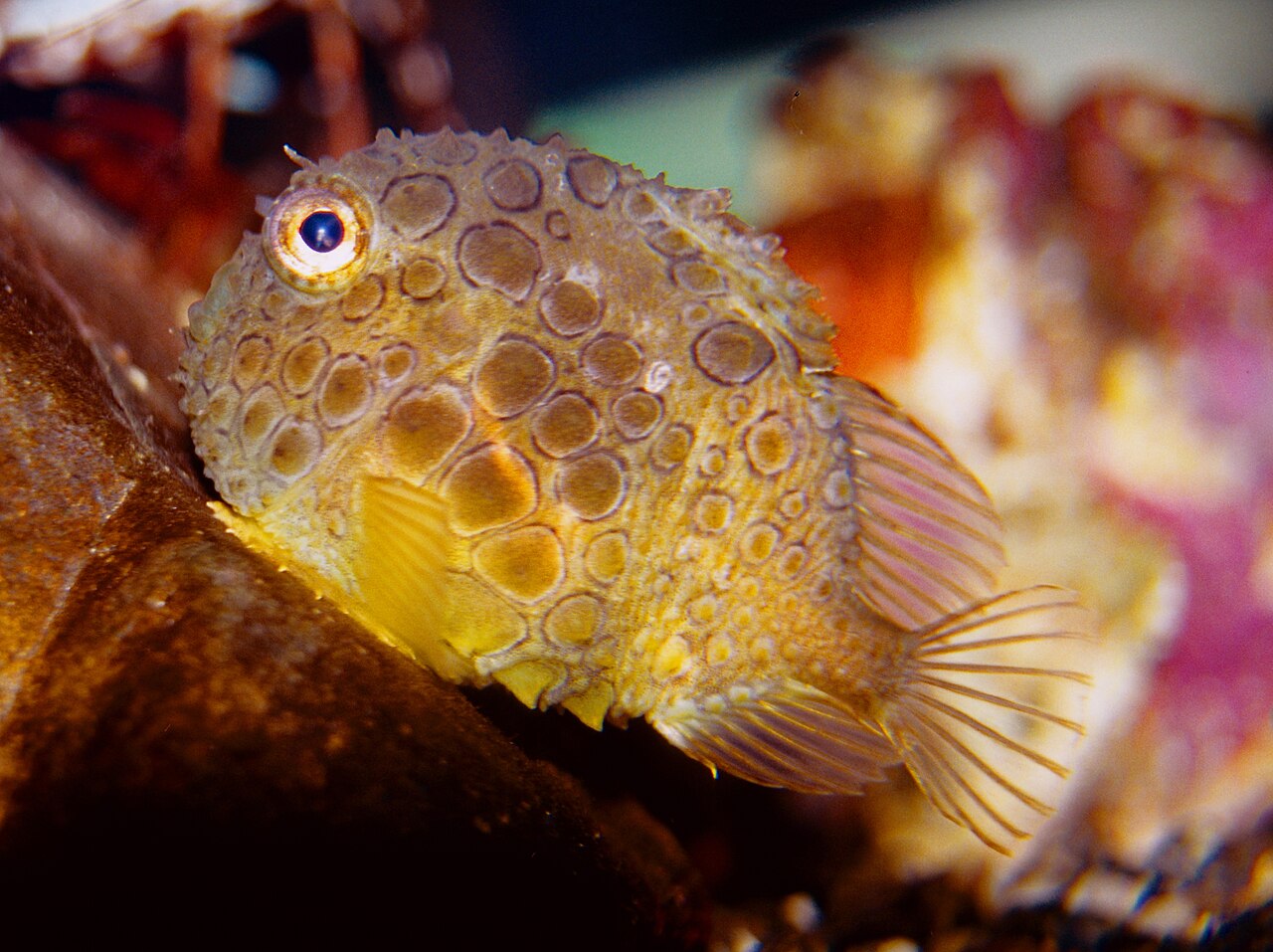
Adults carry armor-like structures across the body. Birch Aquarium describes the small spines as odontodes, with enamel as part of their structure.
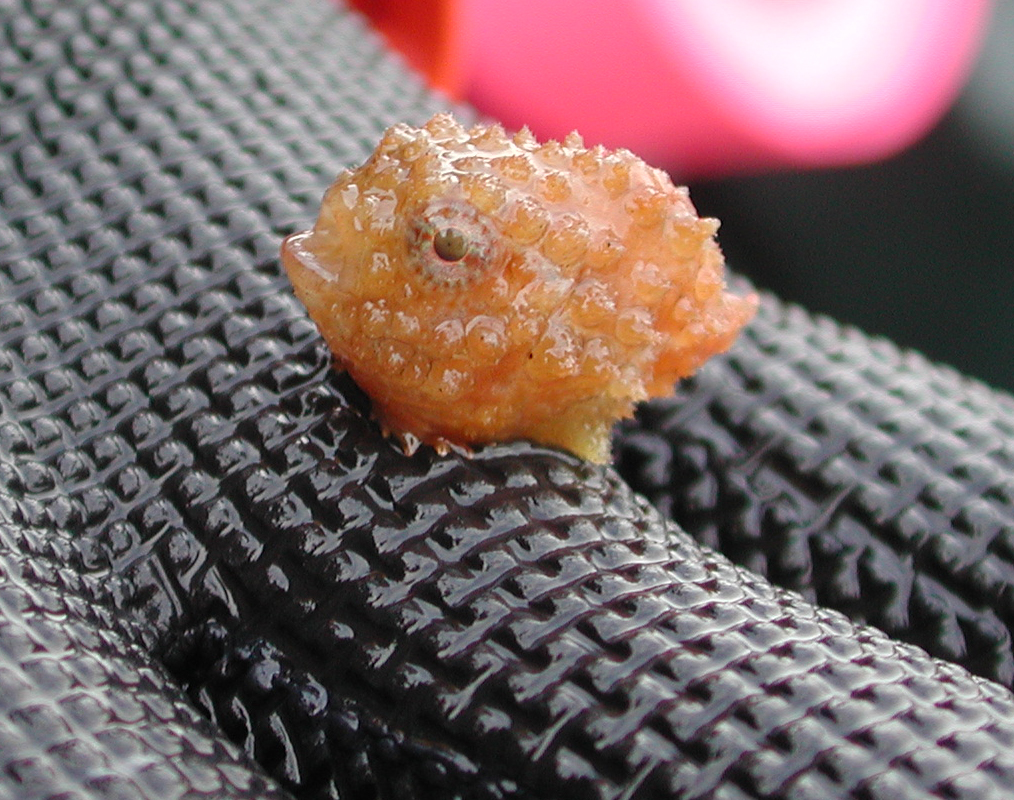
These develop as the fish grows. Newly hatched young lack the adult's spiky appearance.
That means a smooth-looking juvenile and a prickly adult can be the same species at different stages of life.
The Father Guards the Eggs
Male Pacific spiny lumpsuckers care for the eggs after they are laid in a sheltered spot, such as a crevice.
The Academy describes males protecting and aerating the clutch for weeks. Sheltered nesting spaces matter alongside the surfaces adults use for attachment.
A Different Kind of Glow
Birch Aquarium also reports biofluorescence in these fish. Under suitable lighting, parts of the body can absorb light and give it back at a different color.
This is different from producing light through bioluminescence. An ordinary photograph should not be expected to show the effect.
More Than a Funny Face
Aquarium breeding partnerships have allowed Birch Aquarium to share young lumpsuckers with other institutions, helping reduce pressure to collect display animals from the wild.
The Pacific spiny lumpsucker brings together grip, armor, camouflage, and parental care in a body small enough to overlook.
Once you know what is underneath that little round shape, it becomes much harder to look away.
Photograph Credits
Featured image: Basilosauridae, CC BY-SA 4.0. Resized for display. Pacific spiny lumpsucker at Birch Aquarium, San Diego; source photograph tone-corrected.

Body image 1: David Csepp / NOAA Fisheries, public domain. Resized for display. Pacific spiny lumpsucker photographed in Auke Bay, Alaska.

Body image 2: NOAA Fisheries, public domain. Resized for display. A juvenile Pacific spiny lumpsucker documented by NOAA Fisheries in Alaska.
