In the 2013 film Oblivion, enormous machines draw resources from Earth while the people maintaining them misunderstand the system they serve. As discussion of artificial intelligence and water use grows, that image has found a new audience.
The comparison works as a question about resources. It becomes misleading when a science-fiction plot is treated as a description of how today's AI operates.
What the film actually depicts
Joseph Kosinski's film stars Tom Cruise as a technician working on a devastated Earth. Its documented plot includes machines harvesting seawater and a controlling artificial intelligence known as the Tet.
The extraction belongs to a fictional system with its own purpose and scale. It does not establish that contemporary AI is draining oceans, nor does a resemblance prove that the filmmakers predicted modern data-center engineering.

Archival exterior detail of a data-center building at the National University of Córdoba, Argentina. This does not establish the facility’s AI use or resource consumption. Photo: Ana Las Heras, CC BY-SA 4.0. Resized; JPEG conversion. Image adaptation shared under the same CC BY-SA 4.0 license.

Electricity demand is growing
The real infrastructure question is substantial without the movie comparison. In its 2026 assessment of energy and AI, the International Energy Agency estimated that data centers used about 485 terawatt-hours of electricity worldwide in 2025.
Its central projection put demand at roughly 950 terawatt-hours in 2030, around 3 percent of global electricity consumption. Those figures cover data centers broadly, including services beyond AI. They should not be described as electricity used solely by chatbots.
The agency also describes uncertainty around future demand. A projection is a planning estimate, not a measurement of electricity already consumed.
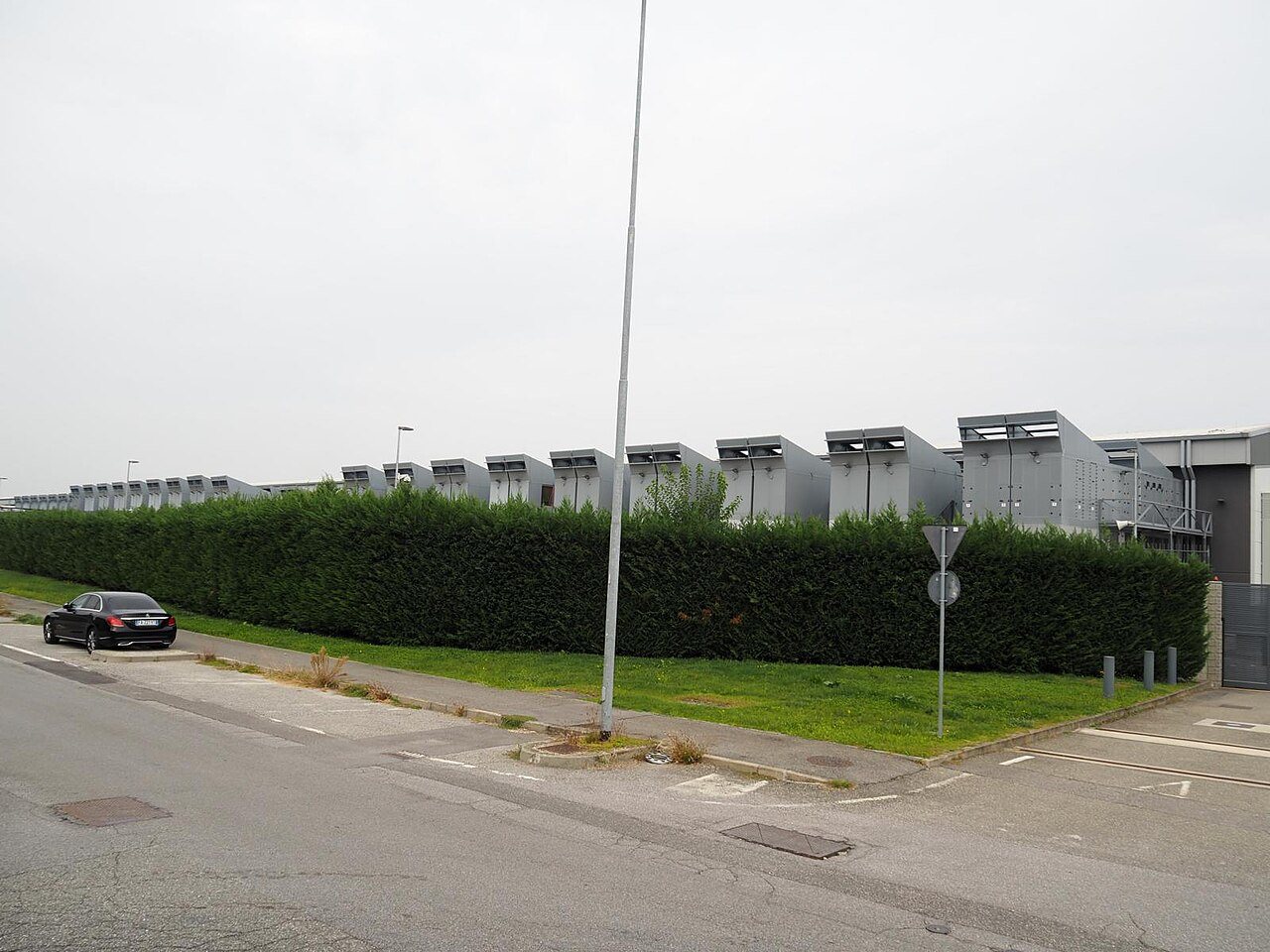
Illustrative data-center ventilation photograph. Cooling arrangements vary among facilities. Photo: Lapalmauz, CC BY-SA 4.0. Resized; JPEG conversion. Image adaptation shared under the same CC BY-SA 4.0 license.

Water figures need their own context
Water can be consumed directly in cooling systems and indirectly when electricity is generated. The amounts vary with climate, cooling design, energy supply and the workload being served.
The 2024 United States Data Center Energy Usage Report examines these water impacts as well as electricity demand. A national annual estimate cannot be converted into a universal water cost for every individual AI question without additional assumptions.
Oblivion offers a memorable visual for asking who benefits from a resource-intensive system. Assessing real systems requires something less cinematic: clear boundaries, dated measurements and an honest account of what the numbers include.
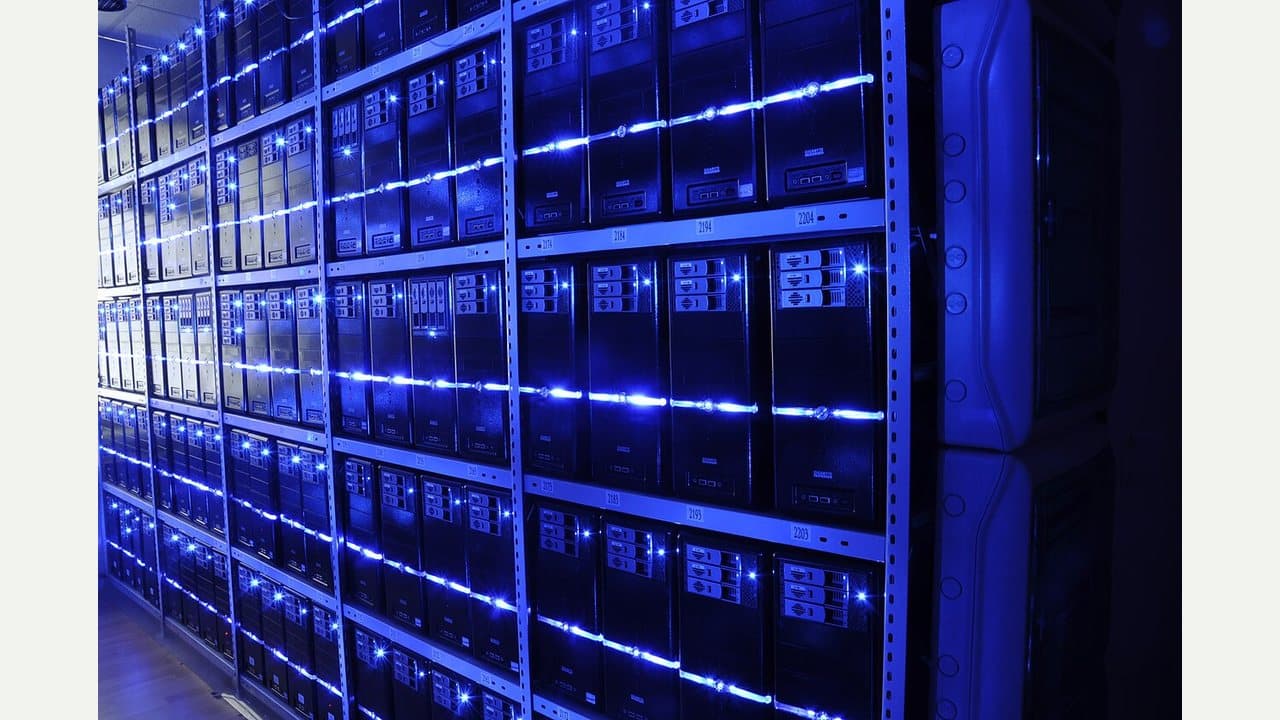
Featured image: Illustrative data-center photograph. This is not a film still from Oblivion or a facility with measured AI-only water use. Photo: BalticServers.com, CC BY-SA 3.0. Resized and placed on a plain 16:9 canvas without cropping the subject. Image adaptation shared under the same CC BY-SA 3.0 license.
