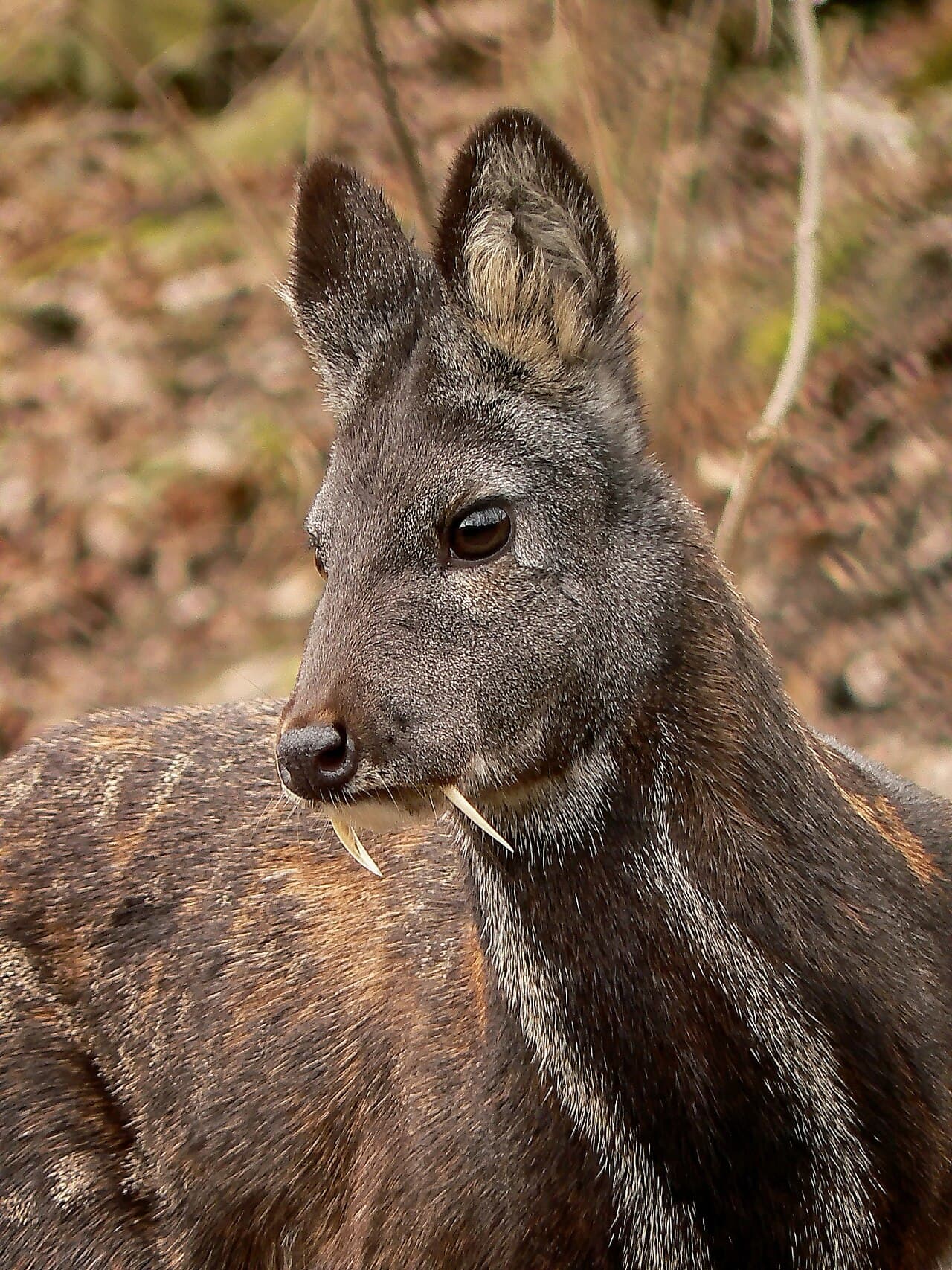
A male musk deer can have long canine teeth that look surprisingly like fangs. Its head has no antlers, creating a silhouette quite different from the deer many of us picture.
Those teeth belong to a secretive plant eater.
A family of their own
Musk deer belong to the genus Moschus in the family Moschidae. They resemble true deer, but are classified separately.
Several species occur across parts of Asia, with ranges and conservation circumstances that differ between species. The photographs here include Siberian musk deer.
Animal Diversity Web's family account describes their antler-free heads, enlarged male canines, and general biology.
More than a remarkable pair of teeth
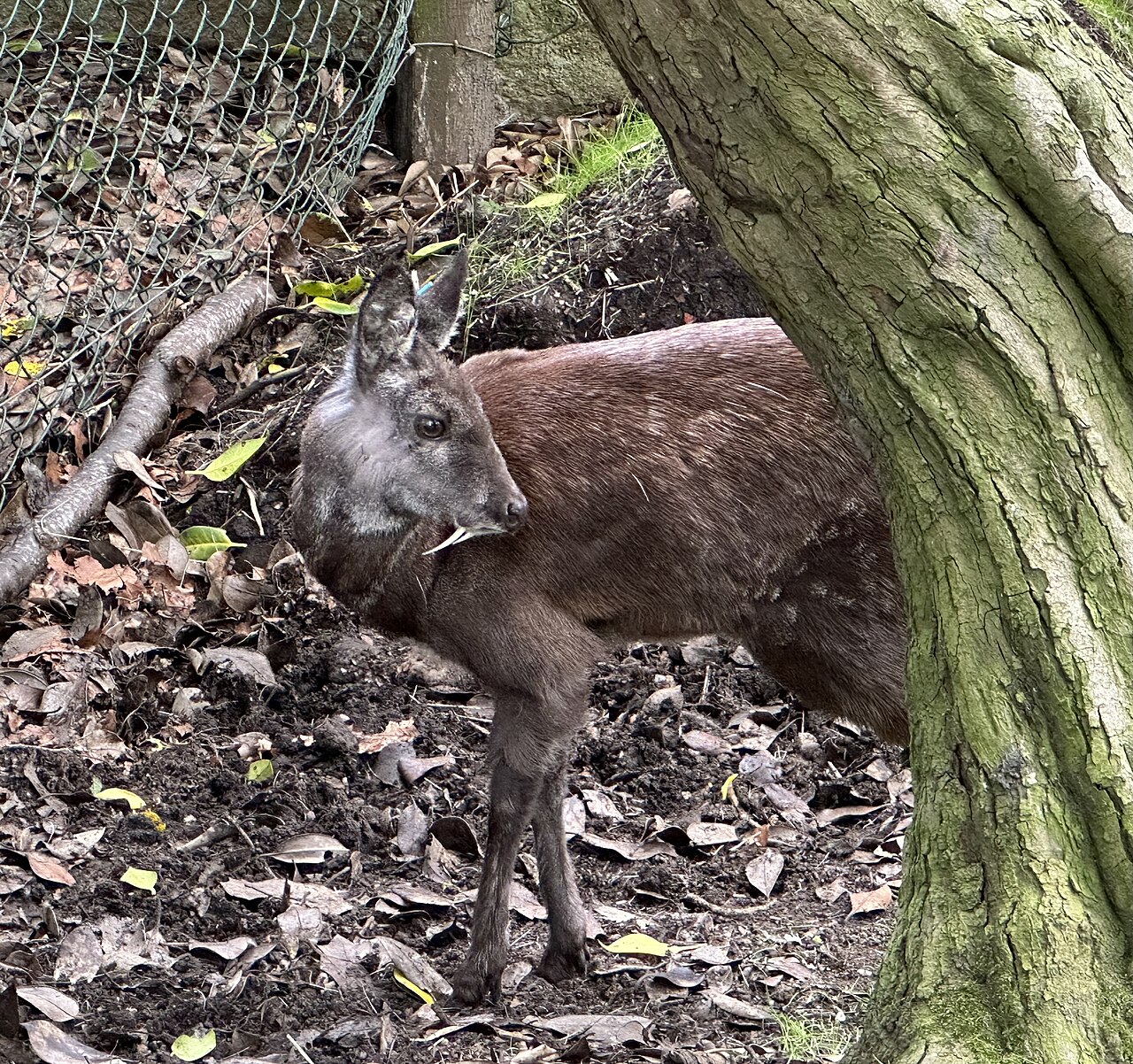
Musk deer are generally solitary and often active around dusk, dawn, or at night. Their food includes vegetation such as leaves, shoots, and lichens.
The male's enlarged canines are associated with rivalry, rather than a meat-eating lifestyle. An unusual tooth shape does not tell an animal's entire feeding story.
Their quiet behavior and use of cover can make them difficult to observe.
Why the musk matters
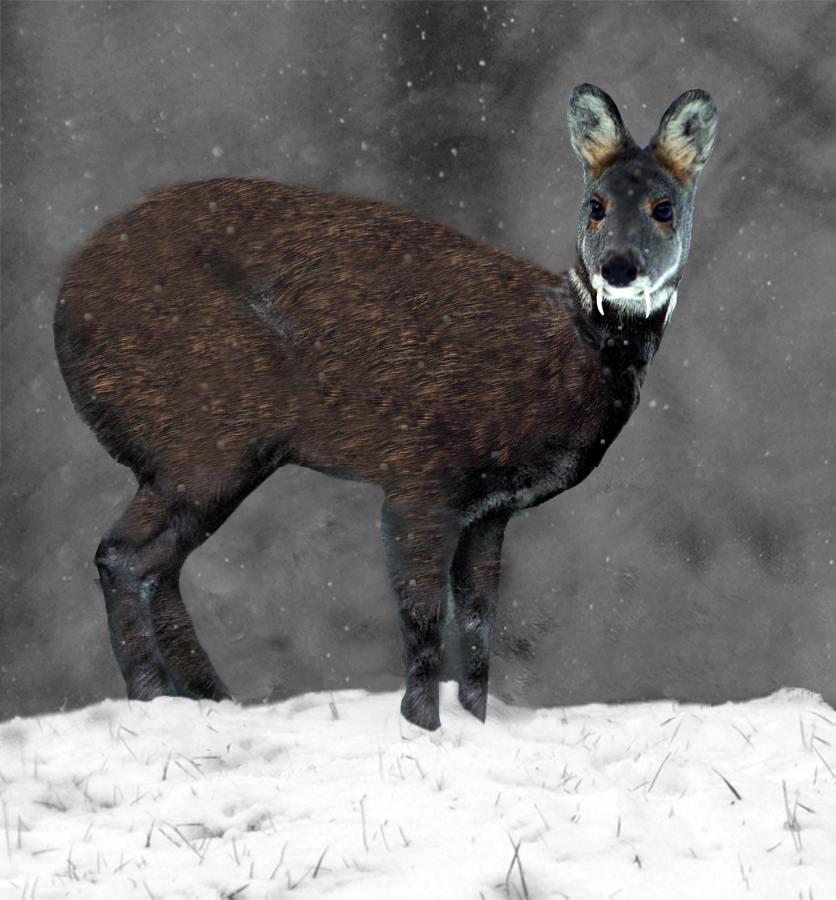
Males have a gland that produces musk. Its commercial value has driven hunting and trade, creating serious conservation pressure.
A TRAFFIC assessment discusses the trade and notes the different musk deer species across Asia.
Protecting them requires looking beyond the unusual face to the forces affecting wild populations.
The musk deer's most memorable feature may be its teeth. Its more urgent story is how a small, elusive forest mammal became vulnerable to the value people placed on a scent.
Photo credits
Featured image: Moschus moschiferus in Plzen zoo (12.02.2011).jpg — Николай Усик / http://paradoxusik.livejournal.com/; CC BY-SA 3.0.

Body image 1: Musk deer in Edinburgh Zoo.jpg — EspenÅberg; CC BY-SA 4.0.

Body image 2: Siberian Musk Deer.jpg — ErikAdamsson; CC0.

Photographs resized for web display where available. Existing crops are identified in the linked source files.