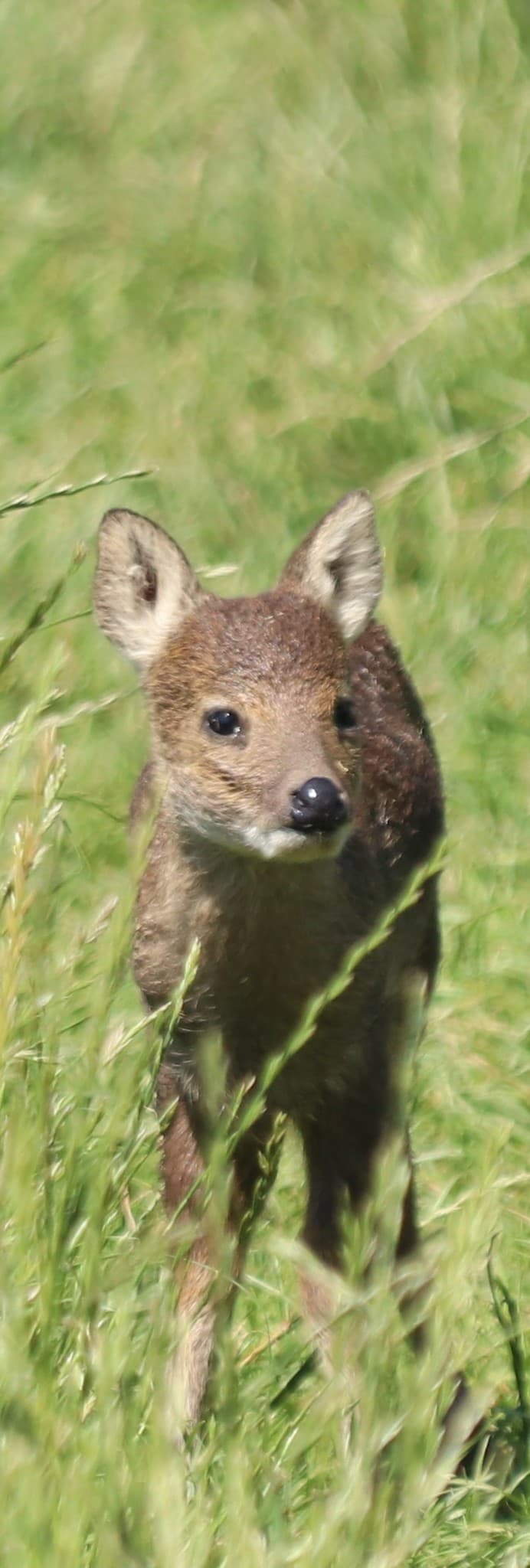
A male Chinese water deer can carry long, curved canine teeth that extend below its lips. The striking teeth belong to a plant-eating deer whose head carries no antlers.
A closer look turns a vampire-like first impression into a fascinating piece of natural history.
What the teeth are for
Chinese water deer, Hydropotes inermis, have enlarged upper canines, especially in males. Females have much smaller canines.
Males use the prominent teeth in contests with rivals. They are not evidence of a blood-drinking diet.
Animal Diversity Web describes the teeth, behavior, and the absence of antlers in both sexes.
A hidden life among reeds and grass
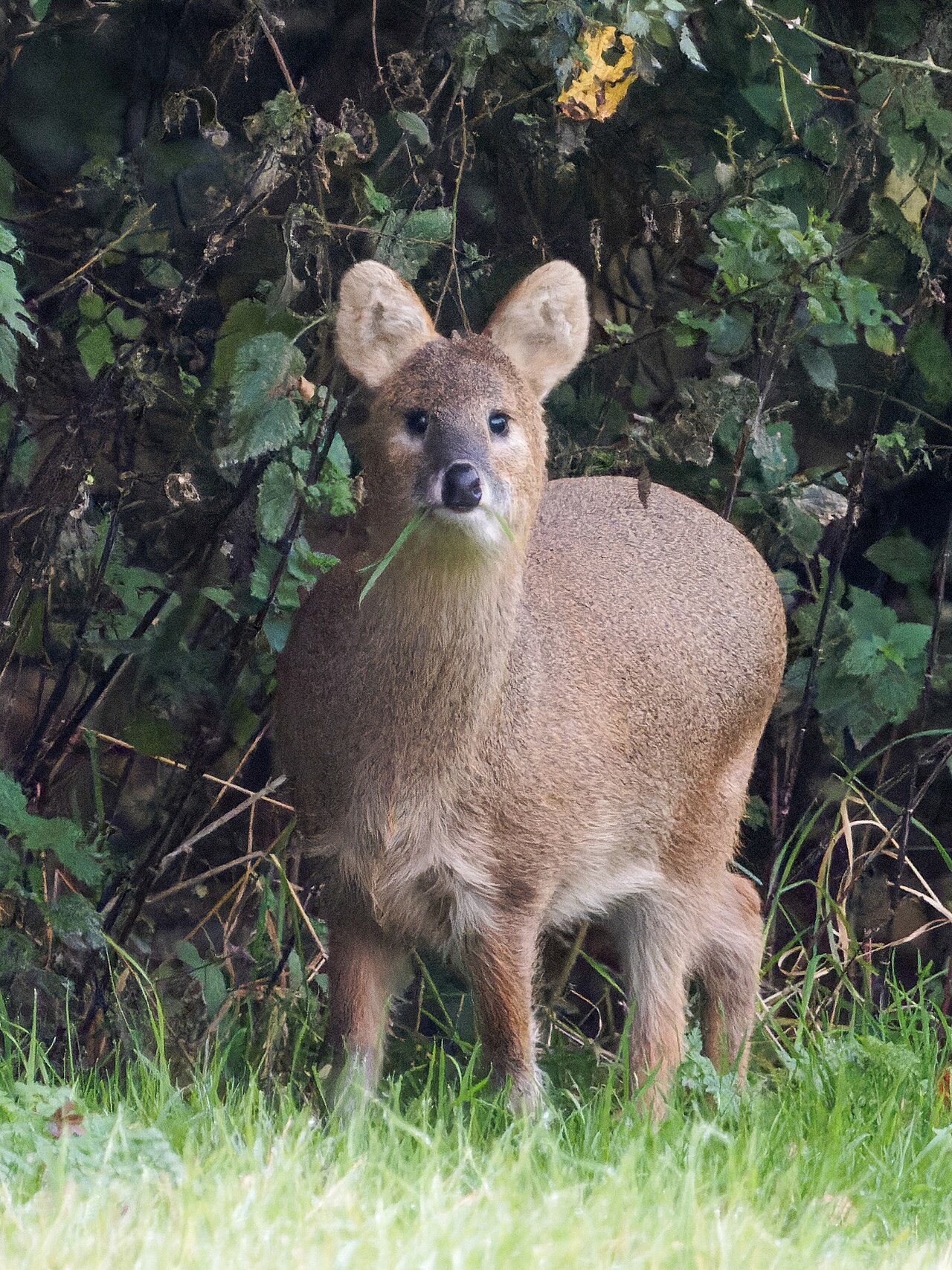
Water deer are native to China and Korea, with introduced populations elsewhere. They use habitats such as tall grass, reeds, river margins, and areas of dense cover.
Their small bodies and quiet behavior help them remain inconspicuous. A deer that looks obvious in an open photograph can become much harder to find among vegetation.
They are capable swimmers, but their lives also depend on cover and feeding places on land.
Looking carefully at a familiar family
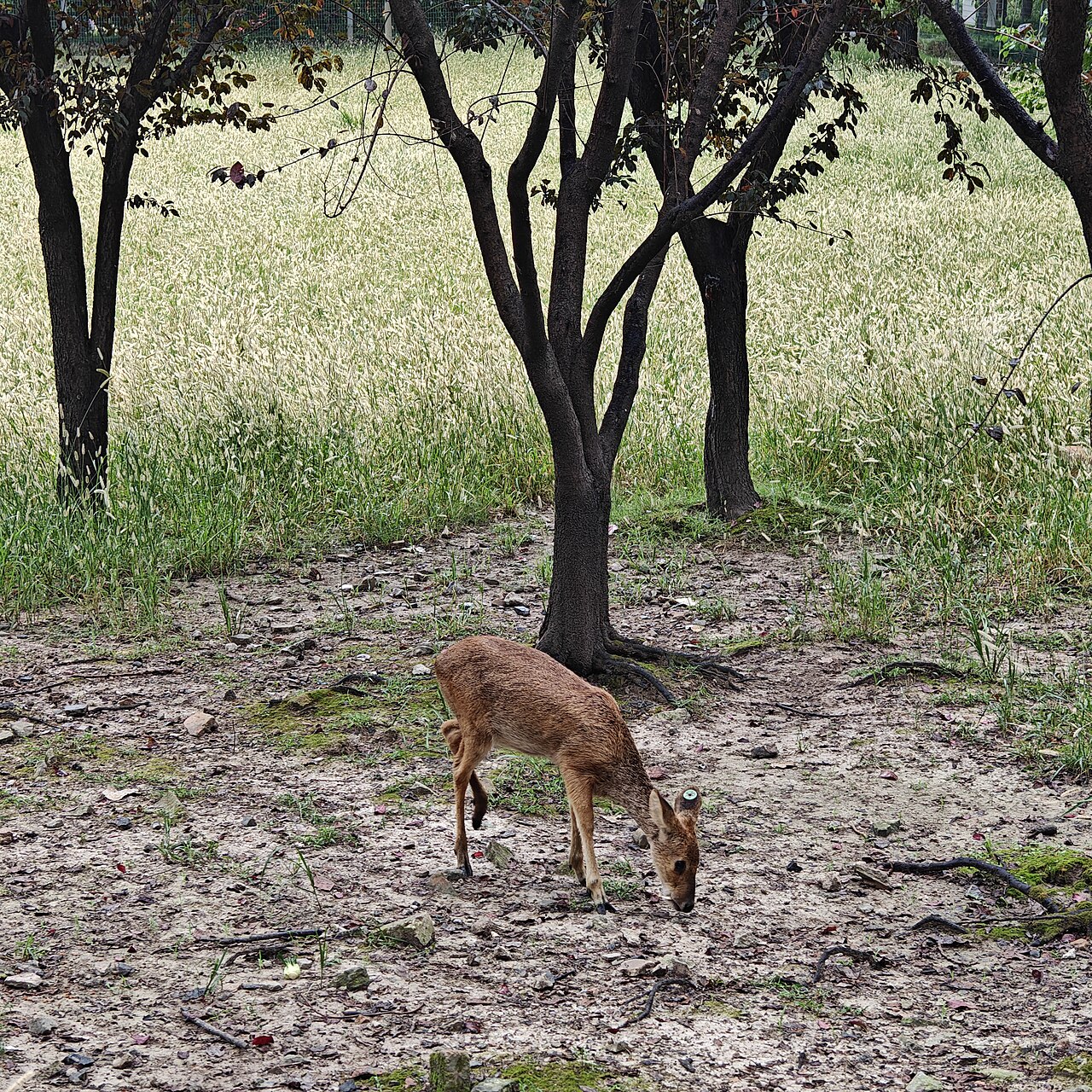
Antlers are such a familiar part of our image of deer that their absence can seem as unusual as the teeth themselves.
Yet these animals reveal another combination of features within the deer family: compact bodies, strong canine teeth in males, and a reliance on concealment.
The Chinese water deer rewards curiosity beyond the dramatic close-up. Those surprising teeth belong to an animal whose everyday world is woven through reeds, grass, and sheltered ground.
Photo credits
Featured image: Hydropotes inermis 138999631.jpg — Bryan Crunden; CC0.

Body image 1: Hydropotes inermis 168257189.jpg — William Stephens; CC BY 4.0.

Body image 2: Water Deer in Huaxia Park, Shanghai 5.jpg — 纳瓦拉的亨利; CC BY-SA 4.0.

Photographs resized for web display where available. Existing crops are identified in the linked source files.