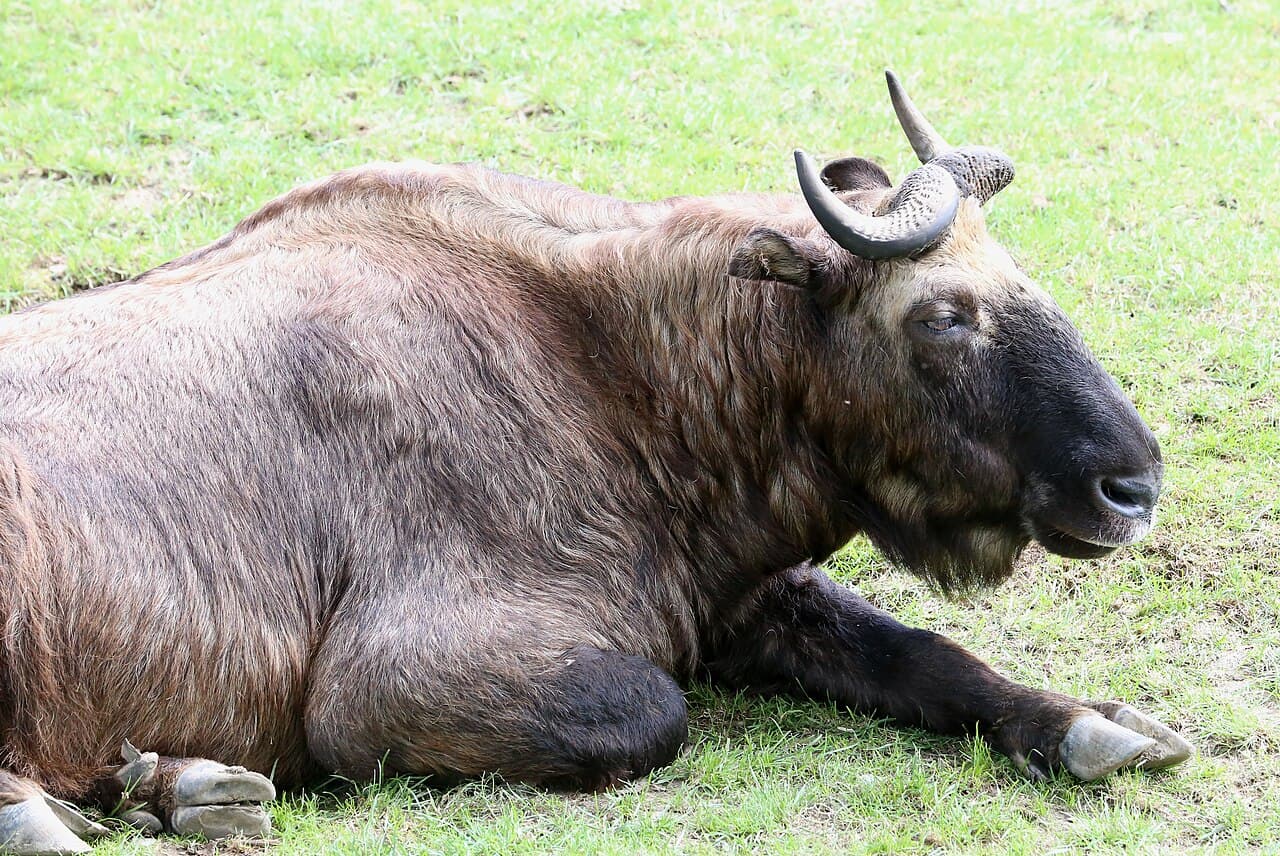
A takin has a broad snout, heavy shoulders, curved horns, and a thick coat that can range from brown to golden tones. The combination gives it an appearance quite unlike a typical mountain goat.
Its nose is more than a memorable feature: large internal cavities help warm the air it breathes.
Built for mountain conditions
Takins belong to the cattle family, Bovidae, and are commonly listed under Budorcas taxicolor.
Their coats and sturdy bodies help them cope with cold mountain environments. Split hooves provide purchase across uneven ground.
San Diego Zoo Wildlife Alliance describes their anatomy, mountain life, and differences in coat color between forms.
A seasonal search for plants
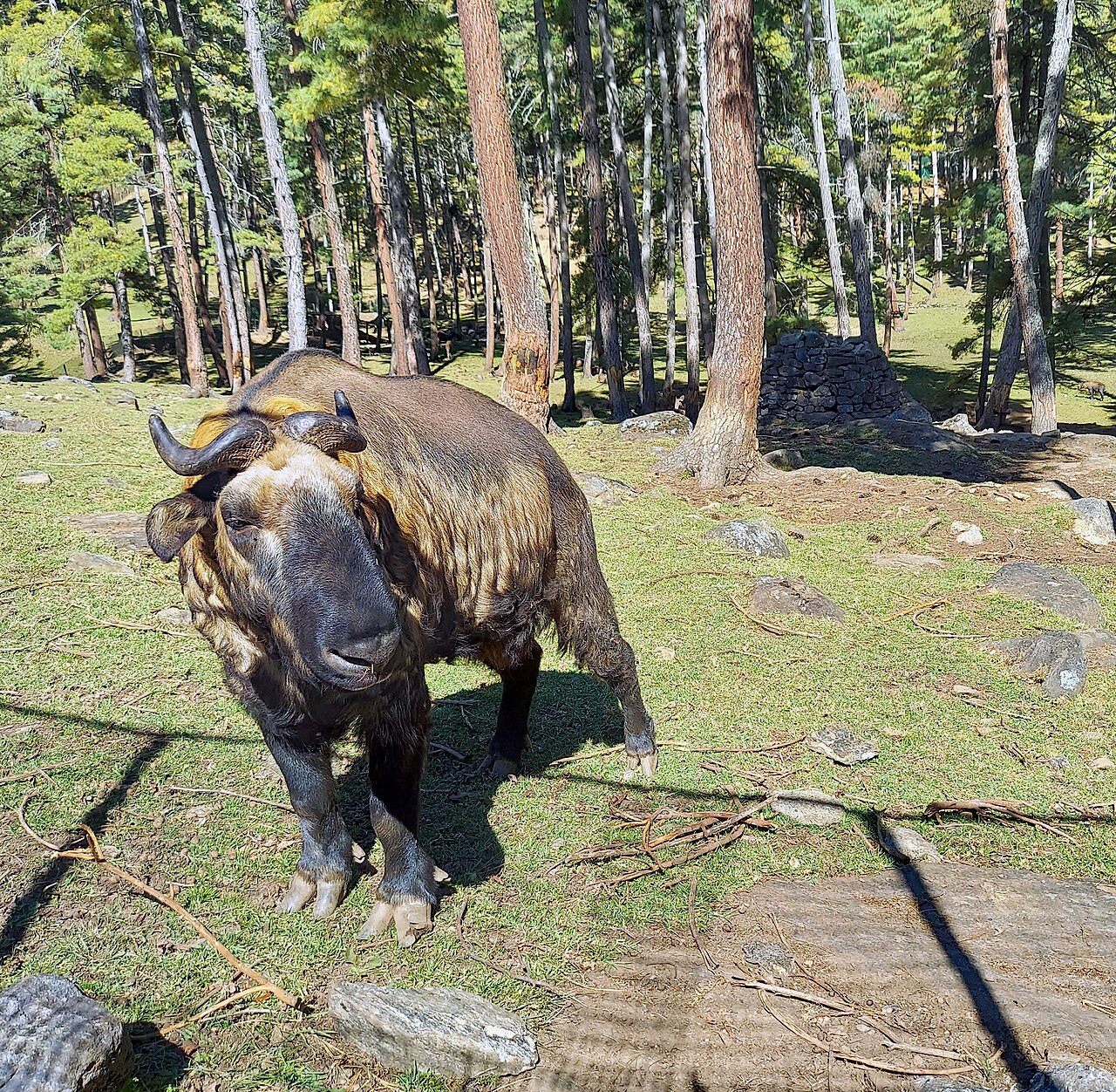
Takins eat a wide range of vegetation, including leaves, grasses, and shoots. As conditions change, herds can move between higher feeding grounds and lower forested areas.
Their size does not prevent agile movement over rocks. Both males and females carry horns, making this another useful contrast with familiar horned mammals.
The Bhutan takin is the national animal of Bhutan, as described in Smithsonian field notes.
A whole landscape behind the portrait
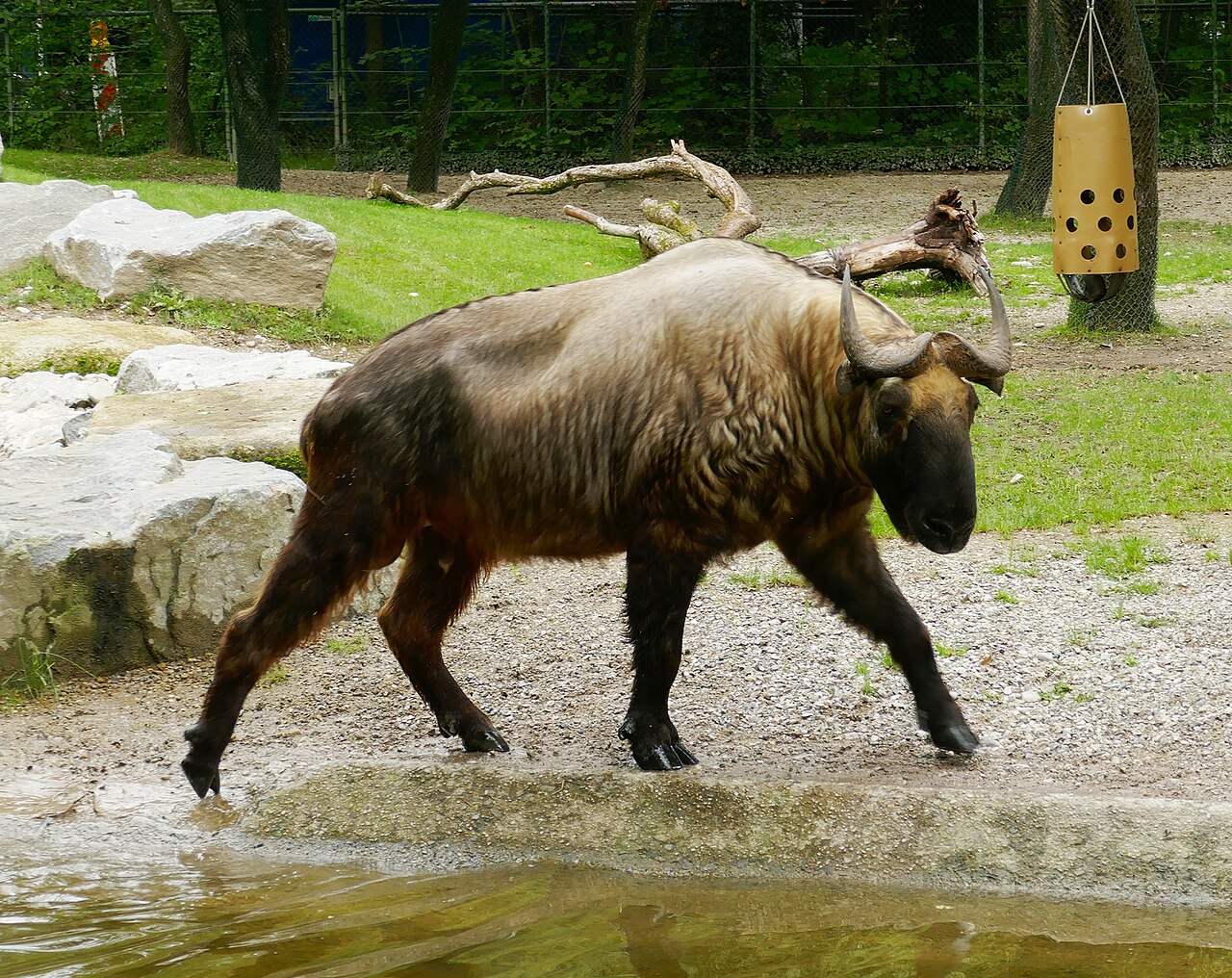
Seasonal movement means that one good feeding patch is not the whole habitat. Forest cover, travel routes, and access to food across the year all matter.
Hunting and habitat pressures create conservation concerns for takins.
The broad nose and shaggy coat may draw our attention first. Understanding how the animal breathes, feeds, and moves turns that unusual face into a portrait of life in rugged mountain country.
Photo credits
Featured image: Mishmi-Takin Budorcas taxicolor taxicolor Zoo Augsburg-07.jpg — Rufus46; CC BY-SA 3.0.

Body image 1: Bhutan---Takin.jpg — P. Hughes; CC BY-SA 4.0.

Body image 2: Budorcas taxicolor 2.jpg — Tiia Monto; CC BY 4.0.

Photographs resized for web display where available. Existing crops are identified in the linked source files.