In Romania's Movile Cave, the food web does not begin with plants capturing sunlight. Microorganisms use chemical energy, creating a source of food in a world of darkness.
That makes the cave more than a collection of unusual animals. It is a working ecosystem with a different foundation from a sunlit forest.
Energy from underground chemistry
Movile Cave lies near Mangalia in southeastern Romania. Its partly flooded spaces receive waters rich in compounds such as hydrogen sulfide and methane.
A 2023 microbial study describes organisms using these reduced chemicals in processes that support the ecosystem.
This is chemosynthesis. Unlike photosynthesis, it does not need light as its immediate energy source.
Microbes support larger life
Microbial growth supplies organic material that other organisms can use. That connects tiny chemical specialists to the cave's invertebrates and predators.
The system is not proof that every organism directly eats sulfur. Different members occupy different roles, just as they do in more familiar food webs.
Darkness changes the energy pathway, but it does not remove ecological relationships.
An unusual underground predator
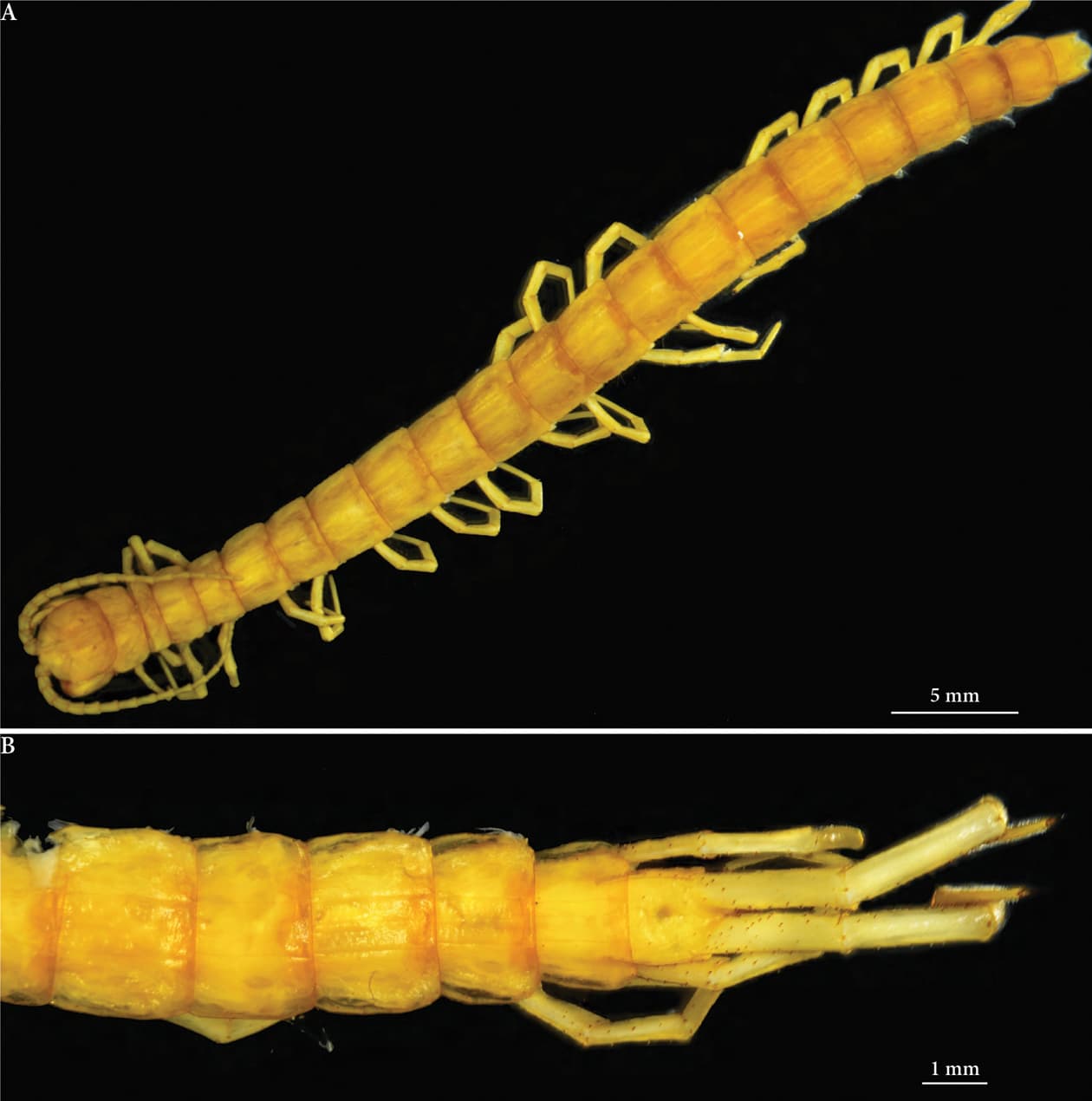
Researchers described the centipede Cryptops speleorex from Movile Cave in 2020. Its name refers to a “king of the cave,” reflecting its role as a predator within this small world.
The original species description examines its anatomy and relationship to other centipedes.
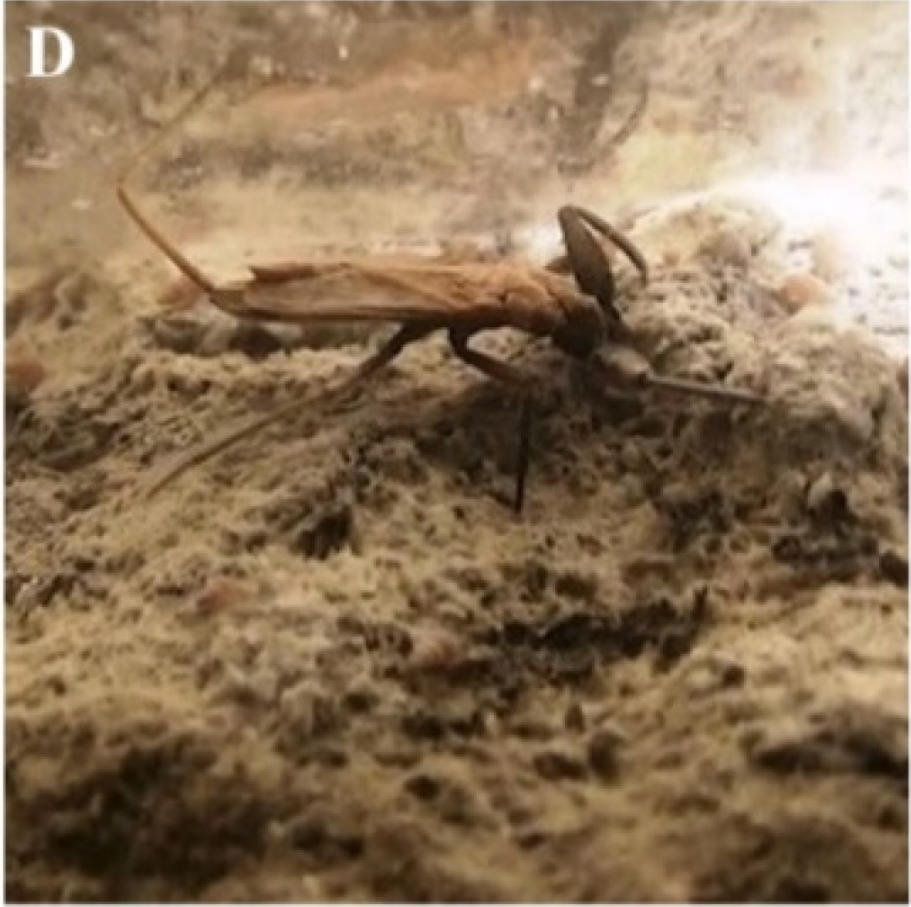
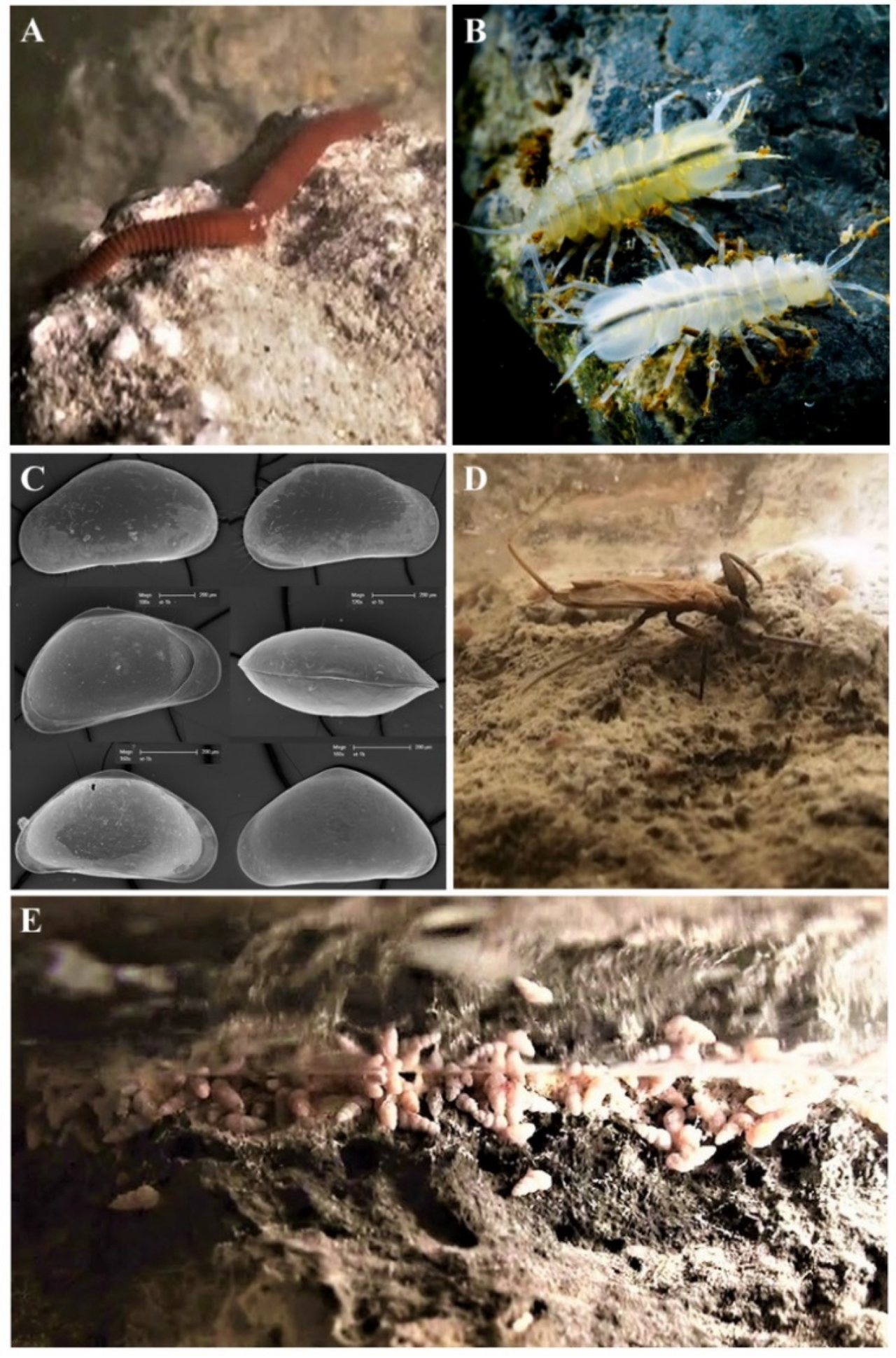
The scientific photographs show cave animals and specimen anatomy, revealing small structures that can be difficult to observe in the underground habitat.
A research habitat worth protecting
Restricted access helps limit disturbance and contamination. An isolated underground system can be vulnerable to changes brought from outside.
Movile Cave broadens our idea of what life needs. Sunlight supports most familiar ecosystems, but chemical energy can build another route—from microbes to an entire community hidden below ground.
Photo credits
Featured image: Varpu Vahtera, Pavel Stoev, Nesrine Akkari; Wikimedia Commons source; CC BY 4.0. Resized for web display.

Body image 1: Traian Brad, Sanda Iepure and Serban M. Sarbu; Wikimedia Commons source; CC BY-SA 4.0. Resized for web display.

Body image 2: Traian Brad, Sanda Iepure and Serban M. Sarbu; Wikimedia Commons source; CC BY-SA 4.0. Resized for web display.
