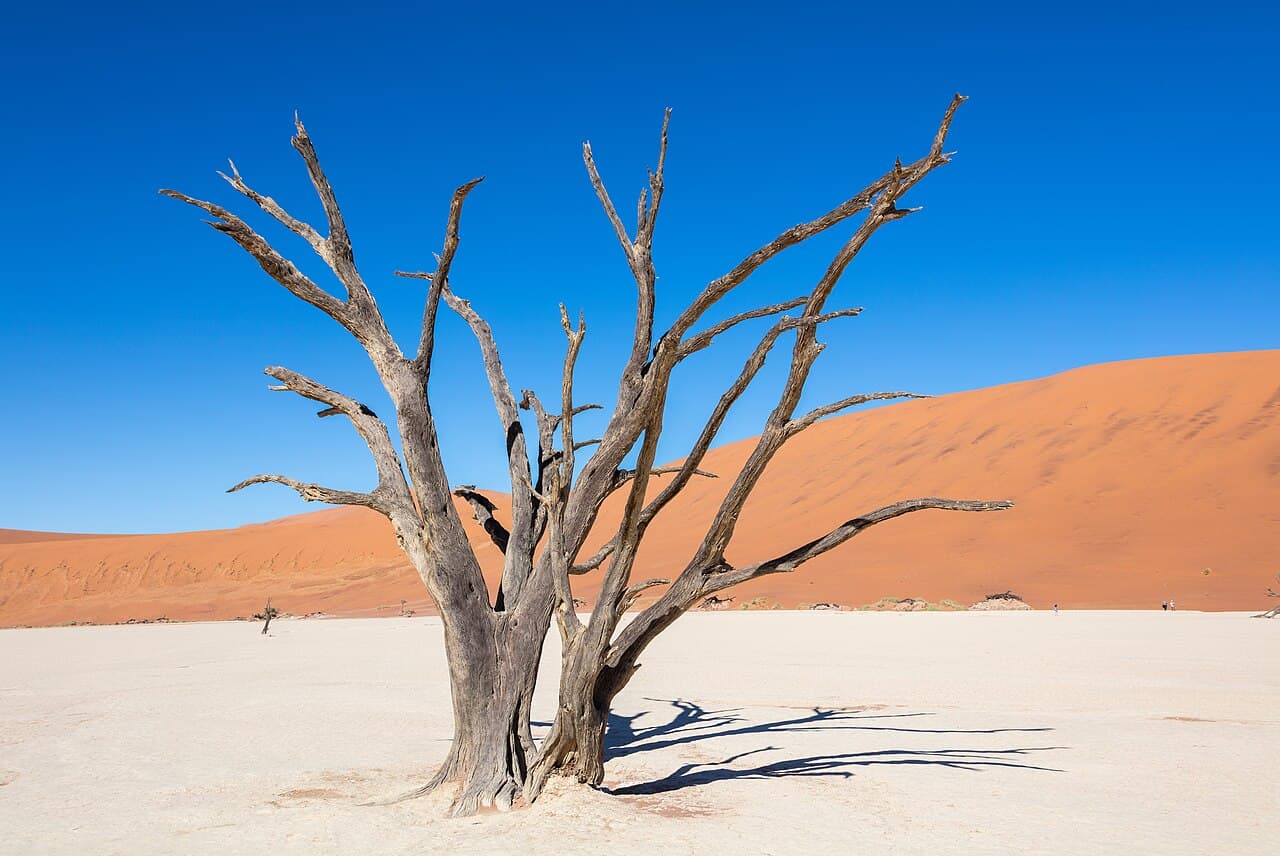
At Deadvlei, dark dead trees stand against a pale clay floor and orange dunes. The sharp contrast can look like a painting, yet it records a real change in water.
The trees grew when conditions allowed them to live. Their remains now mark a place the water no longer regularly reaches.
A pan among the dunes
Deadvlei lies in Namibia's Namib-Naukluft landscape, near Sossusvlei. The pale surface is a dry clay pan, not a field of snow or bleached desert sand.
The setting belongs to the wider Namib Sand Sea World Heritage landscape, where wind-shaped dunes meet highly specialized environments.
The pan and surrounding sand have different materials and histories, even though one view brings them together.
The trees needed a different past
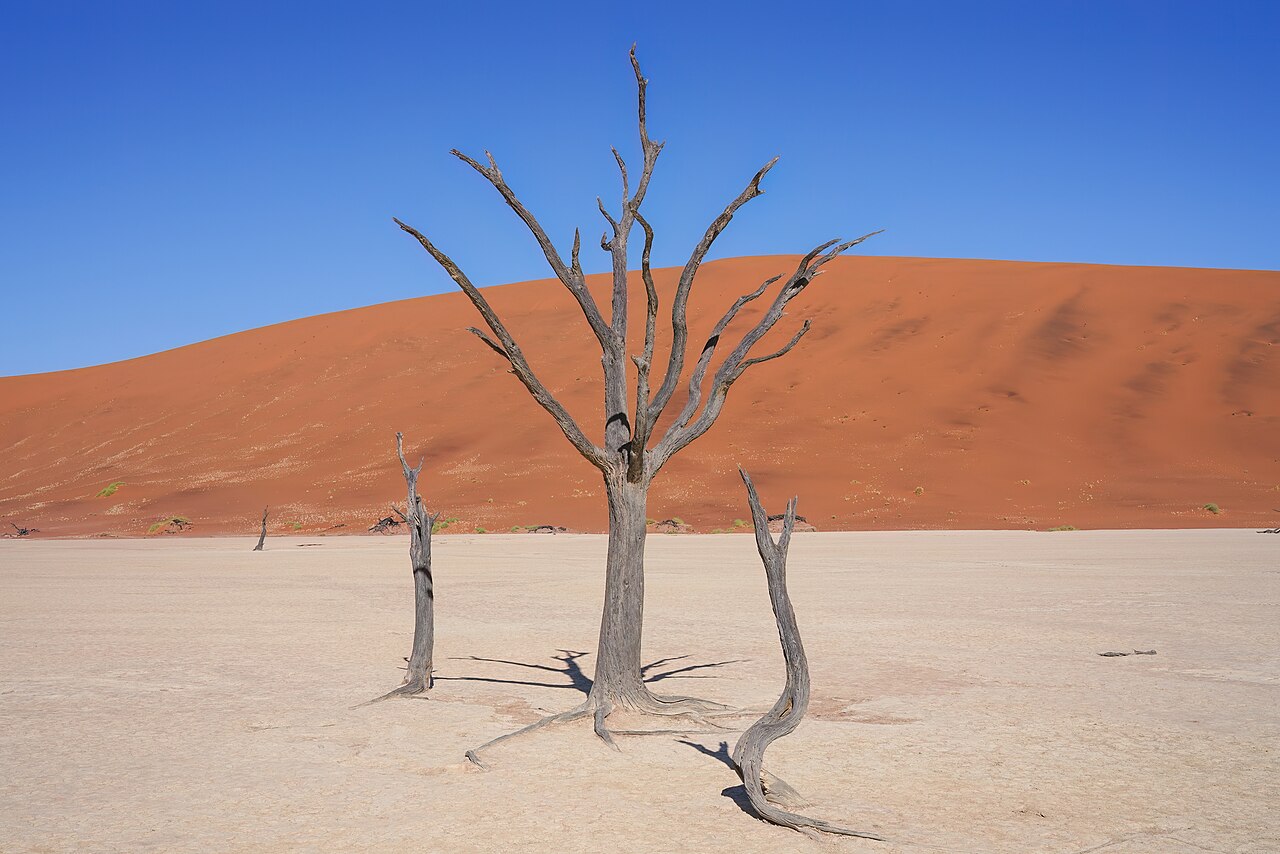
Camelthorn trees once had access to enough water to grow here. As dunes and drainage conditions changed, that supply was cut off.
Namibia Wildlife Resorts explains the relationship between encroaching dunes, the pan, and the surviving dead trunks.
The trees are often described as several centuries old. Such estimates help convey the timescale, but an exact age should not be assigned to every trunk in a photograph.
Dark wood does not mean a fire
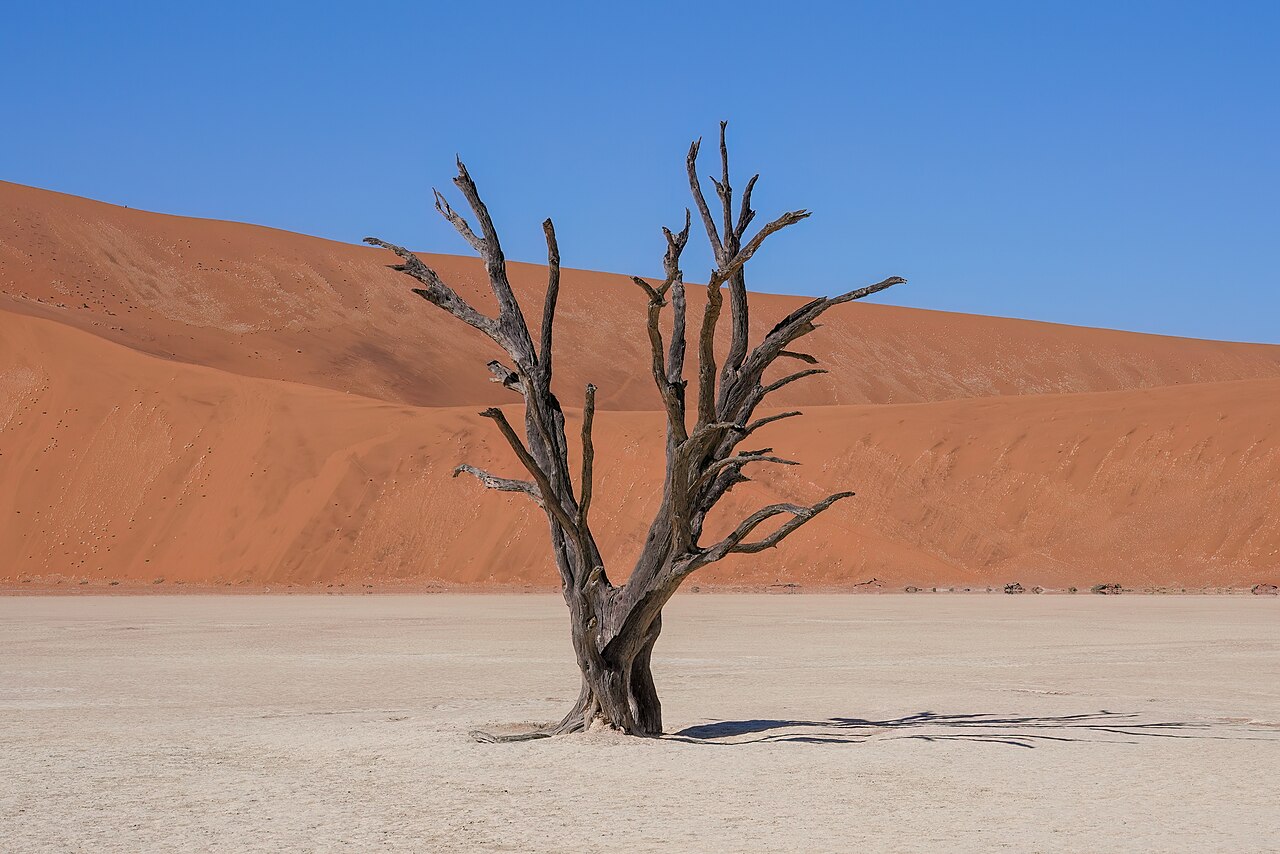
Their blackened-looking appearance can suggest burning. In this setting, exposure and long weathering are the important parts of the story.
The dry climate slows decay, allowing the remains to persist. They are wood, not stone fossils or metal sculptures.
A close look can reveal textures that a distant silhouette hides.
Leave the silhouettes standing
The trunks are vulnerable to damage. Namibia Wildlife Resorts has specifically called for visitors to stop climbing on or harming them.
Deadvlei's beauty depends on what remains intact: clay, dunes, and old wood.
Its striking colors are an invitation to imagine change. A place that now seems defined by dryness once supported living trees, and their shapes still hold the memory of that water.
Photo credits
Featured image: Diego Delso; Wikimedia Commons source; CC BY-SA 4.0. Resized for web display.

Body image 1: Giles Laurent; Wikimedia Commons source; CC BY-SA 4.0. Resized for web display.

Body image 2: Giles Laurent; Wikimedia Commons source; CC BY-SA 4.0. Resized for web display.
