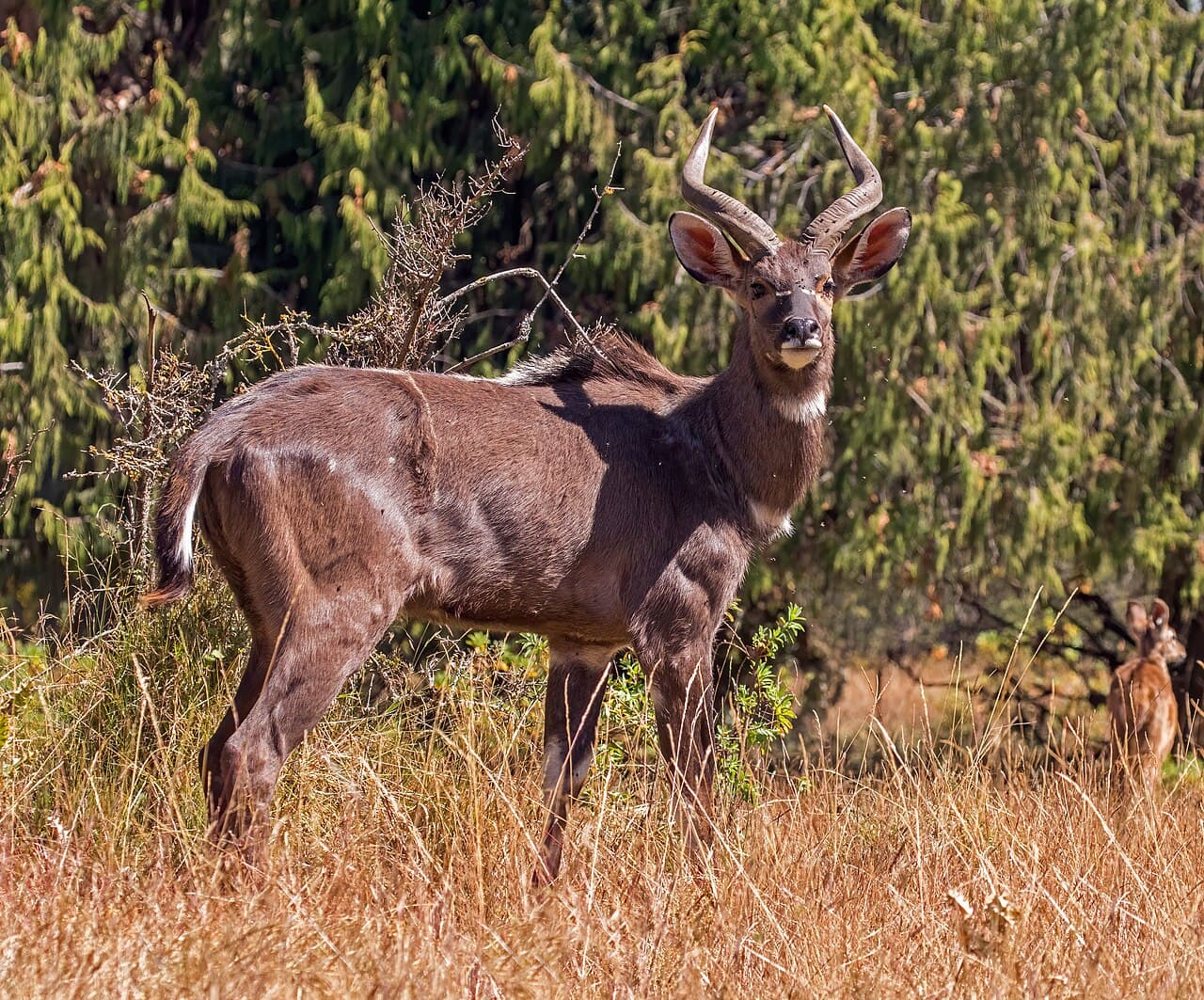
A male mountain nyala can stand among highland shrubs with spiraled horns above a coat marked in white. It is an antelope whose home lies in Ethiopia's mountains rather than a broad lowland plain.
Tragelaphus buxtoni is native to Ethiopia. The Bale Mountains are an important part of its range and conservation story.
One species, different outlines
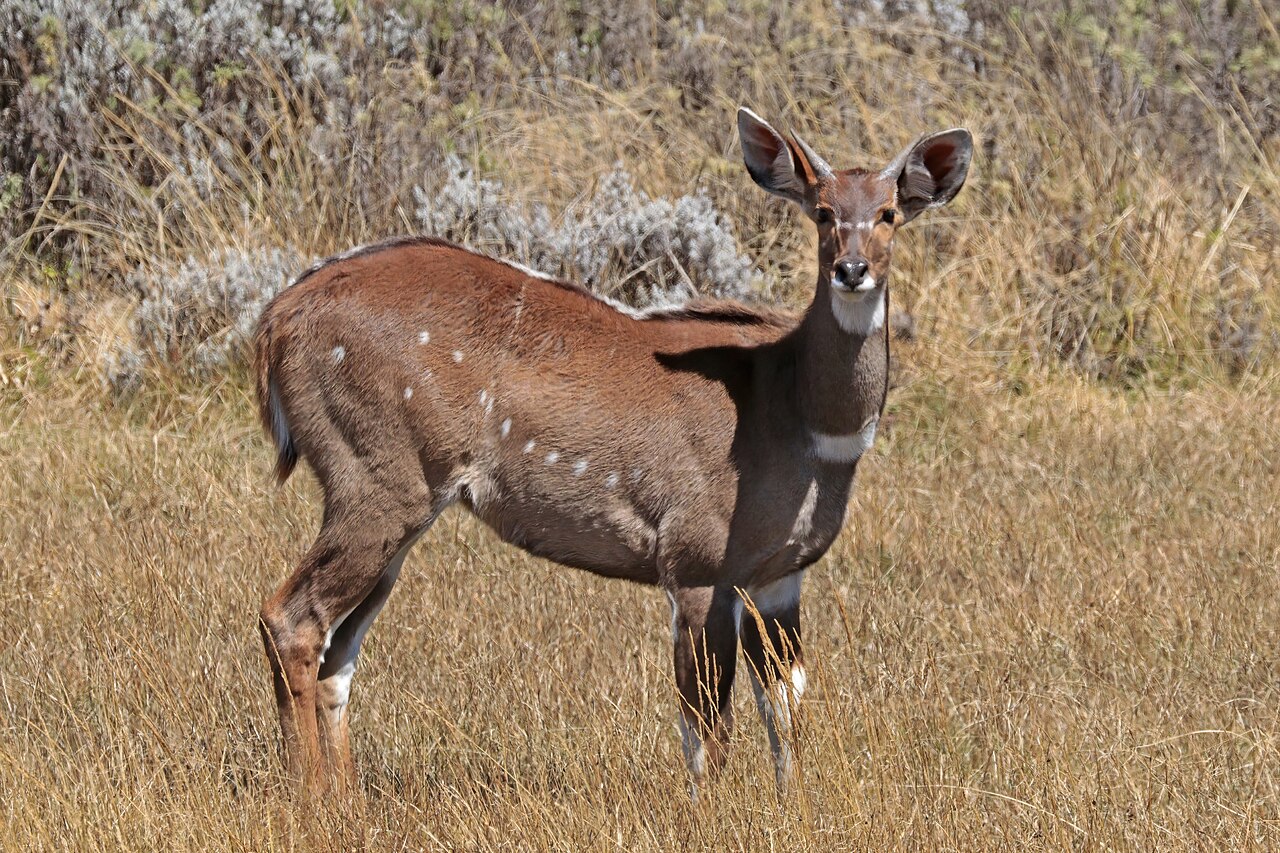
The Animal Diversity Web account describes males with horns and darker coats, alongside smaller, hornless females.
White spots and stripes break up the grey-brown body. Large ears add to the portrait.
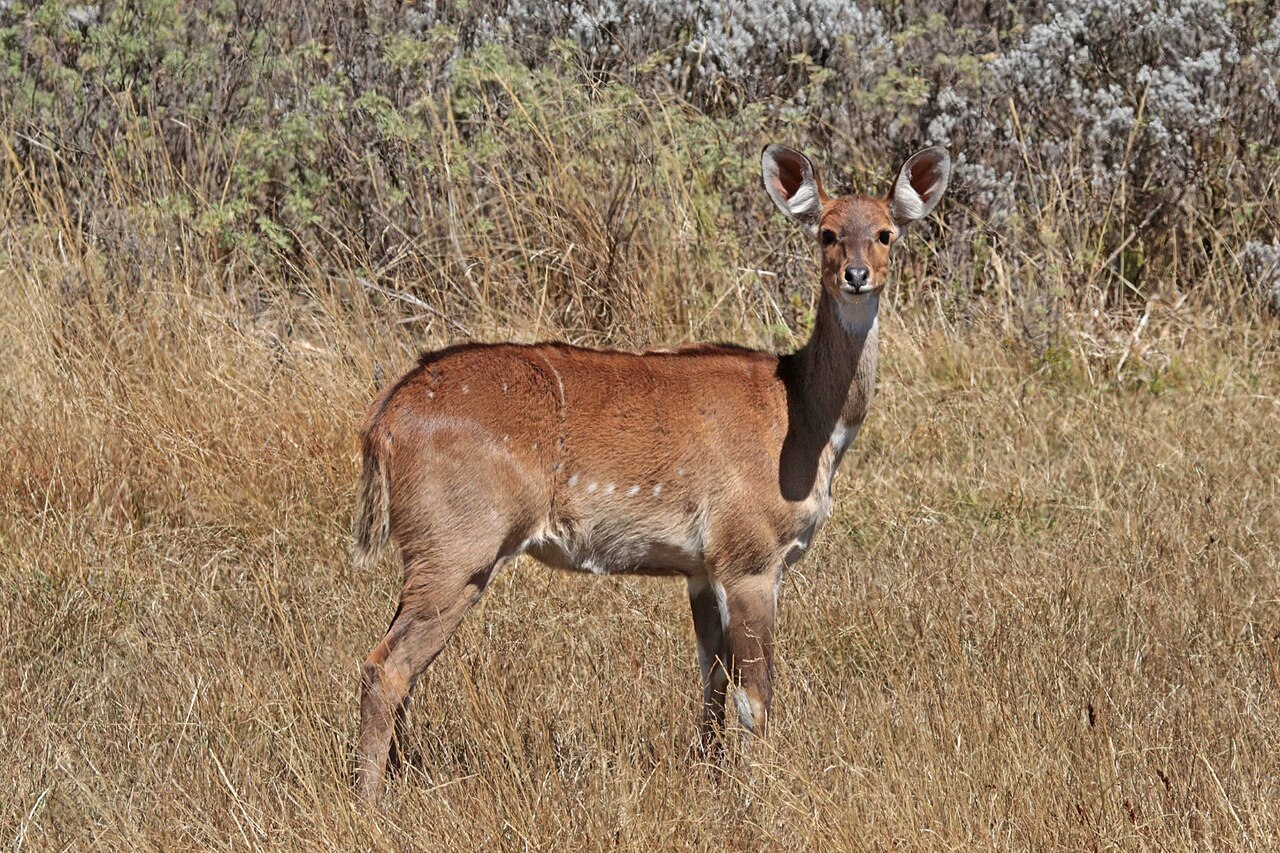
A family group reveals more variety than a single photograph of a mature male.
A life tied to highland vegetation
Mountain nyalas use woodland, bush, heath, and other mountain habitats. They browse on plants rather than live by a single fixed food source.
Changes in the surrounding vegetation affect both feeding and shelter. Protecting a mountain landscape includes noticing its wooded edges and shrubs.
A restricted home increases the stakes
Habitat pressure and hunting are concerns for the species. A limited natural range means local changes can have wider consequences.
Exact population figures need current surveys; an old estimate should not be mistaken for a live count.
The mountain nyala's beauty belongs to more than its horns. Look at the female, the young animal, and the vegetation around them: together they reveal a highland life that deserves room to continue.
Photo credits
Featured image: Mountain nyala (Tragelaphus buxtoni) male.jpg — Charles J. Sharp; CC BY-SA 4.0.

Body image 1: Mountain nyala (Tragelaphus buxtoni) female.jpg — Charles J. Sharp; CC BY-SA 4.0.

Body image 2: Mountain nyala (Tragelaphus buxtoni) juvenile.jpg — Charles J. Sharp; CC BY-SA 4.0.

Photographs resized for web display where available.