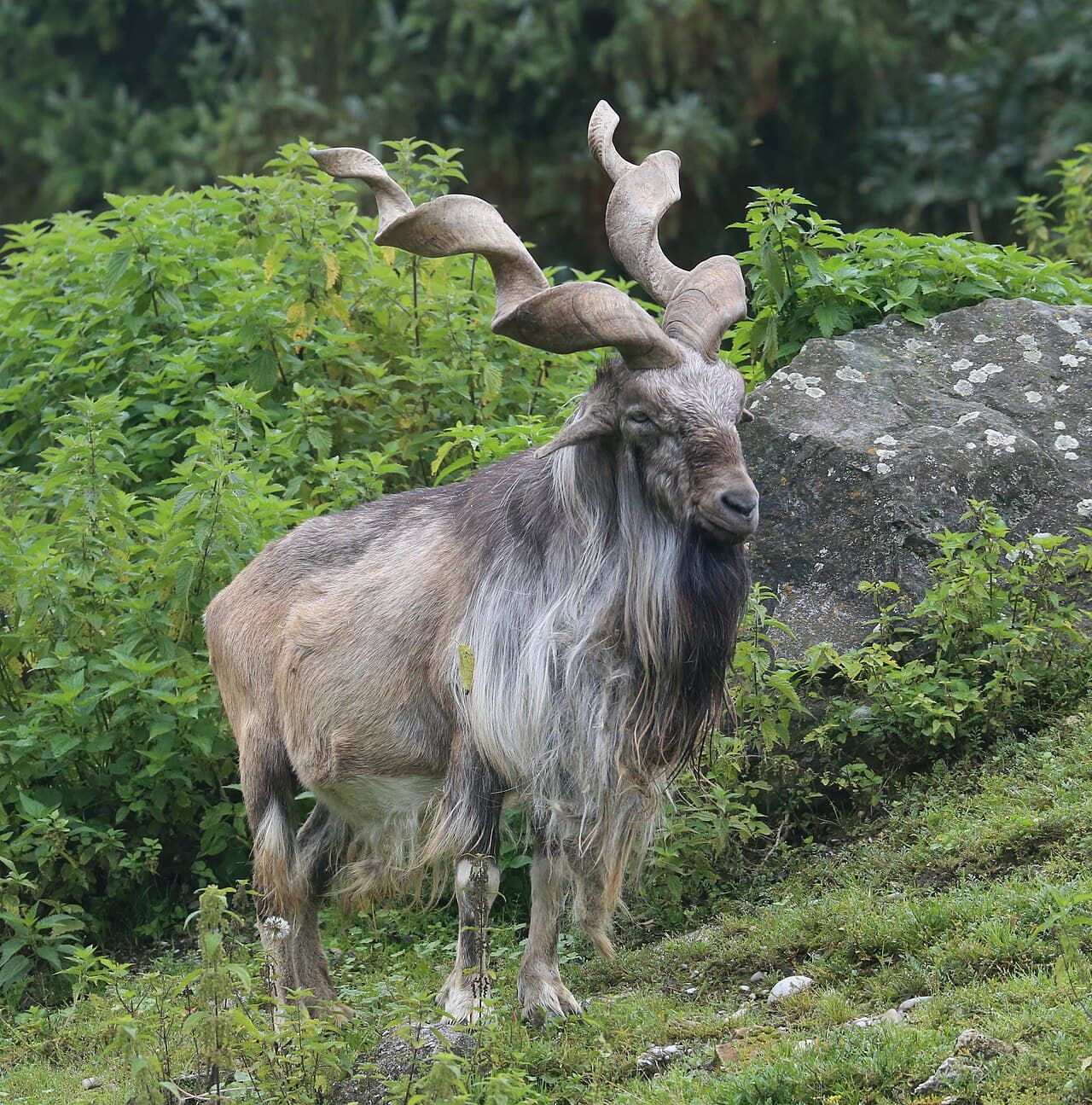
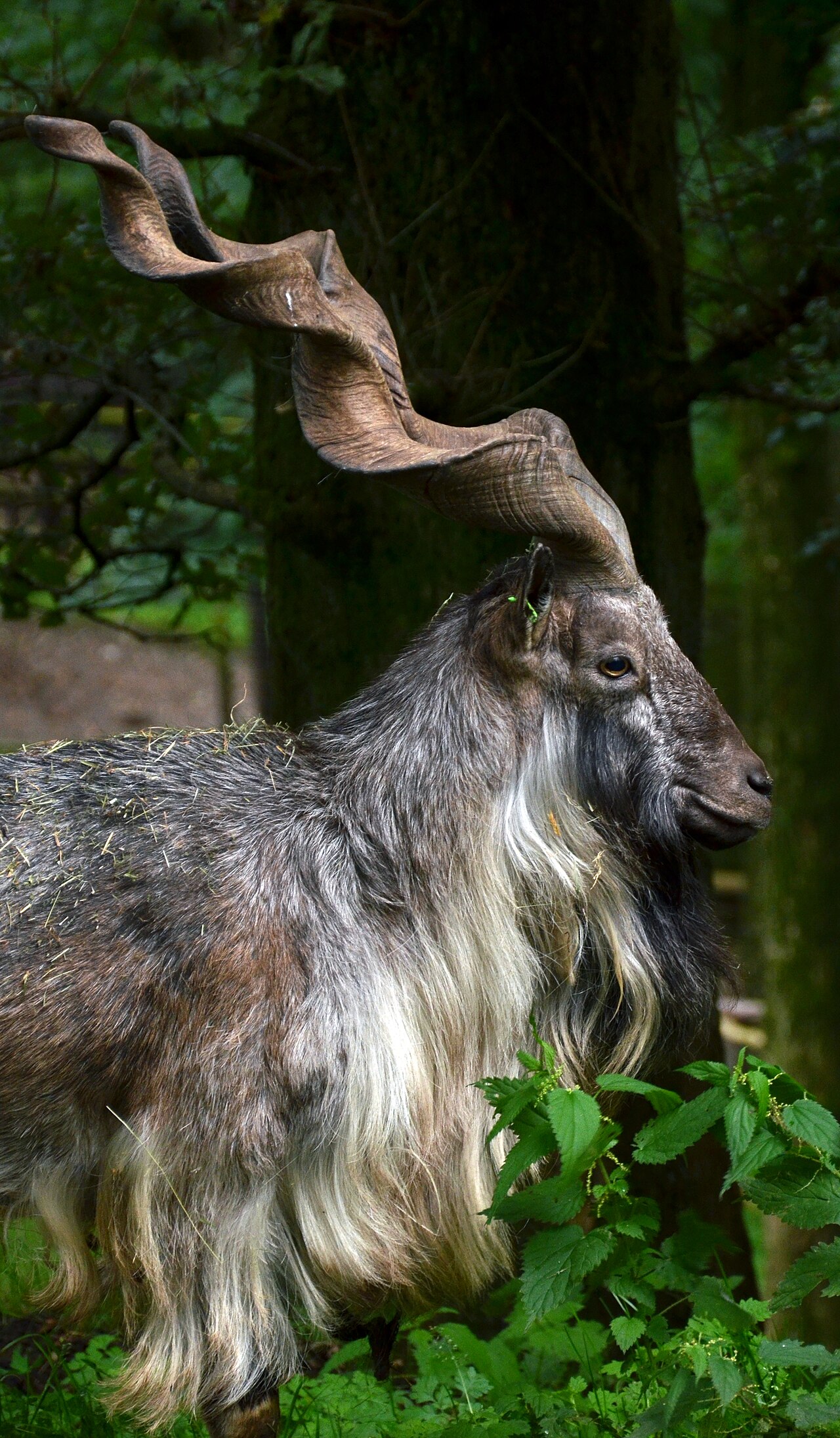
A male markhor's horns twist upward like corkscrews. They are among the most memorable outlines in the goat family, carried above a shaggy neck and beard.
Capra falconeri lives in mountainous parts of Central and South Asia. Females also have horns, usually smaller and more slender than the males'.
A life on uneven ground
The Animal Diversity Web markhor profile describes a mountain-dwelling goat that feeds on vegetation and moves through rugged terrain.
Strong climbing ability helps it use places that appear difficult from a human viewpoint.
The photographs here show animals under managed care. Rocks and slopes can illustrate their posture without replacing the story of wild mountain habitat.
More than a spectacular adult male
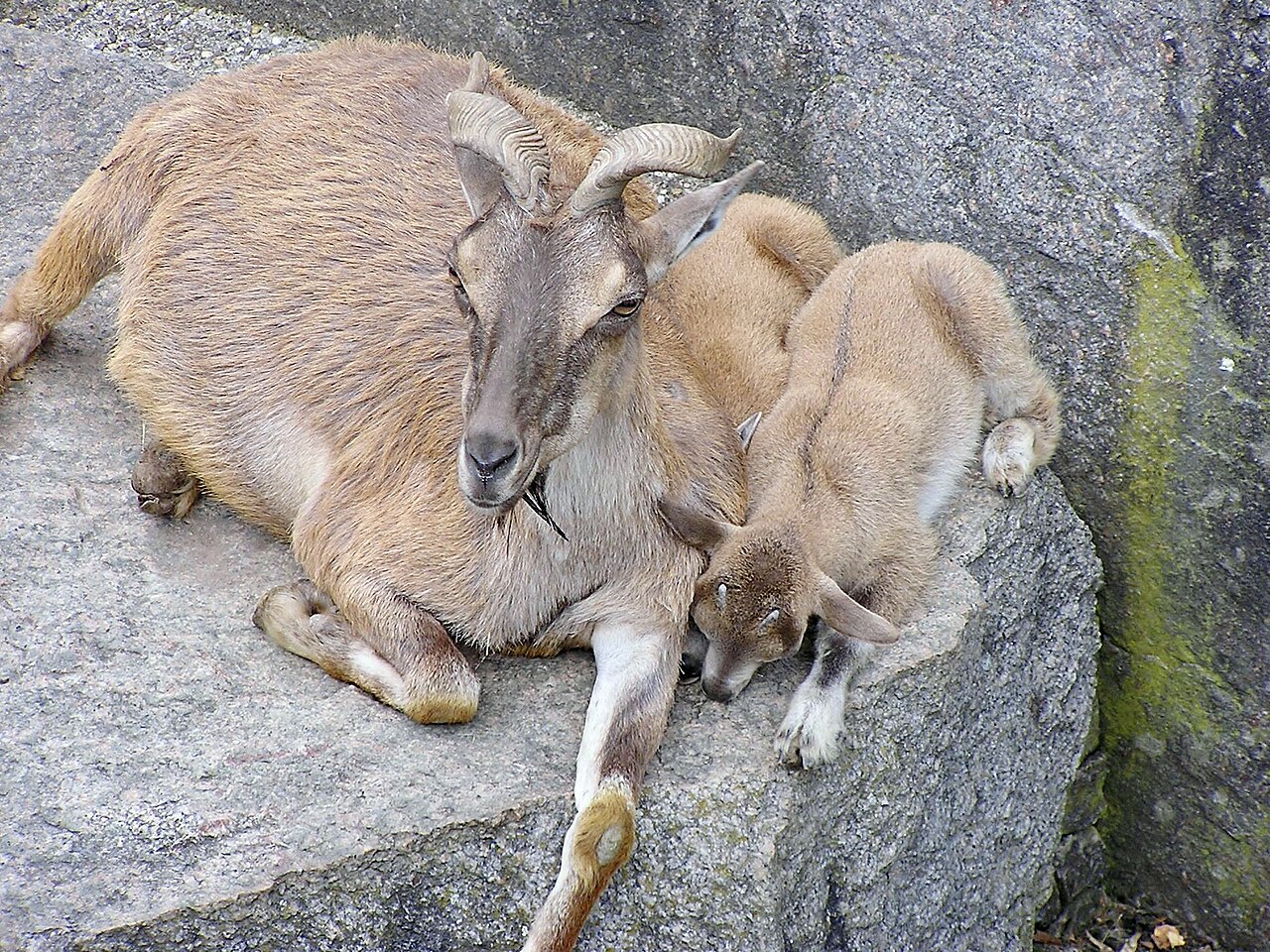
Females and young often occur in groups. Males may live separately outside the breeding season.
Looking at young animals brings a different scale to the horns and body proportions that dominate adult portraits.
San Diego Zoo's goat guide also describes markhors as capable climbers, including observations of animals balancing in surprising places.
Keep the mountain in view
Living markhors need feeding areas and safe routes through their seasonal range. Hunting and habitat management affect their future.
Admiring the horns is an introduction, not a complete understanding of the animal.
The markhor combines a remarkable structure with everyday mountain skills. Its beauty becomes richer when a static spiral is connected with balance, movement, and life on a steep landscape.
Photo credits
Featured image: Markhor Schraubenziege Capra falconeri Zoo Augsburg-02.jpg — Rufus46; CC BY-SA 3.0.

Body image 1: Bovidae Capra falconeri 2.jpg — NasserHalaweh; CC BY-SA 4.0.

Body image 2: Capra falconeri Markhor Parc Bouillon 31082014 1.jpg — Vassil; CC0.

Photographs resized for web display where available.